New Leak?

TN4Runner07

New member
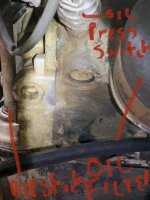
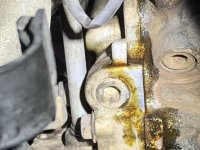
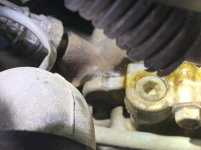
Not sure what part this is? Or if this is a pump or gasket failure?

Recently replaced the cam seals, crank seal, timing belt etc. I started to notice oil accumulating on driveway and undercarriage after change out. Cleaned engine really well. Originally thought there was seepage from the dipstick O-ring. I started vehicle and within a few seconds of increasing the RPMs I noticed seeping here....(Attached picture)

Thoughts and suggestions of how the two can be related or unrelated are very appreciated!!

3rd GEN, 320 K, 5VZ motor....
 

Attachments
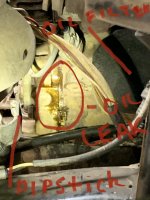
  • IMG_3788.jpg
    IMG_3788.jpg
    125.3 KB · Views: 512
Last edited:
Register to hide this ad
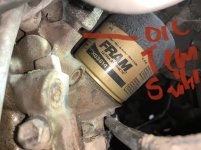
Is it leaking down from the oil pressure switch right above it? Those shats like to leak.

Increasing rpms increases oil pressure drastically At that switch location. More pressure more leak.

Hopefully it’s not that wet seam leaking.
 
I think that the AC Compressor is on the other side? The passenger side?

I kind of think its between the oil pump and the block as well. However, I will make sure it's not coming from the temp sensor too. Thats a good idea. I will reclean today and retest to make sure.

If it is between the oil pump and the block.... I am not super sure what that means and what would need to be done? New seal? New oil pump? Is this a common leak?

Thanks for the help and replies!
 
Last edited:
However, I will make sure it's not coming from the temp sensor too. Thats a good idea. I will reclean today and retest to make sure.

It is your oil pressure switch, not a temp sensor. It is filled with xx PSI oil. They do tend to leak. I'm hoping for your sake that it is the problem, they are a cheap and easy fix.

If it's the seam I think that is not common at all. Never heard that complaint before. I think it'd be a bunch of trouble to get it fixed.
 
Ok, well I don't think its the oil pressure sensor. I think its coming from between the block. Not sure what that means or what could have happened during timing, seals, and belt changes.

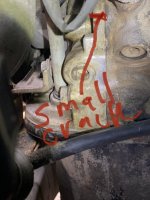
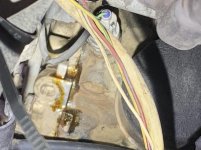
Cleaned everything up really well. I did notice to tiny crack at the top of whatever is attached to the engine block. The shiner metal part attached to the block. I was able to run a flat blade across and feel a "catch" to confirm. I feel like I should know what that does, but have no idea what it is, or if i touched it during timing install? See pictures. Restarted and had my wife increase RPM's to 800-1000.

*I tried to attach a video, but its not able to load.
 

Attachments

  • Before 1.jpg
    Before 1.jpg
    131 KB · Views: 432
  • Before 2.jpg
    Before 2.jpg
    132 KB · Views: 426
  • Crack.jpg
    Crack.jpg
    131.2 KB · Views: 420
  • After 1.jpg
    After 1.jpg
    126.1 KB · Views: 430
  • After 2.jpg
    After 2.jpg
    131.4 KB · Views: 420
  • After 3.jpg
    After 3.jpg
    132.1 KB · Views: 410
Last edited:
Ok, well I don't think its the oil temp sensor. I think its coming from between the block. Not sure what that means or what could have happened during timing, seals, and belt changes.

Cleaned everything up really well. I did notice to tiny crack at the top of whatever is attached to the engine block. The shiner metal part attached to the block. Iwas able to run a flat blade across and feel a "catch" to confirm. I feel like I should know what that does, but have no idea what it is, or if i touched it during timing install? See pictures. Restarted and had my wife increase RPM's to 800-1000.

*I tried to attach a video, but its not able to load.

1) It's an "oil pressure switch". I apologize for coming off rude, but anyone that stumbles across this in the future should be aware that it's an "oil pressure switch" also known as an "oil pressure sensor".

2) Where 2 separate metal components meet like that there will always be a "crack" or "gap" unless the components were separated from 1 piece by fracturing or were machined together. This does not indicate that there is a leak there but that there is 2 pieces joined together. The "crack" you're looking at is the back side of the oil pump and the front side of the engine block.

3) Since you have narrowed down where it is coming from now is the time to clean it thoroughly, add engine oil dye, and look at the area with a uv light while the engine is running.
 
Last edited:
1). Nope, not rude at all! I was in the wrong and need the correction!

2) Picture is hard to tell, but the crack is on the part to the left and the crack runs left to right on this part only, not the vertical space between the part and the block. If that makes any sense?

3). Just curious what other data I can collect with the dye? I tried to load the video, which shows it actively seeping through at this space. Would the dye simply confirm this? Never used it before.

Thanks for the reply....
 
1). Nope, not rude at all! I was in the wrong and need the correction!

2) Picture is hard to tell, but the crack is on the part to the left and the crack runs left to right on this part only, not the vertical space between the part and the block. If that makes any sense?

3). Just curious what other data I can collect with the dye? I tried to load the video, which shows it actively seeping through at this space. Would the dye simply confirm this? Never used it before.

Thanks for the reply....
Thanks for understanding.

I guess I can't see the crack in my pictures. I'll look again later on a bigger screen, but judging from your description it isn't where the two parts mate together. Adding dye to the engine oil and watching with a uv light would be able to determine if the oil is coming from the crack or the mating surface. If it's coming from the crack then you will need to replace the oil pump, but if it's coming from the mating area then you might be able to just reseal it if you are trying to do it as cheap as possible. I'd have to look into it further but I'm 99 percent sure to remove the oil pump you'll have to drop the oil pan in addition to removing the timing components. ProDemand lists oil pump replacement as an 11.9 hour job for what it's worth.
 
Well, that sucks. I was hoping it was the oil pressure switch as it is cheap, easy and commonly leaky.

Now I would say this has moved into the realm of ignore it until you need to do a timing belt replacement. I wouldn't want to dig in there just for an oil leak unless absolutely needed.
 

Members online

Forum statistics

Threads
278,307
Messages
3,554,050
Members
248,016
Latest member
Advally Service

Trending content

Back
Top