Radiator Replacement Advice

So I picked up some Shell Rotella ELC, hopefully this is the right coolant.

Poured in a gallon and the radiator was full, but lo and behold there is a pretty significant leak. The leak seems to be on the transmission return though, which I thought was transmission fluid. Is something wrong with my radiator?

Both fluids are red, but I'm pretty sure it's coolant leaking, it's very thin.

Yep, sounds like the petcock valve drain on the bottom of the new radiator wasn't tight. If it started leaking as soon as you put the coolant in, it's probably coolant. The only way the trans fluid will mix with the coolant is if the new trans cooler in the new radiator has a crack in it. If the engine wasn't running when you noticed the leak, it's probably the coolant leaking. But, get under the rig and look to be sure. The trans cooler connection closest to the radiator petcock valve is the the send line connection coming from the trans. You should be able to easily see where the leak is coming from as long as your skid pan is out of the way.
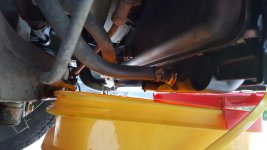
 
The coolant is definitely leaking from one of the transmission lines. It is the line by the drain/petcock which I believe is the return line. Picture attached.

I have drained the radiator by removing the drain, but the hose that was leaking was the one in this image. I believe the hose clamp has failed, there doesn't seem to be any clear sign that the hose has failed.

Like I said, both fluids are red so it is possible that it was transmission fluid that was escaping. With that said, the leak didn't begin until I added coolant (although I did start the car shortly after that). That the hose was the leak was very clear (there was a steady pouring of liquid out of it.

How could I tell if it is transmission fluid vs antifreeze? If it is antifreeze, what should my next step be?

I'm tempted to just trust that it is transmission fluid with no clear way to tell, to get a better hose clamp, and to run it. The only way to know for sure if it is mixing is when it starts to milkshake, right?
 

Attachments

  • 20160619_163127-Web.jpg
    20160619_163127-Web.jpg
    37.9 KB · Views: 2,821
Last edited:
The coolant is definitely leaking from one of the transmission lines. It is the line by the drain/petcock which I believe is the return line. Picture attached.

I have drained the radiator by removing the drain, but the hose that was leaking was the one in this image. I believe the hose clamp has failed, there doesn't seem to be any clear sign that the hose has failed.

Like I said, both fluids are red so it is possible that it was transmission fluid that was escaping. With that said, the leak didn't begin until I added coolant (although I did start the car shortly after that). That the hose was the leak was very clear (there was a steady pouring of liquid out of it.

How could I tell if it is transmission fluid vs antifreeze? If it is antifreeze, what should my next step be?

I'm tempted to just trust that it is transmission fluid with no clear way to tell, to get a better hose clamp, and to run it. The only way to know for sure if it is mixing is when it starts to milkshake, right?

From the picture you supplied, the hose most prominent in the picture is the send line from the transmission. It sends the hot fluid from the trans to the cooler. The hose in the background is the return line that brings the cooled fluid back to the transmission. It looks like you don't have the hose clamp on right. It's too far away from the radiator. It looks like the clamp could be partly resting on the barb part of the fitting that far out causing the clamp to not be putting equal pressure on the fitting. Compress the clamp and bring it back closer to the radiator but make sure there's still a little bit of hose showing between the clamp and radiator. I hope that makes sense. After you do that, start it again and see if that stopped the leak.

You should be able to tell the difference between the coolant and trans fluid. Dab some coolant on your fingers, feel what it's like and then do the same with the trans fluid. But, if the fluid is coming out of that line you showed, it's trans fluid.
 
From the picture you supplied, the hose most prominent in the picture is the send line from the transmission. It sends the hot fluid from the trans to the cooler. The hose in the background is the return line that brings the cooled fluid back to the transmission. It looks like you don't have the hose clamp on right. It's too far away from the radiator. It looks like the clamp could be partly resting on the barb part of the fitting that far out causing the clamp to not be putting equal pressure on the fitting. Compress the clamp and bring it back closer to the radiator but make sure there's still a little bit of hose showing between the clamp and radiator. I hope that makes sense. After you do that, start it again and see if that stopped the leak.

You should be able to tell the difference between the coolant and trans fluid. Dab some coolant on your fingers, feel what it's like and then do the same with the trans fluid. But, if the fluid is coming out of that line you showed, it's trans fluid.

I guess I never thought about how alike the two fluids look. It just has to be transmission fluid... there is no way it's coolant from that hose. It was quite the leak. I lost about a quart.

This Rotella ELC is very sticky for coolant, thicker and more oily than any coolant I've dealt with before. All of my other vehicles have been green Prestone type. It's thick stickiness and color is very similar to ATF.

The hose clamp is in that position because I was trying to move it around to see if I could stem the tide. I'm fairly sure the hose clamped has failed. Going to have to wait till tomorrow for the parts store to open.

It being the send line makes more sense. The increased pressure when I ran the vehicle could explain the magnitude of the leak.
 
I guess I never thought about how alike the two fluids look. It just has to be transmission fluid... there is no way it's coolant from that hose. It was quite the leak. I lost about a quart.

This Rotella ELC is very sticky for coolant, thicker and more oily than any coolant I've dealt with before. All of my other vehicles have been green Prestone type. It's thick stickiness and color is very similar to ATF.

The hose clamp is in that position because I was trying to move it around to see if I could stem the tide. I'm fairly sure the hose clamped has failed. Going to have to wait till tomorrow for the parts store to open.

It being the send line makes more sense. The increased pressure when I ran the vehicle could explain the magnitude of the leak.

I've never seen one of those constant pressure hose clamps wear out but I guess it's definitely possible. So far on my rig, I've reused those type of hose clamps with 100% success. Have you actually had someone start the rig while you're looking underneath to see exactly where the ATF is leaking from? Just seems weird that the clamp was holding fine before the radiator replacement and now it's not. Maybe the clamp was damaged somehow when you removed it? Zooming in on the picture you provided, it does look a little tweaked, out of round and not contacting the hose in one spot but it's hard to tell.
 
Last edited:
I've never seen one of those constant pressure hose clamps wear out but I guess it's definitely possible. So far on my rig, I've reused those type of hose clamps with 100% success. Have you actually had someone start the rig while you're looking underneath to see exactly where the ATF is leaking from? Just seems weird that the clamp was holding fine before the radiator replacement and now it's not. Maybe the clamp was damaged somehow when you removed it? Zooming in on the picture you provided, it does look a little tweaked, out of round and not contacting the hose in one spot but it's hard to tell.

It's hard to remember the exact sequence of events. What I remember is:
  1. I finished the radiator installation.
  2. I went out and bought some Shell Rotella ELC.
  3. I found a funnel, cleaned it, and started to pout in the 50/50 prediluted mix.
  4. I spilled a bit when the radiator filled up, it dripped down the radiator and onto the ground (very frustrated with myself).
  5. I poured the rest into the overflow tank (just barely above the Low mark).
  6. I started the truck to begin warming it up to open the thermostat, continue filling, and to burp the lines.
  7. I laid down under the truck to see if there was anything leaking and red fluid was pouring out under that hose.
  8. I shut the truck off, but the leak kept pouring.
  9. I laid down under it again and tried to move the clamp around with some pliers, trying to find better purchase or to get it far enough back to compensate for a failure in the hose like a cracked end. The hose slid freely forward and back, I could have pulled it off with the hose clamp still on it if I had wanted.

It does sort of make sense that a failed hose clamp would have caused a failure at that point, since the transmission line would have come up to pressure.

When I took that line off the old radiator, it had quite a lot of fluid in it, enough that rather than letting it drain completely I plugged the end with some paper towel. Could allowing the tube to remain wet with transmission fluid have lubricated or created a pathway for the pressurized fluid to escape?

Does anyone know what size hose clamps I need? The hose is 3/8id right?

I can't seem to find a nice assortment/kit of spring hose clamps on Amazon with prime. :(

This set seems really nice, but out of stock at Amazon. T-Bar/Bolt style clamps are supposed to be the superior option, right, or is that only when they are constant tension style?

This kit is sort of what I was thinking, but $46 for the kit seems a bit expensive.

Am I being ultra-picky here where I shouldn't be?
 
In a related question. The previous owner disconnected the rear heater, leaving me with the two metal lines disconnected where the pop up by the firewall. If I wanted to reconnect those lines, where do they connect to?

Based on this thread, it looks like the previous owner left one T in place and capped the line with a bolt, but removed the other T.

Does the line on the top, with the valve in the line (send line?) go to the top or bottom port. Based on this image, it looks like the top line goes to the bottom port:
50710293.jpg


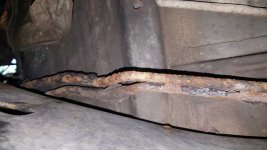
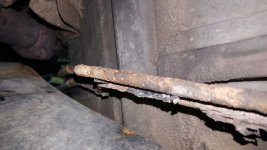
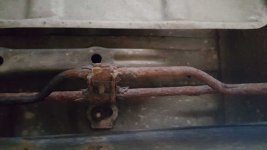
There appear to be conflicting opinions about making this run in rubber hose, due to the proximity with the exhaust. Are there any long-term perspectives on this from maybe someone who did the rubber hose swap and has been running it for a while? I have a few corroded spots which may or may not be leaks.

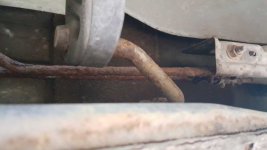
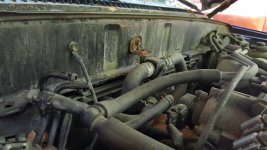
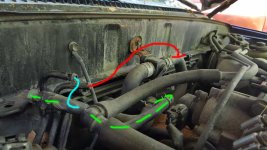
Pictures of my setup attached.

In the marked image, the green dotted line represents an existing capped line from a T. The red line represents the connection I would need to make by adding a T, small section of line before the valve, and a connection to the lower rear line port for supply of hot coolant. The blue line represents the return line connected to the green existing line.
 

Attachments

  • rear-heater-lines-front.jpg
    rear-heater-lines-front.jpg
    50.5 KB · Views: 2,989
  • rear-heater-lines-mid-front.jpg
    rear-heater-lines-mid-front.jpg
    54.6 KB · Views: 3,031
  • rear-heater-lines-mid-rear.jpg
    rear-heater-lines-mid-rear.jpg
    26.9 KB · Views: 2,914
  • rear-heater-lines-rear.jpg
    rear-heater-lines-rear.jpg
    27.2 KB · Views: 2,850
  • rear-heater-lines-top.jpg
    rear-heater-lines-top.jpg
    62.5 KB · Views: 2,868
  • rear-heater-lines-top-marked.jpg
    rear-heater-lines-top-marked.jpg
    64.5 KB · Views: 3,273
It's hard to remember the exact sequence of events. What I remember is:
  1. I finished the radiator installation.
  2. I went out and bought some Shell Rotella ELC.
  3. I found a funnel, cleaned it, and started to pout in the 50/50 prediluted mix.
  4. I spilled a bit when the radiator filled up, it dripped down the radiator and onto the ground (very frustrated with myself).
  5. I poured the rest into the overflow tank (just barely above the Low mark).
  6. I started the truck to begin warming it up to open the thermostat, continue filling, and to burp the lines.
  7. I laid down under the truck to see if there was anything leaking and red fluid was pouring out under that hose.
  8. I shut the truck off, but the leak kept pouring.
  9. I laid down under it again and tried to move the clamp around with some pliers, trying to find better purchase or to get it far enough back to compensate for a failure in the hose like a cracked end. The hose slid freely forward and back, I could have pulled it off with the hose clamp still on it if I had wanted.

It does sort of make sense that a failed hose clamp would have caused a failure at that point, since the transmission line would have come up to pressure.

When I took that line off the old radiator, it had quite a lot of fluid in it, enough that rather than letting it drain completely I plugged the end with some paper towel. Could allowing the tube to remain wet with transmission fluid have lubricated or created a pathway for the pressurized fluid to escape?

Does anyone know what size hose clamps I need? The hose is 3/8id right?

I can't seem to find a nice assortment/kit of spring hose clamps on Amazon with prime. :(

This set seems really nice, but out of stock at Amazon. T-Bar/Bolt style clamps are supposed to be the superior option, right, or is that only when they are constant tension style?

This kit is sort of what I was thinking, but $46 for the kit seems a bit expensive.

Am I being ultra-picky here where I shouldn't be?

I believe the clamps on our rigs are metric. It's too bad you don't have a dealership close to you so you could just run over and get one. if you want an OEM constant pressure clamp for that application, you could just order it on-line from a place like Camelback Toyota and get it fairly quickly. But, a regular ol' screw type hose clamp that you can pick up at any auto parts store will work just fine for this. Good luck!
 
I ordered some 3/8in transmission cooler line (25'), in case I need to replace the supply line due to hose failure and to run as the coolant lines to the rear heater. I also ordered a package of 3/8in tees to add a tee to the line before the heater valve and this package of hose clamps, 10 of each size in 6 metric sizes.

Hopefully I will have what I need to make this all work. Should arrive on Thursday.
 
****ing Denso.

So, new hose clamp applied and still the same issue. Red fluid begins to drip when I fill the radiator with coolant from the transmission supply line... and fitting.

Turns out, the fitting was not securely tightened down in the radiator. I grabbed an adjustable (the only wrench large enough on hand) and tightened down the nut around the transmission supply fitting and voila, the leak went away.

Can anyone confirm that the nut secures the transmission supply line inside the coolant resevoir at the bottom of the radiator and thus assuage my concerns that I am milkshaking my truck with a failed radiator.

Video of the leak (before I tightened the nut): https://www.youtube.com/watch?v=epuvUrRjA_Q

Kindof irritating that it took waiting 4 days for a hose clamp to figure out that the issue was just that nut. :(
 
I've changed several radiators on 3RD generations as preventative maintenance. About 50% have the transmission lines at the bottom with a loose nut/fitting. It's just something you have to check before you install the radiator. Like I said, it's a 50/50 chance that one of them needs tightening. I have used KOYO, DENSO, Murray, and TYC.
 
Tranny fluid is starting to look pretty bad too, it's a pretty dark maroon rather than bright red. Thinking I'll take it in for a transmission flush when this is all over.

The saga however, continues. Can someone walk me through the steps to refill and burp the coolant lines that they used? The process I just performed obviously didn't work as my temperature gauge can attest. It's redlined right now from a short drive, freaking me right out as I worry about head gaskets...

So what do you think could be the cause? I've only got a little over a gallon of coolant in there, so there has to be room for more (meaning air in the lines), at redline temperatures the thermostat must be open, right?

I filled the radiator to the neck, filled the reservoir to the low mark and ran it in the driveway. After a while I came back and put some more in the radiator and capped it... should I not have capped it? should I just have kept it running and kept filling the radiator?
 
Tranny fluid is starting to look pretty bad too, it's a pretty dark maroon rather than bright red. Thinking I'll take it in for a transmission flush when this is all over.

The saga however, continues. Can someone walk me through the steps to refill and burp the coolant lines that they used? The process I just performed obviously didn't work as my temperature gauge can attest. It's redlined right now from a short drive, freaking me right out as I worry about head gaskets...

So what do you think could be the cause? I've only got a little over a gallon of coolant in there, so there has to be room for more (meaning air in the lines), at redline temperatures the thermostat must be open, right?

I filled the radiator to the neck, filled the reservoir to the low mark and ran it in the driveway. After a while I came back and put some more in the radiator and capped it... should I not have capped it? should I just have kept it running and kept filling the radiator?

did it look like this?

that fluid looks awfully red did you cut it 50 50?

http://www.toyota-4runner.org/attac...1389385078-pink-milkshake-rookie-img_1258.jpg

if any of that coolant got in the tranny lines flush it asap !


https://www.google.com/search?q=chr...XS-CUYQ_AUICCgD&dpr=1.1#imgrc=TNLnrXy_py1x7M:

if it looks like the middle thats fine, just flush

did you turn both your rear heater and front heater on high?
 
Last edited:
It's a 50/50 blend, so no I did not blend it further.

The tranny fluid actually looks more like the "good" on the right image, so I guess I'm fine. I shouldn't expect it to be like-it-came-out-of-the-bottle I guess.

Definitely nothing like that milkshake picture. Apparently the tranny line itself was sealed fine with the existing hoseclamp. It's the fitting that was leaking coolant and there was no mixture.

I definitely did NOT turn on the heater (rear is disconnected for now), that could be it. Ty.
 
It's a 50/50 blend, so no I did not blend it further.

The tranny fluid actually looks more like the "good" on the right image, so I guess I'm fine. I shouldn't expect it to be like-it-came-out-of-the-bottle I guess.

Definitely nothing like that milkshake picture. Apparently the tranny line itself was sealed fine with the existing hoseclamp. It's the fitting that was leaking coolant and there was no mixture.

I definitely did NOT turn on the heater (rear is disconnected for now), that could be it. Ty.

I think you might be able to get away from rear heater, especially if disconnected. but no way you can get around not putting on front heater, there is a heater core that has an air bubble.

youtube, how to bleed cooling system, there are several. they can explain it better than anyone can with texts.
 
Last edited:
I think you might be able to get away from rear heater, especially if disconnected. but no way you can get around not putting on front heater, there is a heater core that has an air bubble.

youtube, how to bleed cooling system, there are several. they can explain it better than anyone can with texts.

Yea, the rear heater (and lines) are completely disconnected. See earlier pictures for details.

Not having bled the heater core is almost certainly my problem. For some reason I couldn't find the information I was looking for when looking for information on bleeding the system. Honestly, I should know better, it's not like I'm unfamiliar with how the coolant runs through the vehicle. Will give this a shot a little later today.

I didn't see one, the 4Runner doesn't have a bleeder valve for coolant, right?
 
Yea, the rear heater (and lines) are completely disconnected. See earlier pictures for details.

Not having bled the heater core is almost certainly my problem. For some reason I couldn't find the information I was looking for when looking for information on bleeding the system. Honestly, I should know better, it's not like I'm unfamiliar with how the coolant runs through the vehicle. Will give this a shot a little later today.

I didn't see one, the 4Runner doesn't have a bleeder valve for coolant, right?

not that i am aware of.
 
Yea, the rear heater (and lines) are completely disconnected. See earlier pictures for details.

Not having bled the heater core is almost certainly my problem. For some reason I couldn't find the information I was looking for when looking for information on bleeding the system. Honestly, I should know better, it's not like I'm unfamiliar with how the coolant runs through the vehicle. Will give this a shot a little later today.

I didn't see one, the 4Runner doesn't have a bleeder valve for coolant, right?

no bleeder. get yourself the coolant funnel that has a lot of adapters, made by lisle. pick the cap and nipple that fits your radiator. install it and fill the funnel to the line where the cone part stops. run the engine with heater on so the coolant circulates, as that helps the air come out. watch the gauge. if the thermostat is installed incorrectly it can cause issues as well. easy process man. you have to run it for a while as the system in these trucks is made to cool while driving not sitting and idling. after everything is good, let it sit over night and check the reservoir. if it needs topping off, do it. it's easy.
 

Members online

Forum statistics

Threads
278,309
Messages
3,554,068
Members
248,016
Latest member
Advally Service

Trending content

Back
Top