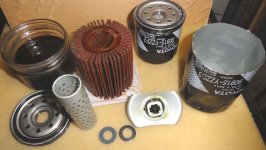
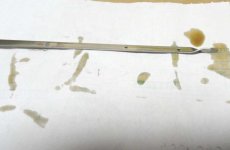
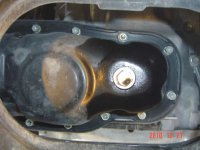
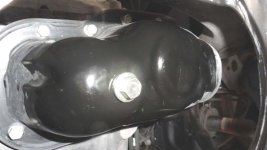
For information and experience regarding Seafoam in the crankcase, please search this site for "Why Seafoam is BAD!!" and read the postings placed on that thread by me.
http://www.toyota-4runner.org/general-discussions/159663-why-seafoam-bad.html
Do you have any pictures of the bearings, inner surfaces of the engine, pick-up tube, and other components such as the cylinderhead and so on? Typically what I see happen is that people try to fix a severely sludged up engine with a product like Seafoam or say BG's EPR and essentially clean the engine too well too fast. I wouldn't say it is the fault of the product itself as BG's EPR says specifically not to use it in severely sludged engines (I'm not sure if Seafoam has updated their packaging.)
If I recall the 5VZ-FE was prone to sludging if not well maintained (though no where near as bad as Toyota's historic 3.0L & 3.3L engines. The problem is these products work very well, I usually use Seafoam to decarbon piston tops or clean up GDI intake ports. Unless you're planning on doing one or more oil changes, filter changes, and possibly dropping the oil pan back to back; you really shouldn't be trying to run something like Seafoam in the crankcase. I ran Seafoam once in the crankcase of my 2UZ-FE after I got it, mostly to make sure I cleaned up the inside a bit before putting in good synthetic oil; it didn't hurt anything really, but I'm not sure how well it helped to be honest. I ran it about 50~100mi before my oil change and haven't had any issues since. But I have seen some horror stories in terms of sludge; most of them are due to poor maintenance practices. I normally don't recommend people use Seafoam as anything more than a fuel treatment, because it does really well in that respect and it's also because sludge is a tricky thing to deal with. I'm not saying don't use it, just be cautious and consider maybe doing more than one oil change and/or check the oil pan/pick-up. Sludge doesn't always show up as thick goo, sometimes its semi-crumbly charcoal like substance that can make this nasty paste.
That being said, at the dealership we're using a similar BG EPR product that is run in the engine for 10~15minutes before draining the oil and changing it. So far we haven't had any issues with it destroying an engine and we've been running it in hundreds of cars regularly for almost a year now.
A while back we had a parts truck Tundra with the 5VZ-FE that had HORRIBLE sludge in it (the filter stud backs off on those engines sometimes when they get high mileage and leaks at the oil filter. The engine had been run with about 1~1.5qts of oil for a month and I'm surprised it didn't seize at all. I told our parts manager that we could try to de-sludge it via EPR, but chances are the engine would probably be toast; she okay'd the use of EPR (against the warning not to use it in a severely sludged engine, per my suggestion as a Hail Mary.) Ran two cans of the stuff for about 30min, drained the oil twice (that stuff looked blacker and as nasty as diesel oil.) Filled it up and was shocked that the oil not only was practically still new after a 10mile test drive up a extremely steep hill behind our dealership (including engine braking as I wanted to load up the engine in case it was on the edge of failing,) but that oil pressure was fine, engine didn't hiccup, and that the vehicle was pretty damn clean under there. Fast forward almost a year and it's still running strong. So to reiterate I used twice the recommended amount, in a severely sludged engine, for twice the recommended length of time, and it did not blow up (the BG EPR is supposed to actually be stronger than Seafoam as it is designed specifically for crankcase cleaning.) Was it a lucky fluke? Most likely, I was expecting the engine to be unsalvagable (with 300k+ and that much sludge, I figured it'd throw a rod or just need to be rebuilt); but it ran okay.
I'm not saying you're wrong, I actually agree that if your engine is severely sludged, simply using Seafoam in the crankcase and then doing a plain oil change may not be a wise decision. I'm just providing a counter point to your experience based on an empirical test I did (to be honest I was itching to really push that EPR stuff to the max for a while because I wasn't sure it really did anything) and the results I got. Sludge is a very tricky condition to deal with in extremely high mileage or neglected engines. I'd think of it as an avalanche waiting to happen. If it's the snow on your roof, not a big deal to let it roll and clean it up (mildly sludged/dirty engines,) it's when it's big enough to swallow the whole house that you may not want to poke it.