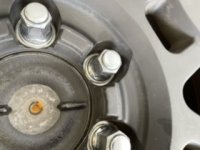
Steering wheel shakes after installing new wheels and tires.

bzizzi

Member
I installed new wheels and tires on my 2020 ORP, went with RRW wheels and TOYO OC AT3 stock size tires. Within 100 miles of installation I noticed steering wheel shaking back and forth likes tires needed balanced, took back to Jack Williams Tire and they road force balanced the tires and said all is ok. Next day no better, I checked tire pressure and all right at 32 psi so I called them and they said bring vehicle back in. I then looked at sidewall of the tire and it said max load at 44 psi so I increased pressure to 38psi and took for a ride. No more steering wheel shake at all at any speed. Wonder why increasing pressure solved the problem ? Sticker in door jamb of vehicle says 32psi, the RRW wheels are 8.5" wide with zero offset and look great. Stock wheels are 7.5" wide.
 
Register to hide this ad
There are about 12,275 different threads on this issue. Give or take 3.

The only way to get a 4Runner’s aftermarket tires n wheels not to shake is to do the following.

Rims must be hub centric. Either the rim must be built that way or you have to use an adapter ring. Preferably built that way. 106.1mm
(Your search results might vary )

Tire balancing. Most tire shops do not know how to properly balance tires for 4runners. When your tires are being setup on the balance machine, the rim must be mounted to the machine HUB and LUG centric. Just the same way it is while mounted on the 4Runner. 99.92% of tire shops just hub center the rim using a cone on back of the rim, spin balance the tire and call it a day. WRONG! It won’t work on a 4Runner.

Watch this video and you will see exactly what I’m talking about.

https://www.youtube.com/watch?v=95-2PnLKVA0&feature=youtu.be

If you have out of round tires or tires with excessive road force you will never get the shake to go away. If the tire store you used doest have a way to balance your new tires the way the video shows, go to one that does.

GOOD LUCK
 
Thank you so much for bringing this to my attention, I’ll ask installer if he uses this method, if not I’ll just take to Toyota dealer.
Here are the specs for wheels I purchased.

Specifications

Size: 17x8.5
Offset 0 / -12
Bolt Pattern: 6x5.5 / 6x139.7
Load Rating: 2500 lbs
Center Bore: 106.1 mm (hub-centric for Toyota trucks)
Backspacing: 0 is 4.75" / -12 is 4.28"
Weight: approx 28 lbs
Compatible with TPMS
 
Last edited:
There are about 12,275 different threads on this issue. Give or take 3.

The only way to get a 4Runner’s aftermarket tires n wheels not to shake is to do the following.

Rims must be hub centric. Either the rim must be built that way or you have to use an adapter ring. Preferably built that way. 106.1mm
(Your search results might vary ����)

Tire balancing. Most tire shops do not know how to properly balance tires for 4runners. When your tires are being setup on the balance machine, the rim must be mounted to the machine HUB and LUG centric. Just the same way it is while mounted on the 4Runner. 99.92% of tire shops just hub center the rim using a cone on back of the rim, spin balance the tire and call it a day. WRONG! It won’t work on a 4Runner.

Watch this video and you will see exactly what I’m talking about.

https://www.youtube.com/watch?v=95-2PnLKVA0&feature=youtu.be

If you have out of round tires or tires with excessive road force you will never get the shake to go away. If the tire store you used doest have a way to balance your new tires the way the video shows, go to one that does.

GOOD LUCK

Nice video and interesting mounting system. What I see (as an Engineer) when I look at it though is a very accurate lug centric mounting system.

The other thought / comment I might have is that as far as I know, it's impossible to have hub and lug centric mounting. You either have one or the other. For instance, if you have a true hub centric wheel, the wheel center bore is centered exactly / tightly on the hub center. No matter what your lug nuts do, it's not going to move off of that location.

Your thoughts?
 
Last edited:
I learned a long time ago to only run hub centric wheels on my Toyota trucks. Hopefully your shake is fixed permanently.
 
Nice video and interesting mounting system. What I see (as an Engineer) when I look at it though is a very accurate lug centric mounting system.

The other thought / comment I might have is that as far as I know, it's impossible to have hub and lug centric mounting. You either have one or the other. For instance, if you have a true hub centric wheel, the wheel center bore is centered exactly / tightly on the hub center. No matter what your lug nuts do, it's not going to move off of that location.

Your thoughts?

Depends on tolerances. If the hub has even a slight allowance of the wheel to move or if uneven pressure by the lugs can cause a minor misalignment on the hub then it throws the balance off at varying speeds.

The lug nuts are acorn type, so they will cause the wheel to move ever so slightly and is why proper torqueing technique is a must.
 
Depends on tolerances. If the hub has even a slight allowance of the wheel to move or if uneven pressure by the lugs can cause a minor misalignment on the hub then it throws the balance off at varying speeds.

The lug nuts are acorn type, so they will cause the wheel to move ever so slightly and is why proper torqueing technique is a must.

I agree with what you said, but if tightening the lugs indeed moves the wheel at all, then it's a lug centric system in my book. (With all of the wonderful problems that come with it.)
 
I agree with what you said, but if tightening the lugs indeed moves the wheel at all, then it's a lug centric system in my book. (With all of the wonderful problems that come with it.)

Yes and no, when you place the wheel or spacers on the hub, they don't sit on the lugs, they are resting on the hub. The lug nuts more so align it on the hub, but if done unevenly it causes a slight tilting around the hub. Different axis of wheel positioning going on...

Or to keep it more simple, hub centric = weight of vehicle sitting on hub vs lug centric = weight of vehicle sitting on lugs.
 
Depends on tolerances. If the hub has even a slight allowance of the wheel to move or if uneven pressure by the lugs can cause a minor misalignment on the hub then it throws the balance off at varying speeds.

The lug nuts are acorn type, so they will cause the wheel to move ever so slightly and is why proper torqueing technique is a must.

I haven’t had any acorn nuts on my 2014 or my 2021 T4Rs. There is a flat retained washer on my lug nuts to match the flat surface on the wheels.
These wheels are hub centric only.
They will not move on the hub, but always torquing sequence is a must!
 

Attachments

  • 7B74B60D-C1A8-4FE2-965B-E3B800005B89.jpeg
    7B74B60D-C1A8-4FE2-965B-E3B800005B89.jpeg
    26 KB · Views: 1,499
I haven’t had any acorn nuts on my 2014 or my 2021 T4Rs. There is a flat retained washer on my lug nuts to match the flat surface on the wheels.
These wheels are hub centric only.
They will not move on the hub, but always torquing sequence is a must!

Gotcha, depends on wheel type, my KMC's require conical lug nuts.

But again, the lug nuts just align the wheel around the hub, and the hub is still supporting the weight of the vehicle.
 
OEM wheels are hubcentric only. The oem lug nuts do not center the wheel in addition to the hub seating. The lug nut holes have significant tolerance compared to the hub. The machining is precise enough that aftermarket wheels can use them for centering the wheel.

The vertical load of the wheel is carried by the friction between the wheel and the wheel mount surface. That's true for most vehicle wheels. Nether the hub not the lugs nuts carries any load under normal circumstances. The function of them is to center the wheel and to apply clamping force between the wheel and mounting surface.
 
OP, it been my experience that under inflated tires can cause the steering wheel to shake or make an existing one worse, even if it’s just a few pounds. Though your new tires are the same as your old ones, they may be a different load range. I suggest you look up the load inflation table and adjust accordingly. For example, my current tires are OE size, but XL(116) load range. They need to be inflated to 36 psi instead of 32.
 
Then you change out P rated tires for LT or non P rated tires, the load rating is different so you can throw the placard on the door column out the window as far as this psi inflation guidelines.
Personally I run 44 psi in my BFG All-Terrain T/A KO2 to meet my load needs.
 
I installed new wheels and tires on my 2020 ORP, went with RRW wheels and TOYO OC AT3 stock size tires. Within 100 miles of installation I noticed steering wheel shaking back and forth likes tires needed balanced, took back to Jack Williams Tire and they road force balanced the tires and said all is ok. Next day no better, I checked tire pressure and all right at 32 psi so I called them and they said bring vehicle back in. I then looked at sidewall of the tire and it said max load at 44 psi so I increased pressure to 38psi and took for a ride. No more steering wheel shake at all at any speed. Wonder why increasing pressure solved the problem ? Sticker in door jamb of vehicle says 32psi, the RRW wheels are 8.5" wide with zero offset and look great. Stock wheels are 7.5" wide.

Over inflating your tires just masks the tire problem. When my stock Dunlops were over inflated to 55 psi from the dealer, they never vibrated. I dropped the pressure down to 32 PSI and massive vibration ensued. The tires were ruled as defective because they had too much road force. Road force is a combination of out of roundness and hardness.
 
Then you change out P rated tires for LT or non P rated tires, the load rating is different so you can throw the placard on the door column out the window as far as this psi inflation guidelines.
Personally I run 44 psi in my BFG All-Terrain T/A KO2 to meet my load needs.

This. If you went with E-loads then your pressure needs to go up to around 44. There's a link on multiple threads here that explains/does the correct psi for changing load and/or size.
 
Last edited:
This forum is awesome ! So much helpful information, my 20 ORP is going to Toyota dealer tomorrow for inspection, Toyota care service and a correct wheel balance using the correct method described in this thread from first reply. Dealer is familiar with this issue and has a remedy.
 
Toyota trucks are just sensitive to wheel balance. The only way I've been able to reliably get rid of steering wheel shimmy is to have the tires RoadForce balanced and ask the tech what the RoadForce numbers are on each tire. These numbers describe how out of round the tire is. Less than 10 is good, 10-20 is ok, over 20 is garbage. If you just bought the tire and its over 20, I'd ask them to remount it, to see if that helps. If it doesn't help, ask for a new tire. Once you've got your Roadforce numbers for each tire, request that the lowest numbers go on the front and the highest numbers go in the rear. Now the only time I get a bit of shimmy is in the mornings when the tire has been sitting on the same spot and is cold. It goes away as soon as the tire warms up.
 
55 psig? lol, that’s higher than the tire is rated at, right?

55 PSI is the right at the max limit for the tire. The Toyota factory over inflates the tires so they won't get flat spotted during transit. Dealers are supposed to lower the pressure back to 32 PSI during PDI but most never do. Many people on this forum have complained they found their tires at 55 PSI.
 

Members online

Forum statistics

Threads
278,317
Messages
3,554,129
Members
248,016
Latest member
Advally Service

Trending content

Back
Top