Thermoelectric cooler ... opinions?

Register to hide this ad
I'm thinking of picking one of these up: Amazon.com: Coleman 40 qt TE Cooler with Power CD Cold: Sports & Outdoors

Any experience/opinions on this? If not, other models of thermoelectric coolers, or thermoelectric coolers in general?

Thanks!

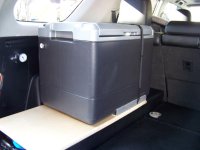
I'm running one :

100_4131_zps2da8bd6e.jpg


First of all- check Craigslist before you drop $100 on one. I scored mine for $40 and it was basically brand new.

I have used mine a lot over this summer! Does it work? Well- yes- but it is NOT a fridge. I have packed several lunches in mine for family day trips and it has worked great. When it's really hot 85+ I throw a couple of the Coleman blue ice blocks in there and it will keep them solid all day, and the cooler nice and cold.

These units draw a lot of power. Running it overnight will absolutely kill your stock battery- my much much bigger battery can handle overnights with the cooler and still have juice to start the truck.

Here's my take on it- If you want something to keep food cold on trips, etc it will work great. If you want more- buy a fridge. I definitely would have a fridge back there right now if I had the money to blow.

The big test will be camping this October- it should be running nonstop for almost 4 days...
 

Attachments

  • 100_4131_zps2da8bd6e.jpg
    100_4131_zps2da8bd6e.jpg
    62.1 KB · Views: 1,505
I have a 12v Coleman T/E cooler that I sometimes use on long road trips, and I have a T/E dorm room size mini fridge I used when I was driving OTR. We use the mini fridge in our crew house on the oil rig for cooling down soda and fruit drinks. They will cool down to about 40 - 50 degrees reasonably well. If you use ice in them they will keep that frozen longer. But honestly for the price they really aren't that much of a gain over a decent regular cooler with ice or cold packs in it. And in a hot environment they are really taxed to stay cool. And if you don't start one with something cold in it it can take several hours to get down to a cool temperature. So you would need to plug it in the night before you load it up if you need it cold when you're ready.

Don't get me wrong. I like mine. It's just that most of the time I just use a regular cooler and a bag of ice for a weekend trip instead of worrying about how to keep power going to one of these.
 
I have one. It works great when you add ice packs first. Draws a LOT of power. Will melt a 12V socket in a hot car, on a hot day.
 
Yep, ditto one the Coleman. I've had mine for about 6 months and have used it a handful of times. Keeps beer and other camping stuff at the right temp. My only concers: the a/c adaptor pack gets quite warm when plugged into a 120v socket, and it does use a fair amount of power on 12v as well; I managed to drain my battery in 6 hours or so.
 
I have a Coleman, although it's slightly smaller, has been really nice for day trips. Keeps things cold but outside temps were never to hot. I got mine from Costco and it came with the cord to plug into AC outlet allowing precooling. Honestly though I'm usually taking stuff right from the house fridge and tossing in so it's already cold. I was in for less then $100 far more aligned with my needs versus a real fridge.
 
Thanks for the feedback folks.

Antman .. thank you for the picture too as it gives me a visual of how that exact model fits in the back.

I'll keep my eye out on craigslist ... as the need is not imminent.
 
I have a 12v Coleman T/E cooler that I sometimes use on long road trips, and I have a T/E dorm room size mini fridge I used when I was driving OTR. We use the mini fridge in our crew house on the oil rig for cooling down soda and fruit drinks. They will cool down to about 40 - 50 degrees reasonably well. If you use ice in them they will keep that frozen longer. But honestly for the price they really aren't that much of a gain over a decent regular cooler with ice or cold packs in it. And in a hot environment they are really taxed to stay cool. And if you don't start one with something cold in it it can take several hours to get down to a cool temperature. So you would need to plug it in the night before you load it up if you need it cold when you're ready.

Don't get me wrong. I like mine. It's just that most of the time I just use a regular cooler and a bag of ice for a weekend trip instead of worrying about how to keep power going to one of these.

How did you like the mini fridge on the road, and how do you think it may work in the Runner? I hadn't thought about using one until I read your post, and I can pick one up on Craigslist all day long for $50. I guess the space they take up, securing it, and the power needed would be the biggest issues? An actually vehicle fridge is not in my budget right now, and I'd like something a little stouter than a cooler sometimes.
[MENTION=43686]diego[/MENTION], sorry for hijacking your thread.
 
How did you like the mini fridge on the road, and how do you think it may work in the Runner? I hadn't thought about using one until I read your post, and I can pick one up on Craigslist all day long for $50. I guess the space they take up, securing it, and the power needed would be the biggest issues? An actually vehicle fridge is not in my budget right now, and I'd like something a little stouter than a cooler sometimes.

It worked fine for keeping drinks and lunch meat cool. But mine in particular would probably have too large a footprint to be usable in a 4R. It's almost 2' wide and deep, and you have to allow a couple inches of space around the sides and back for airflow or it just plain will not cool. I don't think even AC power would be a problem because they just use a small circuit board and circulating fan, aside from the obvious problem with battery drain if the vehicle is not running. I do think the Coleman cooler is just as efficient as that mini fridge. Same concept, different package. The mini fridge was just more convenient for the more open space and APU provided in the semi I was driving.
 
As many of you know here I am sort of a "minimalist" when it comes to doing things. I have worked on so many complex designs and prototypes over the years that now, anytime I can make something simple, I do it. It just boggles my mind sometimes that people, either professionally or socially (like you guys) want to either A) Spend $100 to save $5 or B) Increase complexity and decrease reliability and durability by changing a perfectly functioning device!

Now, why am I posting something like this in a simple "cooler" thread? Glad you asked lol. I used to camp quite a lot back in the day for several days at a time. What I learned about keeping things cool back then we still use today. This is the "simple" way because:

1. Plug in coolers or portable refrigerators are not really portable. They go from garage to vehicle and stay there. What if you need your cooler, oh, say 1/4 mile from where you parked? What if that 1/4 mile is tough terrain?

2. These devices have moving parts. Even though I am an engineer I realize the fallacy of moving parts in certain applications. Less moving parts the better when keeping it simple.

3. Power. These plug in coolers require power. Yes, you can go out and spend several hundred dollars on a dual battery setup, generator or some solar sail but why?

4. My favorite: The probability to malfunction increases exponentially with each additional component!

We recently went to Florida for five days. We did not camp but did go to the beach a few days and now that its just the wife and me we will stop at scenic areas when traveling and have a "picnic" instead of eating out all the time. So, we packed the cooler with milk, lunch meat, cheeses, melon slices, etc and were off! When we returned on the sixth day we still had some of the original ice we had when we started. No block ice, no dry ice, just regular bagged ice and we didn't buy any extra ice. Here is what I do and its nothing special:

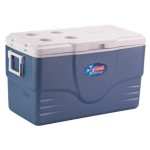
1. Get a Coleman 5 day cooler.
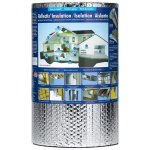
2. Get a material called Reflectix (cheap and available at Lowes)
3. Get a smaller cooler.
4. Get a few short 2X4's
That's all.

The 5 day cooler won't keep ice much longer than three days in it's stock form, so you need to modify it a bit. Go to Lowe's and get a roll of Reflectix. A pic is posted below. Once you get it, line your cooler with it. It is basically foil lined bubble wrap and I just used a few pieces of double sided tape to hold the pieces in place. This helps to keep your cooler cool by a lot!
The 2X4's are used to keep the bottom of the cooler off the vehicle floor and let air circulate under it. The small cooler is used to pack a day's worth of cold items, so you only have to open the big cooler once or twice a day, instead of every 20 minutes or so.

If you bought all this stuff new you are looking at about $80. Chances are you already have a smaller cooler of some type so you will probably only need the Reflectix and a decent new Coleman 5 day cooler, which can be had for around $40. I don't know about you but in six days we can eat all the food in a normal cooler so you have to somewhere to re-provision anyway! So there is my way. A simple, cheap method of keeping things cool for up to six days using no power or moving parts. Hopefully this will help some of you that don't want a powered cooler. Pics below:
 

Attachments

  • 10885772.jpg
    10885772.jpg
    18.2 KB · Views: 922
  • 716511516014.jpg
    716511516014.jpg
    128.2 KB · Views: 859
As a boater, I use coolers a lot. Agree with [MENTION=66316]1engineer[/MENTION] on KISS. Interesting idea on the insulation Greg.

Couple other small points that help the KISS system; always refrigerate stuff before packing it, freeze your plastic bottles of drinking water, and keep the cooler covered with something, a sleeping bag, blankets, etc.

A little more effort, but 3/4-filled frozen quart plastic milk jugs last much longer than ice cubes. (Leave the caps off).
 
Last edited:
Me three, I get several days out of a cooler by using much the same techniques, and I don't need a 12v fridge. But you know what? Damn if I don't envy the guys I camp with who don't have to go to all that effort to keep their beer cold.
 
As a boater, I use coolers a lot. Agree with [MENTION=66316]1engineer[/MENTION] on KISS. Interesting idea on the insulation Greg.

Couple other small points that help the KISS system; always refrigerate stuff before packing it, freeze your plastic bottles of drinking water, and keep the cooler covered with something, a sleeping bag, blankets, etc.

A little more effort, but 3/4-filled quart plastic milk jugs last much longer than ice cubes. (Leave the caps off).

I wouldn't do it if it didn't work and was measurably better...
 
Bringing this over from another thread:

Other things you can do to maximize your ice - 1) Precool the cooler. Throw a sacrificial bag of ice in there the night before you leave. A huge amount of icemelt happens in the first several hours as your ice brings the cooler down to temp. The sacrificial bag of ice will buy you an extra day of ice in the field. 2) Dry ice in the bottom of the prefrozen cooler, then bagged ice over that. The dry ice will keep the tempurature lower, and as the bagged ice melts anyway the meltwater will be refrozen by the dry ice. The dry ice won't last the entire trip, but it'll definitely extend the life of the bagged ice. 3) As mentioned, freeze everything you can beforehand. Frozen food will keep longer (and keep your ice longer) than unfrozen food. 4) If you have any empty space in the cooler at the start of the trip, fill it with frozen bottled water. 5) Keep the cooler shut and in the shade. Don't keep your drinks in the cooler or it'll be open all the time - consider one of those 12v thermoelectric cooler thingies to keep drinks cool, or leave them in the creek if you have running water nearby. If the only time you open the cooler is to get meals out and then close it immediately, you'll near double the lifespan of your ice. Keeping it in the shade is critical too, and if you're really feeling jiggy, wrap the cooler in a thermal blanket or shiny tarp. With the above techniques, I can make 2 bags of ice and a small chunk of dry ice last six days in a $50 coleman cooler.

Greg, I wrap my reflective insulation around the outside of the cooler. You make it sound like you're putting the Reflectix on the inside of the cooler?
 
Here's a question I have, that maybe one of you so-called engineers (:D) can help me out with - drain the icewater or leave it in the cooler? I've debated this with several guys and there's two main camps. One side says to leave it in there because it's already cold and the thermal mass keeps the cooler colder longer, the other side says to drain it because it's warmer than the ice by definition and thermally conductive and will make the ice melt faster.

What say the smart fellows of T4R.org? Leave the meltwater or drain it frequently?
 
Bringing this over from another thread:


Greg, I wrap my reflective insulation around the outside of the cooler. You make it sound like you're putting the Reflectix on the inside of the cooler?

I do.
Zeroth law of thermodynamics: If two systems are in thermal equilibrium separately, with a third system, they must be in thermal equilibrium with each other. This law helps define the notion of temperature.

I line my coolers with this material for thermal properties more so than reflective properties. This product adds two things in a cooler: An "air gap" that is cooled and the metal foil which is an insulator. This keeps the ambient temperature in the cooler from transferring to the plastic case so much. Works better than doing the outside.
 
Here's a question I have, that maybe one of you so-called engineers (:D) can help me out with - drain the icewater or leave it in the cooler? I've debated this with several guys and there's two main camps. One side says to leave it in there because it's already cold and the thermal mass keeps the cooler colder longer, the other side says to drain it because it's warmer than the ice by definition and thermally conductive and will make the ice melt faster.

What say the smart fellows of T4R.org? Leave the meltwater or drain it frequently?

Drain it. You are trying to cool the air, which in turn cools the solid food or drinks. Leaving the water in there is just another heat sink for the ice.
 
+1 for minimalism & Greg's comments.

A variation, though...
Wouldn't it also help to have Reflectix cover the cooler, so radiant heat and the sun from outside would not even touch the cooler body?

+ I freeze my water bottles, so the ice aids the cooler and should become cold/ ice-cold/cool water in a couple of days. (On a dayhike, I also freeze a plastic soda bottle and stick in my backpack so I have an ice-cold Coca-Cola at the summit - heh-heh)

Oh heck, I prefer my Stout room-temp, anyway - LOL!
 

Members online

Forum statistics

Threads
278,310
Messages
3,554,077
Members
248,016
Latest member
Advally Service

Trending content

Back
Top