They reduced the GVW spec.

GrantK

New member
I just noticed a little yellow sticker on my door frame that is almost impossible to read telling me that the GVW has been reduced from the advertised spec by get this.... a whopping 9 lbs!!!!

I guess they had to put the sticker on based on some legal requirement but come on, isn't GVW just calculated to start with. :redbrick:
 
Register to hide this ad
Yes, but it is based on certain options from the factory. If you got a different or additional options that added weight, hence the adjustment. For example, my rig originally had cloth non power seats. SE Toyota swapped out the seats for power leather. More weight. SE also added running boards, and a sound deadening package. More weight. I forgot now what the difference was, but I too had a yellow sticker. It was over 100 lbs difference.

Be safe.
 
What mods have you done? This is weird - phillyd had this happen to him too over on his thread....I should see if they've messed with mine.
 
Oh, I just assumed that it was due to my Gobi since it says Due to Modifications....... or are we talking about another sticker ???
 
Same as the one you posted in your build thread. Must be done when they add the port-of-entry options.
 
Can't wait. If I take mine in, they will ADD weight.

Holes in bumper- check
Holes in dash- check
Half the rockers gone- check
Emblems removed- check......
 
Yes, but it is based on certain options from the factory. If you got a different or additional options that added weight, hence the adjustment. For example, my rig originally had cloth non power seats. SE Toyota swapped out the seats for power leather. More weight. SE also added running boards, and a sound deadening package. More weight. I forgot now what the difference was, but I too had a yellow sticker. It was over 100 lbs difference.

Be safe.

Not exactly accurate. What you are describing is curb weight. The gvw is the max weight of the vehicle including cargo, passengers, etc. the gvw is based on frame, suspension, tire strength, etc with oem parts. If they changed out any components between spec releases and date of manufacture they are obligated to add the sticker to inform the driver/owner.

On most of our rig this gvw is just a base number anyway due to having upgraded our suspension and tires. When you change out components this effects the gvw but unless you have a masters in automotive engineering I doubt you could calculate it. Too many variables.
 
Ok, I may be wrong, but here is my understanding. You are right, Curb weight is the weight of the vehicle, with all the necessary fluids. But it is an important number when trying to understand Gross Vehicle Weight Rating.

This is my understanding of GVWR (from the net)

" A gross vehicle weight rating (GVWR) is the maximum weight value of a vehicle as specified by the manufacturer. The GVWR includes, but is not necessarily limited to, the total of the weights of a vehicle's chassis, body, engine, engine fluids, fuel, accessories, driver, passengers and cargo.

Now, the yellow sticker the OP mentions, I think, refers to the GVWR.(even though he said GVW) If that is the case, any options or changes (probably done at the port, as in my case which I referred too in my example) which increases weight, reduces the amount of passenger and cargo weight one can add, according to the manufacturer. This then, reduces the GVWR. (Which is what my sticker stated....)

As I understand it, if a vehicle comes from the factory with a curb weight of 5K, but a GVWR of 7K, it can hold 1 ton of people and cargo. However, if certain options (non suspension, frame, tires, brakes etc) are added, and those options add weight, lets say 200lbs, now the curb weight is 5200lbs, but the GVWR will only be 9800 lbs. (Additional 1800lbs of people and cargo).

As stated above, if changes are made to tires, brakes, frame etc....enough to effect the incomprehensible formula (incomprehesible to all except of the brilliant engineers on this forum), then you might still be able to achieve the original 1 ton payload results.

My understanding is that just by increasing the load capabilities of the tires will allow a substantial increase in GVWR.....at least that is what I was told.

So, if the OP's sticker really stated a "REDUCTION" in the Gross vehicle Weight, then he should be able to "INCREASE" the weight of people and cargo by 9 lbs. (GVWR) Time to go to Dairy Queen!

Be Safe.

 
Last edited:
The gvwr doesn't change from non load bearing options i.e. leather, power seats, etc. Only the curb weight changes.

7k gvwr -
5k curb weight=
2000lb payload

Add 200 lbs of options and the payload drops to 1800lb but the gvwr is still 7k.

Gvwr doesn't change unless susp, tires, frame strength are upgraded.
 
Reviving this thread a bit as it's the most relevant thread I can find to ask this (possibly stupid) question.

1. Should I be concerned about hitting or going beyond the GVWR in my build?
2. IF answer to 1 is yes, how does everyone stay below the GVWR with all the extra weight of bumpers, fridges, etc.? Is it LT or higher rated tires that'll do the trick?

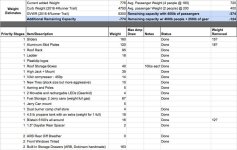
I've got my build plans in a sheet where I calculate my additional weight and with a few passengers, gear and water I'll be over GVWR very soon without the addition of a heavy duty front or rear bumper.

Any thoughts or recommendations would be appreciated!
 

Attachments

  • 4r_build_weight_calcs.jpg
    4r_build_weight_calcs.jpg
    107.4 KB · Views: 736
Last edited:
Reviving this thread a bit as it's the most relevant thread I can find to ask this (possibly stupid) question.

1. Should I be concerned about hitting or going beyond the GVWR in my build?
2. IF answer to 1 is yes, how does everyone stay below the GVWR with all the extra weight of bumpers, fridges, etc.? Is it LT or higher rated tires that'll do the trick?

I've got my build plans in a sheet where I calculate my additional weight and with a few passengers, gear and water I'll be over GVWR very soon without the addition of a heavy duty front or rear bumper.

Most modified 4runners go WAY over the GVWR. There are a lot of factors that are used to determine the GVWR. The factors that you can change that will improve weight capacity are spring rates/shocks and tires, and possibly differential gear ratios if you need to.
 
Yep - I have one of those 'adjusted' stickers on mine - due to port added options - have not looked at it in years now but believe it was around 42lbs.
 
Asking the hard questions.

Reviving this thread a bit as it's the most relevant thread I can find to ask this (possibly stupid) question.

1. Should I be concerned about hitting or going beyond the GVWR in my build?
2. IF answer to 1 is yes, how does everyone stay below the GVWR with all the extra weight of bumpers, fridges, etc.? Is it LT or higher rated tires that'll do the trick?

I've got my build plans in a sheet where I calculate my additional weight and with a few passengers, gear and water I'll be over GVWR very soon without the addition of a heavy duty front or rear bumper.

Any thoughts or recommendations would be appreciated!

No easy way to know. The GVWR is based on safety handling first and foremost so changes in ride height, suspension, brakes and balance all affect it. The folks saying that GVWR doesn't change are mistaken. GVWR changes based on how they expect the vehicle to handle. Outside of that your load out is actually based on your shock/spring and tire ratings. If the vehicle has drastic sag or bad sway at hwy speeds you are overloaded. You would have to get crazy spring/shock setups before you were risking frame damage. The exception to this is tongue weight since it is a point load.
The easy way to think about this is to consider how Toyota considered worst case load. the roof "limit" is assumed by auto manufacturers to be 160 lbs. and they estimate that at a height of about 8" above the highest point of the roof or rack. Outside of that they run some interior weighting that's pretty back heavy and high. Then they calculate if the "moose test" will send you spinning or rolling off the road.
Tires are a different animal. The load weight of each tire should be at more than 50% of the heaviest you will make your vehicle weigh. Better than that if you are going to abuse them offroad.
 

Members online

Forum statistics

Threads
278,312
Messages
3,554,083
Members
248,016
Latest member
Advally Service

Trending content

Back
Top