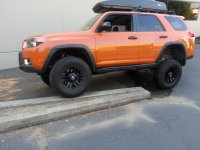
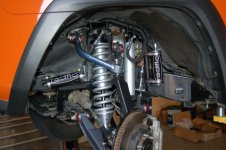
There is no absolute requirement for UCAs with a 3" lift..
However, you won't get "ideal" alignment in terms of caster without them. It's fine to try it and see how you like it. It's often not bad at all.
The reason for the aftermarket UCAs relates back to suspension geometry. The stock UCAs position the upper ball in the ideal position for stock ride height. The suspension does not allow the tires to move vertically in straight lines.. It moves in arcs.. The arcs are designed for handling... As you come into turn, the outside suspension is compressed...You want that to produce some negative camber to help with the turn and tire contact.
As the vehicles ride height is raised, the Lower Control Arm(LCA) ball moves down and arcs inboard. This creates postive camber. To counteract the odd handling and tire wear that positive camber produces... The cam bolts on the LCA need to be adjusted to push the lower ball out. Unfortunately this limits how far forward the lower ball can be positioned at the same time (resulting in less + caster potential). Low + caster can make the steering feel light and twitchy.
Best way for me to describe it is to relate it back to a bike. I do a lot of mountain biking, so it makes perfect sense to me (might not work for others). Bikes with slack head angles (mid to low 60*...) have high + caster and want to go straight and are very stable at speed. Downhill oriented bikes are very slack like this... Very steep angle bikes (73+ *) like XC bikes, have light twitch steering. Both can still go straight... but you have to fight the XC bike at high speed in rough terrain. The downhill bike is harder to turn at speed... but that is exactly what you want when flying down the mountain. The XC bikes shines in tight twisty single track terrain that does not induce so much speed.