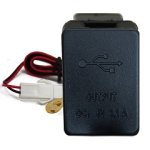
A charger can't push more than a device can accept, so a 3.1A port won't be faster than a 1 or 2A port for most devices.
Also, because of USB standards, there has to be some rudimentary communication between the port and the device before the device will draw as much power as it can. Usually it's just a couple resistors on the data wires in the charging port that let the device know how much current it can pull. You could have a port capable of supplying 10A, but if it's not configured correctly your devices will charge at a very slow default rate, 0.1-0.2A.
There are some setups that allow faster charging when the device and charger are both compatible, for example, Quick Charge 2.0. If your device(s) support that you will get best results with a charge that also supports it. With that I think there is more intelligence in the charger.
I think the best solution is to install an extra 12V outlet if you don't have enough, then get something that plugs into that that works with the latest charging standards. They are changing on an ongoing basis, so in a year or two the newest devices might charge faster with something else.
For example, here's a 12V charger that seems to be good quality for most devices.
Robot Check
If you need Quick Charge 2.0, you'll want to get something like this:
http://www.amazon.com/Charge-Anker-...=1453932956&sr=8-7&keywords=anker+car+charger
I think QC 3.0 is also a thing.
USB C is probably the next standard, and it allows higher charging current. USB C devices might charge faster with a new charger than with anything you can buy today.
Apple, of course, only uses standards if it's convenient for them.