rdgt4r
New member
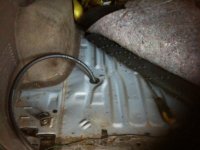
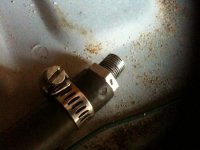
If you know how to properly drive in a water crossing (See Bow Wave above), there should be no need to extend the breaters on your t-case and front diff. The purpose the breathers serve is to create a time lapse between when your diffs hit the water and start cooling down to when your breather gets dunked. When your t-case or diffs cool rapidly, such as in a water crossing, the breathers suck in air to equalize the internal pressure. If you go slowly into the water, your diffs will be equalized before the breather is under water. The rear diff breather is on the axle housing and needs to be moved if you plan on any significant water crossings.
As rdgt4r noted above, the bow wave is your friend. I have seen too many people freak out during crossings and speed up, only to have one of the following things happen: A. Hydro-Lock the engine, B. Destroy a diff or t-case due to water ingress, C. Break the fan blades in the engine compartment.
These things are all bad, m-kay.
I can always tell how experienced for knowledgeable a person is by how they approach a water crossing. The folks that make the huge splashes at 40 mph deserve whatever mechanical problems they create.
The people who take time to investigate currents and depth, approach slowly, and maintain thier bow wave rarely get stuck and usually come out the other side none the worse for wear.
Advice. Proceed slowly through a water crossing. Do not shift while the transmission is submerged. Keep it in L or 1st gear. You should find the perfect speed that keeps the wave just in front of your front bumper, which will create a trough behind it that will reduce the water level in your engine compartment and will help propel your vehicle along slowly through the water, so if you bog down a little, the force behind the wave might give you just enough push so you don't get stuck.
The problem I have is my 4Runner is too water tight. I have been through crossings where no water leaked in and at around 4 feet deep, the rear end felt like it was trying to float. Water coming in means your truck doesn't float away. If you are worried about getting water in your ride, don't cross a river. The tops of the wheels is generally accepted as the safe wading level for most vehicles. Going in deeper will require modification and preparation.
Hope this helps.
Very nice elaboration sir! =)