Winch Fused Circuit Breaker Option?

lockedlex

Member
I was just thinking. Right now my Warn Winch is connected directly to the +- of the battery. So technically it's always "on."

Kind of realized it's a bit scary that that's the case. What happens if there's a controller module issue or say I'm using it and something shorts inside.

In looking at the specs, it says it runs a max amps of 396. I was wondering if anyone has installed a manual bypass for the main leads so I can just kill it in case of issues?

I was thinking of something like this inline with the +:

Amazon.com
 
Register to hide this ad
I have a 500A isolator relay next to the battery, so I have to hit a switch to power the winch circuit before using the winch.

No fuse or circuit breaker between the battery and the relay, or between the relay or winch, though.
 
What does that look like? I'm just worried that a relay could burn out (when I need it the most), but equally worried about having a winch live 24/7.

I might be overthinking this though. But I just pulled out all the wiring of my truck for all my mods and ran it through silicon wires that were correctly gauged and then a bunch of bluesea fuse boxes and a properly relayed separate ACC fuse boxes. Then labeled the whole thing, then am updating a wiring diagram for it, eek.

I figure while I'm still in the mood, this would be a good time to address something a bit safer for the winch.
 
What does that look like? I'm just worried that a relay could burn out (when I need it the most), but equally worried about having a winch live 24/7.

I might be overthinking this though. But I just pulled out all the wiring of my truck for all my mods and ran it through silicon wires that were correctly gauged and then a bunch of bluesea fuse boxes and a properly relayed separate ACC fuse boxes. Then labeled the whole thing, then am updating a wiring diagram for it, eek.

I figure while I'm still in the mood, this would be a good time to address something a bit safer for the winch.

An underhood switch is probably the simplest, most reliable option. My only worry is what happens when you need to recover, and the hood won't open for some reason? Maybe it's pinned against a tree? Or at a bad angle and you cant raise it up enough?

I plan to run an underhood switch, and just turn it on as part of my pre-ride check and air down sequence. That way I have the peace of mind that my winch is not going to drain the battery sitting at home, or worst case short out in a crash and cause a fire.
 
An underhood switch is probably the simplest, most reliable option. My only worry is what happens when you need to recover, and the hood won't open for some reason? Maybe it's pinned against a tree? Or at a bad angle and you cant raise it up enough?

I plan to run an underhood switch, and just turn it on as part of my pre-ride check and air down sequence. That way I have the peace of mind that my winch is not going to drain the battery sitting at home, or worst case short out in a crash and cause a fire.

OK, I went ahead and ordered a bluesea Switch. Also, that's a good idea, turn it on as part of my precheck process.

It's been installed for 3 years w/o any issues and I don't mind it being "LIVE" when I'm wheeling, but just realized maybe no reason to have it on all the time. (I also prefer to leave the hood open when winching, just in case, but you bring up a good point in case I can't open it for some reason, it will at least already be on in case I need it).
 
Had a bluesea switch that didn't last long under my hood (FYI I did water crossing so many that had something to do with said) but it was not for my winch. Warn calls for the winch to be hard wired, if u run ur wires right u shouldn't have and issue IMO and if something happens that does enough damage to ur vehicle to short the wire, its probably the last thing on ur mind, but I did have the same thought when mounting my first winch. If I was going to running something it would be this:
20231214_1156066.jpg
 

Attachments

  • 20231214_1156066.jpg
    20231214_1156066.jpg
    87.4 KB · Views: 317
Had a bluesea switch that didn't last long under my hood (FYI I did water crossing so many that had something to do with said) but it was not for my winch. Warn calls for the winch to be hard wired, if u run ur wires right u shouldn't have and issue IMO and if something happens that does enough damage to ur vehicle to short the wire, its probably the last thing on ur mind, but I did have the same thought when mounting my first winch. If I was going to running something it would be this:

Funny you mention that, I was looking at some recent reviews in the past 3 years or so, I think, and several users mentioned how the Bluesea switch sort of just disintegrated. That's really disappointing for BlueSea product.

I already received it, but will think about it. I like that it is a breaker type switch though and can withstand hundreds of amps, but am not happy if it cracks when needed, or cracks and shorts. I'll do a bit more research, see if maybe they improved it. But your experience with it doesn't seem isolated.
 
What does that look like? I'm just worried that a relay could burn out (when I need it the most), but equally worried about having a winch live 24/7.


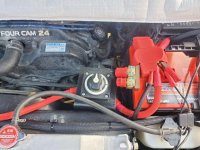
It's a little silver can. I have it attached in a little space between the battery and inner fender (hard to see) , hooked to a regular switch inside. Actually, instead of just the winch, it's the whole 'house' circuit, I have a heavy wire going to the rear as well as up to the winch. So the lights, the compressor, and the winch all run on this circuit. And Anderson connectors front and rear that fit jumper cables I have. Turn that switch off, the whole house circuit goes dead. It's a 2 battery setup as well, yellowtop Optima runs the house circuit, and a little Braille/Deka battery as the start battery. (The fridge is wired directly to the house battery to reduce the relay current draw because the fridge needs to be powered 24/7).

I've used the winch multiple times with no issues. Warn Zeon 8S.
 
Last edited:
It's a little silver can. I have it attached in a little space between the battery and inner fender (hard to see) , hooked to a regular switch inside. Actually, instead of just the winch, it's the whole 'house' circuit, I have a heavy wire going to the rear as well as up to the winch. So the lights, the compressor, and the winch all run on this circuit. And Anderson connectors front and rear that fit jumper cables I have. Turn that switch off, the whole house circuit goes dead. It's a 2 battery setup as well, yellowtop Optima runs the house circuit, and a little Braille/Deka battery as the start battery. (The fridge is wired directly to the house battery to reduce the relay current draw because the fridge needs to be powered 24/7).

I've used the winch multiple times with no issues. Warn Zeon 8S.
Do you happen to have a picture of this? I got the Warn winch disconnect relay kit and was wondering where to mount it. Seems like where you mounted it might be the best spot.
 
Don't run a breaker under the hood. They rely on tempature to trip and underhood Temps can cause premature tripage. Not to mention I don't think any reputable company make that high of amperage breaker. I run a blue sea m6006 switch under hood. Unfortunately switches of these ratings are not a life long item. They are considered a "wear" item and need replacing over time/usage. I mounted mine on my fan shroud next to the battery.

Was going to run a high current starter relay, but due to reliability concerns with keeping the coil activated for hours has lead me away from running one, not to mention added points of failure. Just my .02 cents worth of info.

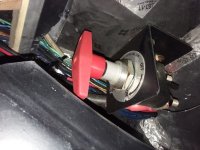
Here is my switch, 1/4 abs plastic bent 90 degrees.
 

Attachments

  • 20240419_153538_7ylLIgxY9E.jpg
    20240419_153538_7ylLIgxY9E.jpg
    138.2 KB · Views: 173
Was going to run a high current starter relay, but due to reliability concerns with keeping the coil activated for hours has lead me away from running one, not to mention added points of failure. Just my .02 cents worth of info.
I don't understand. The relay won't be energized unless the starter is actually running. Spinning the engine. We're talking a few seconds at a time during the starting of the engine. After that, there's no current flowing through the coil, no heat generated.

Same with a winch relay. It'll energize while the winch turns. Yes, the coil will have current flowing, but that's what it's designed for. It's the high current contacts that will get warm while the winch is actually spinning. One way of the other. Then, when the winch stops, they'll start cooling down. Presuming it's a properly rated relay, or breaker, the contacts will get warm, maybe even hot, but they should be able to handle the heat. Presuming the winch draws the correct current that it's rated for, and little or no more.

Anywho, have fun!
Pat☺
 
Ever-so-slight sidetrack (a forum classic) but as I'm seeing all the
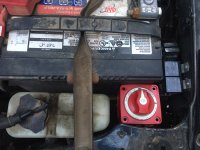
different mounting spots, would the attached be considered acceptable?

It's a snug fit, so I wanted some input on it being too much in the
"blast zone" as far as collision/impact is concerned. I really want to keep
the battery-side cable as short as possible, but still maintain easy access.
 

Attachments

  • mmm.jpg
    mmm.jpg
    116.4 KB · Views: 163
I don't understand.

I was referring to using a starter solenoid (high current solenoid/relay type battery disconnect) as the main cut off for the winch, not the winch control solenoid that is only on for a few seconds. It needs to be kept on for an extended period of time. Relay/solenoid coils have a varnish for anti shorting on the coil wire, excessive heat melts that causing the coil to short out. Relay coils generate heat, the larger the plunger the more current it takes to hold it down, thus can only be used for short periods of time. Yes I agree, the contacts wear out quickly on a high amp solenoid. Hope this helps explaining it a bit more.
[MENTION=93300]GhostRing[/MENTION] I was going to run mine there too, but it ended up being just to tight of a space with what I have. But if it works for you, go with it! I'm running 1/0 wire, it's flexible, but only so much (it's royal excelene welding/battery cable) so see how your wires will lay and mount it where ever it works best.
 
I made my own custom bus bar off the side of the battery, like this:

lphosUWh.jpg


It runs aftermarket lights, trailer brakes/power and the winch. If the (3x paralleled) breakers fail for the winch (trip, whatever), it is easy to bypass them.

You can probably mount something right there using a stiff bus bar...

-Charlie
 
Probably get some shiz for this, but gotta ask...

I'm getting closer to installing my BS 6006 and want to simply cut/shorten the X20 Winch pos. cable
and add new lugs to the cut ends. It seems the wire may be 3AWG (25 sq mm) Since I have way more
likely access/use out of 2 AWG lugs, can I simply add some strands into a 2 lug to fill it out for the 3 wire?

The diameter difference according to AWG chart looks like this:

2......0.258"......6.54mm......33.6mm Cross Sec.
3......0.229"......5.83mm......26.7mm Cross Sec.

I'd be using a Temco hammer crimper in my 20T press, so an extra baby squeeze should be enough to set the weld, ya?
Am I over-thinking this, or do I really need to get 3G lugs to avoid a .71mm catastrophe?:flame:
 
I'd say more then likely the x2o winch cables are 2awg. 3 awg is pretty uncommon. You can use wire as a filler but you have to make sure it's a damn good crimp. Never use a connector the other way around, don't cut strands to make it fit in a connector.

Eta - somewhere on the wire there should be a marking, either stamped into the insulation or printed on it. Also the winches instructions in specs it should list the wire awg.
 
Last edited:
I'd say more then likely the x2o winch cables are 2awg. 3 awg is pretty uncommon.
Eta - somewhere on the wire there should be a marking, either stamped into the insulation or printed on it. Also the winches instructions in specs it should list the wire awg.

Gotta remember where this thing was made..!

I'm just going by the lugs which have "25-8" stamped in.
Assuming that is mm area + stud/hole size (no marks on cable)

That can only help flexibility due to where I want to smush this thing,
as the cables will need a pretty precise angle to be happy.
 
Gotta remember where this thing was made..!

I'm just going by the lugs which have "25-8" stamped in.
Assuming that is mm area + stud/hole size (no marks on cable)

That can only help flexibility due to where I want to smush this thing,
as the cables will need a pretty precise angle to be happy.
25mm2 is what they call out on their website... so that seems like a fair assumption.

-Charlie
 

Members online

Forum statistics

Threads
278,316
Messages
3,554,120
Members
248,016
Latest member
Advally Service

Trending content

Back
Top