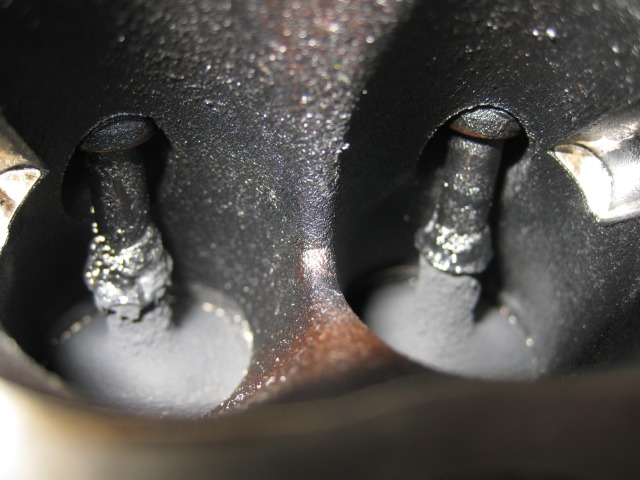
You're NOT alone. Years ago with carburated vehicles - carbon buildup was common. But today with fuel injection and vehicles being much more efficient there is almost 0 carbon buildup. I guess it may clean out the injectors a little..but that's about it. I wouldn't use it for the sake of using it. If you are experiencing a problem (poor acceleration, bad idle...etc) then by all means you should give it a try. I'm not experiencing any of those problems and I have over 200k miles on my 05 4runner.
I would respectfully dissagree, carbon build-up is inherent in all gasoline & Diesel engines. There is no engine on the market that has a 100% burn efficiency and as a result carbon forms.
It forms in varying degrees for varying engines in varying conditions, and it was more prevelant in carbuerated engines of old. Carbon build-up still results in modern day engines, hell, the new direct injection engines are huge carbon builders because of the lack of a fuel injector spraying fuel on the back of the intake valves and their insane amount of cam timing manipulation. They build up so much carbon they block off the intake ports sometimes!
Many of these are modern engines with less than 40k on the odometer with perfect oil change intervals. Its just a consequence of the type of injection system they use, it doesn't make the engines bad engines. Just soething to be aware of when servicing.
That being said, I was blown away when my good friend of mine informed me about how dirty these GDIs run. He sees them regularly and here' a lil nudge to Seafoam; one of the ways they repair this problem is by removing the intake manifold, soaking the closed intake ports with seafoam for a few hours or overnight and then going in there with soft bristle brushes.
On your more average style of fuel injection vehicles, many use EGR systems that introduce carbon into the intake system and back through the engine. While idealy these systems should only introduce soot that should be burned off easily enough, an engine is not a perfect heat transference method and as such a lot of unburned fuel and partially burned fuel is floating in an engine at any one point in time. Intakes get sooted up, that soot layers up and you get carbon build-up.



 I did some searches, learned a bit about it, and read this thread (good one):