3rd gen 4runner cooling question.

Forrest931

New member
Hi T4r, I know there's already a bit of a thread about this but I was left a little unclear about what the optimal coolant temp should be for a 3rd gen 4runner.

I have a 96 limited 286k miles and recently on a trip to some dirt roads in the sierras I started getting a little hotter than I have previously I would say coming back I averaged about 200 on the freeway in 102 degree heat with the heater on but as I hit stop and go traffic I got up to 220 so I pulled over and opted to tow home.

A little background I recently did a lift bumper and tires within about a week of each other. one thought I had was that my bumper placement blocks more airflow to the rad.

Driving around town today I was sitting around 197-202 so to circle back to my question is that a normal temp or should I be concerned? I purchased a new OEM thermostat and champion radiator just in case but I want to see what people who are smarter than me have to say

Thanks!
 
Register to hide this ad
It would be my guess the jiggle valve on your thermostat is positioned wrong. It's supposed to be positioned at the 6 o'clock, not 12 o'clock. You'll run 10 degrees hotter at 12 o'clock.

Also, rising temps in stop and go traffic is indicative of a fan clutch problem. When you're driving down the road, wind pushing in through the grill is cooling your radiator. When you're not pushing through the air, you rely solely on the fan clutch to pull air through your radiator cooling fins.

I would investigate the whole system. First check the integrity of your radiator cap. They are known to break apart and not hold proper pressure on your cooling system. If the cap is good, I'd drain the coolant and investigate the positioning of the thermostat jiggle valve. Finally, I'd test the fan clutch, or just replace it.

You can use my videos to get the work done. By the way, I was in Santa Cruz today for a mountain bike ride.

<iframe width="560" height="315" src="https://www.youtube.com/embed/A8OTtggtQnc?si=HuWogU2mBjZhiDxj" title="YouTube video player" frameborder="0" allow="accelerometer; autoplay; clipboard-write; encrypted-media; gyroscope; picture-in-picture; web-share" referrerpolicy="strict-origin-when-cross-origin" allowfullscreen></iframe>


<iframe width="560" height="315" src="https://www.youtube.com/embed/WzhlACxqeqQ?si=CYB_PAxkZ416bChe" title="YouTube video player" frameborder="0" allow="accelerometer; autoplay; clipboard-write; encrypted-media; gyroscope; picture-in-picture; web-share" referrerpolicy="strict-origin-when-cross-origin" allowfullscreen></iframe>
 
Thanks, Timmy, I'll get that new rad thermostat and fan clutch installed when I get it and send an update.

You're the man I used your trans video to do mine.
 
220 - that's right on the edge of cracking a head - hopefully not.

The 5VZ has a very robust cooling system. In central texas heat well over 105 mine idles - goes thru repeated SG - tows - off-roads slowly for miles - all under 194 and all with the AC blasting ice cubes. Yours should do the same.
 
The 5VZ has a very robust cooling system. In central texas heat well over 105 mine idles - goes thru repeated SG - tows - off-roads slowly for miles - all under 194 and all with the AC blasting ice cubes. Yours should do the same.
Agreed - the only time I've seen over 195* or so is when something has been wrong. This includes 105*F+ weather climbing mountains off road with the AC blasting.

Tim hit the top three:
- Radiator cap - get OEM ONLY!!! This is important.
- Thermostat - OEM only, again. Jiggle valve at 6 o'clock, which is upside down to most motors
- Fan clutch - definitely a possibility at this age.

No need to upgrade the radiator or anything else (other than a transmission cooler). The only reason for an aftermarket radiator is go get the increased reliability of an all-aluminum part, not for increased cooling.

-Charlie
 
Thermostat jiggle valve @6pm made the biggest difference for me.

I had purchased my 3rd gen with 232K miles on the clock back in 2016. I then ordered a scan gauge which showed 202-207F as the operating temp for my engine. After draining the radiator, I took a peak at the thermostat and the jiggle valve was oriented at 3pm. Placed the new thermostat in with the jiggle valve @6pm and refilled new coolant. The new temps were 186-191F. Huge difference!

Then in 2021 I took my car in for a timing belt/water pump job and upon completion, on my way home, the scangauge reported 210-215F temps. When I reached home, I drained the radiator again and looked at the thermostat, this time the jiggle valve was at 12pm position. Again, flipped it back to 6pm and refilled old coolant, and bam, back down to 188F.

As for what a "normal" engine temp is, I would think anything from 170F-220F can be considered "safe". I think those that are supercharged run hotter than smallfolk and do require an 170F thermostat.
 
Last edited:
I've been running into similar issues with my vehicle, but I attribute it to being gifted an UltraGauge and now I stare at the temp fluctuations constantly!

I do have 285s, plate bumper, trans cooler, min. decade old radiator/cap, and hover between 190-200 most days - short drives, stop & go, offroad often, etc.
Now, I *swear* I put the jiggle valve at 6 o'clock, but maybe it was daylight saving time when I did it, who knows...but the dash needle rarely moves
under all of these circumstances, so I'm tempted to say it's fine. I'd love to see more 180s and I think it's probably time for a fresh radiator anyway.
 
Last edited:
Update

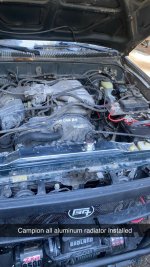
I installed my champion today temps are down about 10 degrees or so sitting around 194, lower but not quite as low as I'd like. I'll give another update when I install the new thermostat I tested my fan clutch and it seems fine but I'm going through all the trouble so I figure I'll replace it anyway with an OE replacement.
 

Attachments

  • IMG_0945.jpg
    IMG_0945.jpg
    147.5 KB · Views: 420
I installed my champion today temps are down about 10 degrees or so sitting around 194, lower but not quite as low as I'd like. I'll give another update when I install the new thermostat I tested my fan clutch and it seems fine but I'm going through all the trouble so I figure I'll replace it anyway with an OE replacement.
194*F is not high. How much lower do you think it should go when your engine has a 180*F/82*C thermostat? The thermostat regulates the INLET temperature of the engine, and the temperature of the OUTLET is where the sensor is for the ECU. That ~10-15*F rise is the heat getting transported out of the engine by the coolant.

There is no reason to run the engine colder... (assuming you aren't supercharged, running on the edge of pinging during regular use...) If the temp is 'rock sold' - running up and down only a few degrees under most usage conditions, your cooling system is working well. When the jiggle valve is in the wrong position, temps go up and down by a much larger amount while driving which tells you something is wrong.

As a secondary note, the factory gauge is basically a 3-position indicator - too cold (<160*F or so), fine (160-215*F) and too hot (>215*F). It doesn't show any minor fluctuations, by design.

All of this is somewhat specific to the 5vz engine - every engine runs a bit different with ideal temps, normal temp fluctuations, etc.

-Charlie
 
Agreed - the only time I've seen over 195* or so is when something has been wrong. This includes 105*F+ weather climbing mountains off road with the AC blasting.
-Charlie
Charlie...you running automatic, right? When you climbing (in HOT weather)...in a situation where you have to use 1st gear (lo range) for a period of time.....do you recall what rpms your engine running in that situation? Just ballpark.

I'm just analyzing some things related to a trip up to top of Silver Cyn Rd out of Bishop a couple weeks ago....and researching these threads for some baseline info.
Thx

Does anyone have a link to supplemental electric radiator fans w/ thermostat control?
Just researching something.
TIA
 
194*F is not high. How much lower do you think it should go when your engine has a 180*F/82*C thermostat? The thermostat regulates the INLET temperature of the engine, and the temperature of the OUTLET is where the sensor is for the ECU. That ~10-15*F rise is the heat getting transported out of the engine by the coolant.

There is no reason to run the engine colder... (assuming you aren't supercharged, running on the edge of pinging during regular use...) If the temp is 'rock sold' - running up and down only a few degrees under most usage conditions, your cooling system is working well. When the jiggle valve is in the wrong position, temps go up and down by a much larger amount while driving which tells you something is wrong.

As a secondary note, the factory gauge is basically a 3-position indicator - too cold (<160*F or so), fine (160-215*F) and too hot (>215*F). It doesn't show any minor fluctuations, by design.

All of this is somewhat specific to the 5vz engine - every engine runs a bit different with ideal temps, normal temp fluctuations, etc.

-Charlie

Thanks, Charlie I appreciate it, drove it around some more today and ended up in the 197-201 range. I'm sure it's fine I want to bulletproof my system so that I never have to worry about it again when 4wheeling at altitude with AC on. I also don't want to get close to over 220 again on the freeway for fear of damaging my head gasket that definitely wasn't normal and I don't want to have that happen again. the only reason I worry about it is that before Lift 285 17 tires and a bumper, I used to run a lot colder 185 ish so seeing the increase was worrying. I'll check my thermostat and replace it with an OEM. the person who owned my car before claimed he did a water pump timing belt job but I doubt it was done well if it was done because he was very dishonest.
 
Charlie...you running automatic, right? When you climbing (in HOT weather)...in a situation where you have to use 1st gear (lo range) for a period of time.....do you recall what rpms your engine running in that situation? Just ballpark.
Yeah, auto. 4Lo, locked in first is for slow driving only... if you are going up a 'road' feel free to use more than just 1st. If you are going to be above 25mph or so, you'll want to be back in 4Hi. Based on a quick google view of the trail/road you are talking about, I might even stay in 4Hi and watch trans temps.

-Charlie
 
Thanks, Charlie I appreciate it, drove it around some more today and ended up in the 197-201 range. I'm sure it's fine I want to bulletproof my system so that I never have to worry about it again when 4wheeling at altitude with AC on. I also don't want to get close to over 220 again on the freeway for fear of damaging my head gasket that definitely wasn't normal and I don't want to have that happen again. the only reason I worry about it is that before Lift 285 17 tires and a bumper, I used to run a lot colder 185 ish so seeing the increase was worrying. I'll check my thermostat and replace it with an OEM. the person who owned my car before claimed he did a water pump timing belt job but I doubt it was done well if it was done because he was very dishonest.
My post above covers it well - jiggle valve, fan clutch or radiator cap...

I used to have a 'weak' thermostat that opened early and ran in the mid 180's, but now with a new (well, like 5 years old now!) it is right in the 190-193 range most of the time. The only time I've seen my 4Runner get hotter than it should was when I had a bad radiator cap.

-Charlie
 
FIXED!

I got my new OEM thermostat in the mail this morning and pulled off the thermostat housing. the jiggle valve was at 12 o'clock and upon closer inspection it looks nothing like the OEM one and has no brand name anywhere. I installed everything and refilled the coolant with OE Toyota red, went for a test drive and the hottest I got was 190, and stayed 188 to 190 the whole time so no more massive 10-degree fluctuations. I am beyond happy with the repair and added reliability of the champion radiator, I also threw on a trans cooler while I was at it.


Thank you to everyone who pointed me in the right direction, as always couldn't have done it without the T4r forum!
 
I installed my champion today temps are down about 10 degrees or so sitting around 194, lower but not quite as low as I'd like. I'll give another update when I install the new thermostat I tested my fan clutch and it seems fine but I'm going through all the trouble so I figure I'll replace it anyway with an OE replacement.

I went the Koyo Aluminum radiator route. Like you, my engine temps improved with the aluminum radiator. I'm happy I went with it.

<iframe width="560" height="315" src="https://www.youtube.com/embed/4hS0pdMzyLo?si=CHVOUc4fgLnITbDx" title="YouTube video player" frameborder="0" allow="accelerometer; autoplay; clipboard-write; encrypted-media; gyroscope; picture-in-picture; web-share" referrerpolicy="strict-origin-when-cross-origin" allowfullscreen></iframe>
 
My post above covers it well - jiggle valve, fan clutch or radiator cap...

I used to have a 'weak' thermostat that opened early and ran in the mid 180's, but now with a new (well, like 5 years old now!) it is right in the 190-193 range most of the time. The only time I've seen my 4Runner get hotter than it should was when I had a bad radiator cap.

-Charlie

I did a test with a used and new thermostat after seeing my coolant temp increased with the new thermostat. I heated up water to around 180 degrees in a pot on my stove and placed both thermostats into the water. I then took them out and measured how far each one opened. The old one opened further than the new one, which is understandable because the old thermostat spring having cycled thousands of times had fatigued somewhat and the spring wasn't as strong. So, what did I do? I put the old thermostat back in and kept the new one as a spare. The old thermostat is allowing a larger flow of coolant past it and thus is keeping my engine cooler.

Unlike you, I've seen pretty high temps, but my rig is WAYYYY heavier than stock with a full belly of skids, aftermarket bumpers, roof rack, winch, etc. The engine has to work harder and when I'm climbing grades and/or driving in hot ambient temps, my coolant temp will rise much higher than 193. There's nothing cooling system wise that I haven't addressed. With the Koyo aluminum radiator, I finally feel I have my cooling system under control. The aluminum radiator does make a difference in the cooling efficiency. I've personally witnessed it on my rig.
 
Last edited:
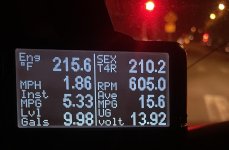
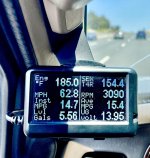
I'll just add these before and after shots because I have nowhere else to put them. I was noticing temps creeping up over a month (194+ in town) and replaced the fan clutch. Didn't help a bit and things got worse. The Before shot is creeping up to a red light at midnight (58 degrees and foggy). The system was heating the ATF (in-series cooler) too! The After shot is a couple of days later flogging it on I-80 from SF to Davis and back in nearly 90 degree ambient temps. The the only thing I did was I parked it on a very steep SF hill and burped it. It took what seemed like 10 minutes but it finally ejected a flurry of bubbles. The 185 shown in the After pic was a bit of an anomaly but I couldn't believe it (I was climbing a bit of a grade). It now runs at 186-188 around town and ATF is right on spec at 150-175. Crazy. Still going to get a Koyorad one day. I still have one eye on the gauge because it's too good to be true.....
 

Attachments

  • Before2.jpg
    Before2.jpg
    87.2 KB · Views: 213
  • After2.jpg
    After2.jpg
    125.9 KB · Views: 220
Agreed - the only time I've seen over 195* or so is when something has been wrong. This includes 105*F+ weather climbing mountains off road with the AC blasting.

Tim hit the top three:
- Radiator cap - get OEM ONLY!!! This is important.

Just curious how come a OEM radiator cap is so important? I have one of those caps with the pressure relief lever on mine I got off rock auto. Seems to work fine. Although this summer now I have a scangauge I see my coolant temps now. Early this year during spring when it was cooler outside it would run 188 solid never change based on driving. Now in summer it sits 190 normally and 191 on the freeway cruising 75 with the ac. I see it spike up sometimes though and it has been concerning me. It goes up to 193 and even 195 sometimes. I've seen 197 when I was going up a hill. I have replaced everything possible related to the coolant system, fan clutch, new raditaor & coolant, water pump, temp sensor, etc. It usually only gets that hot when I run the ac. lol my engine gets worked when I run the ac and have to go up a hill. but anyways. Also a second question. I bought a koyo rad full alu. radiator a while back and planning on installing that but my 1998 4runner has green coolant and i was wondering if i should ever get that flushed out for red / also if i should before i install the koyo aluminum radiator. Not sure. I know toyota switched to red sometime around 1998 right. But green is just as good right? thanks
 
Just curious how come a OEM radiator cap is so important? I have one of those caps with the pressure relief lever on mine I got off rock auto. Seems to work fine. Although this summer now I have a scangauge I see my coolant temps now. Early this year during spring when it was cooler outside it would run 188 solid never change based on driving. Now in summer it sits 190 normally and 191 on the freeway cruising 75 with the ac. I see it spike up sometimes though and it has been concerning me. It goes up to 193 and even 195 sometimes. I've seen 197 when I was going up a hill. I have replaced everything possible related to the coolant system, fan clutch, new raditaor & coolant, water pump, temp sensor, etc. It usually only gets that hot when I run the ac. lol my engine gets worked when I run the ac and have to go up a hill. but anyways. Also a second question. I bought a koyo rad full alu. radiator a while back and planning on installing that but my 1998 4runner has green coolant and i was wondering if i should ever get that flushed out for red / also if i should before i install the koyo aluminum radiator. Not sure. I know toyota switched to red sometime around 1998 right. But green is just as good right? thanks
First the easy one - with green coolant, you need to be VERY diligent about coolant changes (like, every 2 years). Red can go much longer before causing problems. Both cool equally, but the Toyota Red is MUCH better for anti-corrosion in the long term. The official interval for the Toyota red is 2 years / 36k miles but it does last longer than that...

Many/most aftermarket caps leak or don't hold pressure correctly. No pressure = localized boiling of the coolant (around the cylinders) and poor cooling system performance and overheating.

"Spiking" to 197*F is a non-issue. Don't worry about it. The factory gauge doesn't even move from the middle (by design of Toyota) until something like 215*F, which means temps below that are fine. Knowing your exact temperature is helpful for keeping an eye on your cooling system for small issues, but you are still VERY safe.

-Charlie
 
First the easy one - with green coolant, you need to be VERY diligent about coolant changes (like, every 2 years). Red can go much longer before causing problems. Both cool equally, but the Toyota Red is MUCH better for anti-corrosion in the long term. The official interval for the Toyota red is 2 years / 36k miles but it does last longer than that...

Many/most aftermarket caps leak or don't hold pressure correctly. No pressure = localized boiling of the coolant (around the cylinders) and poor cooling system performance and overheating.

"Spiking" to 197*F is a non-issue. Don't worry about it. The factory gauge doesn't even move from the middle (by design of Toyota) until something like 215*F, which means temps below that are fine. Knowing your exact temperature is helpful for keeping an eye on your cooling system for small issues, but you are still VERY safe.

-Charlie

Good to know. See this is why I come to you for info like this. You know so much haha. Sounds like I will be ordering a oem radiator cap then. Can't hurt. Also good to know about the coolant. I am fine with green and i am meticulous with my 4runner anyways so every 2 years changing out coolant is fine haha. i did my new radiator when I first got my 4runner then had to fix a coolant leak when I did my vc gaskets and then little later after that did my timing belt. I've drained my coolant like 6 times within a year for other jobs too and always just put new green stuff in didn't re use the old stuff so I am probably good for a while I would say. When I put the new koyo aluminum radiator in ill fill it up with all new green stuff too. good to know about the temps too. makes sense why they have that range where it doesn't move. prevents it from going up and down and freaking you out lol. But that's why i got the scangauge so I could see that. Just wanted to make sure not trying to crack a head at 205k haha would also be inconvenient since i have work every day to. I rely on her haha.

Thanks as always charlie
 

Members online

Forum statistics

Threads
278,309
Messages
3,554,067
Members
248,016
Latest member
Advally Service

Trending content

Back
Top