
You are using an out of date browser. It may not display this or other websites correctly.
You should upgrade or use an alternative browser.
You should upgrade or use an alternative browser.
85 Octane in Colorado? Toyota says yes. What do you say?
- Thread starter explore.runner
- Start date


Toffees
Member
Not so. The 1GRE is made for 93 octane (at sea level). Anything lower and it is retarding timing to prevent knock.
High performance engines, or those that run at higher compressions, always required higher octane. Temperature and pressure are related, so anything running a higher compression will require a higher octane so there isn't any detonation because the cylinders stay hotter. Piston airplanes require high octane fuel (described as 100LL, but not sure whether this is the same rating scale) even though they fly at high altitudes all the time for this very reason.
1996_Valencia_Owen
Banned
Not so. The 1GRE is made for 93 octane (at sea level). Anything lower and it is retarding timing to prevent knock.
Wrooooooong.
The 1GR-FE is dyno rated at 87 octane, and requires it as the f'ing manual states.
Anything above 87, and it adds timing. On 91 octane it makes 285 hp and 289 ftlbs.
Thus, anyone really complaining about not having a V8 should try 91 or 93, as it pulls pretty darn well on that fuel, and has significantly more hp than the V8 did.
Popular Mechanics weighed in on this in 2010:
https://www.popularmechanics.com/cars/how-to/a5308/4345737/
I guess the answer might be different for those who live in Denver vs those who travel to CO or UT once or twice a year, but the basic principle seems to be the same.
This is interesting as I make the occasional trip DOWN to the Pacific Northwest. One of my fuel stops is typically in the area of Mountain Home, ID, where the minimum octane rating is at 85. The elevation starts to drop quickly heading west from there and am at low elevations by the time I need to refuel again. However, I always noticed that my fuel economy suffers quite a bit on that leg of the trip which never made a lot of sense to me. Maybe on the next trip I need to refuel at a higher octane to compensate for the drop in elevation.
The EPA needs to ditch the ethanol mandate.
There's a "APP" for that. Try downloading "Pure Gas" I use this when I travel out of state. It locates the Stations that sell non ethanol gas.
Last edited:

Hydguy
Member
There's a "APP" for that. Try downloading "Pure Gas" I use this when I travel out of state. It locates the Stations that sell non ethanol gas.
I have it. But I think it's ridiculous that clean gas can cost up to twice as much as the shitty blended gas.
I do try to run a tank every six months or so, but it's far too expensive to use everyday.
Luckily, the EPA is (at the moment) stopping the push for 15-20% ethanol blend, as it would basically destroy the car industry, but in 2-6 years we might be looking an another mandate for it.
The facts prove that ethanol is bad for vehicles, and actually causes more pollution because engines run less efficiently, and it decreases fuel efficiency.


nglayton
Senior Member
The best octane level is always going to be an ongoing debate, reminds me of the similar debates on when to change your oil for the first time and the best interval.
Personally I run higher octane all the time, but at a measly $5'ish a tank, I can afford it and I plan on keeping my 4runner until the wheels fall off. At $5 more per tank do I get an extra 100k out of it? Probably not. If I save that $5 a tank over the life of my current rig will it pay for a new 4runner? Probably not. The answer is probably somewhere in the middle, but no one really knows, because no one has 2 identical 4runners and runs them with different octane fuels over their entire lives.
There are some that maybe are not in the same great financial positions or that just don't really care one way or the other. Heck some people get a new runner every 2-3 years, just for a new paint color or a "PRO" badge and if there is anything to the 85-93 octane pro or con it will be the next owners problem or gain.
Run your own tests on 85, 87, 89, 91 and 93 octane and see how you think it performs or if you get better MPG with one rating or another. Don't take random internet strangers (ie: new best friend) word for it.
Hell even my wife figured out (on her own Rav4) that she gets better mileage with a higher to mid-grade octane rating than the rock bottom or max available. FYI: She gets a new Rav4 every 3 years (company car) so she has zero to gain or loose in the well being of the car.
The bottom line is, it's your rig, do whatever the heck makes you feel good about driving it.
Personally I run higher octane all the time, but at a measly $5'ish a tank, I can afford it and I plan on keeping my 4runner until the wheels fall off. At $5 more per tank do I get an extra 100k out of it? Probably not. If I save that $5 a tank over the life of my current rig will it pay for a new 4runner? Probably not. The answer is probably somewhere in the middle, but no one really knows, because no one has 2 identical 4runners and runs them with different octane fuels over their entire lives.
There are some that maybe are not in the same great financial positions or that just don't really care one way or the other. Heck some people get a new runner every 2-3 years, just for a new paint color or a "PRO" badge and if there is anything to the 85-93 octane pro or con it will be the next owners problem or gain.
Run your own tests on 85, 87, 89, 91 and 93 octane and see how you think it performs or if you get better MPG with one rating or another. Don't take random internet strangers (ie: new best friend) word for it.
Hell even my wife figured out (on her own Rav4) that she gets better mileage with a higher to mid-grade octane rating than the rock bottom or max available. FYI: She gets a new Rav4 every 3 years (company car) so she has zero to gain or loose in the well being of the car.
The bottom line is, it's your rig, do whatever the heck makes you feel good about driving it.


Lester Lugnut
New member
Not so. The 1GRE is made for 93 octane (at sea level). Anything lower and it is retarding timing to prevent knock.
You are a smart guy - I've learned a lot from your tech-oriented threads, but in all the octane-related threads I've read, have never come across this...93 octane for a 1GR-FE.
Where is this information posted?

Bootleg
New member
I've been informed I'm wrong about that. Someone told me a long time ago that higher octane fuels tended to be cleaner and better for the fuel injectors and I never bothered to check.
So, I guess I learned something new today.
With most cars/trucks the opposite is actually the case. Engines with timing designed to run on 87 will not get a complete burn on higher octane fuels. In these cases running 91 can cause carbon buildup where 87 should be more of a complete burn.
The caveat to this is engines which can advance/retard timing based on knock, or lack thereof, such as ours. You don't get fuel economy or power increases right after you fill up though. Your ECU needs time to learn that it's running higher octane and then advance the timing accordingly.

The Waco Kid
New member
You are a smart guy - I've learned a lot from your tech-oriented threads, but in all the octane-related threads I've read, have never come across this...93 octane for a 1GR-FE.
Where is this information posted?
This is the closest I can find. I do recall the early FJ Cruisers requiring 91 (college roommate had one). But I don't recall where, if any, info is posted on 93.
"The FJ Cruiser uses the 4.0-liter 1GR-FE DOHC V6. For the 2007 to 2009 model years, the engine came with single variable valve timing (VVT-i) which produces 239 hp (178 kW) at 5200 rpm, and 278 lb⋅ft (377 N⋅m) of torque at 3,700 rpm on 91 octane fuel.[26][27][28][29] For the 2010 model year, the FJ Cruiser's engine gained Dual VVT-i technology which adjusts timing on both intake and exhaust camshafts resulting in 259 hp (193 kW) at 5600 rpm, and 270 lb⋅ft (370 N⋅m) on 91 octane, in addition to slightly improved fuel economy on 91 octane fuel.[26][30] For model year 2011, these figures rose to 260 hp (194 kW) at 5600 rpm, and 271 lb⋅ft (367 N⋅m).[31] The 2011 onwards engine meets stringent LEV II/Tier 2 Bin 5 emissions certification[32] Both versions of the 1GR-FE engine run normally on 87 octane fuel[26] though they produce less power thus Toyota recommends premium fuel for demanding situations such as towing, off-roading, and driving at high elevation."
https://en.wikipedia.org/wiki/Toyota_FJ_Cruiser

wfo9
New member
You are a smart guy - I've learned a lot from your tech-oriented threads, but in all the octane-related threads I've read, have never come across this...93 octane for a 1GR-FE.
Where is this information posted?
It's not really documented anywhere clearly by Toyota. A few bits and pieces here and there in the 2010+ FJ manual... Although, I've heard a few try to argue the FJ has a totally different engine and ECU LOL
It will run on anything really... However, it is setup to give maximum output on premium. It will learn what fuel you run via knock detection and adjust accordingly.
At higher altitudes, the need for octane decrease along with power. Lower cylinder pressure = less propensity to knock. Each motor will be a bit different depending on how bad the PCV oil contamination and carbon buildup is.
Last edited:
Toffees
Member
The best octane level is always going to be an ongoing debate, reminds me of the similar debates on when to change your oil for the first time and the best interval.
Personally I run higher octane all the time, but at a measly $5'ish a tank, I can afford it and I plan on keeping my 4runner until the wheels fall off. At $5 more per tank do I get an extra 100k out of it? Probably not. If I save that $5 a tank over the life of my current rig will it pay for a new 4runner? Probably not. The answer is probably somewhere in the middle, but no one really knows, because no one has 2 identical 4runners and runs them with different octane fuels over their entire lives.
There are some that maybe are not in the same great financial positions or that just don't really care one way or the other. Heck some people get a new runner every 2-3 years, just for a new paint color or a "PRO" badge and if there is anything to the 85-93 octane pro or con it will be the next owners problem or gain.
Run your own tests on 85, 87, 89, 91 and 93 octane and see how you think it performs or if you get better MPG with one rating or another. Don't take random internet strangers (ie: new best friend) word for it.
Hell even my wife figured out (on her own Rav4) that she gets better mileage with a higher to mid-grade octane rating than the rock bottom or max available. FYI: She gets a new Rav4 every 3 years (company car) so she has zero to gain or loose in the well being of the car.
The bottom line is, it's your rig, do whatever the heck makes you feel good about driving it.
Higher octane is always going to give you better combustion performance, the question is whether the performance you're measuring (mpg, etc) gets the same results.
Do the tests yourself, but at the cost of gas ($5? Where do you live? It's about $2.50 here), let's assume $3.00 for 87 and $3.50 for 93, so 1/6th (17%) increase are you getting 1/6th (or 17%) better results (i.e., moving from 15 to 17.5?)?
Chances are, you're not, it's just a performance relationship that doesn't matter much in these trucks.
The other question--longevity and reliability--is harder to know but easy to guess. If you buy premium at $0.50 more and buy 600 gallons a year, you're spending an extra $300 a year on gas. Are you postponing your engine rebuild (8 years? 12 years?) sufficiently with this investment? 8 years is $2,400, and 12 years is $3,600. It's up to you whether you should save the money and be more aggressive spending it elsewhere, but the back of the napkin math isn't terribly difficult, it's the logic that can confuse.

nevada
Senior Member
Not so. The 1GRE is made for 93 octane (at sea level). Anything lower and it is retarding timing to prevent knock.
its built for 93? wtf. the highest they even sell here is 91.
The Waco Kid
New member
its built for 93? wtf. the highest they even sell here is 91.
It's primarily an east coast offering.
There's a few in washington that sell 93 or higher though, according to this:
https://find93.com/
Last edited:
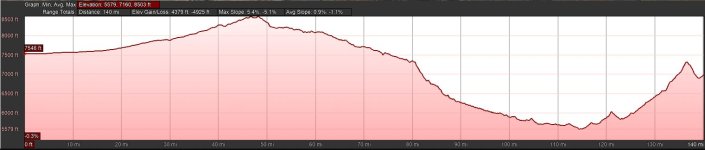
Tail wind and slightly down hill. Turn around, go back, average the results.
Yup. Slight gradual decline for the first 45 miles, then 70 miles of constant downhill, will give you excellent MPG every time.
Attachments
nevada
Senior Member
It's primarily an east coast offering.
There's a few in washington that sell 93 or higher though, according to this:
https://find93.com/
interesting that is shows a shell station in Easton having 93. that is a TEENY little town. about 75 miles from me though. too bad, because my truck would love to run some 93 lol.
just seems odd they would build the 4runner to take gas that isn't readily available everywhere. I would like to see some documentation from Toyota saying it takes 93. what does the owners manual say? I would have expected 87, 93 would be a huge surprise.
The Waco Kid
New member
interesting that is shows a shell station in Easton having 93. that is a TEENY little town. about 75 miles from me though. too bad, because my truck would love to run some 93 lol.
just seems odd they would build the 4runner to take gas that isn't readily available everywhere. I would like to see some documentation from Toyota saying it takes 93. what does the owners manual say? I would have expected 87, 93 would be a huge surprise.
I believe our manuals say 87, as does the gas cap. But earlier iterations of the engine (those found in the first few years of the FJ Cruiser) "required" 91 or "Premium".
Why? I can't answer that with authority. Jeremy probably knows, but what I think Toyota may have done was just adjust the specs for more marketability. The FJ was a niche vehicle, the 4runner is a more mass market suv. He may be right that it was designed to run optimally on 93, but in order not to scare away the typical SUV buyer, every spec listed is per 87 octane.
Also, 93 is difficult to find near Houston too. It's mostly in surrounding suburbs and farming communities that have it... However Dallas seems to have a plethora of stations that carry 93.
Last edited:


Similar threads
- Replies
- 0
- Views
- 2K
- Replies
- 0
- Views
- 645


