Aux fuel tank

Bring back a dead thread here - anyone know of any companies still producing above-the-spare auxiliary fuel tanks?
Downey/NWMP - no longer making them
The Long Ranger/ARB - no longer making them

Are we stuck having to ditch the spare and go with the F-150 set-up? Just asking because I'm tired of the jerry-can approach.
 
Last edited:
I haven't seen any, but here's a custom one on a 5th gen.

http://www.toyota-4runner.org/showpost.php?p=1457998

I'm working my way through the [MENTION=74569]SOcalTRAIL[/MENTION] 5th Gen build thread and he pieces together a pretty amazing set up. Fully custom, but it may give you some ideas if you have access to people who can fab stuff up for you. I sure wish I knew someone in fabrication after reading his thread, haha.
 
I've been wondering if you guys with jerry cans have a hose/pump setup so you don't have to lug the heavy-ass can down and pour it in the filler for the fuel cell. Some of these cans I've seen are huge looking. Yes, I get the double entendre there
 
I've been wondering if you guys with jerry cans have a hose/pump setup so you don't have to lug the heavy-ass can down and pour it in the filler for the fuel cell. Some of these cans I've seen are huge looking. Yes, I get the double entendre there

Best set-up I've seen was a 6 gallon rotopax on the roof of a third gen. Guy had a hose that he would connect to it and let gravity drain it into the tank. Said most gas stations won't fill it while its on the roof though.

I think I'm going to see if a fabricator friend can re-create one. If he does I'll get pics and get him to market them on his site. Lord knows there are enough of us third gens out there that are tired of 180-220 miles per tank to make it worthwhile.
 
I got 20.5 mpg the other day and was amazed that it was even possible. I'd like to have something on my roof rack that I could attach a hose to and drain it right into the tank below. That would make trips so much easier.
 
I know this thread is a little older but I'll say this anyways. If I ever go sas and dual cases or even if I keep IFS and go crawlbox/dual case setup I'll be going this route. Automatic trans is too long and any dual case setup interferes with the stock tank. Not to mention it's a HUGE hang up spot in the rocks + too much travel and your ds hits the side of the factory skid. I've looked into the f150 tank install numerous times. Even sought out to find the tank but lost interest. It's not that hard if you have fabrication skills. Easy to beat an aluminum tank to form, I think you only lose maybe half a gallon if not less and as long as you have the factory straps for it you're good to go with a little welding. Then just 3/16" steel for a skid. I might not even be concerned with getting the gauge right considering my damn fuel gauge doesn't work anyways. The $$ to fix the oh so problematic gas gauge issue would cost the same price if not more than for me to do the f150 tank swap. At any rate, I'm done blabbing. Carry on...
 
Best set-up I've seen was a 6 gallon rotopax on the roof of a third gen. Guy had a hose that he would connect to it and let gravity drain it into the tank. Said most gas stations won't fill it while its on the roof though.

I think I'm going to see if a fabricator friend can re-create one. If he does I'll get pics and get him to market them on his site. Lord knows there are enough of us third gens out there that are tired of 180-220 miles per tank to make it worthwhile.

Fabricating fuel tanks is a very easy thing to do, and if you find the right fabricator, it shouldn't be more than a few hundred bucks. I worked for a company building high end sand cars for a long time and we custom built gas tanks for every single one of them.

If you or the shop have the welder required to weld aluminum, and can do nice welds, that is all you really need. Aluminum gas tanks don't have any special features or need any special tools or anything crazy. Just weld up a closed box or whatever shape you desire, then we would put like 15 PSI in the tank (do too much and it distorts), and use soapy water to test for any leaks.

There are two ways to set up the fuel pump. If you are like [MENTION=58830]JWaldz[/MENTION] and aren't worried about a fuel gauge, you simply add a small "sump" which is fancy talk for another small box on the bottom of the tank that will fill with gas. You need this so the pump is always supplied with fuel while the rest of the tank sloshes around. Then just run a simple in-line fuel pump you can get from almost any auto parts store (bosch makes the best ones from the parts stores) and an in-line filter and you are ready to party.

If you want to run a fuel gauge and do all that fun stuff, still simple. Just design your tank to incorperate the stock 4runner sending unit (or a different one if you want to get crazy) and then you will have full function of your gauges. I would really reccomend this route because if you are in a smog state, it will allow you to use all the factory smog crap that you need to keep the CEL off. It is a little more headache because you need to figure it all out, but is rather straight forward once you get it all sorted out and works just as good. I would also reccomend staying away from any of the aftermarket sending units and all that because agai nit doesn't play well with smog stuff or the factory gauges. We have done it when we put a fuel cell in a Ford Lightning, it's all possible, but it was a HUGE amount of work and headache trying to figure it all out.

Also one other note I leanerd from a previous Bronco project. If you are doing a rear ful tank with the factory sending unit/pump combo, build a hatch in the floor of your 4runner so you have access to the top of the tank without dropping the tank. The best way to do this is find a doner 4runner and cut out a section of floor that is larger than the hole you want to cut. Then all you have to do is lay the new floor over the hole and bolt it down. Put your carpet over it and it's hidden. But then if you want access to your tank, it's as easy and removing the pannel and you can change out anything. Also, have the tank steam cleaned by any randiator shop before install to get rid of any debree from building, it will save you a filter change down the road.

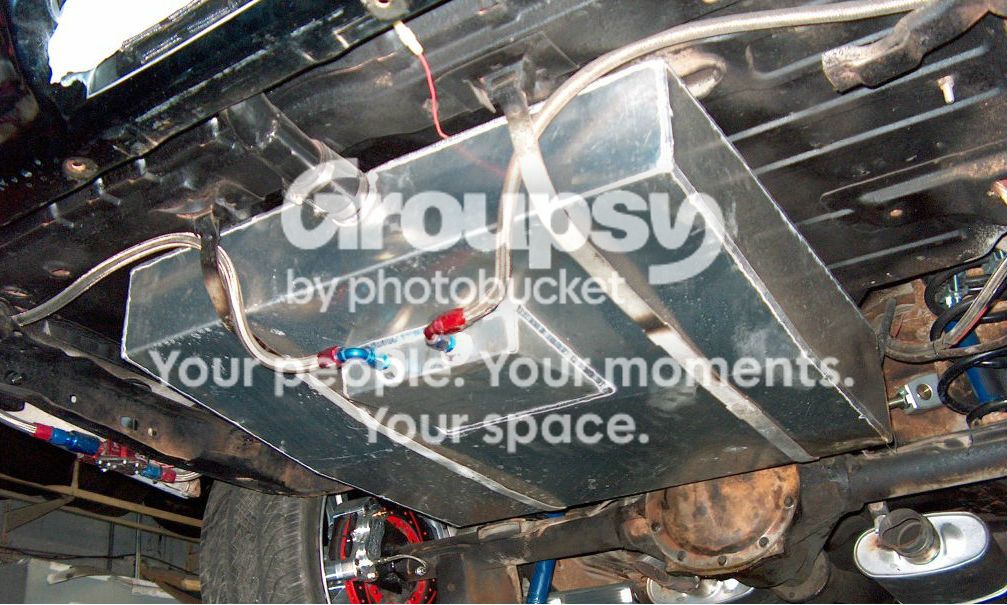
Here is an example I found on Google Images of what a custom tank could look like and this has the sump.

 
Fabricating fuel tanks is a very easy thing to do, and if you find the right fabricator, it shouldn't be more than a few hundred bucks. I worked for a company building high end sand cars for a long time and we custom built gas tanks for every single one of them.

If you or the shop have the welder required to weld aluminum, and can do nice welds, that is all you really need. Aluminum gas tanks don't have any special features or need any special tools or anything crazy. Just weld up a closed box or whatever shape you desire, then we would put like 15 PSI in the tank (do too much and it distorts), and use soapy water to test for any leaks.

There are two ways to set up the fuel pump. If you are like [MENTION=58830]JWaldz[/MENTION] and aren't worried about a fuel gauge, you simply add a small "sump" which is fancy talk for another small box on the bottom of the tank that will fill with gas. You need this so the pump is always supplied with fuel while the rest of the tank sloshes around. Then just run a simple in-line fuel pump you can get from almost any auto parts store (bosch makes the best ones from the parts stores) and an in-line filter and you are ready to party.

If you want to run a fuel gauge and do all that fun stuff, still simple. Just design your tank to incorperate the stock 4runner sending unit (or a different one if you want to get crazy) and then you will have full function of your gauges. I would really reccomend this route because if you are in a smog state, it will allow you to use all the factory smog crap that you need to keep the CEL off. It is a little more headache because you need to figure it all out, but is rather straight forward once you get it all sorted out and works just as good. I would also reccomend staying away from any of the aftermarket sending units and all that because agai nit doesn't play well with smog stuff or the factory gauges. We have done it when we put a fuel cell in a Ford Lightning, it's all possible, but it was a HUGE amount of work and headache trying to figure it all out.

Also one other note I leanerd from a previous Bronco project. If you are doing a rear ful tank with the factory sending unit/pump combo, build a hatch in the floor of your 4runner so you have access to the top of the tank without dropping the tank. The best way to do this is find a doner 4runner and cut out a section of floor that is larger than the hole you want to cut. Then all you have to do is lay the new floor over the hole and bolt it down. Put your carpet over it and it's hidden. But then if you want access to your tank, it's as easy and removing the pannel and you can change out anything. Also, have the tank steam cleaned by any randiator shop before install to get rid of any debree from building, it will save you a filter change down the road.

Here is an example I found on Google Images of what a custom tank could look like and this has the sump.


Thanks Mojave! I'm going to keep it as simple as possible. Last night I dropped my spare and was working with a cardboard mock-up similar to The Long Ranger tanks. I have a 12v fuel transfer pump from back when I was into quads so the price is right. Once I have the tank made with a vent and a sump I'll just fuse and switch the transfer pump - it is like 7 gallons per minute which may be too much for my evap system to handle....but I'll test it out. Not worried about the breather, and it can dump the fuel into the existing filler line but I'm unsure how I want to fill the aux tank. I see all the manufactured aux tanks have the filler in the fender-well. I'm not sure how that would work with deep water or soupy mud. I might see if I can fab up a select-able valve off the stock filler tube unless you have some good ideas?

The tank itself I'm not too worried about. My fabricator friend just finished his TIG cert so we should be good to go.
 
Thanks Mojave! I'm going to keep it as simple as possible. Last night I dropped my spare and was working with a cardboard mock-up similar to The Long Ranger tanks. I have a 12v fuel transfer pump from back when I was into quads so the price is right. Once I have the tank made with a vent and a sump I'll just fuse and switch the transfer pump - it is like 7 gallons per minute which may be too much for my evap system to handle....but I'll test it out. Not worried about the breather, and it can dump the fuel into the existing filler line but I'm unsure how I want to fill the aux tank. I see all the manufactured aux tanks have the filler in the fender-well. I'm not sure how that would work with deep water or soupy mud. I might see if I can fab up a select-able valve off the stock filler tube unless you have some good ideas?

The tank itself I'm not too worried about. My fabricator friend just finished his TIG cert so we should be good to go.

I personally would just put the filler somewhere around the rear bumper, something easy to access but is out of the way. If you vent the tank to the stock filler vent line, then you should be covered for water crossings. The fuel cap you would use for an aux tank isn't like your factory fuel cap. The factory caps are designed to vent, but for your aux tank it can be a cap that seals tight. So when you do any sort of water something, there is no issue. These tanks don't need a huge vent either. We would use brake line to make the vents. You can weld a small peice of material to the top of the tank and tap it to fit a pipe thread then run hard break line to where ever you need the vent to go.

I like the idea of using it as an aux tank and using a small fuel pump to pump the fuel into the stock tank. What I mentioned before was more of a stock tank replacement for those who are trying to link the rear or whatever. But for an aux, a simple pump on a small sump would work great. If you are going to run an aftermarket gauge somewhere, you can also run a very simple aftermarket sending unit too. I know for my future plans I am building a tank for auxilary use, so I will be doing somehting very similar to what you are talking about. Hell, am incogneto gauge and switch in the glove box would be kind of cool, open the door, and you have it all right there, flip the switch and watch the gauge go down. I am bad at wiring but I would bet you could even set it up to pump until empty and then shut off automatically if you were so inclined...
 
I personally would just put the filler somewhere around the rear bumper, something easy to access but is out of the way. If you vent the tank to the stock filler vent line, then you should be covered for water crossings. The fuel cap you would use for an aux tank isn't like your factory fuel cap. The factory caps are designed to vent, but for your aux tank it can be a cap that seals tight. So when you do any sort of water something, there is no issue. These tanks don't need a huge vent either. We would use brake line to make the vents. You can weld a small peice of material to the top of the tank and tap it to fit a pipe thread then run hard break line to where ever you need the vent to go.

I like the idea of using it as an aux tank and using a small fuel pump to pump the fuel into the stock tank. What I mentioned before was more of a stock tank replacement for those who are trying to link the rear or whatever. But for an aux, a simple pump on a small sump would work great. If you are going to run an aftermarket gauge somewhere, you can also run a very simple aftermarket sending unit too. I know for my future plans I am building a tank for auxilary use, so I will be doing somehting very similar to what you are talking about. Hell, am incogneto gauge and switch in the glove box would be kind of cool, open the door, and you have it all right there, flip the switch and watch the gauge go down. I am bad at wiring but I would bet you could even set it up to pump until empty and then shut off automatically if you were so inclined...

I'm all about using parts I've already got - the pump is a self priming style pump so I'm not too worried about running it dry for a minute or two. Being 7 gpm I may have a bigger issue with over-filling the primary tank then running the aux dry. I may need to go with a smaller pump just to allow the OEM fuel gauge to keep up. The tank I'm designing should hold somewhere between 11-15 gallons depending on options.
 
Last edited:
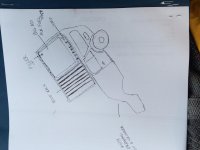
Okay here's a concept just throwing this out there
 

Attachments

  • image.jpg
    image.jpg
    125.1 KB · Views: 1,234
Okay here's a concept just throwing this out there

The notations on the drawing are hilarious!
Problem I have with that design is that my hi-lift, awning, ax, chainsaw, and soon RTT are already up there. So I'm already a top-heavy pig. 10 gallons of gas at 6.7 lbs per....dunno if my rack will even take an additional 70lbs??
For those of you who don't have much up there that should work just great.

I hit the junkyard at lunch today and measured tanks out of a bunch of smaller import cars for reference. I'm thinking I might just find a better place for my spare and use a Nissan Sentra gas tank with a heavy skid. All priced out I think I could make it work for less than $100. I may have to go from OME890's in the rear to 891/861's though.
 
Haha thanks man, well maybe it could be slimmed down but it might be what I lean towards when I get a roof rack we will see.
 
Best 4runner drawing ever [MENTION=83885]Dirtyfingers[/MENTION] !!!!!!

A small flat tank out of a car would work. Make sure to flush the tank and have it steam cleaned before install. Any radiator shop can clean a tank for you for rather cheap. Who knows what is in the tank at the scrap yard. Plus the way they siphone the gas from the tanks is kind ghetto!
 
The 90 series LC Prado shares a very similar chassis with the 3rd Gen and has a fuel tank mounted behind the rear axle.

BLRE4B-700.JPG


It looks like Toyota puts the last frame crossmember at the very rearmost section of the frame as opposed to the loaction of the crossmember used to support the spare tire winch in the 3rd Gen. I'm not sure if it supports the tank as well. Ask some guys over on Pradopoint to measure the length of the frame behind the rear axle to see if they are similar lengths. If they are then this may be a very good option.
 
This is a great concept and a sweet drawing. The idea is not necessarily a bad one to put the tank on the roof. But if you ever do roll or flop... That could be a dangerous situation, not to mention that the risk would be increased due to the raised center of gravity now with the extra weight on the roof.

On a side note, if you just make a slightly low spot in the tank or park on an incline, you probably wound need a pump you could just run a line down to the normal fuel neck and likely get most or all of the fuel out of it. Unless you want to pump on the go or something.
 

Members online

Forum statistics

Threads
278,312
Messages
3,554,089
Members
248,016
Latest member
Advally Service

Trending content

Back
Top