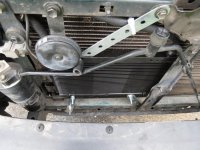
I know this topic has been covered quite a bit but here is my take on it to give others more ideas and to show once again how easy it is to do.
After spending time here on the forum and reading countless “strawberry milkshake” horror stories I decided to install an external trans cooler last weekend on my 2002 2WD SR5. I have just under 100K miles but with another hot Texas summer on its way I figured a small investment of $65 and a few hours of my time was much better than a $3K transmission rebuild if the trans cooler in the radiator were to fail. I installed a B&M Super Cooler # 70264 based on the many other posts covering this topic. The trans cooler comes with about 5ft of 5/16 transmission line, this will not be enough. Some other members who had mounted their cooler passenger side indicated a need to get 8ft of transmission line. If you mount the cooler on the driver side you need to get 10ft as it is a longer run for each hose. Below is a quick run down of how I approached and executed my install. Let me know what you think.
Remove the skid plate below the engine, remove the front grill, and horns on each side above the radiator. After some analyzing I realized utilizing the passenger side of the radiator was not a good idea for two reasons. 1. The A/C line was more obstructive on the passenger side and 2. where the A/C lines pass through the radiator core support access hole does not leave much room for anything else. I know others have utilized the passenger side location with no problem but I did not see the need to.
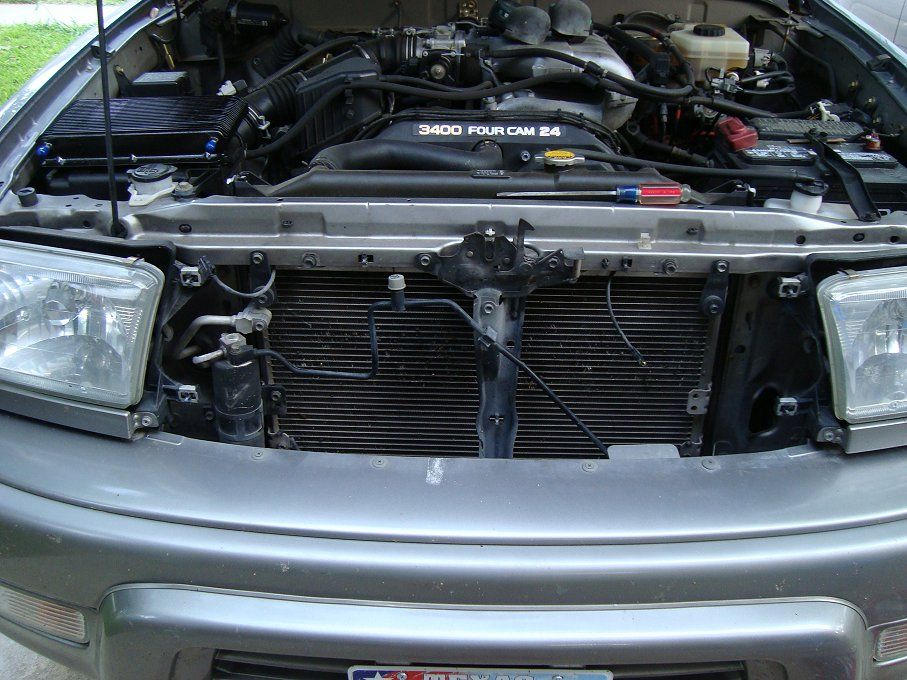
Now that I had decided to use the driver side I needed to remove a small bracket on the A/C condenser that was not being used.


Next I “eye-balled” where the brackets needed to bent to let the cooler sit a little closer to the AC condenser. I had considered using the push through straps that come with the kit. However since there was plenty of room for the brackets the choice was easy. Plus by using the brackets this would make the cooler easy to remove should the cooling system need to be serviced in the future.
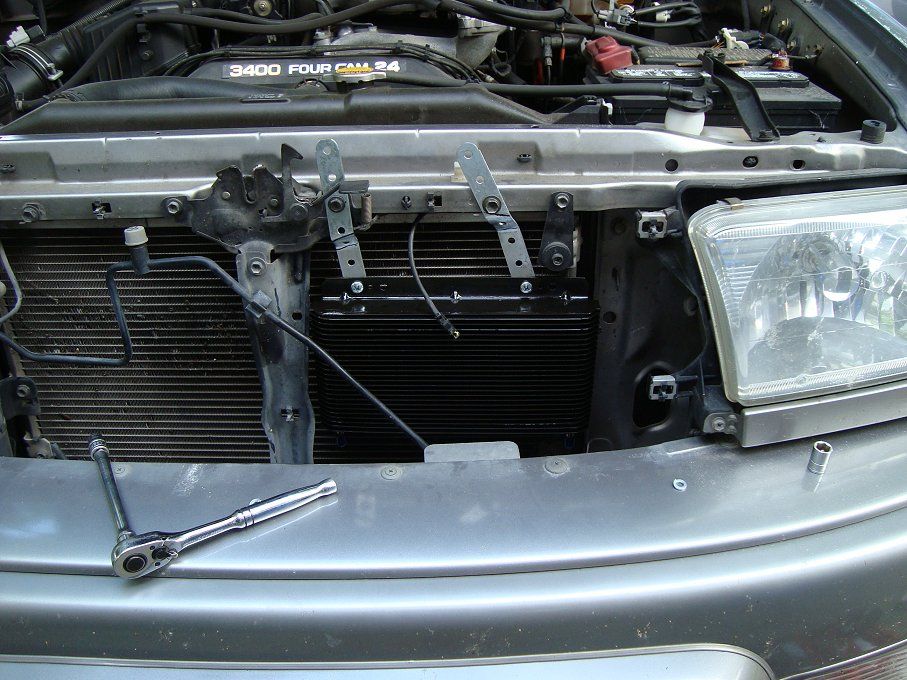
Once I had everything the way I liked it I used heater hose to wrap any sharp edges that the trans cooler or hoses would come in contact with.
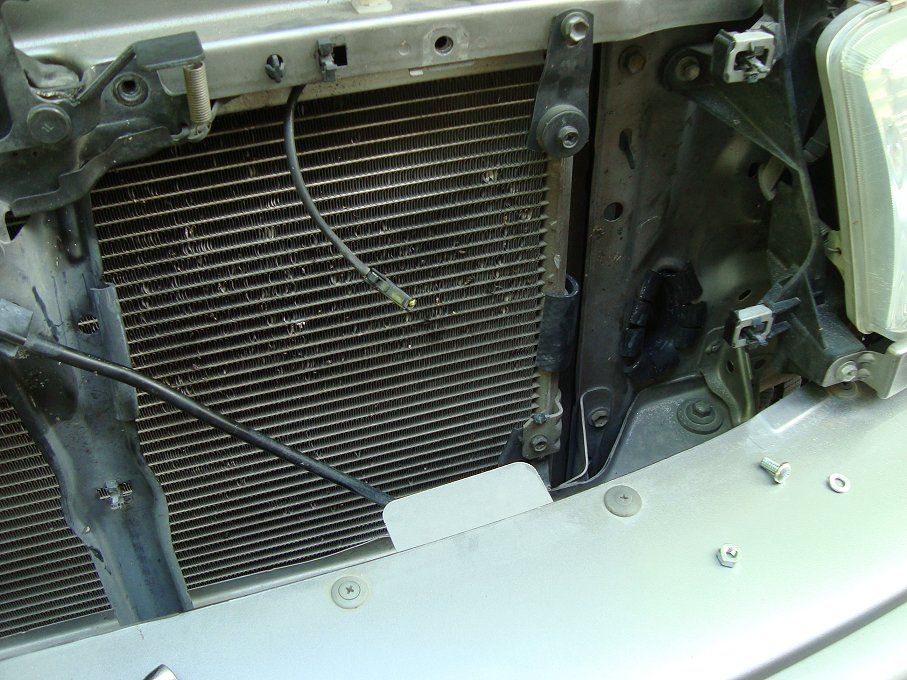
I cut the mounting brackets down and shot them with some semi-gloss black spray paint. I did the final install of the cooler and connected the transmission hoses using new screw type clamps for all connections. When I disconnected the hoses from the transmission hard lines I expected a tablespoon of fluid to escape as others had reported. Even with my 4Runner parked on a slight incline, nose up, I still lost almost a QUART of fluid! I had a pan ready so I did not make a mess on my driveway but just be warned and ready if you do this on yours.
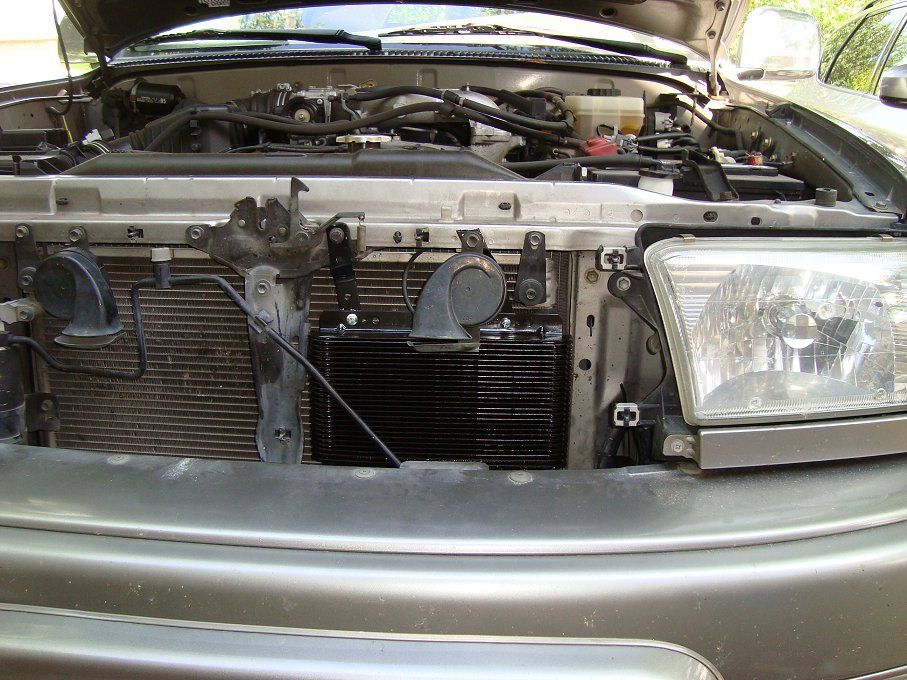

I blew some air through the original trans cooler to get all of the residual transmission fluid out of the trans cooler inside the radiator. I used a piece of the original transmission hose to cap off the original trans cooler connections.
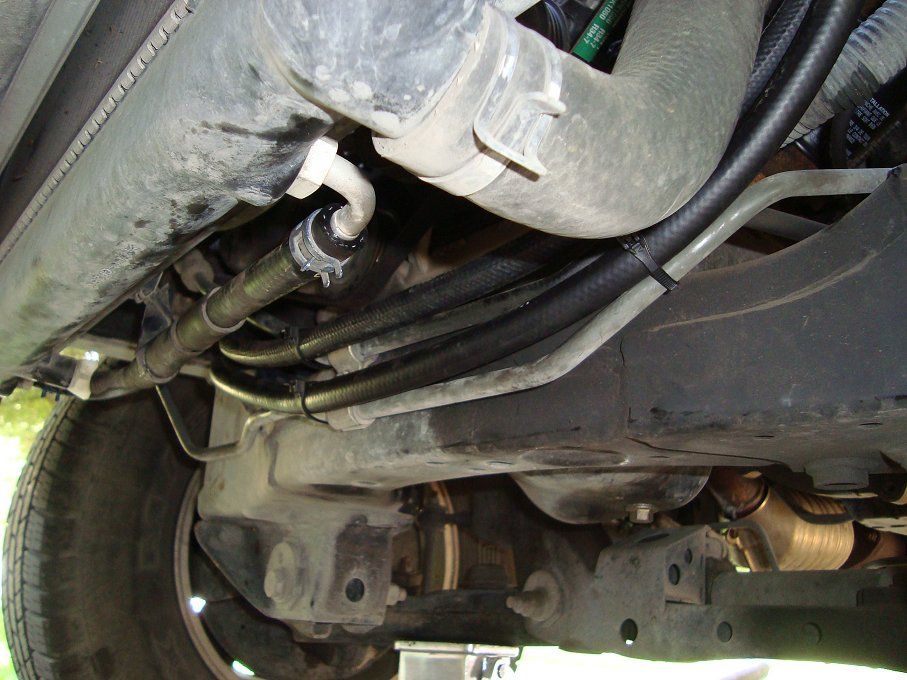
Finally I started it up to let the system start pressurizing. My wife helped me by running it through the gears a few times. Once I confirmed I had no leaks I reinstalled the horns and grill. As you can see the trans cooler gets a direct shot of air while driving and even with my hand in front of it I can feeling the cooling fan drawing air towards it.


I drove it around and replaced the fluid I lost. It has now been a week with no issues what so ever. My skid plate has been reinstalled and I sleep better knowing the old girl won’t be mixing any milk shakes.
After spending time here on the forum and reading countless “strawberry milkshake” horror stories I decided to install an external trans cooler last weekend on my 2002 2WD SR5. I have just under 100K miles but with another hot Texas summer on its way I figured a small investment of $65 and a few hours of my time was much better than a $3K transmission rebuild if the trans cooler in the radiator were to fail. I installed a B&M Super Cooler # 70264 based on the many other posts covering this topic. The trans cooler comes with about 5ft of 5/16 transmission line, this will not be enough. Some other members who had mounted their cooler passenger side indicated a need to get 8ft of transmission line. If you mount the cooler on the driver side you need to get 10ft as it is a longer run for each hose. Below is a quick run down of how I approached and executed my install. Let me know what you think.
Remove the skid plate below the engine, remove the front grill, and horns on each side above the radiator. After some analyzing I realized utilizing the passenger side of the radiator was not a good idea for two reasons. 1. The A/C line was more obstructive on the passenger side and 2. where the A/C lines pass through the radiator core support access hole does not leave much room for anything else. I know others have utilized the passenger side location with no problem but I did not see the need to.
Now that I had decided to use the driver side I needed to remove a small bracket on the A/C condenser that was not being used.
Next I “eye-balled” where the brackets needed to bent to let the cooler sit a little closer to the AC condenser. I had considered using the push through straps that come with the kit. However since there was plenty of room for the brackets the choice was easy. Plus by using the brackets this would make the cooler easy to remove should the cooling system need to be serviced in the future.
Once I had everything the way I liked it I used heater hose to wrap any sharp edges that the trans cooler or hoses would come in contact with.
I cut the mounting brackets down and shot them with some semi-gloss black spray paint. I did the final install of the cooler and connected the transmission hoses using new screw type clamps for all connections. When I disconnected the hoses from the transmission hard lines I expected a tablespoon of fluid to escape as others had reported. Even with my 4Runner parked on a slight incline, nose up, I still lost almost a QUART of fluid! I had a pan ready so I did not make a mess on my driveway but just be warned and ready if you do this on yours.
I blew some air through the original trans cooler to get all of the residual transmission fluid out of the trans cooler inside the radiator. I used a piece of the original transmission hose to cap off the original trans cooler connections.
Finally I started it up to let the system start pressurizing. My wife helped me by running it through the gears a few times. Once I confirmed I had no leaks I reinstalled the horns and grill. As you can see the trans cooler gets a direct shot of air while driving and even with my hand in front of it I can feeling the cooling fan drawing air towards it.
I drove it around and replaced the fluid I lost. It has now been a week with no issues what so ever. My skid plate has been reinstalled and I sleep better knowing the old girl won’t be mixing any milk shakes.