Battery drawing down over 2 days - winch the cause?

So basically the battery is junk. Glad mine seems to be holding up, regardless, I am pitching for an odyssey next time.

Hi jrandom,

I gotta say that I've never had a battery with a better reputation or performance than the Odyessey Extreme 35 PC-1400! Additionally, I'm using a HIGH OUTPUT aftermarket alternator (270-XP) made by DC Power Engineering which is capable of keeping that AGM battery at a full charge at all times! Have a look:

ODYSSEY Batteries - 35-PC1400T-A

The only other battery that I would buy is the Exide Edge. It's slightly less costly, but every bit as capable as the Odyssey. My wife has this one in her Camery. She was having an electrical issue a few months ago when NJ temperatures (20 Deg F) prohibited me from resolving it; the radio was coming on at random so when she got into the car in the morning she'd often find that it was on. One faithful morning she got in it only to find that her "Dyna-last" (Autozone) battery was completely dead! I had to disable the audio system until I could kneel down in the driveway to go after the cause. In the meantime, that experience had her spooked so she wanted a brand new battery until I could fix it... I chose the Exide Edge! Take a look:

rigtec-albums-%26quot%3Bgentilmen+prefer+redheads%26quot%3B-picture41149-20160112-201931.jpg
rigtec-albums-%26quot%3Bgentilmen+prefer+redheads%26quot%3B-picture41150-20160112-201951.jpg~original


Both of these AGMs (@900 CCA, 125 min res 'mine'/@710 CCA, 120 min res 'Hers') are more than capable of all you put them through so buy with confidence!

Cheers, rig
 
Last edited:
Had a good long talk with [MENTION=75328]DannyLlama[/MENTION]. I personally don't see the benefit of the NoCo Genius gen1 over a normal battery charger/tender. There is a solar powered version that may be a good on-the-go option, but nothing that I would truly trust my trip to.

I ordered the battery tender I mentioned earlier as a stop-gap solution. [MENTION=83083]rigtec[/MENTION], did you install the xp270 yourself? Or did you have a shop do it?

The hypothetical of my reasoning :
If the truck uses 100 amps to run the vehicle, and Toyota figured a 10% safety margin, the 110amp alternator is fine. Now that I added lights, compressor, deep cycle battery etc, the truck uses 150amps to run the vehicle. While a battery tender of sorts may keep the battery charged, but root cause would remain.

No matter how long you you drive the truck, if the alternator does not have sufficient amperage to run the vehicle AND charge the deep cycle battery, your deep cycle will always be depleting unless you use an external charger.

By upgrading the alternator, the root cause is addressed and both my 31M and future second D35 will be kept charged by the vehicle alone.

Otherwise you remain in the 2 steps of usage, one step backwards due to insufficient charging.

Rigtec can correct me if I'm wrong :shrug::lmao:
Okki
 
My issues arose from not enough driving. When I take road trips, longer drives, or repeated longer duration my problems go away (I have the 130 amp alternator). Which is only similar to your issue, which is what drew me to your thread. :)

I live less than 5 miles from work and often bike, so my truck sits, and that big azz battery gets no love.

I am sure others are equal or even better for all I know. The only reason I chose a NoCo, it is an onboard, marine environment IP68 rated charger, that's all. We get hammered in the winter with slurried road salt (even more so when I drive to go skiing). I had every intention of mounting it permanently somewhere. The most extra space I have is in the grill and behind the bumper cover.


I have also been looking at a Streamlight 22670 SolarStream for the roof (they use them on LEO and EMS vehicles). It is all-in-one but still investigating as I believe there are far better solutions out there. The SolarStream is pretty low, 14 watts, 0.9 amps in full sun, for that size panel (40"x13") and gees a bit expensive.

Anyway, I'm glad you've got yours sorted out :)
 
Had a good long talk with [MENTION=75328]DannyLlama[/MENTION]. I personally don't see the benefit of the NoCo Genius gen1 over a normal battery charger/tender. There is a solar powered version that may be a good on-the-go option, but nothing that I would truly trust my trip to.

I ordered the battery tender I mentioned earlier as a stop-gap solution. [MENTION=83083]rigtec[/MENTION], did you install the xp270 yourself? Or did you have a shop do it?

The hypothetical of my reasoning :
If the truck uses 100 amps to run the vehicle, and Toyota figured a 10% safety margin, the 110amp alternator is fine. Now that I added lights, compressor, deep cycle battery etc, the truck uses 150amps to run the vehicle. While a battery tender of sorts may keep the battery charged, but root cause would remain.

No matter how long you you drive the truck, if the alternator does not have sufficient amperage to run the vehicle AND charge the deep cycle battery, your deep cycle will always be depleting unless you use an external charger.

By upgrading the alternator, the root cause is addressed and both my 31M and future second D35 will be kept charged by the vehicle alone.

Otherwise you remain in the 2 steps of usage, one step backwards due to insufficient charging.

Rigtec can correct me if I'm wrong :shrug::lmao:
Okki

Hey Okki,

Your insights and concerns are 100% dead on: "see post #15 in my alternator upgrade thread": http://www.toyota-4runner.org/1734407-post15.html Hope this adds even more clarity!

rig
 
"...[MENTION=83083]rigtec[/MENTION], did you install the xp270 yourself? Or did you have a shop do it?.."

Opps almost forgot your question: Here's another link: http://www.toyota-4runner.org/1733904-post1.html ...And this is a quote from that post below:

I don't know if anyone else here has ever changed a 5th gen 4R alternator yet, but if you're planning it or need to... BEWARE! Looking at it, standing in front of the truck, you can see that it might be a b*tch getting it out from it's station. The engine head overlaps it on top, the a/c compressor beneath, hoses/piping and large harness to the right, and engine block to the south,:faint:ugh... There are, what looks like two bolts (through the 'ears') holding it in place. But what you can't see is a third bolt and bracket down underneath the alternator, securing it to the exhaust manifold which is very difficult to remove from up top; glad I had my mechanic taking care of it for me this time (my mechanic >:caked:< me)... dodged a bullet! Additionally, there is an electrical system harness that's secured to the alternator as well, so IF you ever need to R&R your alternator on a 5th gen, give yourself plenty of extra time to do this one; even the service time estimate guide advises 1.5 hrs to do this job, which is just short of the actual time that it took and this mechanic works really fast.
 
Last edited:
Man that is a nice piece of hardware. Sorry, too low on my list. Next up for me is a set tires to wrap around the second set of trail wheels I have had sitting for the last 12 months..
 
I don't think a high output alternator is going to do anything for you. Unless you are driving around all the time with your lightbar and air compressors running, you don't have any additional draw over stock. Your alternator output is also likely controlled by a charging circuit that is keying off of your battery's voltage, so it will just tell your high output alternator to cut its output sooner.

Admittedly, I am not up to speed on modern vehicle charging systems, I am going off of decade+ old motorcycle charging knowledge, but I doubt charging systems have gotten dumber.
 
I've had 2 internet conversations with electrical rebuilders(alternators & starters) in my area. Both told me that since approx. 2000, the vehicles ECU controls alternator charging. Some mfgs. use the term PCM vs. ECU.

I'm not going to argue this with anyone, but would wonder how this works on vehicles that still have a voltage regulator. What role does the VR play if the ECU regulates charging?
 
I would imagine, my auto electrical knowledge stems from the stone age too, as it seems logical that a computer based system would request and if the power was availAble it would fulfill the request. Of course that is assuming that there isnt a capped value written into the code.
 
I don't think a high output alternator is going to do anything for you. Unless you are driving around all the time with your lightbar and air compressors running, you don't have any additional draw over stock.

This.

Have you actually used an amp clamp to determine what your actual current draw is?
 
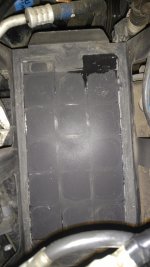
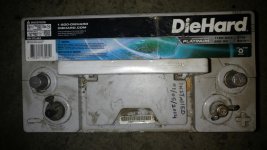
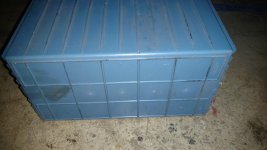
Just to close the loop here. Pulled out the 31M and found a small puddle of fluid under it and cracks around the poles.

I guess I now know for sure what was causing it to lose power!

Got a refund from Sears and shopping for a Northstar 31M at the moment. :clap2:

Okki
 

Attachments

  • IMG_20160726_195419993.jpg
    IMG_20160726_195419993.jpg
    132.7 KB · Views: 381
  • IMG_20160726_195447650.jpg
    IMG_20160726_195447650.jpg
    131.4 KB · Views: 386
  • IMG_20160726_195508774.jpg
    IMG_20160726_195508774.jpg
    124.5 KB · Views: 381
I don't think a high output alternator is going to do anything for you. Unless you are driving around all the time with your lightbar and air compressors running, you don't have any additional draw over stock. Your alternator output is also likely controlled by a charging circuit that is keying off of your battery's voltage, so it will just tell your high output alternator to cut its output sooner.

Admittedly, I am not up to speed on modern vehicle charging systems, I am going off of decade+ old motorcycle charging knowledge, but I doubt charging systems have gotten dumber.

Although I mostly agree with you...I'm thinking a little bit different variation. Some folks will use the extra amps to power serious stereo equipment (I'm in the beginning stages of tinnitus, so that won't be me)...I'd like to bypass the useless100/400 watt inverter and see what this monster could run at an idle.
 
I've had 2 internet conversations with electrical rebuilders(alternators & starters) in my area. Both told me that since approx. 2000, the vehicles ECU controls alternator charging. Some mfgs. use the term PCM vs. ECU.

I'm not going to argue this with anyone, but would wonder how this works on vehicles that still have a voltage regulator. What role does the VR play if the ECU regulates charging?

Hi Lester,

I'm not well enough informed to speak about the other modern Japanese and American made vehicles, but these late model Toyotas do have their PCMs/ECUs set-up to 'Monitor' the starting/charging system status e.g. voltage range, outdoor battery temperatures...etc, but are not wired (integrated) within the alternator's controlling circuitry to perform generator output compensations or surge correction. Because output voltage was a point of concern for me, I researched every piece of literature that I could find on the subject of ECU/PCM controlled charging systems, as well as the GEN-5 4Runner wiring data sheets that were available!

The bottom line is... the "DC Power Engineering 270XP" is maintaining a constant 14.05VDC from it's integrated, internal voltage regulator, and no (ECU/PCM) third party interference!

Best to you!
 
Just to close the loop here. Pulled out the 31M and found a small puddle of fluid under it and cracks around the poles.

I had my battery in/out a lot whilst messing with headlights. After that I began finding lots of corrosion on/around the battery.
Upon inspection, it was weeping at the seam of the top of the case. Turns out I had overtightened the hold down clamp and distorted the top.
 
Last edited:
Hi Lester,

I'm not well enough informed to speak about the other modern Japanese and American made vehicles, but these late model Toyotas do have their PCMs/ECUs set-up to 'Monitor' the starting/charging system status e.g. voltage range, outdoor battery temperatures...etc, but are not wired (integrated) within the alternator's controlling circuitry to perform generator output compensations or surge correction. Because output voltage was a point of concern for me, I researched every piece of literature that I could find on the subject of ECU/PCM controlled charging systems, as well as the GEN-5 4Runner wiring data sheets that were available!

The bottom line is... the "DC Power Engineering 270XP" is maintaining a constant 14.05VDC from it's integrated, internal voltage regulator, and no (ECU/PCM) third party interference!

Best to you!

I was curious about this "no ECU/PCM) third party interference"

Queued up with DC Power. Asked if the volt. reg. in their XP 270 is also controlled by PCM/ECU. Their reply follows - underlined:

Everything from 2006 and on is PCM controlled. If it has that square 4 pin plug it is PCM controlled


I was curious about this "no ECU/PCM) third party interference"

Queued up with DC Power. Asked if the volt. reg. in their XP 270 is also controlled by PCM/ECU. Their reply follows - underlined:

Everything from 2006 and on is PCM controlled. If it has that square 4 pin plug it is PCM controlled

Hey Lester,

I just spent a little time trying to find the documentation that I once found on the DC Power Engineering Knowledge-base sometime ago; apparently they've lost some of their extensive tutorials, videos and other important documentary teaching materials! The information that I got was a bit different wrt to the 5'th GEN 4Runner. It explained that If the 'specific vehicle' was using an ECU/PCM to control electrical system voltage the 270XP was ECU/PCM compliant; meaning that the square 4 pin plug would accommodate that function if the vehicle itself were to utilize the ECU/PCM controlled alternator.

If you were to look at the GEN-5 4Runner charging system wiring diagrams, it shows that the 'square four pin connector plug' is marked (M) as a monitor, because the 4Runner uses an independent i.e. stand-alone internal voltage regulator and needs no external support! Here's that charging system electrical plot:

FIRST A LOOK AT THE SQUARE 4-PIN CONNECTOR


NOW A LOOK AT THE ELECTRICAL SCHEME PRINT


The data recorded and logged here is used to help the tech staff determine if there are problems with the charging, starting, fluctuating voltages or current issues across time; the internal voltage regulator is wholly responsible for maintaining safe output voltages for the electrical system components and, also keeping the battery fully charged at all times!

rig, 'Best to you'!
 
Last edited:
The hypothetical of my reasoning :
If the truck uses 100 amps to run the vehicle, and Toyota figured a 10% safety margin, the 110amp alternator is fine. Now that I added lights, compressor, deep cycle battery etc, the truck uses 150amps to run the vehicle. While a battery tender of sorts may keep the battery charged, but root cause would remain.

No matter how long you you drive the truck, if the alternator does not have sufficient amperage to run the vehicle AND charge the deep cycle battery, your deep cycle will always be depleting unless you use an external charger.

By upgrading the alternator, the root cause is addressed and both my 31M and future second D35 will be kept charged by the vehicle alone.

Otherwise you remain in the 2 steps of usage, one step backwards due to insufficient charging.

Rigtec can correct me if I'm wrong :shrug::lmao:
Okki

^^^^This.

I have recently developed starting issues and noticed that over a long camping trip that my fridge would not stay on like it previously had. Then right before Christmas i had to jump my truck after a short trip to a store left my battery without enough voltage to start up.

i took it to autozone to check the battery (optima yellowtop that was bought new in August of 2014 and has been in the 4runner since October 2014) because i was still within the 3 year window of warranty. Autozone says there is nothing wrong with the battery its just only at 43% charged. They checked the alternator and said it failed the voltage check. The kid was new and i didnt have time to mess around with the holidays approaching so i bought a duralast tender and charged my battery overnight. Has been fine since for the most part but i wanted a second opinion. Took it to firestone yesterday and they did a much more thorough check than autozone did. They said there is nothing wrong with the battery or alternator, just the battery isnt fully charged AGAIN.

This reiterates what many others here have said, that the stock alternator cannot keep up with the electrical extras most of us throw on the truck. Purchasing a HO alternator today. It is time. Especially with a dual battery setup fast approaching where i will need to keep 2 deep cycle batteries fully topped off...

@okki, has your deep cycle battery been staying fully charged since you added the HO alternator?
 
Had no issues since the alternator upgrade. Left it at the airport for a couple days and all was good when I got back.

Got a dual battery kit ready for installation and installed dynamat and a Goose Gear floor in the back this weekend in preparation for the fridge.

Anyone needing a sliding tray!?!?!? :p
Okki
 

Members online

No members online now.

Forum statistics

Threads
278,316
Messages
3,554,112
Members
248,016
Latest member
Advally Service

Trending content

Back
Top