Brake bleeder?

zig

New member
I would like to make one of the positive pressure brake bleeders using an extra brake cap attached to an air regulator/compressor. I bought the cap, but am not for sure where I should put the air. The cap has two o-rings, one at the very top, and one at the bottom on the end of a plastic stud. There is a hole in this stud between the top and bottom o-ring, but the stud/tube is capped when it gets to the bottom o-ring. Should I put the air into this tube, pressurizing the area between the two o-rings, or should I extend it down to the area below the second o-ring? I've seen some of the units sold specifically for this, and it looks like they just pressurize the whole thing, but I don't want to damage anything.

I was only going to use 2-3 lbs of pressure.

Thanks
 
Register to hide this ad
See my writeup here on how to make your own cheap brake flushing tools.

As a short answer to your question, though, you need to pressurize the whole reservoir, and 10 psi is more than likely closer to the pressure you'll end up using to make it more effective.
 
Last edited:

Attachments

  • 057.jpg
    057.jpg
    12.1 KB · Views: 3,679
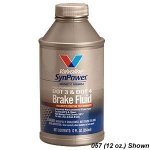
By the way...I use this type, because the boiling point is WAY higher. Well worth it & the fluid color is lighter, so you can see it when it's clean fluid compare to old fluid left in the lines.
 
kimboy said:
Icantsee, how many bottles of that stuff is required for a system flush?

kimboy,

Sorry...I don't know for the 4R. I just got it since Halloween & I wouldn't be touching the brakes for another 2yrs. Or at least the brake fluid. I read or watched it on SpikeTv that the fluid needs to be flushed every 2yrs. I have friends that don't even flush it for 5+ yrs.

Uneek's MPV is still running on the original brake fluid since '94. And no problem, but I wouldn't recommend it.

Because the dirty & old fluid can deteriorate the brake lines. A few bucks for the fluid & 30mins of doing it is less cost than brake lines.

And back to how many bottles, I have no idea, but let me give you a run down on cars that I've done in the past.

'93 Honda Prelude - (1) bottle
'94 Acura Integra - (1) bottle
'95 Lexus SC300 - (1.5) bottle
'95 Honda Accord LX - (1) bottle
'97 Honda Civic EX - (1) bottle
'99 Toyota Corolla CE - (1) bottle
'99 BMW 328 - (1.5) bottle
'01 Honda Accord LX 4cyl - (1) bottle
'03 Honda Civic EX - (1) bottle
'03 Toyota Camry V6 LE - (1.5) bottle
'04 Subaru WRX - (1) bottle

So far...4cylinders seems to be (1) bottle & V6s are (2)

For the 4R, I don't think it'll be much far from the V6s that I worked on in the past.

If you need a write up on the procedure in how to do it, send a message my way.
 
icantsee said:
Uneek's MPV is still running on the original brake fluid since '94. And no problem, but I wouldn't recommend it.

Right... and I don't have a mushy pedal from flushing either. :p
 
kimboy said:
how many bottles of that stuff is required for a system flush?

Get 3-4 bottles, you can always return what you don't use (Kragen allows returns). Better to have more on hand and return them later, than to be short and have to walk or call someone to get to the auto store. Also, use brand new bottles of fluid. Opened bottles sitting around could've absorbed moisture defeating the purpose of a flush.

BTW, the reason to flush the system, is not cause it'll get dirty. Brake fluid absorbs moisture which lowers brake fluid's boiling temp and could lead to brake fade. DOT5 fluid does not absorb moisture, so moisture will collect in the lowest parts of the brakes usually it's the brake calipers or wheel cylinders, rusting those components first.

I recommend getting a power flusher like the Motive Products. It's much easier to do by yourself, not to mention if your wanna be helper is half deaf (can't understand when to pump or release the pedal) or incompotent, air will be introduced into the system or stripped bleeder screws. Effing idiots.

Always siphon out as much old fluid from the master cylinder reservoir, add new fluid and then start the flushing process. Another tip I read was, rather than pour fluid into the power flusher, just top off the master cylinder reservoir and use the power flusher for the air pressure to push the fluid through adding more fluid as needed. It'll make one less thing to clean up later.
 
Originally posted by Uneek

BTW, the reason to flush the system, is not cause it'll get dirty. Brake fluid absorbs moisture which lowers brake fluid's boiling temp and could lead to brake fade. DOT5 fluid does not absorb moisture, so moisture will collect in the lowest parts of the brakes usually it's the brake calipers or wheel cylinders, rusting those components first

Exactly, Uneek got it dead on. He hit the hammer on the nail.

I forgot to mention, those numbers are based on 32oz size bottles.

That picture is just what Kragen gave me.
 
Last edited:
Uneek said:
Get 3-4 bottles, you can always return what you don't use (Kragen allows returns). Better to have more on hand and return them later, than to be short and have to walk or call someone to get to the auto store. Also, use brand new bottles of fluid. Opened bottles sitting around could've absorbed moisture defeating the purpose of a flush.

BTW, the reason to flush the system, is not cause it'll get dirty. Brake fluid absorbs moisture which lowers brake fluid's boiling temp and could lead to brake fade. DOT5 fluid does not absorb moisture, so moisture will collect in the lowest parts of the brakes usually it's the brake calipers or wheel cylinders, rusting those components first.

I recommend getting a power flusher like the Motive Products. It's much easier to do by yourself, not to mention if your wanna be helper is half deaf (can't understand when to pump or release the pedal) or incompotent, air will be introduced into the system or stripped bleeder screws. Effing idiots.

Always siphon out as much old fluid from the master cylinder reservoir, add new fluid and then start the flushing process. Another tip I read was, rather than pour fluid into the power flusher, just top off the master cylinder reservoir and use the power flusher for the air pressure to push the fluid through adding more fluid as needed. It'll make one less thing to clean up later.
Please be aware that the Motive bleeder does not fit the 2001+ models. There are modification instructions here that tell you how to modify it for the 2001 and 2002 models. The same modifications should work for 2003+ models, but I have not tried it.

Instead of the Motive bleeder, I used the setup GSGALLANT provided in his posts. One modification -- I also bought an in-line regulator to ensure the air compressor was not providing too much air. Good thing, too, as the dial on the compressor only goes down to 30 psi, even though the regulator will go to zero. The in-line regulator I bought was this one.

By the way, thanks to the contributors to this thread. After flushing the system on Sunday, the brake pedal feels much more solid.
 
jharris2 said:
Please be aware that the Motive bleeder does not fit the 2001+ models. There are modification instructions here that tell you how to modify it for the 2001 and 2002 models. The same modifications should work for 2003+ models, but I have not tried it.

Instead of the Motive bleeder, I used the setup GSGALLANT provided in his posts. One modification -- I also bought an in-line regulator to ensure the air compressor was not providing too much air. Good thing, too, as the dial on the compressor only goes down to 30 psi, even though the regulator will go to zero. The in-line regulator I bought was this one.

By the way, thanks to the contributors to this thread. After flushing the system on Sunday, the brake pedal feels much more solid.

Good catch John... I forgot about that. Motive's site says to call for the 4Runners. After seeing that on their site, I did take a look at my 4Runner vs. the Camry and Tacoma; the cap, reservoir and master cylinder is completely different.

On a side note, it appears that the VSC and ABS module are directly under the reservoir and on the master cycliner for the 4Runner instead of a seperate ABS unit on the passenger side fender for the Camry (has VSC too).
 
Uneek said:
Good catch John... I forgot about that. Motive's site says to call for the 4Runners. After seeing that on their site, I did take a look at my 4Runner vs. the Camry and Tacoma; the cap, reservoir and master cylinder is completely different.

On a side note, it appears that the VSC and ABS module are directly under the reservoir and on the master cycliner for the 4Runner instead of a seperate ABS unit on the passenger side fender for the Camry (has VSC too).
I sent an e-mail to Motive last week and got a response today. Basically, it didn't provide any insight into their product. In return, I pointed them to the modification and suggested they may want to re-think that their products don't fit any 4Runners from 2001 and onward.

A friend tried the modification linked in my prior post but didn't have much success. So he took GSGALLANT's adapter, connected it to the Motive tank so the Motive was supplying pressure and fluid, and flushed his 2001 model a couple of days ago. Says it worked well for him.
 
i was just going to post a new topic that the motive power bleeder adapter doesn't fit my 04 v6 4runner. i'll look into that mod you posted. thank god for the maintenance forums.
 
*wishlist* said:
i was just going to post a new topic that the motive power bleeder adapter doesn't fit my 04 v6 4runner. i'll look into that mod you posted. thank god for the maintenance forums.
One correction to my last post....the friend told me today that he used the Motive unit only to control the air pressure. Like others in this thread, he filled up the reservoir with fluid and just made sure it didn't go below the "min" level.
 
Yeah, an inline regulator and guage are a must if your compressor's regulator can't control at pressures less than 10psi, and if your compressor's guage does not read that low. I'm lucky (unlucky because I'd like a bigger one also) that I only own a small compressor, so it has a regulator that fairly accurately controls pressure right down to a couple of psi. I usually use approx 10-12 psi when I pressurize my brake reservoir. Any higher than that and I'd start to get nervous.

The beauty of the adapter I build is that it seems pretty much universal as far as 4Runners and Tacoma's go (for the ones that I've tried it on anyways, which include 2002 4R, 1993 4R with 3.0L, and 1999 Tacoma).
 
Please be aware that these bleeder-valves snap off flush with the calipers, many times. So please do hit it with PB-blaster or similar the day before!
 
greasefingers said:
Please be aware that these bleeder-valves snap off flush with the calipers, many times. So please do hit it with PB-blaster or similar the day before!
Good information! I found it better to use a box-end wrench than open-end to make sure to not round off the bleeder plug. They were 8mm, IIRC.
 
GSGALLANT said:
Yeah, an inline regulator and guage are a must if your compressor's regulator can't control at pressures less than 10psi, and if your compressor's guage does not read that low. I'm lucky (unlucky because I'd like a bigger one also) that I only own a small compressor, so it has a regulator that fairly accurately controls pressure right down to a couple of psi. I usually use approx 10-12 psi when I pressurize my brake reservoir. Any higher than that and I'd start to get nervous.

The beauty of the adapter I build is that it seems pretty much universal as far as 4Runners and Tacoma's go (for the ones that I've tried it on anyways, which include 2002 4R, 1993 4R with 3.0L, and 1999 Tacoma).
It would also work on the Camry, and probably most anything with a round cap. The problem I saw with using it on the Camry was that the reservoir is small and it would probably have to be filled up once or twice while you're bleeding each line. Seemed to be too much effort compared to the Motive unit.
 

Members online

Forum statistics

Threads
278,306
Messages
3,554,046
Members
248,016
Latest member
Advally Service

Trending content

Back
Top