
Crawford Eco Block

I think most driving miles are steady state cruising. I think with modern wide band o2 systems 90%+ of fuel is used during closed loop operation.

Typically it requires almost full throttle to get into open loop on the 4runner. I don't know if it ever goes into OL below 3k rpms - I don't know what circumstances would cause it. I haven't seen it happen and I can't create a scenario where it will happen that I'm aware of. The other OL condition is deceleration or downshifting down hills. So.. it's pretty rare for most of us in normal use.

What you think is well noted while keeping in mind that many also think the world is flat.

The facts are that open loop fueling is based on many factors and throttle position is not really one of them. The main parameter the ECU looks at to make the decision between open and closed loop is called Load and load is not RPM dependent, so your assumption about under 3k rpms is not a reality.

Also, during deceleration and downshifting down hills, the ECU automatically shuts off the fuel injectors. This function is designed in to save fuel, and while in the deceleration mode you can see the air fuel ratio go off the chart because of the massive amounts of oxygen in the exhaust system.

Also while in the deceleration mode the Load parameter is at its lowest possible setting, and this setting is well below the threshold the ECU uses to switch between closed and open loop fueling.

I would recommend reading up on how the ECU actually functions instead of making uneducated guesses on how it functions. This would enlighten you quite a bit and also make it easier for you to follow the technical part of the conversation.

Thanks for you input though,
Quirt
 
What you think is well noted while keeping in mind that many also think the world is flat.

The facts are that open loop fueling is based on many factors and throttle position is not really one of them. The main parameter the ECU looks at to make the decision between open and closed loop is called Load and load is not RPM dependent, so your assumption about under 3k rpms is not a reality.

Also, during deceleration and downshifting down hills, the ECU automatically shuts off the fuel injectors. This function is designed in to save fuel, and while in the deceleration mode you can see the air fuel ratio go off the chart because of the massive amounts of oxygen in the exhaust system.

Also while in the deceleration mode the Load parameter is at its lowest possible setting, and this setting is well below the threshold the ECU uses to switch between closed and open loop fueling.

I would recommend reading up on how the ECU actually functions instead of making uneducated guesses on how it functions. This would enlighten you quite a bit and also make it easier for you to follow the technical part of the conversation.

Thanks for you input though,
Quirt
I think both of us understand what's happening. One of us is honest about it.
 
Quirt,

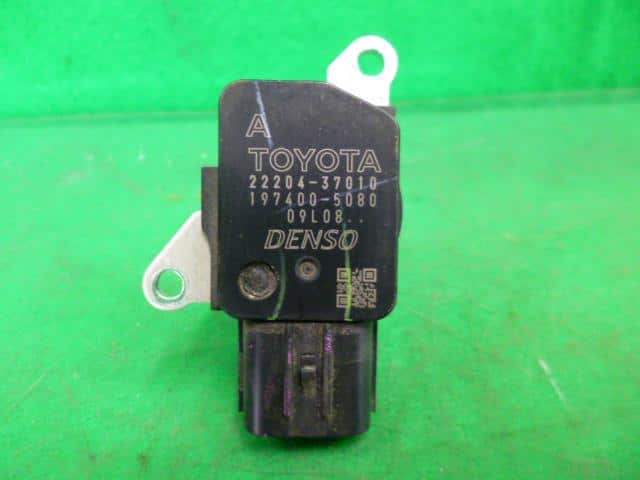
I've got a denso 197400-5080 and its not listed on the application chart.

PA01386835_907cc0.jpg


2010 SR5 premium. It looks like the same shape as any other Denso MAF but just want to confirm with you.
 
Last edited:
Toyota has gone to the newer / smaller MAF sensor on your 2017 SR5 so the correct fitment will be our Q2.

I'm doing well, thanks for asking. I hope you are in the same boat :)

I am intrigued by the EcoBlock and read the 400+ posts. I ordered one this morning and will give it a try. Quirt's credentials are pretty solid.
 
What you think is well noted while keeping in mind that many also think the world is flat.

The facts are that open loop fueling is based on many factors and throttle position is not really one of them. The main parameter the ECU looks at to make the decision between open and closed loop is called Load and load is not RPM dependent, so your assumption about under 3k rpms is not a reality.

Also, during deceleration and downshifting down hills, the ECU automatically shuts off the fuel injectors. This function is designed in to save fuel, and while in the deceleration mode you can see the air fuel ratio go off the chart because of the massive amounts of oxygen in the exhaust system.

Also while in the deceleration mode the Load parameter is at its lowest possible setting, and this setting is well below the threshold the ECU uses to switch between closed and open loop fueling.

I would recommend reading up on how the ECU actually functions instead of making uneducated guesses on how it functions. This would enlighten you quite a bit and also make it easier for you to follow the technical part of the conversation.

Thanks for you input though,
Quirt

Do you have any technical presentations available for this, like that would have been made to anyone in the industry (SAE, TRB, CAR, etc.)?
 
Quirt,

I've got a denso 197400-5080 and its not listed on the application chart.

PA01386835_907cc0.jpg


2010 SR5 premium. It looks like the same shape as any other Denso MAF but just want to confirm with you.

This is the second generation denso sensor which takes our Q2
 
I am intrigued by the EcoBlock and read the 400+ posts. I ordered one this morning and will give it a try. Quirt's credentials are pretty solid.

Thanks for the kind words! And please post your results on here, good or bad!

Quirt
 
Do you have any technical presentations available for this, like that would have been made to anyone in the industry (SAE, TRB, CAR, etc.)?

I wish I had the ability to create a technical presentation like you are speaking of, but I do not and that is just one of my shortcomings. I'm just a third generation car nut that was blessed with a dose of common sense which makes math easy for me to comprehend.

Quirt
 
These guys have come up with a MAF mod as well. However their mod requires different fuel injectors.

The point is that its possible to make small reliable gains from simple MAF mod.

---------Cap's MAF Riser Mod ---------

I'm also pretty good at math - and electronics - and fluid dynamics. Although I don't know what the programming looks like behind the fuel map - I do know how a spacer effects the maf sensor output. And I know it's a lot easier to just put a 50 cent potentiometer inline on the output signal than use a spacer. You can dial in exactly how much signal modification you want. The problem is that it would only work in open loop, and these vehicles rarely operate in open loop. And as I've shown earlier if you could lean it out you're also violating EPA law by increasing emissions. - there's some chemistry going on here too.

The fact is that is smells like junk science. First: the claimed effect appears so weak that observers can hardly distinguish it from noise. No amount of further work increases the signal. Second: anecdotal evidence is used to back up the claim. Those are trademark signs.

Can you trick the ECU to run lean in OL? sure. Should you? that's up to you. Is there an easier way to do it electronically? Yep - I already told you how. It would cost about $1 and a few minutes to solder it in.
 
I'm also pretty good at math - and electronics - and fluid dynamics. Although I don't know what the programming looks like behind the fuel map - I do know how a spacer effects the maf sensor output. And I know it's a lot easier to just put a 50 cent potentiometer inline on the output signal than use a spacer. You can dial in exactly how much signal modification you want. The problem is that it would only work in open loop, and these vehicles rarely operate in open loop. And as I've shown earlier if you could lean it out you're also violating EPA law by increasing emissions. - there's some chemistry going on here too.

The fact is that is smells like junk science. First: the claimed effect appears so weak that observers can hardly distinguish it from noise. No amount of further work increases the signal. Second: anecdotal evidence is used to back up the claim. Those are trademark signs.

Can you trick the ECU to run lean in OL? sure. Should you? that's up to you. Is there an easier way to do it electronically? Yep - I already told you how. It would cost about $1 and a few minutes to solder it in.

thank you.. this is informative stuff.. didnt realize too lean can also introduce emissions as well.. always thought more fuel more emissions..duh.. so much balance involved
 
thank you.. this is informative stuff.. didnt realize too lean can also introduce emissions as well.. always thought more fuel more emissions..duh.. so much balance involved

An excessively lean AFR and a richer AFR will both create more emissions as well as different types of emissions. The question here is to quantify what "too lean" is...

The reality is the Lambda sensor will not let the motor run any leaner in closed loop fueling than the stock fuel map is set at. And when the ECU transitions into open loop fueling, the air fuel ratio is way on the rich side so it never gets anywhere close to the lean state he is speaking about.

Without stating an actual air fuel ratio there is no way to prove or disprove the statement.

Quirt
 
I'm also pretty good at math - and electronics - and fluid dynamics. Although I don't know what the programming looks like behind the fuel map - I do know how a spacer effects the maf sensor output. And I know it's a lot easier to just put a 50 cent potentiometer inline on the output signal than use a spacer. You can dial in exactly how much signal modification you want. The problem is that it would only work in open loop, and these vehicles rarely operate in open loop. And as I've shown earlier if you could lean it out you're also violating EPA law by increasing emissions. - there's some chemistry going on here too.

The fact is that is smells like junk science. First: the claimed effect appears so weak that observers can hardly distinguish it from noise. No amount of further work increases the signal. Second: anecdotal evidence is used to back up the claim. Those are trademark signs.

Can you trick the ECU to run lean in OL? sure. Should you? that's up to you. Is there an easier way to do it electronically? Yep - I already told you how. It would cost about $1 and a few minutes to solder it in.

Higher emissions (from higher engine and exhaust temps) and accelerated failure of the catalyst ($$) - at best. Doing this means you're leaning an awful lot on knock sensors to prevent serious engine damage. Probably unlikely, but the risk/reward here makes little practical sense...

If simply leaning the mixture safely increased fuel economy AND power, either Toyota or the aftermarket tuners absolutely would have done so already.

An excessively lean AFR and a richer AFR will both create more emissions as well as different types of emissions. The question here is to quantify what "too lean" is...

The reality is the Lambda sensor will not let the motor run any leaner in closed loop fueling than the stock fuel map is set at. And when the ECU transitions into open loop fueling, the air fuel ratio is way on the rich side so it never gets anywhere close to the lean state he is speaking about.

Without stating an actual air fuel ratio there is no way to prove or disprove the statement.

Quirt

You're right. Running lean increases NOx. One that is absolutely proven to contribute to things that make you and those around you sick.

Just note that the last sentence obliterates the rest of your claims. Without taking the time to measure its effects in a variety of environmental conditions, you have no basis to make any such statements about reliability or efficacy.
 
Last edited:
Higher emissions (from higher engine and exhaust temps) and accelerated failure of the catalyst ($$) - at best. Doing this means you're leaning an awful lot on knock sensors to prevent serious engine damage. Probably unlikely, but the risk/reward here makes little practical sense...

If simply leaning the mixture safely increased fuel economy AND power, either Toyota or the aftermarket tuners absolutely would have done so already.


You're right. Running lean increases NOx. One that is absolutely proven to contribute to things that make you and those around you sick.

Just note that the last sentence obliterates the rest of your claims. Without taking the time to measure its effects in a variety of environmental conditions, you have no basis to make any such statements about reliability or efficacy.

Your opinions "might" be valid if I was the one saying that my product causes the engine to run lean, but instead this false information was created by the trolls on this thread.

As I have stated many times in this thread, the Lambda sensor on the engine will not let the engine run lean. It forces the engine to run at 14.7 to 1 AFR in its leanest condition, unless you go into the ECU and re-program the closed loop fuel table.

Quirt
 
Your opinions "might" be valid if I was the one saying that my product causes the engine to run lean, but instead this false information was created by the trolls on this thread.

As I have stated many times in this thread, the Lambda sensor on the engine will not let the engine run lean. It forces the engine to run at 14.7 to 1 AFR in its leanest condition, unless you go into the ECU and re-program the closed loop fuel table.

Quirt

You have to choose between running lean or not. If the engine is not running leaner than the OEM spec, it does not save fuel. End of story. If it does run lean, then it can at least possibly save fuel. What is not physically possible is to burn the same amount of fuel while at the same time burning less fuel. I hope you can recognize how nonsensical you sound when you say that it is not running lean but is also saving fuel. So which is it? Is it running lean or not? You need to quit lying to people about your product.
 
Just so there's no confusion. The fact of what this spacer does is that it runs lean in open loop, and does nothing in closed loop.
 
Just so there's no confusion. The fact of what this spacer does is that it runs lean in open loop, and does nothing in closed loop.

This. Unless the ECU is rejecting MAF outputs as a result of this spacer (which would likely throw a check engine light), it will NOT change whether the engine runs in "open or closed loop" -- terms used with gross simplification (confusion?) by Quirt. All it's doing is pulling the sensor wire out of the stream of air, giving a false reading of less air entering the intake than actually is, and thus running lean.

It would be safer to simply disconnect the MAF (for free) and live with the check engine light. Or better yet, accept the fact that even if this thing gives you 10 hp (unlikely), you'll become numb to that difference almost immediately. The risk is destroying O2 sensors, three very expensive catalysts, and exhaust valves, while being a certified dick for bypassing effective pollution controls for something so insignificant.

Many of us could have bought a plenty-capable SUV with more power, but didn't because reliability and low cost of ownership (maintenance) was a priority. I'm surprised to see so many willing to take the risk from someone who throws around simple technical terms out of context with zero evidence of anything resembling real-world testing.
 
Last edited:
My issue with it is the misrepresentation. If they would just come out and say exactly what it does and market based on reality, I think it would probably work okay.

It's not unreasonable to just market it as "this device causes a leaner mix during open loop mode, so you can get a few more hp when at wide open throttle. We think that the wide band O2 sensor along with the conservative OEM fuel map allows you to do this safely (but you're on your own if not). It only costs $30 and installs in 5 minutes." There wouldn't be any controversy over it, and buyers would know what they're getting.
 
I posted about this a while back. I can see where it would possibly work, but not by running leaner. But, by running more timing via slightly reduced load readings. It takes quite a bit of throttle to get these things in open loop and even then.. it's a WB so hard to say if it is true open loop vs just a fuel enrichment mode.

It's a hack regardless... but hacks sometimes work and these trucks obviously come with an oddball calibration from the factory.
 
I posted about this a while back. I can see where it would possibly work, but not by running leaner. But, by running more timing via slightly reduced load readings. It takes quite a bit of throttle to get these things in open loop and even then.. it's a WB so hard to say if it is true open loop vs just a fuel enrichment mode.

It's a hack regardless... but hacks sometimes work and these trucks obviously come with an oddball calibration from the factory.

You are correct, this fuel saver does not just make one change within the ECU. On the contrary it makes a change to every load based table which all add up to a slightly more efficient running engine. This increase in efficiency saves fuel and squeezes out a little more power as well.

Thanks for thinking outside the box,
Quirt
 

Members online

Forum statistics

Threads
278,312
Messages
3,554,084
Members
248,016
Latest member
Advally Service

Trending content

Back
Top