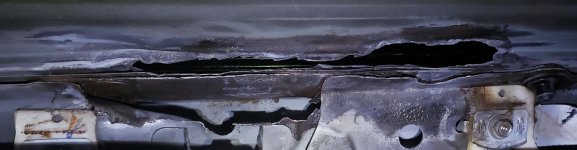
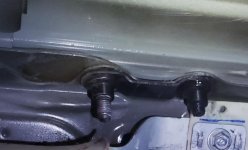
Destroyed Factory Roof Mounting Locations

I have to ask because I could not find anything on the net about silicone being bad for paint in regards to sealing a roof rack as example. I saw multiple web sites saying that modern paint contains silicone as it helps flow through the sprayers. Some car wax contains silicone, windshield sealant is silicone.
Do you have any links that show its actually harmful? I'm just wondering because as I've used it in many automotive sealant areas like adding grommets for exterior lighting etc. maybe I haven't kept the rigs long enough to see damage but I've never read anything bad about until now. Thanks!

Let's clarify: there are a lot of different kinds of sealants, there are a lot of different kinds of silicone, there are a lot of different kinds of silicone sealants. Some people use the words "silicone" and "sealant" interchangeably, even though not all sealants have silicone, and not all silicone products are sealants.

What I can't do is give you an exhaustive list of every kind of sealant that everyone has used to seal a roof rack, and whether or not they are compatible with paint, metal, weathering, UV exposure, etc. I caught some flak when I posted this to a Facebook group. Lots of people said "stop making blanket statements, I used XYZ sealant on my roof and it's fine". Sorry, but I would rather make blanket statements that encourage research and PREVENT accidents like this happening, even if I'm not being inclusive of exceptions.

Sure, some acetic silicone sealants appear to be corrosive to bare metal. However, my assertion isn't that the sealant corroded the metal in OP's roof. What I'm suggesting is that by using a sealant that cures and hardens (as well as removal/reinstallation of the rack without new sealing), it shrank back from the surfaces it was bonded to. This allowed moisture to creep into the joints and stagnate, causing runaway oxidation.

This is why I advise against using a sealant that cures and hardens (like most silicone sealants). Most silicone based sealants are not made for continuous exposure to the elements and sunshine (UV) that can make things very hard and brittle. Also, you have to consider that your vehicle roof goes through hugely dynamic situations like vibration, heat/cold cycles that expand and contract the sheetmetal, weight loading, etc.

Butyl rubber is what OEM applications use because it's a sealant that never cures. It can move with dynamic applications without losing its bond and seal. It's also fairly inert and easy to remove, even after years of service. Can you imagine chipping hardened silicone sealant off of your roof rack mounts in ten years?

By the way, your last example (windshield sealant): that's butyl rubber too :wink2:
 
Just wondering if you used the Oem bolts and rubber washers ? This is what my Oem rack came with.

e9e7b78ba27b731f61fb83b49ffed695.jpg

I did not use the factory bolts the rack had its own set, which I think could have also been an issue
 
Got the areas cleaned and rust-free.
 

Attachments

  • 20200110_195242.jpg
    20200110_195242.jpg
    154.8 KB · Views: 1,974
  • 20200110_195531.jpg
    20200110_195531.jpg
    116.3 KB · Views: 1,929
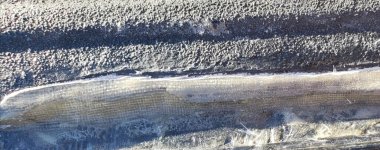
First attempt at fiberglassing the outside. It doesn't look pretty but it's sealed tight to the metal both on top of the roof and in the rail. I'll do the inside as well. Everything else will get a coat of POR-15.
 

Attachments

  • 20200112_143435.jpg
    20200112_143435.jpg
    165.7 KB · Views: 1,925
This is why I don't want to mess with my roof rack or install a new one. The factory installed one is probably the best you can get at having proper sealing.

Don't count on it.
I've had several roof racks factory installed and every one has ended up rusting like the OP's roof. They were not 4 runners.

A couple things at play here.
The truck was left outside near the ocean, same as mine, less than a mile from the ocean. Salt air comes into play. It's a real problem.
The factory should seal protrusions properly, but I would not trust it.
On my list is to remove the factory install and reinstall it to what I feel is adequate. Hate to see a good 4 runner wasted needlessly.
The reason why there was no tell tale signs of intrusion is likely because the water once inside finds its way down the inside of the framework all the way down to the sills or rockers. On one of my vans the jacking point had rusted so thin that it collapsed under a jack but looked fine on the outside.
Another area to check is the hinge mounts for the rear hatch. That can get rusted from the inside from the roof rack leaks.

I did a lot of marine work and pretty standard in the industry is to use a 3M product called 5200. It's a marine grade sealant that works well under the water line on hull protrusions and does not leak. It must be properly applied in a process called "bedding" the attached parts. It seals both the mating surfaces and the hardware threads. Galvanic corrosion is really not an issue for something like this.

Repairing the damage with fiberglass is fine but you must realize that polyester resin is not waterproof, epoxy resin is and has a much higher adhesive strength.
Similarly regular automotive bondo is also polyester, not waterproof and also has poor adhesion.
Marine fairing compound looks just like the bondo, costs more, but also can be used below the waterline, commonly on aluminum hull yachts. You can't beat it off with a sledge hammer.

Lastly, I wouldn't use POR15, it can have problems with moisture creeping unnoticed underneath it, not worth the risk.
Again, in marine, IMRON is used, or any polyurethane 2 part paint, properly prepped and applied of course. Prepping constitutes cleaning the metal with phosphoric acid along with etching primers.

Just some food for thought
Best of luck with it. :usa2:
 
Sorry to see you're fixing it, I am here to present you with a better idea (not my image)
 

Attachments

  • 4runner Convertible.jpg
    4runner Convertible.jpg
    69.9 KB · Views: 1,749
Oh man that stinks: Doing rack installs at a prior job we did not use RTV sealants because of the drying and hardening.

We exclusively used E6000 for everything that had to do with sealing. Albeit a little runnier.
 
Just a guess but was the rack still in really good shape like not corroded at all? Was the metal of the rack directly touching the metal of the roof maybe where paint had worn off? Factory racks have a rubber or plastic spacer and I'm sure factory bolts are chosen specifically to avoid a dissimilar metals issue. Your rack I'm guessing did not have a spacer and or the hardware was a dissimilar metal. Again just guessing.

Galvanic action occurs when two electrochemically dissimilar metals are in contact and a conductive path occurs for electrons and ions to move from one metal to the other. One metal corrodes as its ions are deposited onto the other metal. ... Cathodes are noble, or stable, metals that are not prone to corrosion.

If I'm correct, your roof acted similar to a zinc anode on a boat prop shaft or the zinc outer coating of a galvanized steel beam. It sacrificed itself protecting your roof rack.

Listen to the above and the guy on page 1. Likely the main cause. I am in the coatings industry and you would not see that sort of corrosion from normal water and leakage. Not possible in that time frame.

Bad metal next to bad metal and you get what you get...
 
This is a really disquieting thread, as a person who hasn’t actually committed to purchasing his TRDP yet. I know it’s an aftermarket roof rack, but man that calls into question some of the basic fundamental structure of the vehicle itself. There could be other factors at play (metals not playing well together), but it’s worrisome nonetheless.
 
This is a really disquieting thread, as a person who hasn’t actually committed to purchasing his TRDP yet. I know it’s an aftermarket roof rack, but man that calls into question some of the basic fundamental structure of the vehicle itself. There could be other factors at play (metals not playing well together), but it’s worrisome nonetheless.

You're fine. The roof rack is sealed correctly against water intrusion from the factory. If you decide to change the roof rack, make sure to seal it correctly (i.e. don't just slather silicone everywhere hoping for the best).

Galvanic corrosion may be present in this scenario but it is not the root cause. Most commercially available hardware is designed to resist corrosion (zinc coatings actually corrode first, long before nearby steel rusts). You can't just wave your hands and say "oh it's bad metals" because you'd have to try really hard to deliberately select materials that would cause the roof to become severely anodic.

Furthermore, galvanic corrosion only occurs in the presence of an electrolyte (in this case water). That means you could have a cast iron roof with solid gold bolts and not experience sacrificial corrosion, as long as they were properly sealed and protected from water intrusion. A correctly sealed roof rack does not allow water to intrude into the cabin and mating surfaces. Runaway corrosion, like you see here, is the result of stagnant moisture in the system. And uncoated steel will oxidize very quickly in this environment with little prompting.
 
You're fine. The roof rack is sealed correctly against water intrusion from the factory. If you decide to change the roof rack, make sure to seal it correctly (i.e. don't just slather silicone everywhere hoping for the best).

Galvanic corrosion may be present in this scenario but it is not the root cause. Most commercially available hardware is designed to resist corrosion (zinc coatings actually corrode first, long before nearby steel rusts). You can't just wave your hands and say "oh it's bad metals" because you'd have to try really hard to deliberately select materials that would cause the roof to become severely anodic.

Furthermore, galvanic corrosion only occurs in the presence of an electrolyte (in this case water). That means you could have a cast iron roof with solid gold bolts and not experience sacrificial corrosion, as long as they were properly sealed and protected from water intrusion. A correctly sealed roof rack does not allow water to intrude into the cabin and mating surfaces. Runaway corrosion, like you see here, is the result of stagnant moisture in the system. And uncoated steel will oxidize very quickly in this environment with little prompting.

My concern isn't much to do with this particular instance. It's more of a concern of the quality of the steel used in the truck and future rust issues maybe.

I live by the ocean, so it will constantly be exposed to salt air. On top of that, it wont always be garage-kept and it rains loads in FL. Now, the factory rack may be just fine, but I'm going to expose the entire vehicle to these sort of conditions on a daily basis. That's my concern.

My concerns are no doubt blown out of proportion.
 
Do you guys have any recommendations for shops in the east coast (VA, MD) that would do a good job at installing an aftermarket rack?

This thread has me all sorts of paranoid now.
 
My concern isn't much to do with this particular instance. It's more of a concern of the quality of the steel used in the truck and future rust issues maybe.

I live by the ocean, so it will constantly be exposed to salt air. On top of that, it wont always be garage-kept and it rains loads in FL. Now, the factory rack may be just fine, but I'm going to expose the entire vehicle to these sort of conditions on a daily basis. That's my concern.

My concerns are no doubt blown out of proportion.

Any steel (including those alloyed with nickel and chromium, stainless steels) can and will oxidize in the presence of oxygen and a corrosive environment. It has nothing to do with the "quality of steel" and everything to do with basic chemistry.

The roof (and the car/truck) will not corrode if it is properly protected against the elements. Toyota and other car manufacturers go through great pains to ensure their cars are properly protected and sealed from water getting inside. Toyota did go through a huge frame recall last decade when it was found that the frames on some Tacoma trucks were improperly rust-proofed, causing premature failure. They replaced the frames at no cost to customers. It was a VERY big deal because it was a fairly recent example of a major quality assurance failure. They don't happen often.

Take heart. Plenty of people drive 4Runners in Florida, you'll be just fine.
 
This might be a stupid idea (I've done it so it's probably stupid), but you could just replace the roof? To make it cheaper, go without a sunroof if you have one.

I replaced the roof on my 95 4runner when I was restoring it -the a-pillars were rusted out from either rock chips or inattentive windshield installers (the rust didn't look bad from the outside, but inside was completed rotted). It had a sunroof, but I found a donor vehicle with no sunroof at the pick n pull that I had delivered to a shop to line up the cuts.

Not exactly cheap, but at least you'd have almost factory clean mount points again. For me, it was a decision between headache (and constantly worry) vs cost vs time. I could try and tackle it myself or i can pay to have to replaced and have a solid roof again with 0 structural issues.
 
I started to see tiny rust spots popping up on the roof. Gobi Stealth rack. Took the rack off and found rust building up in the water drains as well. Not terrible yet. I am in Panhandle Florida near the coast and definitely have not washed my vehicle as often as I should. Also seeing rust on parts of the rack where the powder coat is chipped off.
Getting the roof repainted and will get a clear film or color match wrap on the roof for when I put the rack back on. Haven’t looked at the mounting points yet, still have the rack mounts in to prevent water damage until I get some OEM hardware. Definitely going to use the Butyl silicone.
 

Attachments

  • 8D4F06E5-037C-40A5-A3CF-D818D2566713.jpeg
    8D4F06E5-037C-40A5-A3CF-D818D2566713.jpeg
    6.2 KB · Views: 1,255
  • 8C054C53-4A39-4F86-8275-478EE7B321F8.jpeg
    8C054C53-4A39-4F86-8275-478EE7B321F8.jpeg
    8 KB · Views: 1,251
First, my condolences to OP. This sucks pretty bad no matter how you look at it. However, I do believe it's repairable, but at what expense? Personally I would take it to a body shop and see what they say. They probably replace roofs all the time after hail storms. Estimates are free.

Also the root cause may not matter so much to OP, at this time, because the damage is done. The root cause is valuable to others that may see the same issue.

For the the non believers in galvanic corrosion, it's real. In this article, he states
The contact between two dissimilar metals frequently occurs in various situations in everyday life. An aluminum head on a cast iron block, zinc galvanized on a steel beam, solder on a copper pipe and steel fasteners in Aluzinc sheeting are just some common examples of different metals paired in constant contact.

Note that he say's zinc galvanized on a steel beam. Or in our case a zinc screw and steel body.

The OEM rack has a rubber piece under it called "End Support Insulator - Toyota (63487-35020)". They also isolate the aluminum frame from the body by using a support plastic bracket. Finally the hardware looks chrome not zinc plated.
 
We had our Frontrunner installed for less than a year and needed to pull it off. The Frontrunner (steel) spacers had started to rust pretty bad and was contacting the roof. I contacted Frontrunner about it with pictures and heard nothing back. Fast forward a few months and I see they now come with plastic spacer blocks instead of steel. In their defense, they sent me a set of plastic ones instead that we plan to install after removing the rack and taking care of any surface rust issues (if any are present).

In the world of mods 5th gen mods, the roof rack has been our most frustrating but is actually one of our most used. It ain't up there just for looks, but there's no free lunch.
 
First, my condolences to OP. This sucks pretty bad no matter how you look at it. However, I do believe it's repairable, but at what expense? Personally I would take it to a body shop and see what they say. They probably replace roofs all the time after hail storms. Estimates are free.

Also the root cause may not matter so much to OP, at this time, because the damage is done. The root cause is valuable to others that may see the same issue.

For the the non believers in galvanic corrosion, it's real. In this article, he states


Note that he say's zinc galvanized on a steel beam. Or in our case a zinc screw and steel body.

The OEM rack has a rubber piece under it called "End Support Insulator - Toyota (63487-35020)". They also isolate the aluminum frame from the body by using a support plastic bracket. Finally the hardware looks chrome not zinc plated.

Yes, galvanic corrosion is a real thing. No, it is not the primary reason this happened (root cause).

Galvanic corrosion can only take place in the presence of an electrolyte (in this case, stagnant rainwater and moisture). If the roof holes and hardware had been sealed correctly, it would not have corroded, galvanic or otherwise.

We had our Frontrunner installed for less than a year and needed to pull it off. The Frontrunner (steel) spacers had started to rust pretty bad and was contacting the roof. I contacted Frontrunner about it with pictures and heard nothing back. Fast forward a few months and I see they now come with plastic spacer blocks instead of steel. In their defense, they sent me a set of plastic ones instead that we plan to install after removing the rack and taking care of any surface rust issues (if any are present).

In the world of mods 5th gen mods, the roof rack has been our most frustrating but is actually one of our most used. It ain't up there just for looks, but there's no free lunch.

Yikes, that sucks. Hopefully it works out for you. I knew that the Ecotechne roof had a ton of complaints about its powdercoat finish and hardware, so I took a lot of time when I prepped my rack install. So far I haven't bothered with it in the last 1½ years, but will keep an eye on it.
 
I should clarify: we needed to pull it off for other reasons, not due to rust issues. We discovered the rust issues because we removed it. Glad we did. I’ve saved the butyl sealant thread for future use!
 

Members online

No members online now.

Forum statistics

Threads
278,317
Messages
3,554,128
Members
248,016
Latest member
Advally Service

Trending content

Back
Top