Failed transmission questions

...
made the pilgrimage over the Sierras to Yota1 Performance to pick up the new trans....

not use an external filter, magnafine or otherwise. ...confirmed with Nick that I'll be running a Hayden 699 in series...
...
Good stuff to learn, I'm hoping to receive my yota1 trans in a couple weeks (hope) and will remove my existing magnafine (though it has a bypass internally all the time since it is only magnetic filtering).

The Hayden bypass cooler sounds interesting, wonder if it would help in central texas where 'cold' weather is called 40 degrees, probably would cuz when I watched trans temps on my existing OEM trans, it would take 45 mins in winter to fully warm up (I used a standard hayden tube/fin now), so this could help and is less than $80 so I'll probably spring for the same 699 you're getting.

Luck in all you do.
 
Tim has it mounted with the ports on the side I'm assuming for optimal plumbing, but I haven't found any info from Hayden showing that orientation or mention of it being supported by their valving system, only "bi-directional flow". I'll probably call them. Cooler research:
https://www.haydenauto.com/media/9055/bypass-transmission-oil-cooler_flyer_2022.pdf
Ecatalog has a video that references this patent showing the bypass valve system
US6253837B1 - By-pass values for heat exchanger
- Google Patents
The patent there isn't the one for the Hayden built-in "bypass" setup.

The patent shows the true thermostat from Long / Tru-Cool. I installed mine so it bypasses both the OEM and aftermarket cooler:
Jq8Otui.jpg


The Hayden (and other mfgs) 'built-in' bypass system will be either bimetal reed valves that block flow through 'bypass' channels or just differently sized channels that take advantage of the flow characteristics of transmission fluid with temperature to regulate flow through different parts of the cooler. Either way, an external thermostat will do a better job - whether it is needed is a totally different story.

I can say, having now tested my setup from ~20*F to 110*F, that the trans warms up to at least 120*F pretty quickly (~10 miles) no matter the conditions and never goes above ~210 (torque converter unlocked, 4H uphill offroad for long distances). I'd say that's a win.

That general setup works so well, I put one on our van. In this case, it is to help the fluid heat up as quickly as possible - it goes on a lot of short trips and can use *higher* trans fluid temps for many of the drive cycles it goes on...

-Charlie
 
...
The patent shows the true thermostat from Long / Tru-Cool. I installed mine so it bypasses both the OEM and aftermarket cooler...
-Charlie

Thanks for that Charlie, I really like the idea of bypassing both and less than $50. With this perhaps I can keep my old fin/tube cooler with new toyo1 trans.
 
Good stuff to learn, I'm hoping to receive my yota1 trans in a couple weeks (hope) and will remove my existing magnafine (though it has a bypass internally all the time since it is only magnetic filtering).

The Hayden bypass cooler sounds interesting, wonder if it would help in central texas where 'cold' weather is called 40 degrees, probably would cuz when I watched trans temps on my existing OEM trans, it would take 45 mins in winter to fully warm up (I used a standard hayden tube/fin now), so this could help and is less than $80 so I'll probably spring for the same 699 you're getting.

Luck in all you do.

Thank you, and best of luck to you with your swap as well. Interesting data point, I definitely plan on monitoring trans temps more closely and will report back with my findings.
 
The patent there isn't the one for the Hayden built-in "bypass" setup.

The patent shows the true thermostat from Long / Tru-Cool. I installed mine so it bypasses both the OEM and aftermarket cooler:
Jq8Otui.jpg


The Hayden (and other mfgs) 'built-in' bypass system will be either bimetal reed valves that block flow through 'bypass' channels or just differently sized channels that take advantage of the flow characteristics of transmission fluid with temperature to regulate flow through different parts of the cooler. Either way, an external thermostat will do a better job - whether it is needed is a totally different story.

I can say, having now tested my setup from ~20*F to 110*F, that the trans warms up to at least 120*F pretty quickly (~10 miles) no matter the conditions and never goes above ~210 (torque converter unlocked, 4H uphill offroad for long distances). I'd say that's a win.

That general setup works so well, I put one on our van. In this case, it is to help the fluid heat up as quickly as possible - it goes on a lot of short trips and can use *higher* trans fluid temps for many of the drive cycles it goes on...

-Charlie

Cool setups, especially for shorter drives!

You appear to be absolutely correct about the valve, my mistake I must have got lost somewhere in my journey down the rabbit hole. Here is what i believe to be the applicable patent for the Hayden reed valve: US8267162B1 - Bi-directional pressure relief valve for a plate fin heat exchanger
- Google Patents
and it leaves me less concerned about mounting the cooler with the ports on the side.

Thanks very much for your post and the correction.
 
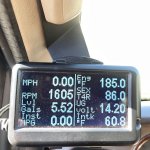
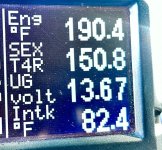
Following this as it will be my turn to make some decisions soon. I was wondering how long it takes people's AT to come to the 'normal' operating temp range (150 - 175)? When my engine temp gets to 185 my AT temp is still a chilly 86. It takes 10 mins of city driving to the the AT to 150. Is this normal?

I am running a Tru-cool (in series) which is supposed to have a thermo-bypass to help warm a cold tranny. Also a Magnefine if it matters.

Wondering if I should return to stock cooling after an AT swap and monitor (if Yota1) or just leave the extra plumbing (if junkyard tranny). I do get to the 210s on extended 4Lo climbs.

Pics:

1. In the parking lot.

2. After some city driving.
 

Attachments

  • TRANNY1.jpg
    TRANNY1.jpg
    130.8 KB · Views: 212
  • TRANNY2.jpg
    TRANNY2.jpg
    137.7 KB · Views: 225
Following this as it will be my turn to make some decisions soon. I was wondering how long it takes people's AT to come to the 'normal' operating temp range (150 - 175)? When my engine temp gets to 185 my AT temp is still a chilly 86. It takes 10 mins of city driving to the the AT to 150. Is this normal?


I am running a Tru-cool (in series) which is supposed to have a thermo-bypass to help warm a cold tranny. Also a Magnefine if it matters.


Wondering if I should return to stock cooling after an AT swap and monitor (if Yota1) or just leave the extra plumbing (if junkyard tranny). I do get to the 210s on extended 4Lo climbs.


Pics:


1. In the parking lot.


2. After some city driving.
I wonder what you get if your remove the external cooler?


Sent from my SM-A536V using Tapatalk
 
Following this as it will be my turn to make some decisions soon. I was wondering how long it takes people's AT to come to the 'normal' operating temp range (150 - 175)? When my engine temp gets to 185 my AT temp is still a chilly 86. It takes 10 mins of city driving to the the AT to 150. Is this normal?

I am running a Tru-cool (in series) which is supposed to have a thermo-bypass to help warm a cold tranny. Also a Magnefine if it matters.

Wondering if I should return to stock cooling after an AT swap and monitor (if Yota1) or just leave the extra plumbing (if junkyard tranny). I do get to the 210s on extended 4Lo climbs.

Pics:

1. In the parking lot.

2. After some city driving.

Your temps are fine. An engine can idle to operating temp, a transmission can't. A transmission needs to be driven to generate heat. Even without an external cooler, it takes a while for the trans to gain heat, especially when the ambient temps are cooler and there's not a heavy load on the trans. Flat freeway driving isn't going to quickly raise the trans temp. If you started climbing hills right out of the gate from a cold start, your trans temp would climb fast.

I'd keep the cooler. The reason is, although it's not ideal to run too cool, heat is the true killer of automatic transmissions. I'd rather run a little cool than run too hot.

Those thermostats to control when to send fluid into the cooler are nice, but the downside I see is they are another potential failure point. That's why I chose coolers with built-in thermal bypass that isn't mechanical but rather uses the principal that colder fluid is thicker and will take the path of least resistance through the larger pathway until the fluid heats up and thins out allowing the fluid to flow more efficiently into the smaller cooling channels.

This is my two and half cents.
 
I disagree but probably depends on your environment. In the colder climates your internal radiator heater and cooler helps heat up the transmission fluid. As they won't fully shift properly or until 4th gear without the transmission fluid reaching a certain temperature. Happens to me on all my 3rd gens every year when it gets 10 degrees or lower below freezing and colder.

Sent from my SM-A536V using Tapatalk
 
I disagree but probably depends on your environment. In the colder climates your internal radiator heater and cooler helps heat up the transmission fluid. As they won't fully shift properly or until 4th gear without the transmission fluid reaching a certain temperature. Happens to me on all my 3rd gens every year when it gets 10 degrees or lower below freezing and colder.

Sent from my SM-A536V using Tapatalk

Whether to run a cooler or not DOES depend on the individuals circumstances. If a person lives in a warmer climate, like Phoenix Arizona, he's not worried about running too cool. For people running in really cold climates, I'd never suggest they bypass the stock cooler in radiator because the stock cooler will help the trans reach a better operating temp quicker. How much it helps, I'm not so sure. It helps a little though.

Maybe that thermostat [MENTION=139000]phattyduck[/MENTION] uses is the answer. I just don't know how reliable of a device they are. If it fails out on the trail, you're screwed unless you bring along hose menders or extra transmission hose to re-plumb it.
 
Last edited:
If it fails out on the trail, you're screwed unless you bring along hose menders or extra transmission hose to re-plumb it.
It won't fail in the sense of blowing up - but failing 'bypassed' would suck! :faint:

I still have an 'issue' with the stock radiator trans cooler helping warm the fluid - I don't think it really does that. You guys in freezing weather should check your bottom rad hose - it'll be VERY cold. The bottom of the radiator is not a controlled temperature at all.

It is interesting feeling the trans thermostat after a drive. The input half is HOT, the return from the coolers is cool/cold, depending on conditions, despite it being a chunck of aluminum.

Another note: The stock sensor is on the OUTLET of the transmission. You'll notice a nearly immediate 20*F change in fluid temp when the torque converter changes state (locked or unlocked) under load. That's not the cooler failing - that's before the cooler has had a chance to work.

-Charlie
 
Hit some moderate hiccups. I got the transmission installed this weekend but unfortunately the pan that Yota1 installed is not compatible with my vehicle as the lower fill tube is nearly interfering with my exhaust and the upper tube certainly will.
kQ0EILk.jpg

I talked to Nick and apparently my vehicle is using a seldom used pan. He will be shipping me my pan off of my core hopefully today. I did some searching and found some people on tacomaworld had some similar issues. Perhaps this explains why scrap yard searches have so many transmission options in addition to some of the previous stuff mentioned at the beginning of this thread.

Also, my cooler install is going to be a pain with my steel bumper, winch, and wiring. I'm going to have to pull all of that off. To be continued....
 
Thoughts on whether I should use thread locker on the bolts between the flex plate and the torque converter? FSM makes no mention of it but [MENTION=120071]mtbtim[/MENTION] used some in his trans replacement video. I can't recall if the holes on the torque converter are through holes and there could be a risk of contaminating transmission fluid, or if theres a desire to seal in transmission fluid. I don't see obvious signs of factory thread locker on the bolts.

Also, thoughts on the torque procedure? FSM instructs to install the green locator bolt first and then the other 5 bolts. I'm thinking i'll snug them all up slowly, remove all tension from all the bolts, bring the green to full torque, and then bring the others to full torque. Tim very gradually worked them all up in his video, I'm not sure if that vehicle used a green locator bolt.

Thanks

UTC5pP2.png


6fFa2sv.jpg
 
Thoughts on whether I should use thread locker on the bolts between the flex plate and the torque converter? FSM makes no mention of it but [MENTION=120071]mtbtim[/MENTION] used some in his trans replacement video. I can't recall if the holes on the torque converter are through holes and there could be a risk of contaminating transmission fluid, or if theres a desire to seal in transmission fluid. I don't see obvious signs of factory thread locker on the bolts.

Also, thoughts on the torque procedure? FSM instructs to install the green locator bolt first and then the other 5 bolts. I'm thinking i'll snug them all up slowly, remove all tension from all the bolts, bring the green to full torque, and then bring the others to full torque. Tim very gradually worked them all up in his video, I'm not sure if that vehicle used a green locator bolt.

Thanks

UTC5pP2.png


6fFa2sv.jpg
I would use blue or red threadlocker. The flex plate/torque converter holes are not through holes so no risk of contamination or leaking.
 
Thoughts on whether I should use thread locker on the bolts between the flex plate and the torque converter? FSM makes no mention of it but [MENTION=120071]mtbtim[/MENTION] used some in his trans replacement video. I can't recall if the holes on the torque converter are through holes and there could be a risk of contaminating transmission fluid, or if theres a desire to seal in transmission fluid. I don't see obvious signs of factory thread locker on the bolts.

Also, thoughts on the torque procedure? FSM instructs to install the green locator bolt first and then the other 5 bolts. I'm thinking i'll snug them all up slowly, remove all tension from all the bolts, bring the green to full torque, and then bring the others to full torque. Tim very gradually worked them all up in his video, I'm not sure if that vehicle used a green locator bolt.

Thanks

UTC5pP2.png


6fFa2sv.jpg

For our install, we did have the green bolt. At the time, I didn't understand the significance of it. If you look closely at the green bolt, it has a wider shoulder on it right below the head of the bolt. That shoulder is to align the flex plate to the torque converter. I don't think you actually have to torque the green bolt first, but maybe you should have the green bolt be the first bolt that touches down snuggly before the other 5. With the green bolt touched down first, that sets the alignment and then you can snug up the other ones. I personally would then slowly and evenly bring all 6 bolts up to the torque value. Once the green bolt is touched down, the alignment isn't going to change and I don't think it's smart to fully torque one bolt while the others have no tension on them. I'm guessing because I made sure all the bolts were touched down first before going through the torquing sequence, I got the proper alignment of the torque converter to the flex plate.

Red loctite is overkill in my opinion. If you ever have to do the job again, which hopefully you won't, you'll regret the use of red loctite on those small bolts. Blue loctite is absolutely sufficient as extra insurance that none of the bolts will back out.
 
Last edited:
Red loctite is overkill in my opinion. If you ever have to do the job again, which hopefully you won't, you'll regret the use of red loctite on those small bolts. Blue loctite is absolutely sufficient as extra insurance that none of the bolts will back out.

Maybe overkill but according to the FSM

3.4L 5VZ Flywheel Bolt | Marlin Crawler, Inc.
They require Three bond 1324 or equivalent
and Three bond 1324 is red

THREE BOND 1324 or equivalent to Loctite Blue 242 - YotaTech Forums in

So I will use Three bond 1324 or equivalent probably should be red loctite instead of blue.

As always folks can do what they wish, I defiantly would put some type of thread sealer on as the those bolts go through and if the threads are not sealed... You could get oil seeping through those threads... :/
 
For our install, we did have the green bolt. At the time, I didn't understand the significance of it. If you look closely at the green bolt, it has a wider shoulder on it right below the head of the bolt. That shoulder is to align the flex plate to the torque converter. I don't think you actually have to torque the green bolt first, but maybe you should have the green bolt be the first bolt that touches down snuggly before the other 5. With the green bolt touched down first, that sets the alignment and then you can snug up the other ones. I personally would then slowly and evenly bring all 6 bolts up to the torque value. Once the green bolt is touched down, the alignment isn't going to change and I don't think it's smart to fully torque one bolt while the others have no tension on them. I'm guessing because I made sure all the bolts were touched down first before going through the torquing sequence, I got the proper alignment of the torque converter to the flex plate.

Red loctite is overkill in my opinion. If you ever have to do the job again, which hopefully you won't, you'll regret the use of red loctite on those small bolts. Blue loctite is absolutely sufficient as extra insurance that none of the bolts will back out.

10 4 Thanks for chiming in. I like this plan and will make sure it is located by the "green" bolt (for those following along the well used bolt isn't obviously green in normal lighting but you can easily tell the difference in the photo I took as Tim describes). Will use blue loctite.
 
Maybe overkill but according to the FSM

3.4L 5VZ Flywheel Bolt | Marlin Crawler, Inc.
They require Three bond 1324 or equivalent
and Three bond 1324 is red

THREE BOND 1324 or equivalent to Loctite Blue 242 - YotaTech Forums in

So I will use Three bond 1324 or equivalent probably should be red loctite instead of blue.

As always folks can do what they wish, I defiantly would put some type of thread sealer on as the those bolts go through and if the threads are not sealed... You could get oil seeping through those threads... :/

These bolts and the specification are for the flywheel/flex plate to crank shaft connection. If you replace the rear main seal as I did you should follow those instructions and use red loctite/threebond/permatex.

I posted the FSM instructions for the joint in question a few posts up, no thread sealant is specified and the torque is 30ftlb rather than the 61 or 63 at the crank for A/t or M/t respectively.
 

Members online

No members online now.

Forum statistics

Threads
278,310
Messages
3,554,080
Members
248,016
Latest member
Advally Service

Trending content

Back
Top