Fuel economy keeps INCREASING. Need help or ?

Only other scenario is that your engine is running stupid lean, but for some reason not throwing the lean code. If you want your 4Runner to last better get someone to look at it or it will consume itself (read overheat/melt).

This is what is concerning me, and why I am looking for answers.

I am running 265/75/16 tires, so my speedometer reads 3% slow. Either way, Google says it is 686 km door to door.

What are some ways to see if it is leaning out?

I have Torque, and the only code I get is for the O2 sensor.
 
The real win would continuing to talk about these mystery miles! Whoever is doing it will keep giving you free gas

Sent from my Nexus 5X using Tapatalk

I wish that were possible!

I make the 16 hour return trip in one shot, and I only stop (now) to use the bathroom. Pretty limited opportunity to sneak in some fuel!
 
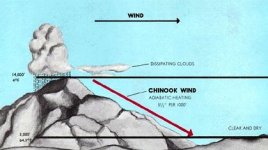
You are receiving a favorable chinook wind on the return trip to Calgary.

Or you are no longer fighting a chinook wind on the trip from Calgary.
 
My next question is how fast do you drive? If you have a 96LTD I'm going to assume you have the E-locker correct? If so I think your truck has 4.30 gears like mine does. Now I don't know how accurate my ScanGauge is for reporting MPGs while you are driving, but I've seen it read 25-30 mpg while I'm driving at slower speeds, so perhaps you are driving at a certain speed that is some kind of MPG sweet spot?

I drive at the speed limit, so mostly 90 - 100 km/h or 55 - 60mph. Majority is 90 through the pass. I will take note of some of the other stats that Torque has to offer, there are things like gallons per hour etc., and maybe someone else can compare with their stats.

The air is thinner at the higher elevation, but that is not new as I have driven that road many times with that 4Runner and had to fill in either Revelstoke or Golden, and not drive all the way through.
 
I'd check with the Toyota Corporate folks. You paid for a vehicle that would give you 15 or so miles per gallon and you have every right to expect it. Don't take no for an answer!
 
The only way to know for sure: Do a hand calculation.
Make sure that your speedo and odo are correct via a phone app and then top your tank off. Set the trip counter to 0. Drive till the gauge reads half empty (or really any amount; half is just an easy number) then fill it back up. Divide the miles driven from the trip counter by the amount of gallons it took to fill.
Do this a few times and take the average. Doing it one time will get you a decent idea, but results may vary slightly.

If your numbers ARE accurate, then I don't see how you can be getting 100+ miles more without doing SERIOUS damage to your engine.
.

When I fill my tank after a trip like that, it will take 60 ish litres, but I do hand calculate normally which is where the 29-33 mpg imperial gallon (about 20% bigger? 4.54 litres as compared to the 3.78 litre US gallon).

I am making the trip again next Friday and will provide careful stats and post them. It is a monthly trip.

With respect to the running lean, would I expect to hear any pre-ignition sounds or anything? It runs as normal as ever.
 
Higher altitude, air is less dense, so less fuel is being called for by the computer (?) if you drive with a light foot (usually it evens out though because you have to use more throttle to compensate for the lack of power), you're probably running 86-87 octane fuel, going 55-60mph and getting 29-33 imperial MPG which is 24-27 US MPG. That's right on the cusp of the best I've ever gotten in my life in a 3.4 which was 23 US MPG, but still pretty high (I currently see 18-19 US MPG in combined daily driving).

And you said you are getting an O2 sensor code? Care to share it?
 
Last edited:
go 120 KM/H (75MPH) instead of unrealistically going 90 KM/H (55MPH), then you'll see that you'll get a normal MPG figure I can assure you. You'll hit around 20-21MPG for that long stretch of road at best.
 
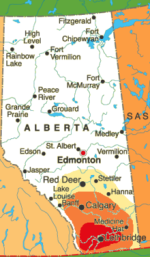
Where Chinook winds occur most frequently.
 

Attachments

  • image.png
    image.png
    97.3 KB · Views: 273
  • image.jpeg
    image.jpeg
    34.4 KB · Views: 269
Higher altitude, air is less dense, so less fuel is being called for by the computer (?) if you drive with a light foot (usually it evens out though because you have to use more throttle to compensate for the lack of power), you're probably running 86-87 octane fuel, going 55-60mph and getting 29-33 imperial MPG which is 24-27 US MPG. That's right on the cusp of the best I've ever gotten in my life in a 3.4 which was 23 US MPG, but still pretty high (I currently see 18-19 US MPG in combined daily driving).

And you said you are getting an O2 sensor code? Care to share it?

Yes, I run the cheapest fuel, I believe it is 87. When making the long trips, there is no reason to hurry so I relax and stay pretty light footed.

O2 code:

highmiles-albums-1996+4runner-picture42039-o2-sensor-code.png
 
I would go closer to 120KM/H or 104KM/H(65mph??), like Diverscale suggested. I will say that I've noticed my mpg has gone up some, but during the summer it always changes compared to the winter in Oregon.

I do know that personally my fuel economy in all vehicles changed after my accident in 2014. My entire habits changed after this point of my life and noticed that I gained at least several mpg's depending on the vehicle i'm driving. Having no desire to go 'fast' or screaming speed and taking things easier and be wary of ANY person near me causes my overall change. Now I also reached a point of where fuel is fuel and doesn't affect me like it did back in 2007-2008 when it was close to 5.00 a gallon. Now I pay for fuel as its 5.00 a gallon because its a fact of life that have to have fuel, and I wouldn't change my life or styles due to my very limited time before I can't drive.

I am very intrigued about this story and look forward to the results. I would ask that on this upcoming trip you use fuel/gps app to completely TRACK your drive. It is the ONLY true way for us to analyze the anomaly before going onto other paths..
 
Where Chinook winds occur most frequently.

Love the Chinooks. 3 or 4 winters ago, we had chinooks every few weeks - many days had 20 deg C (68 deg F) temperature changes in 24 hours. Made me wonder why Calgary was not full of Canucks fans... But that IS OT.

From Wikipedia :

"In southwestern Alberta, Chinook winds can gust in excess of hurricane force 120 km/h (75 mph). On November 19, 1962, an especially powerful Chinook in Lethbridge gusted to 171 km/h (106 mph).

In Pincher Creek, the temperature rose by 41 °C (74 °F), from −19 to 22 °C (−2 to 72 °F), in one hour in 1962.[4]

Trains have been known to be derailed by Chinook winds."

Put a good Chinook on my tail and the fuel tank may fill up! That makes this back on topic. :-)
 
It's very simple how highmiles is doing it... :car:

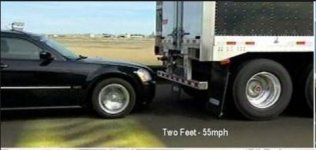
In all seriousness I've drafted an RV my parents were driving years ago in my 85 ford ranger and it went from 19 to 30+ mpg on that road trip. I stayed on their butt the whole time.

And I've seen odo's go bad. Not on a 4runner but my 90 Dodge W350. Odo would stop for a mile or two every 10. Very strange. Having one read faster would be even stranger.
 

Attachments

  • Untitled.jpg
    Untitled.jpg
    34 KB · Views: 334
I am very intrigued about this story and look forward to the results. I would ask that on this upcoming trip you use fuel/gps app to completely TRACK your drive. It is the ONLY true way for us to analyze the anomaly before going onto other paths..

What app would you suggest?
 
Let some air out if your tires, that will fix it quick!

A few months ago, I got 23 mpg out mine cruising 60 on the highway (I had to google my trip miles I was shocked). I got 19 today in rush hour highway traffic. 340k, lifted and 33's!
 
This is what is concerning me, and why I am looking for answers.

I am running 265/75/16 tires, so my speedometer reads 3% slow. Either way, Google says it is 686 km door to door.

What are some ways to see if it is leaning out?

I have Torque, and the only code I get is for the O2 sensor.

The O2 sensor does control fuel supply, so I guess that's the best place to start. At least there's a known issue with the code.
 
Ok so I figured out how I can get 459 miles or 738 kilometers per tank of fuel. Sorta...

If my ScanGauge is accurate in its reporting of real-time fuel mileage and if the conditions were just right, i.e., predominantly flat ground and a nice tail-wind, I could "in theory" drive 459 miles on one tank.

I set this experiment up so that with the cruise control on, I wouldn't be inadvertently affecting the throttle position with my foot either.

Also, I added the TPS sensor to my ScanGauge so that you could see if there were any shenanigans with how much throttle was being applied in that moment. At idle, the TPS sits at 10. With the cruise control engaged at the speed that netted the desired 27mpg — the TPS seemed to sit around 14-18 on flat ground and obviously more or less depending on incline/decline.

As you can see in the pic, if I drive on flat ground at 42 miles per hour with the cruise control set — I get 27~ mpg.

Now obviously the OP isn't driving 42 mph — but I could see with an engine that is running lean in conjunction with speed that was under 55 mph in addition to favorable road & wind conditions — the OP "might" approach 27 mpg and achieve 450+ mpg.

I only had short area of the road to note all this, so I wouldn't be surprised if there is a way to do this but at a higher speed as well.


 

Members online

Forum statistics

Threads
278,316
Messages
3,554,105
Members
248,016
Latest member
Advally Service

Trending content

Back
Top