
GOP Presidential Candidates

I agree with what you are saying about passing down to the consumer. And I agree with your math. (No disputable and I am aware of that).

However, there are two arguments to be made:

1. Would of you NOT made the investment if you net return was $820,000 rather than $850,000 because of an increase in taxes?
2. Would of you NOT made the investment because your return was $820,000 rather than $850,000 because of an off year?

I think the answer to both, assuming NPVs were all equal and it was still the best plan to invest in, would be that you would still make the investment.

I refuse to believe (and so do statistics) that investments would not be made because of higher taxes.

What would Mitt do? If gains tax was 18% he would have only made $17,794,000 million in 2010, at 15 percent he only made $18,445,000. There is 0% change Mitt would pull his investments because he made $451,000 due to taxes. 0% chance.

RunningInGa - I am no longer on the offensive, I thought you were trying to justify something that you weren't.
 
Last edited:
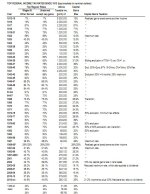
People make decisions based on a myriad of possibilities every day whether to invest their money or not. Reduce the potential reward for seeing a return on your investment, and obviously the decision to invest in the first place, will be a harder decision to justify.

Capital gains taxes are the lowest they have been since 1932. It isn't working.
 

Attachments

  • capitalgains.JPG
    capitalgains.JPG
    88.6 KB · Views: 127
I agree with what you are saying about passing down to the consumer. And I agree with your math. (No disputable and I am aware of that).

However, there are two arguments to be made:

1. Would of you NOT made the investment if you net return was $820,000 rather than $850,000 because of an increase in taxes?
2. Would of you NOT made the investment because your return was $820,000 rather than $850,000 because of an off year?

I think the answer to both, assuming NPVs were all equal and it was still the best plan to invest in, would be that you would still make the investment.

I refuse to believe (and so do statistics) that investments would not be made because of higher taxes.

What would Mitt do? If gains tax was 18% he would have only made $17,794,000 million in 2010, at 15 percent he only made $18,445,000. There is 0% change Mitt would pull his investments because he made $451,000 due to taxes. 0% chance.

You keep referring to the Mitt's of the world - I'm referring to the smaller mom and pop investors because there are a MUCH higher number of those - a greater population that would be affected (investors and employees). I don't disagree with you, however I sell investment-grade businesses / real estate. My primary client base are not the Mitt Romneys or Walton familys or any other name you'd recognize - there just aren't enough of those type of people really. 100% of my clients have net worth less than $50 million. That 20% increase in tax liability DOES affect the decision because the margins are too tight nowadays.
 
Last edited:
Capital gains taxes are the lowest they have been since 1932. It isn't working.

The problems with the tax basis isn't solely tied to the capital gains rates however. There are MANY more factors involved and to think otherwise is ignorant.
 
Looking at the short term gains tax, it is quite high.

I agree with you about smaller "mom & pop" investors. However, for high net worth investors will lots of income (Mitts) my example is solid.

Out of curiosity what would you do about taxes? Always want to hear other view points, since I have been spewing mine.
 
The problems with the tax basis isn't solely tied to the capital gains rates however. There are MANY more factors involved and to think otherwise is ignorant.

Agreed 100%. Our problem cannot be solved with taxes alone. Especially one type of tax.

I was tired of going around and around that investments won't be made with an increase in capital gains tax. My point was that lowering them or whatever SE02 proposes isn't going to help.
 
Looking at the short term gains tax, it is quite high.

I agree with you about smaller "mom & pop" investors. However, for high net worth investors will lots of income (Mitts) my example is solid.

Out of curiosity what would you do about taxes? Always want to hear other view points, since I have been spewing mine.

Well, for one, banks need to start lending again. They're sitting on piles upon piles of cash, but to be fair, there's much more oversight today than there ever has been. Lenders are too afraid to lend right now (both on acquisitions and general business loans) because of this as well as the uncertainty (risk factor) in the US economy now. That aside, you've got to incentivize investment immediately in areas that CREATE jobs so the working class can get back on their feet (bricks and mortar investments - infrastructure type stuff). Then stop the buy now, pay later way of consumerism that has become so prevalent in today's microwave society. Responsibility, especially in the financial sense, needs to be restored so smart decisions are praised again. Right now, corporations and industries can screw up and can walk away from the mess to let the government clean it up because they know it will. That's a start, but it also assumes the political system is restored to a democratic system instead of the fascist / marxist way its headed. If social and economic responsibility is restored, there's no longer a need for a peanut butter inspection oversight team, which creates additional costs or additional legislation that requires farmers to hire an environmental company to clean up pig ****.
 
Last edited:
Agreed 100%. Our problem cannot be solved with taxes alone. Especially one type of tax.

I was tired of going around and around that investments won't be made with an increase in capital gains tax. My point was that lowering them or whatever SE02 proposes isn't going to help.

If you're going to refer to me, at least have the decency to get my board name correct.

Also, typing in large font just makes it appear that you're screaming. Which makes whatever you say seem less valid, because you appear to have reduced yourself to an emotional, less rational state. Just a friendly suggestion.

As far as lower tax rates not helping, I saw a big jump in hiring, business expansion, and start-ups, when tax rates were lowered to the present level.

Of course there are a bunch of other factors involved in the economy. Just one is that since then the sub-prime mortgage bubble burst. As if that was a surprise to anyone. That was a perfect example of people living beyond their means. Lots of people lost their jobs, businesses went bankrupt. Lots of revenue that had been flowing into Government coffers simply stopped. Meanwhile, Government spending has only continued to increase.

The USA is living well beyond it's means as well, and it is not sustainable indefinitely.

I can't speak for anyone else, but I live within my budget. If there's something that I want, but can't afford, I put the purchase off until I can afford it. Or I do without.

My argument is that if a punitive tax rate is imposed on those that have worked hard and had some success, they will alter their work ethic, lifestyle, where they do business, or any number of other possibilities, to avoid being soaked.

It's really no different than looking for the best deal on a 4Runner, or accessories for your 4Runner. The place that offers the best deal for your Dollar, gets your business.
 
This is one spirited discussion.

I had a foolish professor that decried about the minimum wage theory; I guess that is why he never got to be a dean. We all thought he was nuts and then some.

I will have to side with 02SE with the lower tax rates; they will at least in theory help in the short run.

When I worked for a small business as an assistant comptroller, lower taxes allowed for higher wages and bonuses to the present workforce of the company, an investment of capital (autos, tools, and the like) to allow for the task work at hand to be completed faster and more efficiently. In the end, it allowed the owners to hire more workers.

As I was leaving for greener pastures, the one tax that was creating the biggest financial encumbrance was the quarterly payroll tax. It increased yearly and ate into the profit more and more each year. Taxes and insurance was such a burden that in the last year of my employment both owners slashed their salaries by 30% so that no one was let go. Five years out my job has still not been filled.

If the government can generate more revenue through levied taxes regardless of who they target, who really believes this government, Congress, etc. will not spend the excess money raised as quickly as they can get it, thus putting us back at square one?
 
This is one spirited discussion.

I had a foolish professor that decried about the minimum wage theory; I guess that is why he never got to be a dean. We all thought he was nuts and then some.

I will have to side with 02SE with the lower tax rates; they will at least in theory help in the short run.

When I worked for a small business as an assistant comptroller, lower taxes allowed for higher wages and bonuses to the present workforce of the company, an investment of capital (autos, tools, and the like) to allow for the task work at hand to be completed faster and more efficiently. In the end, it allowed the owners to hire more workers.

As I was leaving for greener pastures, the one tax that was creating the biggest financial encumbrance was the quarterly payroll tax. It increased yearly and ate into the profit more and more each year. Taxes and insurance was such a burden that in the last year of my employment both owners slashed their salaries by 30% so that no one was let go. Five years out my job has still not been filled.

If the government can generate more revenue through levied taxes regardless of who they target, who really believes this government, Congress, etc. will not spend the excess money raised as quickly as they can get it, thus putting us back at square one?

Nah, just a friendly discussion amongst friends. I agree with your last paragraph. I trust this government and congress about as much as my ex wife.
 
What is a fair tax rate? This is not a hard question, and the answer has been documented in several posts over and over.

First, enough of this goofy 90% straw-man tax rate. NO ONE is proposing that. The fact is (and the charts all show) that currently we pay tax at the LOWEST rate in decades... So any business man who is considering closing his doors and laying everyone off because he is being taxed to death, is:
1) A Straw-man example
2) Needs to fire his accountant
3) Is not paying attention or
4) Is a lousy business man and should find some other way to make a living.

Now back to the far tax question. It has been documented over and over that if we simply returned to the tax rate under Regan in 1987 or Clinton in 1998 then we would could not only support our Medicare, Social Security and Defense Budget (the untouchable big three) for the foreseeable future, but we would actually run a surplus and we would start to pay down the debt.

Our current mess was been triggered by two late 90's talk radio talking points, that frankly are just pure lies:
1) Lowering taxes raises revenue. and
2) the surplus was the peoples money and we should give it back.

The first has been proven false over and over and over and yet we cling to this believe that if we all paid NO Tax the federal government would be swimming in cash... And the second ignores the obvious that while yes the surplus was the peoples money, the federal deficit is also the people debt and needs to be paid back. The Bush area tax cuts are killing this country, and no one is willing to say that the emperor has no clothes and fix this simple problem.

Simply go back to the tax level of 1987 Reagan and all would be good. We are talking about a tax increase of 3 or 4% on the richest of the rich and we can fix this country... But rather then support this great country, we get shoots of "Class Warfare"... Which isn't true either.
 
Last edited:
What is a fair tax rate? This is not a hard question, and the answer has been documented in several posts over and over.

First, enough of this goofy 90% straw-man tax rate. NO ONE is proposing that. The fact is (and the charts all show) that currently we pay tax at the LOWEST rate in decades... So any business man who is considering closing his doors and laying everyone off because he is being taxed to death, is:
1) A Straw-man example
2) Needs to fire his accountant
3) Is not paying attention or
4) Is a lousy business man and should find some other way to make a living.

Now back to the far tax question. It has been documented over and over that if we simply returned to the tax rate under Regan in 1987 or Clinton in 1998 then we would could not only support our Medicare, Social Security and Defense Budget (the untouchable big three) for the foreseeable future, but we would actually run a surplus and we would start to pay down the debt.

Our current mess was been triggered by two late 90's talk radio talking points, that frankly are just pure lies:
1) Lowering taxes raises revenue. and
2) the surplus was the peoples money and we should give it back.

The first has been proven false over and over and over and yet we cling to this believe that if we all paid NO Tax the federal government would be swimming in cash... And the second ignores the obvious that while yes the surplus was the peoples money, the federal deficit is also the people debt and needs to be paid back. The Bush area tax cuts are killing this country, and no one is willing to say that the emperor has no clothes and fix this simple problem.

Simply go back to the tax level of 1987 Reagan and all would be good. We are talking about a tax increase of 3 or 4% on the richest of the rich and we can fix this country... But rather then support this great country, we get shoots of "Class Warfare"... Which isn't true either.

This country does not have a revenue problem. It has a spending problem. Think about it - if you were to get a raise at work, what happens? You spend that money. Same with Uncle Sam.

The major problem, and blast me if you want, is that we allow too many people the right to vote. Welfare recipients should not be allowed to vote as an example. Here's an analogy (yes I'm making generalizations and stereotyping - so what, prove me wrong) - I'm not allowed to speak my opinions to the Board of Directors to Coca Cola about their products or serving sizes or business model because I'm not a stockholder. Sure I'm a consumer and could stop purchasing their soft drinks if I choose. I have no EQUITY in the game. Welfare recipients don't either, but we allow them to voice their opinions en masse. It's in their best interest to continue this nanny-state progression because it puts food on their table (at everyone else expense). Who pays for this exponentionally increasing costs? (taxpayers)

The side of the argument you're conveniently forgetting is that with this lowest tax rate in decades, we have the highest unemployment and most welfare recipients in decades as well, possibly in the history of the system. RAISING taxes isn't the answer either and it's insulting to the average tax payer to suggest it is. The problems lie with the decision makers that have been elected and the ever-growing government machine.

And you're wrong, class and race warfare is stronger now than it has been since the Great Depression.
 
Last edited:
Welfare recipients should not be allowed to vote as an example.
[...]
And you're wrong, class and race warfare is stronger now than it has been since the Great Depression.

Proposing taking away Constitutional rights to fix the debt problem is asinine.

Keeping the poor man down hasn't ever worked and will never work.
 
It is a good thing that there are people fed up with America now. The real task at hand is how to map out a viable change for a better future.

Here is an interesting piece on a forthcoming book by Charles Murray that touches on class division, or the "American Divide" as he calls it. Take from it what you will:
Charles Murray on the New American Divide - WSJ.com

I will say, concerning the small businesses that I worked for in the past and still keep in touch with today, that the increase in the myriad of different taxes over the last decade has had the biggest impact on their growing liability costs across the board to this day. A rise in insurance premiums are a close second followed by an increase in product costs.
 
It is a good thing that there are people fed up with America now. The real task at hand is how to map out a viable change for a better future.

Here is an interesting piece on a forthcoming book by Charles Murray that touches on class division, or the "American Divide" as he calls it. Take from it what you will:
Charles Murray on the New American Divide - WSJ.com

I will say, concerning the small businesses that I worked for in the past and still keep in touch with today, that the increase in the myriad of different taxes over the last decade has had the biggest impact on their growing liability costs across the board to this day. A rise in insurance premiums are a close second followed by an increase in product costs.

From what I understand and in talking to my clients, payroll taxes and insurance costs are crippling small business.
 
From what I understand and in talking to my clients, payroll taxes and insurance costs are crippling small business.

Yep. That's the point I've tried to make in this thread. You, LittleCeasar, and a few others understand the consequences of increasing costs on business. And the stifling effect it has on raises, new hires, business expansion, ability to remain viable, etc.

It was suggested a few posts prior, that any business owner that was considering closing their doors, laying off people, etc., doesn't know how to run a business, has a poor accountant, etc., etc.

I would suggest that a person that assumes such a thing, has absolutely no clue what factors a business owner in that position may have to consider. And has clearly never tried to keep a business running.

As a business, you can't just continually raise the prices of your goods or services to compensate for tax increases, insurance increases, etc. Because eventually consumers will decide that they can no longer afford what you would have to charge for your goods or services to stay in business, and thus keep your employees employed.

Earlier I asked what would be considered a fair tax rate. The answer was whatever it takes. Then 90% was mentioned as having been used in the past, and that we defeated communism, paid for a world war, etc. at that rate. The perceived implication being that it would be viable today.

What wasn't mentioned is that the world economy is a very different place than it was nearly 70 years ago. The USA was at the time arguably the economic engine of the world.

Since then other countries have emerged as legitimate competitors to the USA. Often with more business-friendly policies and tax rates.

The world is now a global economy.

Is it any surprise that so many jobs that were formally performed here, have been moved to other Countries. Or that companies have simply decided to shut their doors, because they are unable to make a profit and thus remain viable in such a climate.

At any rate, I'm tired of trying to explain why punitive taxes and regulations, have a negative impact that trickles down through the entire economy.
 
It is a good thing that there are people fed up with America now. The real task at hand is how to map out a viable change for a better future.

Here is an interesting piece on a forthcoming book by Charles Murray that touches on class division, or the "American Divide" as he calls it. Take from it what you will:
Charles Murray on the New American Divide - WSJ.com

I will say, concerning the small businesses that I worked for in the past and still keep in touch with today, that the increase in the myriad of different taxes over the last decade has had the biggest impact on their growing liability costs across the board to this day. A rise in insurance premiums are a close second followed by an increase in product costs.

Very interesting article. Thanks for posting.
 
Back briefly
I guess the argument is that we have had 20+ years of lowering taxes and the American public are still waiting jobs and income to "trickle down" the ladder.

I need to stop looking at this thread.

The trickle down I was referring to, are the higher costs of doing business being passed along to the consumer. Increases in taxes, insurance, etc. all get passed along.

Ie: Inflation.

As I previously said, you can only increase the cost of your goods, and/or services so much to cover your increased cost of doing business, before you are no longer competitive with your business competitors, or your customers can no longer afford what you provide.

Then you have the really hard choices to make.
 
Last edited:
A single 30 yr male doctor, lawyer or engineer will have far higher purchasing power than a married 30 yr old male despite his major.

I don't know...diapers and diapers and diapers and wipeys and clothings and other baby stuff...geez, we filled up our house with baby junk for our two kids! I sure spent a lot more than when i was single! :eek:
 

Members online

Forum statistics

Threads
278,316
Messages
3,554,120
Members
248,016
Latest member
Advally Service

Trending content

Back
Top