
HELP ME What do I do

Really, you don't think a mechanic should do the ball joints? Also, is there a way for me to visually evaluate whether or not they need to be done? Any warning signs?

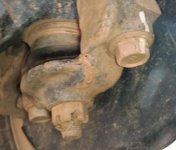
Take the castle nut off. Remove the two bolts from the part the ball joint is secured by. This is one design that Toyota got right. It's super easy. Grab the stem of the ball joint and move it around it shouldn't move easily. Their should be resistance but movable by hand. I'm sure it's the tie rod end links though due to the tire wearing in that particular way,. Your shakes when braking are another symptom the links. Refer to my previous post.
 

Attachments

  • IMG_20211015_144051~2.jpg
    IMG_20211015_144051~2.jpg
    141.2 KB · Views: 180
We sell a "fuel system service" at my dealership. It consists of cleaning the throttle body, adding a fuel injector cleaner to the fuel tank, and running a fuel injector cleaner concentrate through the fuel rail with the engine running.

Seriously! I bought a non dismantle fuel injector cleaner for 100 dollars. It's a canister with pressure regulator you fill with special injector cleaner hooked to an air compressor. Hooks directly into fuel rail. But I'll shut up now because if people knew this stuff y'all at the dealership can't screw people as hard. Especially when the symptoms of dirty injectors could be blamed on numerous different causes
 
Take the castle nut off. Remove the two bolts from the part the ball joint is secured by. This is one design that Toyota got right. It's super easy. Grab the stem of the ball joint and move it around it shouldn't move easily. Their should be resistance but movable by hand. I'm sure it's the tie rod end links though due to the tire wearing in that particular way,. Your shakes when braking are another symptom the links. Refer to my previous post.
I don't know why you keep posting 5th gen specific repairs and procedures here in the 3rd gen section. It isn't the same. It's barely an apples and oranges argument. 3rd Gen lower ball joint is attached to the steering knuckle with 4 bolts (there's 2 different lower ball joint bolts and torque values depending on what bolt it is), there is a castle nut and pin where it attaches to the lower control arm, and another castle nut and pin where the outer tie rod end attaches. Please refrain from posting repair procedures that do not apply directly to 3rd gen 4Runners since this is the 3rd Gen 4Runner section.
 
Seriously! I bought a non dismantle fuel injector cleaner for 100 dollars. It's a canister with pressure regulator you fill with special injector cleaner hooked to an air compressor. Hooks directly into fuel rail. But I'll shut up now because if people knew this stuff y'all at the dealership can't screw people as hard. Especially when the symptoms of dirty injectors could be blamed on numerous different causes
To imply that I screw over anyone and have questionable professional integrity really pisses me off. You don't know me so keep my name out of your ****ing mouth. Thanks for coming to my TED talk.
 
Last edited:
I don't know why you keep posting 5th gen specific repairs and procedures here in the 3rd gen section. It isn't the same. It's barely an apples and oranges argument. 3rd Gen lower ball joint is attached to the steering knuckle with 4 bolts (there's 2 different lower ball joint bolts and torque values depending on what bolt it is), there is a castle nut and pin where it attaches to the lower control arm, and another castle nut and pin where the outer tie rod end attaches. Please refrain from posting repair procedures that do not apply directly to 3rd gen 4Runners since this is the 3rd Gen 4Runner section.

I forget there are different sections my bad. I know the previous design which why i said they got it right. Anyways everything else I said applies. Try not to be an ******* to someone with valuable information and just helping.
 
I forget there are different sections my bad. I know the previous design which why i said they got it right. Anyways everything else I said applies. Try not to be an ******* to someone with valuable information and just helping.
To further correct some of your misinformation, steering wheel shaking when braking is a sign of front rotors that have excessive lateral runout which is commonly referred to as warped rotors. It can also be caused by hot spots or glazing on the surface of the rotor causing a slip/grip situation for the brake pads. It's very rarely caused by worn tie rod ends. Worn tie rod ends typically cause a loose steering feeling and a change in toe which usually presents itself in bad tire wear patterns.

EDIT: spelling
 
Last edited:
To further correct some of your misinformation, steering wheel shaking when braking is a sign of front rotors that have excessive lateral runout which is commonly referred to as warped rotors. It can also be caused by hot spots or glazing on the surface of the rotor causing a slip/grip situation for the brake pads. It's very rarely caused by worn tie rod ends. Worn tie rod ends typically cause a loose steering feeling and a change in toe which usually presents itself in bad tire wear patterns.

EDIT: spelling

Like I said one symptom can have many causes and your dealership shit kicks in. Read my post again carefully I said the toe in problem he has which cause that specific wear pattern can be caused by worn tie rod end links and cause steering shake also. I've had this exact problem before. How is that misinformation??? Everything you said is correct but not the only fix. Does this make sense..
 
I'm sure it's the tie rod end links though due to the tire wearing in that particular way,. Your shakes when braking are another symptom the links. Refer to my previous post.

I think the brakes vibration is from the brakes themselves. I was told that I've been going through my tires, wearing the outsides of them, because of the control arm bushings. You think that's not correct?
 
I think the brakes vibration is from the brakes themselves. I was told that I've been going through my tires, wearing the outsides of them, because of the control arm bushings. You think that's not correct?

Have you even tried watching any of Timmy’s videos yet? Anyone can do this stuff, it’s really not hard(a bit time consuming though). You might throw some swear words out here and there but you will get it done and it won’t cost you 8k. You could buy another 4runner for that price and they probably won’t even use OEM Toyota parts. Just use your mechanics report as a general guide of what you should address first. I’d do new rotors/pads/drums/shoes, all new fluids, lower ball joints, timing belt, and radiator hoses first thing. Timing belt is the only one you might need outside help on but even that is do able on your own, it’s also probably going to be the most expensive repair if you get someone else to do it.
 
Last edited:
Like I said one symptom can have many causes and your dealership shit kicks in. Read my post again carefully I said the toe in problem he has which cause that specific wear pattern can be caused by worn tie rod end links and cause steering shake also. I've had this exact problem before. How is that misinformation??? Everything you said is correct but not the only fix. Does this make sense..

Take the castle nut off. Remove the two bolts from the part the ball joint is secured by. This is one design that Toyota got right. It's super easy. Grab the stem of the ball joint and move it around it shouldn't move easily. Their should be resistance but movable by hand. I'm sure it's the tie rod end links though due to the tire wearing in that particular way,. Your shakes when braking are another symptom the links. Refer to my previous post.

I read your entire post. I also looked at the photos of his tire wear. Based on those photos it's not likely to be loose tie rod ends causing the minor amount of tire wear. Like I said the most likely cause of shaking while braking is indeed a problem with the brakes. Loose tie rod ends will be all the time not just while braking.
 
I think the brakes vibration is from the brakes themselves. I was told that I've been going through my tires, wearing the outsides of them, because of the control arm bushings. You think that's not correct?

It could be numerous things. I usually just jack the front end up and start checking all the balls and bushings by shaking them around with a good amount of force looking for play. You can use a crowbar also to move the joints around looking for play. Be careful with the crowbar! I move the steering wheel back and forth to listen for weird clunks also. Just some quick checking.
 

Members online

Forum statistics

Threads
278,309
Messages
3,554,070
Members
248,016
Latest member
Advally Service

Trending content

Back
Top