How to Charge Towed RV Battery while running?

One thing I have been thinking about trying is connecting the #10 charge line from the truck to a 12V/120V inverter in the RV and disconnecting it from the trailer 12V wiring. I'd then plug a regular 120V battery charger in to the inverter and connect the 12V output to the RV battery.

The theory is that the inverter/battery charger setup would put a heavier draw on the charging system in the truck - one that the voltage regulator could "see" and adjust accordingly - not unlike the headlights or the rear window defogger. I can even see using the battery charger that already exists in my camping trailer to do the same thing.

I can also see a dozen ways to get it wrong, but I think the idea has merit.
 
There is lots of discussion about this on RV owners forums. I've played around with an ammeter in the charge line between the truck and the trailer. From what I was able to find out:

No need for a bigger alternator or particularly large wire. #10 is what usually comes with factory tow setups and is all you really can use with most trailer plugs anyway.

What happens is that the voltage regulator will see the battery with the highest charge and charge based on that reading. That's going to be the starting battery in your truck in most cases. The RV battery will charge but very slowly, no matter how big the wire is, mostly as a function of how quickly the RV battery tries to pull down the starting battery - not much.

The RV battery will charge a bit more quickly if you run with the headlights on but not a lot. It will also charge a bit more quickly if you let the starting battery run down a bit, and one way to do that is to leave the RV connected to the truck while you are camping so both batteries drain more or less evenly. The risk is, of course, that you may wake up and find BOTH batteries dead.

Starting the truck from the RV battery via the trailer connector is not going to work. The wire would have to be huge and the connector would most likely go up in flames.

Just a little clarification on the above statement. The voltage regulator does not see the batteries separately, it only reads voltage in. That voltage in is determined by the main battery until it is connected to the auxiliary battery, at which point the ability of the aux battery to draw down the main battery will establish a voltage reading.

If the batteries were right next to each other and connected with sufficiently large cables, the voltage would pretty much be the average of the two, pretty much. In this case the ability of the aux battery to lower the voltage in the main battery is restricted by the length and size of the cable(s) connecting the two. Not only the 10g charge line, but the ground as well. Most trailer connectors use 16g for ground, great for lights, not so much for charging. Of course the physical connection at the tongue often overcomes that.

In the case of 10g vs 8g,(in the charge line) the difference can be as much as 10A. See the chart using 20 feet of cable.
https://cdn.shopify.com/s/files/1/0588/8881/files/wire_gauge_chart.png?3833

The chart is for recommending wire gauge based on load, but it is an indicator of flow capability.

For a real world example, try jump starting a car using good 2g cables and listen to the alternator whistle after you make the connection. The dead battery is dropping the voltage in the good battery, causing the alternator to output more. Now try using 10g wire and all you'll get is some very hot wire. The current flow will not lower the voltage significantly, so the output of the alternator will not increase very much. And you will NOT be able to start the dead car.

8g wouldn't start the car either, but it WILL allow more current flow.

Just sayin'

:shrug:
 
You guys are thorough! Thanks so much! But wait,, there is more...

You guys are amazing. Thanks for the incredibly detailed info!

FYI. My RV will have two 6volt golf cart batteries tied to make 12v and about 400 watts of solar panels.

So, here is my laymans interpretation.

1. The isolator allows you to cut off the RV batteries so they don't drain down the Main Starting battery when you are drawing power from the RV batts. You want that isolator tripped ON when you are charging and OFF when you are not running the alternator.

2. The regulator in the alternator will respond to the highest voltage that it sees. If the batteries are tied altogether it that would be the average voltage.

3. The alternator will put out X amount of volts (14+) until it gets push back from enough voltage so that it thinks that the batteries are at capacity.

4. The starting batt will charge up first and then the RV batts will slowly charge since the Starting Batt is now full and can take no more juice. This will not hurt the starting battery since it's naturally impeding/not accepting the extra energy. The charging of the RV batts is going to be impeded by the smaller 10g hotwire and possibly weak ground wire so they may take a long time to charge.

5. No need to upgrade alternator or 4Runner circuits except for the constant duty isolator.

Question 1. Will this setup mean that the starting battery will charge slower that usual?

Question 2. Since I'm going to have 400watts of solar. Wouldn't that charge faster than the alternator?

Thanks!

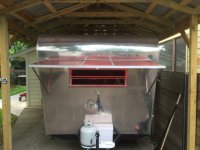
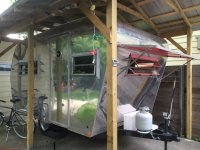
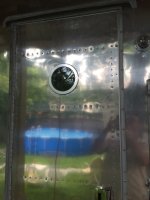
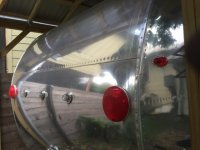
Check out my rig... been build it from SCRATCH... not a refurb. Buck rivets. Aircraft aluminum... all new except for some donor windows....
 

Attachments

  • IMG_2604.jpg
    IMG_2604.jpg
    76.8 KB · Views: 271
  • IMG_2603.jpg
    IMG_2603.jpg
    91.3 KB · Views: 295
  • IMG_2605.jpg
    IMG_2605.jpg
    62 KB · Views: 289
  • IMG_2606.jpg
    IMG_2606.jpg
    68.7 KB · Views: 299
Last edited:
Nice work!

If the isolation relay is closed with the engine off, the two batteries will try to equalize. With the engine running the alternator will be putting out more voltage than the truck battery, so the equalization won't happen. The house battery will take the majority of the current and will charge faster. Generally the main truck battery won't need much to top it off, so that's not an issue.

When the truck is running, the batteries become loads, just like headlights or blower motors. The amount of current going to the house battery isn't determined by the wire size, it's determined by how dead the battery is. I'd wire it to handle at least 70% of the alternator's output capability because you're probably going to be deep cycling pretty regularly.

No matter what size wire you decide to go with, use the appropriate size fuse, as close to the isolator as possible. That way if the battery is pulling more current than the wire will handle, you just get a blown fuse instead of a smoldering pile of metal and rubber.

If you're just planning on using one battery in the RV, the stock alternator will be fine. The truck battery won't be taking a lot of current most of the time so the alternator will be charging the house battery at a good rate. If you start adding additional capacity in the RV, you'll want to either charge the batteries one at a time (using an isolation switch), or upgrade the alternator.

A deep cycle battery needs to be charged at a certain rate to make it last. It needs to be hit hard enough to get warm, and release sulfates from the plates.

As far as the solar goes, you're only going to be getting about 25 amps to the battery, so the alternator will charge it significantly faster. The solar will be great for keeping you topped up though, as that should cover most of your loads during the day.

Here's a link to everything you ever wanted to know about deep cycle batteries if you have a couple of hours to kill. :smash:

DEEP CYCLE BATTERY FREQUENTLY ASKED QUESTIONS
 
Last edited:
FYI. My RV will have two 6volt golf cart batteries tied to make 12v and about 400 watts of solar panels.

Do you have an electric refrigerator? Forced air furnace? If you don't use either of those things your golf cart battery setup will last for well over a week - maybe 2 - running only LED lights and the water pump, even without the solar. I only use two group 24's in mine and can go that long to 50% discharge without any solar panels. LEDs made all the difference - my trailer has some 15 light fixtures in it.

2. The regulator in the alternator will respond to the highest voltage that it sees. If the batteries are tied altogether it that would be the average voltage.

More or less. Unless you are using huge (3/0?) wire, the current draw from the discharged RV battery isn't going to be enough to drag the average down much so "average" is going to be higher than if the two batteries were next to each other and connected with jumper cables.

5. No need to upgrade alternator or 4Runner circuits except for the constant duty isolator.

Or a simple relay - which is what most manufacturers use.

Question 1. Will this setup mean that the starting battery will charge slower that usual?

Marginally - I doubt you will notice it.

Question 2. Since I'm going to have 400watts of solar. Wouldn't that charge faster than the alternator?

Yes and no, perhaps only initially and only when it is sunny. You are going to need some sort of regulator on the solar side to keep from frying batteries while charging. I don't know if your setup will accept the full 30A available from the solar panels or not. Were you planning to connect them directly?

From the Trojan battery website:

There are many types of chargers available today. They are usually rated by their start rate, the rate in amperes that the charger will supply at the beginning of the charge cycle. When selecting a charger, the charge rate should be between 10% and 13% of the battery’s 20-hour AH capacity. For example, a battery with a 20-hour capacity rating of 225 AH will use a charger rated between approximately 23 and 30 amps (for multiple battery charging use the AH rating of the entire bank). Chargers with lower ratings can be used but the charging time will be increased.

Trojan recommends using a 3-stage charger. Also called “automatic”, “smart” or “IEI” chargers, which prolong battery life with their programmed charging profile. These chargers usually have three distinct charging stages: bulk, acceptance, and float.

You need to make sure that the two charging systems (truck and solar) are disconnected when using the solar.

Alternately, if you are thinking about a setup where you could charge quickly from the truck when it is not sunny you may want to consider turning he truck around and using really big jumper cables (I've done this). I'm considering a setup using the type of connectors found on tow trucks and electric forklifts to do this cleanly. Combine this with a "make before break" HD switch and you can direct the entire output from the alternator to the RV battery. Get it wrong though, and you risk blowing up the voltage regulator.

OTOH, now that everybody has generators I've kind of lost interest. We bury one generator about 100 ft. (for noise reduction) from camp and connect all of the RV's to it for about 2 hours, usually while everyone is making dinner. Unless it's super cold (and everyone is running their FA furnaces) it's always been enough.

Check out my rig... been build it from SCRATCH... not a refurb. Buck rivets. Aircraft aluminum... all new except for some donor windows....

Looks fantastic! :thumb:

How much does it weigh? Do you have pictures of the interior?
 
Last edited:
You guys are amazing. Thanks for the incredibly detailed info!

FYI. My RV will have two 6volt golf cart batteries tied to make 12v and about 400 watts of solar panels.

So, here is my laymans interpretation.

1. The isolator allows you to cut off the RV batteries so they don't drain down the Main Starting battery when you are drawing power from the RV batts. You want that isolator tripped ON when you are charging and OFF when you are not running the alternator.

2. The regulator in the alternator will respond to the highest voltage that it sees. If the batteries are tied altogether it that would be the average voltage.

3. The alternator will put out X amount of volts (14+) until it gets push back from enough voltage so that it thinks that the batteries are at capacity.

4. The starting batt will charge up first and then the RV batts will slowly charge since the Starting Batt is now full and can take no more juice. This will not hurt the starting battery since it's naturally impeding/not accepting the extra energy. The charging of the RV batts is going to be impeded by the smaller 10g hotwire and possibly weak ground wire so they may take a long time to charge.

5. No need to upgrade alternator or 4Runner circuits except for the constant duty isolator.

Question 1. Will this setup mean that the starting battery will charge slower that usual?

Question 2. Since I'm going to have 400watts of solar. Wouldn't that charge faster than the alternator?

Thanks!

Check out my rig... been build it from SCRATCH... not a refurb. Buck rivets. Aircraft aluminum... all new except for some donor windows....

with 400w of solar, you wont need any charging from the truck.
unless you have some massive loads in the trailer. AC? or a furnace as mentioned above.
I run 200w, and able to run my 3 way fridge on 12v during the day, without dropping the batteries down. I switch to propane at night however. I do not have nearly the battery capacity that you do. with your described set up, the solar should produce much more than you will need.
 
How much does it weigh? Do you have pictures of the interior?

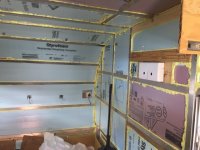
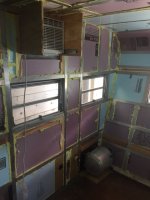
Thanks! Errrrr.... on year two right now. Just got through insulating it. So not much to look at just yet, Unless you are into styrofoam and great stuff... I'm guessing all in it will be Maaaaybe 1800lbs

at the most.
 

Attachments

  • IMG_2767.jpg
    IMG_2767.jpg
    82 KB · Views: 279
  • IMG_2769.jpg
    IMG_2769.jpg
    73.2 KB · Views: 256
  • IMG_2771.jpg
    IMG_2771.jpg
    53.2 KB · Views: 266
with 400w of solar, you wont need any charging from the truck.
unless you have some massive loads in the trailer. AC? or a furnace as mentioned above.
I run 200w, and able to run my 3 way fridge on 12v during the day, without dropping the batteries down. I switch to propane at night however. I do not have nearly the battery capacity that you do. with your described set up, the solar should produce much more than you will need.

Well his pictures do show a household A/C unit. But outside of that, I just did a Westfalia with 3x100W panels in series, they produce as much as 60 Volts on a a warm sunny day. The key here is we are using a MPPT charge controller(capable of handling 400W, and 40A charging, you can't run the array in series with a PWM controller. The tests I did were just to bring the battery down and I easily got 14-16 amps out of the charge controller. I used an AGM 89amp hour battery(20HR rate), designed for solar use.
The owner runs the 12V fridge easily recharging with average daytime sun. He has minimal lighting, and an electric water pump too, but no other real loads. By the way MPPT is 15-20% more efficient than PWM. As of now he has no way of charging his aux battery other than solar. He does want me to install a charge relay, but he is going to have me do a Subaru conversion, so we'll address that when we do that.
 
Well his pictures do show a household A/C unit. But outside of that, I just did a Westfalia with 3x100W panels in series, they produce as much as 60 Volts on a a warm sunny day. The key here is we are using a MPPT charge controller(capable of handling 400W, and 40A charging, you can't run the array in series with a PWM controller. The tests I did were just to bring the battery down and I easily got 14-16 amps out of the charge controller. I used an AGM 89amp hour battery(20HR rate), designed for solar use.
The owner runs the 12V fridge easily recharging with average daytime sun. He has minimal lighting, and an electric water pump too, but no other real loads. By the way MPPT is 15-20% more efficient than PWM. As of now he has no way of charging his aux battery other than solar. He does want me to install a charge relay, but he is going to have me do a Subaru conversion, so we'll address that when we do that.
ah yes, I see that. im thinking maybe that is just there during the build process? it looks as though the cord goes through the wall to the outside.


I have considered adding 2 more panels to my set up, but im not sure I use enough power to justify it. at least so far. a small handful of LED lights, water pump, and during the day, the fridge. I am still running the PWM controller, as it came with my original solar panel purchase, and is more than enough for how its being used.
if my 3 way fridge ever dies, I would like to replace it with an AC/DC fridge. as efficient as they are, there wouldn't be any need to run it on propane again.
his set up sounds similar to mine.
I am able to charge from the truck, but I unplug the trailer whenever I get to where im going. the solar is more than enough to keep the trailer batteries charged. though its highly unlikely to happen, since I do have the solar, I don't like the idea of the trailer draining the truck battery, and not being able to get started.
 
Regarding load... From what my research is telling me... running the AC is on batts is just a huge endeavor and not worth it IMO.

The biggest load on my solar/batts will be a mini fridge that draws 1.8 Amps max from a 1000 pure sine inverter. And we'll just see how that goes. I might just fill it with dry ice when boondocking.

The AC will only run when I have hookups to AC.

Otherwise, everything is 12v and not that big. Occasional water pump, lights, interior fan. Meh... minor stuff.

Since I'll be under a carport at home mostly, I went with a PWM. 30amp. Some article talked about that being better for storage etc.... although I will have a Charge Wizard converter.

It's all just a fun project.

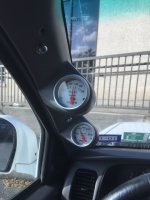
Lately I've been working on the wiring of the truck ... eg the towing setup. And I Just put in the B and M tranny cooler and some gauges. Sweet.
 

Attachments

  • IMG_2773.jpg
    IMG_2773.jpg
    71.3 KB · Views: 285
Picking up a new pop up on Thursday and doing a lot of solar/nerdy crap with it so I figured I'd chime in.

I have 200w on the roof of my 4runner and another 100w flexible that I can take with me. I'm staying with PWM because:

1) Cost.
2) MPPT units never have a very useful interface, if any. Most require an additional monitor, additional cost.
3) Panels in series are more susceptible to shadows nuking output

I can still achieve nearly 15 amps of output with the two 100w rigid panels mounted flat, and the flexible just draped across my windshield. No positioning of the panels required, though it would be helpful in the evening when the sun is getting lower in the sky and it's still 90+ degrees out.

Not sure how I'll rig this up to the trailer though, I have several PWM controllers so I might leave the fridge in the 4runner, connected to its 110ah deep cycle SLA battery on the back seat floor well, and just use the 100w flexible for the popup's battery. LED lighting, fans, and water pump shouldn't exceed what can be replaced by a single 100w the next morning, especially since that panel will be movable if I need to angle it.

I camped in thick forest last weekend with fog/clouds and killed my fridge battery despite the 200w of panels (rather, output stopped to the fridge because the battery hit my low cutoff of 12.1v). Everything stayed cold until I moved the 4runner in to a patch of sunlight mid-day and the battery was floating a few hours later. My 4runner's battery was at like 11.7v though :mad2: because I have other problems, but I just took my jumper cables from my deep cycle battery to my starter battery and let the solar continue to do its thing. This was more done in a pinch with me checking on things every 30 minutes, wouldn't leave it set up like that without me being able to monitor things. Sucks more charge controllers aren't dual battery output :P

Anyway, this thread needs way more pics :tongue1:
 
Regarding load... From what my research is telling me... running the AC is on batts is just a huge endeavor and not worth it IMO.

The biggest load on my solar/batts will be a mini fridge that draws 1.8 Amps max from a 1000 pure sine inverter. And we'll just see how that goes. I might just fill it with dry ice when boondocking.

The AC will only run when I have hookups to AC.

Otherwise, everything is 12v and not that big. Occasional water pump, lights, interior fan. Meh... minor stuff.

Since I'll be under a carport at home mostly, I went with a PWM. 30amp. Some article talked about that being better for storage etc.... although I will have a Charge Wizard converter.

It's all just a fun project.

Lately I've been working on the wiring of the truck ... eg the towing setup. And I Just put in the B and M tranny cooler and some gauges. Sweet.
like a dorm style mini fridge?
does that draw take into account the loss from the inverter?
you might be better off mounting an actual ac/dc fridge. they draw next to nothing, and there will be no need for the inverter.
 
Last edited:
you might be better off mounting an actual ac/da fridge. they draw next to nothing, and there will be no need for the inverter.

Mine can draw over 5 amps DC if it's cooling from significantly over the set temperature.. but averages 3.5-4.5. That's quite a bit, and despite having a dual zone unit I believe the story is the same for all Whynter/Edgestar fridges. ARB I hear use less, but they're also double the price.. superior compressors.

I agree though, a proper DC fridge is far better than running a dorm fridge off of an inverter.
 
Well, the problem is.... I can't find a sexy DC mini Fridge. And my trailer is going to be to the tits :girl: on the inside when it's done. I mean... look at this glass and stainless loveyness...

EdgeStar 84 Can Extreme Cool Beverage Cooler - BWC90SS

I've already got a mod to make it colder than a bevvy cooler too.

https://www.youtube.com/watch?v=Xq4vsf0UvPA

You know... 90% of the time it's going to be parked under it's little carport and I'll be escaping out there to shake martini's and escape the inlaws.
 

Attachments

  • Screen Shot 2016-08-09 at 3.02.51 PM.jpg
    Screen Shot 2016-08-09 at 3.02.51 PM.jpg
    17.7 KB · Views: 188
Last edited:
Mine can draw over 5 amps DC if it's cooling from significantly over the set temperature.. but averages 3.5-4.5. That's quite a bit, and despite having a dual zone unit I believe the story is the same for all Whynter/Edgestar fridges. ARB I hear use less, but they're also double the price.. superior compressors.

I agree though, a proper DC fridge is far better than running a dorm fridge off of an inverter.

oh wow. that's quite a bit. that's more than I remember seeing them advertised as. though, its been a while since I looked into it. though, still much less than the 3way fridges.
 
Bass-o-matic:

Your trailer has a propane tank on it - why not just use a propane/DC fridge?

Edit: And while you are at it, how about a wine cooler? (It started out as wanting a travel-rated wine rack and ended up with cool little blue LEDs in it):

 
Last edited:
Well, the problem is.... I can't find a sexy DC mini Fridge. And my trailer is going to be to the tits :girl: on the inside when it's done. I mean... look at this glass and stainless loveyness...

EdgeStar 84 Can Extreme Cool Beverage Cooler - BWC90SS

I've already got a mod to make it colder than a bevvy cooler too.

https://www.youtube.com/watch?v=Xq4vsf0UvPA

You know... 90% of the time it's going to be parked under it's little carport and I'll be escaping out there to shake martini's and escape the inlaws.

Wow, that refrigerator is going to kill your battery...Fast!

At best it will draw 13.75 Amps. With no charging this will kill a 100 amp/hour battery in less than 3 hours.

The good news is 90% of the time you will be plugged in. The bad news, 10% of the time your battery will be dead. :whistle:
 
Wow, that refrigerator is going to kill your battery...Fast! :whistle:

Ahhhh crap! I figured. Well, since for this project I care about looks over function in some places... I'm going to go with plan A. Which was... just run the fridge on AC. When boondocking... which will really be like a week at the most... a yeti, some dry ice, and a Sh.t ton of scotch.

See... problem solved.
 

Members online

Forum statistics

Threads
278,316
Messages
3,554,111
Members
248,016
Latest member
Advally Service

Trending content

Back
Top