Need help with H4 understanding and driving in snow

This is going to sound really stupid, but this morning I was driving into work and the roads had snow/slush on them. The snow was smashed down in some areas so I'm wondering if it was also icy. I was driving slow, cars in front and back..we went around a small curve and my 2004 4Runner ltd lost control, crossed lanes, hit a mailbox and ended up in a ditch! Scared me to death! Thankfully there doesn't seem to be any damage. No other cars had issues sliding and was driving much faster than me at time! I've never had this happen before this bad, has some slidding but not a complete loss of truck. I was driving in H4. A coworker suggested driving in H4 with center differential lock off instead of on, is this correct?? Honestly, I don't know what most of these switches on my truck do.
 
Register to hide this ad
The center diff should be unlocked, and it normally is unlocked unless you lock it.

If it's unlocked:
Handling in turns is neutral, and you'll have the best chance of going on the line you intend. VSC is active, so it will help correct if you start to spin out (turn too much when you want to go straight) and maybe if you start to understeer (not turn enough when you want to turn). VSC can brake individual wheels, so it's better than even an expert driver in some situations, but ultimately the tires still limit your traction.

With it locked:
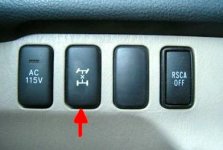
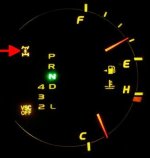
The center diff can be locked by pressing the button with 4 wheels and an x in the middle. That turns off VSC, so you'll see a yellow center diff lock light and a yellow VSC off light on the instrument panel by the green 4WD light. With the center diff locked, both axles must turn at the same speed, so the vehicle will tend to understeer on slippery surfaces (goes straight when you are trying to turn). VSC is off, so it will not help you maintain control. Locked is good for not getting stuck on deep snow or steep hills.

The most important thing for driving on snow and ice is having good tires. Winter tires are best. If you don't have those, good all season tires with plenty of tread left are OK but not nearly as good. If you have less than 4/32" of tread depth on your tires, they won't be safe in the snow. Even more tread depth would be ideal since 4/32 is pushing it. Look up how to measure that with a coin.

Some people will inevitably disagree with me on locked vs unlocked, but I've tried it both ways in a snowy parking lot, and you can try it too if your 4runner isn't damaged. I found it much easier to maintain control with it unlocked.

 
Absolutely agree with everything m85476585 said. Center diff locked forces one or the other axles to break loose on a curve, and that's never good for maintaining control.

One other thing. Sometimes if the curve is slick you may get understeer even with the center diff unlocked, and the front end may plow straight ahead. Usually that happens if you are braking or engine braking. The natural reaction is to hit the brakes harder, which will only worsen the problem. Instead, slightly burping the throttle can help pull the front end around, but you need to be gentle.

Best to practice in parking lots if you can and find out the idiosyncracies and limits of your particular vehicle in a safe place.
 
Note, I've only driven in the snow once, and it was off road so take this with a grain of salt.

Depending on conditions I would want the center diff locked to disable VSC. While it's generally a good thing to have on, it does get really active really quick in slippery conditions and can cause sliding. I had it almost slide me into a hill on a muddy incline once because it tried to correct the stability and I would have been fine had it not kicked on. The fact that with the center diff is true 4wd (vs AWD unlocked) also helps with keeping the vehicle straight and for me personally provides better stability.

When we were in the snow off roading (3-6 inches) I had the center diff locked and never once felt like I was going to lose control or had an issue sliding around. In fact, the couple times I did slide, I was able to straighten it right back out with no problem.
 
I personally drive with the center diff locked in snow. With it unlocked, there have been far too many times when the wheels have slipped, cutting power to the engine, and I feel like a sitting duck before the computer allows me to apply power to get out of the way.
 
The center diff should be unlocked, and it normally is unlocked unless you lock it.

If it's unlocked:
Handling in turns is neutral, and you'll have the best chance of going on the line you intend. VSC is active, so it will help correct if you start to spin out (turn too much when you want to go straight) and maybe if you start to understeer (not turn enough when you want to turn). VSC can brake individual wheels, so it's better than even an expert driver in some situations, but ultimately the tires still limit your traction.

With it locked:
The center diff can be locked by pressing the button with 4 wheels and an x in the middle. That turns off VSC, so you'll see a yellow center diff lock light and a yellow VSC off light on the instrument panel by the green 4WD light. With the center diff locked, both axles must turn at the same speed, so the vehicle will tend to understeer on slippery surfaces (goes straight when you are trying to turn). VSC is off, so it will not help you maintain control. Locked is good for not getting stuck on deep snow or steep hills.

The most important thing for driving on snow and ice is having good tires. Winter tires are best. If you don't have those, good all season tires with plenty of tread left are OK but not nearly as good. If you have less than 4/32" of tread depth on your tires, they won't be safe in the snow. Even more tread depth would be ideal since 4/32 is pushing it. Look up how to measure that with a coin.

Some people will inevitably disagree with me on locked vs unlocked, but I've tried it both ways in a snowy parking lot, and you can try it too if your 4runner isn't damaged. I found it much easier to maintain control with it unlocked.

Spot on. Read and practice this until you can feel and understand what your vehicle is doing. Don't practice in a snow storm. Get good tires.

I personally drive with the center diff locked in snow. With it unlocked, there have been far too many times when the wheels have slipped, cutting power to the engine, and I feel like a sitting duck before the computer allows me to apply power to get out of the way.

Also correct under more extreme situations where VSC isn't needed (slower going) - also requires discretion and practice. Find an offroad park or dirt road and learn the difference between both of these modes so you don't destroy your drivetrain.
 
since ive spun my 4runner when it was in 4 high with the CDL on, i know the feeling. i rarely if ever lock the center diff unless off roading, because having it off lets the four wheel drive system work its magic and allows the electrical nannies like traction control save my ass if I'm not paying attention
 
Thanks everyone for all the helpful replies! To be honest, I'm not sure if mine is running in the off or on position.... Ugh, I feel so stupid with this truck, lol! I need someone to walk me through it all, I'm a much better visual learner! I'm going to go have my tires looked at this weekend, I'm thinking the tread may not be that good on them.
 
Tires make a huge difference. Crappy all seasons vs good all seasons vs snow tires- the differences are very noticeable. Not braking in turns is also important. Try to get down to the proper speed before the turn. Also, use your gears. I drive around town in snow all winter and I generally drive in 2nd gear if I'm driving under 35.
 
since ive spun my 4runner when it was in 4 high with the CDL on, i know the feeling. i rarely if ever lock the center diff unless off roading, because having it off lets the four wheel drive system work its magic and allows the electrical nannies like traction control save my ass if I'm not paying attention

My 4Runner looks just like yours So does it automatically stay on unless you physically switch it off? How do I know if mine is on/off? Sorry to sound so stupid .. I honestly never had a truck with all these choices!
 
Same thing happened to me. My tires were overdue for a change. The vehicle with VSC on will do what it can to correct itself if it deems necessary. But that won't help if you don't have adequate tires for the condition. Above 55 MPH on my old tires standing water on the highway started to feel unstable.
 
Tires make a huge difference. Crappy all seasons vs good all seasons vs snow tires- the differences are very noticeable. Not braking in turns is also important. Try to get down to the proper speed before the turn. Also, use your gears. I drive around town in snow all winter and I generally drive in 2nd gear if I'm driving under 35.


Well I found out my making a few calls, the tires were put on in 2009, they are all season, 60,000 mile tires. The car had around 38,000 and now it has close to 100,000 so I bet it was more than likely the tires!
 
Same thing happened to me. My tires were overdue for a change. The vehicle with VSC on will do what it can to correct itself if it deems necessary. But that won't help if you don't have adequate tires for the condition. Above 55 MPH on my old tires standing water on the highway started to feel unstable.

That's exactly how my car is with water, almost like it hydros!
 
Something else I do in Snow and Mud is not use the brakes unless needed. What I mean by that is I rely far more heavily on engine braking and downshifting via the shifter than actually using the brakes.
 
Get a set of winter tires. I have them on my 4runner and I don't even need 4 wheel drive with them its like night and day from all season tires.
 
Engine braking vs. service brakes - depends on how the vehicle is equipped. If you don't have ABS, engine braking is usually somewhat less aggressive than normal service brakes, so less likely to break the tires loose. However, a working ABS system will generally do a better job of keeping the wheels turning and thus not slipping than even engine braking. Also, if you drive an automatic, it's a lot faster to release the brake pedal to regain control than to shift the automatic into a less aggressive braking mode if your wheels do start breaking loose. Personally, with ABS I recommend leaving the tranny in drive, use a soft touch on the brake pedal, and let the ABS do its thing if you accidentally brake too hard.

In some cases putting the transmission into neutral is beneficial. That's especially true in a 2wd, because the rear wheels will keep pushing due to the torque converter while the fronts totally lock up and cause you to lose steering. Shifting into neutral will make a huge difference in that situation.
 
To be honest, I'm not sure if mine is running in the off or on position.... I'm a much better visual learner!

I'm sure it's unlocked, otherwise you'd be posting here about how hard the steering gets when you make a tight turn, but for reference here's the diff lock button and the light on the cluster indicating the diff is locked. The VSC OFF and turned front wheel lights are gone if the diff is unlocked.

For the most part, leave it unlocked.
 

Attachments

  • 4runner diff lock button.JPG
    4runner diff lock button.JPG
    30.8 KB · Views: 1,190
  • 4runner diff locked light.jpg
    4runner diff locked light.jpg
    11.6 KB · Views: 1,014
Last edited:
I'm sure it's unlocked, otherwise you'd be posting here about how hard the steering gets when you make a tight turn, but for reference here's the diff lock button and the light on the cluster indicating the diff is locked. The VSC OFF and turned front wheel lights are gone if the diff is unlocked.

For the most part, leave it unlocked.

Awesome! Thanks for the pic!
 
Engine braking vs. service brakes - depends on how the vehicle is equipped. If you don't have ABS, engine braking is usually somewhat less aggressive than normal service brakes, so less likely to break the tires loose. However, a working ABS system will generally do a better job of keeping the wheels turning and thus not slipping than even engine braking. Also, if you drive an automatic, it's a lot faster to release the brake pedal to regain control than to shift the automatic into a less aggressive braking mode if your wheels do start breaking loose. Personally, with ABS I recommend leaving the tranny in drive, use a soft touch on the brake pedal, and let the ABS do its thing if you accidentally brake too hard.

In some cases putting the transmission into neutral is beneficial. That's especially true in a 2wd, because the rear wheels will keep pushing due to the torque converter while the fronts totally lock up and cause you to lose steering. Shifting into neutral will make a huge difference in that situation.

I don't completely disagree with the above statement. But I have noticed that letting the vehicle engine brake/coast down naturally vs. using the brakes tends to be more stable.

What I mean by that is if I use the brakes on slippery terrain, the wheels will lose traction and even with ABS it will take longer to regain traction than by letting the engine coast/engine brake to a stop by itself.
 
My 4Runner looks just like yours So does it automatically stay on unless you physically switch it off? How do I know if mine is on/off? Sorry to sound so stupid .. I honestly never had a truck with all these choices!

nice! the center diff lock will only engage when the vehicle is in four wheel drive, its the button to the left of the steering wheel with four tires and an X in the middle, when its on, the dash will show vsc off along with the 4x4 indicator, thats when you know
 

Members online

Forum statistics

Threads
278,316
Messages
3,554,106
Members
248,016
Latest member
Advally Service

Trending content

Back
Top