O2 Sensor Job - Difficult?

Know if you have California Emissions!!!

I had a warning on mine when the A/F sensor went south and the truck dropped into Limp Home mode. Check your emissions sticker under the hood or look underneath the vehicle; if you see more than one cat converter, you probably have a Cali truck and two different sensors. The front sensor is the A/F (air / fuel) sensor and sets the fuel mix through the engine management and the rear sensor is the heated O2 sensor which checks the cat converters' operation. The access to both is driveway easy with a good penetrating oil and metric hand tools. Use silicone bulb grease in the connectors to help the connectors' seals to slide in easily and to help keep dirt and water out of the connectors.

After the fact, I found out from a Toy factory mechanic that aftermarket sensors can cause a second code, indicating a cat converter failure because the aftermarket sensor is not as accurate as the OEM. I experienced this as well and changed both the A/F and O2 sensors with OEM sensors and did not have to replace the cats (a savings of about $700). The same mechanic also advised that lots of Cali trucks were sold outside of California and checking is really important.

Hope this helps somebody avoid my headaches!

Bear
 
Last edited:
Failed smog check twice for high NOx at 15mph

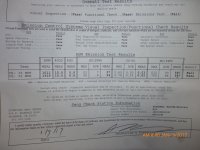
First I want to thank all you Toyota and 4Runner owners out there, you rock. I feel obligated to give back to this forum because you guys out there have been very helpful in guiding my through this last smog check. I own a 1997 Toy 4runner 4x4 3.4 limited with 372,000mi. Before the smog check I changed plugs, changed oil(I run Mobil 1 10W-40 high mileage) and filter, and new air filter. This was my first smog check::wtf: P1060819.jpg
I failed the 15mph with NOx =835ppm. The guy at the smog shop suggested I check for vacuum leaks. After this happened I had to re-group. I started scanning all the forums, youtube, and google. What I came up with is that they said I had high internal combustion temps and I needed to cool them down. At first I wasn’t sure what to do. I think I lost a few hours sleep thinking about this whole thing. I read article that told you to just about check and change everything. Well, the truck was running great so I didn’t think it was something major so I checked for vacuum leaks and I did find a couple of vacuum hosed that were starting to cut on the ends so I replaced them. There was also a small crack on the throttle body intake duct right where it clamps to the throttle body so I fixed that. Also the big hose that plugs into the aft side of this intake duct was starting to get a little loose over the years to I put a hose clamp on it.
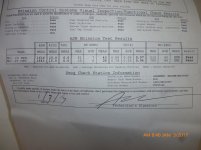
The next thing I did was run Cat-A-clean through engine according to instructions. Then filled up tank with Shell premium and added 1/2 bottle of 108 octane boost. I also added 3 oz of acetone at this time. Then I took for a long drive and immediately took it in for a re-check. These were my numbers on smog check:toilet3: #2 P1060820.jpg


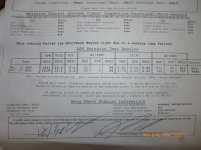
The NOx came down to 587, but still not enough. After talking to my smog man, we agreed I should change both O2 sensors, so I did! Then I took the truck for a warm up drive. I decided to dump the rest of the octane boost into tank. Then I took it back for another re-check the same day. These were my results: :boink:P1060821.jpg
Hooray!!! It passed, but not by much…. Whew. Thank God its over, for now…
 

Attachments

  • P1060819.jpg
    P1060819.jpg
    132.9 KB · Views: 1,589
  • P1060820.jpg
    P1060820.jpg
    132.1 KB · Views: 1,600
  • P1060821.jpg
    P1060821.jpg
    129.6 KB · Views: 1,562
I have a 99 4runner SR5 and am in the process of replacing the O2 sensor 1. I have the original O2 sensor yet and my Engine Check light is on. I cleaned the MAF and the light stayed off for a few days but now is back on. My question is how exactly do I get to the connecter from under the vehicle? I am attempting this on ramps so it is a bit difficult to get my fingers on the plug so far. Any help would be very appreciated.
I have had this 4runner since I purchased it new in 1999 and just don't want to part with it yet.
This site is Super and all you guys are great.
Thanks in advance for your help.
 
I have a 99 4runner SR5 and am in the process of replacing the O2 sensor 1. I have the original O2 sensor yet and my Engine Check light is on. I cleaned the MAF and the light stayed off for a few days but now is back on. My question is how exactly do I get to the connecter from under the vehicle? I am attempting this on ramps so it is a bit difficult to get my fingers on the plug so far. Any help would be very appreciated.
I have had this 4runner since I purchased it new in 1999 and just don't want to part with it yet.
This site is Super and all you guys are great.
Thanks in advance for your help.

It's got a clip on the end that snaps into a hole in the frame. You'll want to squeeze it with pliers or just break it off (gently mind you). Once the clip is off, you can then clearly see the connector and it's much easier from there.
 
It's got a clip on the end that snaps into a hole in the frame. You'll want to squeeze it with pliers or just break it off (gently mind you). Once the clip is off, you can then clearly see the connector and it's much easier from there.

This, plus if you unbolt the sensor BEFORE attacking the clip, it becomes way easier. I'm not sure if autos are the same, but on my 5-speed Cali. '99, you can then pass the sensor up over the top and then the connector hangs down the other side where it is a breeze to undo, if you get the clip loose. I just left mine broken for the last eight years. It's not really needed.
 
Hello,
I am new in this forum. Got 4 runner 3.4 4wd 2000, and check engine is on and same problem with oxygen sensors, just did diagnostic by toyota dealer and they gave me sensor part codes which i need to raplace. rear oxy sensor, california spec 89465-49105 and front 89467-35011 and i cant find them in my country... What is the difference between california spec exhaust and usual exhaust system?
 
Hello,
I am new in this forum. Got 4 runner 3.4 4wd 2000, and check engine is on and same problem with oxygen sensors, just did diagnostic by toyota dealer and they gave me sensor part codes which i need to raplace. rear oxy sensor, california spec 89465-49105 and front 89467-35011 and i cant find them in my country... What is the difference between california spec exhaust and usual exhaust system?

The Cali. exhaust meets a more stringent spec, has TWO catalytic converters instead of one and uses a wide spectrum Air/fuel sensor in front instead of the standard o2 sensor on the Federal exhaust system. To see which you have, count cats or look at the emissions sticker on the underside of your hood.

The stickers can be confusing, post a pic if you need help. I doubt you have a Cali'system in Lithuania, unless somebody brought it over from the US.
 
Last edited:
Truck is from USA imported long time ago. It has two cats, just did emission test and it has 9 percent insted of 3, the fuel consuption is too big for it. So i cant pass technical inspection. :moping: will try to find them on ebay. If cats are in bad condision changing sensors may not help. Thinking how to check cats are they in good shape or to change them? Maybe there are aftermarket cats ?
 
Truck is from USA imported long time ago. It has two cats, just did emission test and it has 9 percent insted of 3, the fuel consuption is too big for it. So i cant pass technical inspection. :moping: will try to find them on ebay. If cats are in bad condision changing sensors may not help. Thinking how to check cats are they in good shape or to change them? Maybe there are aftermarket cats ?

The only potentials signs of a failing converter is the exhaust smelling like rotten eggs, or on the smog test (no idea what this looks like in Lithuania) having high CO (Carbon Monoxide), HC (fuel or hydrocarbons) and high NOX (Nitrogen Oxide) numbers as well. Basically showing the catalytic converter isn't converting the gases anymore.
 
Reading a lot about the AFR/O2 sensor (upstream) replacement before I dive into it. Thought I’d summarize the main points below, and maybe someone can advise if I’m missing anything

Tools:
-wrench/socket wrench/vice grips
-wd-40


Basic tips seem to include:
-spray with wd-40/penetrator first
-disconnect negative battery terminal
-unbolt sensor before unplugging
-use new bolts (2?) when installing the new sensor.

Any other tips I should be aware of?

Questions I still have:
-Where do you get the bolts and is there a part number or size I should be looking for?
-Do you recommend changing both AFR/O2 sensors at the same time? Would this help the computer/gas mileage?

Final point:
-I’ve read different views that you should remove the front wheel for easier access, but others say this isn’t necessary. I guess if it gets too difficult then the tire will come off

06 SR5 with 190k. Cali model (dual cat.s, next to the engine)
 
Reading a lot about the AFR/O2 sensor (upstream) replacement before I dive into it. Thought I’d summarize the main points below, and maybe someone can advise if I’m missing anything

Tools:
-wrench/socket wrench/vice grips
-wd-40


Basic tips seem to include:
-spray with wd-40/penetrator first
-disconnect negative battery terminal
-unbolt sensor before unplugging
-use new bolts (2?) when installing the new sensor.

Any other tips I should be aware of?

Questions I still have:
-Where do you get the bolts and is there a part number or size I should be looking for?
-Do you recommend changing both AFR/O2 sensors at the same time? Would this help the computer/gas mileage?

Final point:
-I’ve read different views that you should remove the front wheel for easier access, but others say this isn’t necessary. I guess if it gets too difficult then the tire will come off

06 SR5 with 190k. Cali model (dual cat.s, next to the engine)

Just watched Timmy the tool mans video on this and worth the 20 minutes.
Hope it helps.
YouTube

LMS
 
Reading a lot about the AFR/O2 sensor (upstream) replacement before I dive into it. Thought I’d summarize the main points below, and maybe someone can advise if I’m missing anything

Tools:
-wrench/socket wrench/vice grips
-wd-40


Basic tips seem to include:
-spray with wd-40/penetrator first
-disconnect negative battery terminal
-unbolt sensor before unplugging
-use new bolts (2?) when installing the new sensor.

Any other tips I should be aware of?

Questions I still have:
-Where do you get the bolts and is there a part number or size I should be looking for?
-Do you recommend changing both AFR/O2 sensors at the same time? Would this help the computer/gas mileage?

Final point:
-I’ve read different views that you should remove the front wheel for easier access, but others say this isn’t necessary. I guess if it gets too difficult then the tire will come off

06 SR5 with 190k. Cali model (dual cat.s, next to the engine)

I see you have a 2006 (unless that was a typo), but the same principle remains. You'll unplug the sensor in question and replace. However, I believe 06's have multiple upstream sensors so be sure you replace the right one and only use DENSO or genuine Toyota parts (DENSO is the OEM for oxygen or air/fuel sensors).

To answer a few questions:

-Where do you get the bolts and is there a part number or size I should be looking for? The bolts, if they are present on the 06, are welded on the exhaust. It's the nuts that are removable and can be replaced if damaged by rust or stripped. Some newer models like the 06 have screw-in sensors with no nuts or welded bolts at all.
-Do you recommend changing both AFR/O2 sensors at the same time? Would this help the computer/gas mileage? No, they get pricey. If you really want to try and restore efficiency, replace only the upstream sensor(s) before the cats since they control the majority of the fuel trims.

Final point:
-I’ve read different views that you should remove the front wheel for easier access, but others say this isn’t necessary. I guess if it gets too difficult then the tire will come off. It's up to you really. I'm a thin guy and with these high clearance 4Runners there's plenty of room to shimmy under the exhaust pipe. Just make sure it's not hot!
 
Thanks gamefreak for the detail.

To be clear, I was referring to replacing both AFR sensors (also known as the upstreamO2 sensors, not the O2 sensors behind the cat). I’ve seen those terms used interchangeably so thanks for clarifying. But even replacing only the two forward/upstream sensors can get pricey quick, so is it ok to just replace one (in this case replacing only the passenger side, and leaving the older driver side forward AFR sensor, at least until it starts throwing a code.

And that’s a good recommendation [MENTION=322551]Last Man Standing[/MENTION]. I’ve had that video saved but didn’t have WiFi so haven’t been able to watch. I’ll take a look at it.
 
Thanks gamefreak for the detail.

To be clear, I was referring to replacing both AFR sensors (also known as the upstreamO2 sensors, not the O2 sensors behind the cat). I’ve seen those terms used interchangeably so thanks for clarifying. But even replacing only the two forward/upstream sensors can get pricey quick, so is it ok to just replace one (in this case replacing only the passenger side, and leaving the older driver side forward AFR sensor, at least until it starts throwing a code.

And that’s a good recommendation [MENTION=322551]Last Man Standing[/MENTION]. I’ve had that video saved but didn’t have WiFi so haven’t been able to watch. I’ll take a look at it.

CelticRunner,

Most welcome, as I am so new to this 4Runner world I mostly read and stay on the sidelines. My takeaway on the video was he used PB blaster the night before and he thought that helped with nuts, also watch where he analyzes
the Ohm reading on the O2 connector to see if it is necessary to replace them as they are pricey buggers as he mentions. Also, note the direction of the gasket install and the fact he needed a adjustable head ratchet on one of the O2 sensors due to an obstacle on his model.

Was thinking of doing mine ( 02 ) but his results for improved mileage was only 1 MPG gain for his efforts and investment?

Regards,

LMS
 
Thanks gamefreak for the detail.

To be clear, I was referring to replacing both AFR sensors (also known as the upstreamO2 sensors, not the O2 sensors behind the cat). I’ve seen those terms used interchangeably so thanks for clarifying. But even replacing only the two forward/upstream sensors can get pricey quick, so is it ok to just replace one (in this case replacing only the passenger side, and leaving the older driver side forward AFR sensor, at least until it starts throwing a code.

And that’s a good recommendation [MENTION=322551]Last Man Standing[/MENTION]. I’ve had that video saved but didn’t have WiFi so haven’t been able to watch. I’ll take a look at it.

Yes you can most definitely just replace the one. I think they run what, about $120 per sensor? That will at least take care of the code and allow you to drive happy.
 
Ok, dumb question, but how sensitive is the sensor? Is it ok to touch them? What’s the consensus?

I have always read to never touch them, but I bought it from the auto parts store and the guy took it out of the box to show me. There was no plastic covering the sensor (Denso) and the guy started handling the sensor side of the part. I questioned him regarding the sensitivity of the sensor (and not touching it) and he blew it off saying that it comes in contact with hot exaust so touching it won’t hurt.

Any thoughts? I’m hesitant to try the instal until I can confirm this won’t create an issue


Edit: the copper thread stuff is in the box, so I don’t believe it’s old. The metal is a little discolored though, as you might see when someone touches a piece of metal (oil from hands?)

I did watch the Timmy Toyota man video and saw that he lightly bumped the sensor on the pipe when inserting it, so maybe it’s not quite the issue I thought
 
Last edited:
Ok, dumb question, but how sensitive is the sensor? Is it ok to touch them? What’s the consensus?

I have always read to never touch them, but I bought it from the auto parts store and the guy took it out of the box to show me. There was no plastic covering the sensor (Denso) and the guy started handling the sensor side of the part. I questioned him regarding the sensitivity of the sensor (and not touching it) and he blew it off saying that it comes in contact with hot exaust so touching it won’t hurt.

Any thoughts? I’m hesitant to try the instal until I can confirm this won’t create an issue


Edit: the copper thread stuff is in the box, so I don’t believe it’s old. The metal is a little discolored though, as you might see when someone touches a piece of metal (oil from hands?)

I did watch the Timmy Toyota man video and saw that he lightly bumped the sensor on the pipe when inserting it, so maybe it’s not quite the issue I thought

Parts guy is right. Don't drop the thing in a tub of oil, but a little residue from your clean hands isn't going to spoil it. Best not to touch it once you start working though in case you have sealant/oil/whatever on your hands.
 
A/F and O2 Sensor

Okay I hope I am not hijacking this thread.

I have 2000 4Runner V6 3.4L 4X4 Limited - CALI - (2) CATS

Got a P0420 Code was going to replace the downstream O2 Sensor behind second CAT right before muffler and if that didnt work I would try replacing the A/F Sensor up front. Any suggestions?

Also, which Denso sensors (part numbers please) do I need for both?

Thanks
 

Members online

Forum statistics

Threads
278,307
Messages
3,554,054
Members
248,016
Latest member
Advally Service

Trending content

Back
Top