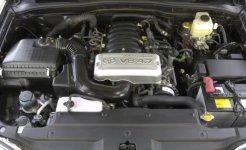
The electrical connections in the engine bay are "water resistent" NOT "water proof" to the 150+ psi of water presure generated by a power washer.
If you want electrical gremlins and problems for years to come . . . go ahead and powerwash the engine bay, have a few cold ones :beer: and start waits for problems to creep up either immediately or months from now.
I respectfully disagree.
I've been driving for almost 20 years, owned 6 cars, and I have power washed all of the engines and never had a problem because of it.
Not only does a clean engine look good, but it helps it perform better as well. A lot of dirt and dust can collect on your engine and other moving components in the engine bay, even if you don't off-road. Not to mention salt and even worse, magnesium chloride, can get in your engine bay if you live in the northern states. When salt and mag chloride get kicked up into your engine bay, they can wreak havoc with corrosion. Keeping your engine free of salt and mag chloride will help prevent long-term corrosion issues. Keeping the engine clean also helps it stay cool in the summer months. You don't have to wash the engine often (especially if you don't go 4-wheel'n), maybe every year or two, but it's still a good idea.
I do agree that you have to be careful with a power washer. I keep a good distance (at least a foot, sometimes more) between the nozzle of the power washer and whatever I am aiming at. I don't focus the stream on anything small or fragile (small vacum hoses, electrical connections) but it is fine if they get wet. I also try to avoid the alternator but again, even if it gets wet you should be fine. I have never been stranded at the car wash because my engine didn't start after washing it.
When I clean my engine, I buy a can of Gunk Engine De-greaser, use the whole can on my engine and engine bay, then I power wash with the soap, then rinse. That is how my high school auto shop teacher recommended doing it, and I've been doing it that way ever since with great results.