Real World MPG with 5th Gen?

Unless you're that guy that puts it in neutral on the downhill?? :)

No. Really no. There's this law called Conservation of Energy...
and then there's this fact that adding the component of acceleration due to gravity to your vehicle's closed loop system will not have the same energy value of gasoline....
and then *losses! lots of losses!* due to the inefficiency of the drivetrain...
and then there's rolling resistance...
aerodynamic drag...
parasitic losses of other functioning components...

Really it's not even close to being equal. Don't perpetuate that myth please.
 
No. Really no. There's this law called Conservation of Energy...
and then there's this fact that adding the component of acceleration due to gravity to your vehicle's closed loop system will not have the same energy value of gasoline....
and then *losses! lots of losses!* due to the inefficiency of the drivetrain...
and then there's rolling resistance...
aerodynamic drag...
parasitic losses of other functioning components...

Really it's not even close to being equal. Don't perpetuate that myth please.

what? you mean i don't get infinite gas mileage as long as i end my trip at the same elevation?
 
Actually aerodynamic drag is smaller in higher elevation due to air being less dense :flame:

All these differences are peanuts and for sure will not cause a drop in mpg from 21 to 17. On the other hand lead foot, stop-and-go or high speed "sport" driving will make it happen before you can say "rumpelstiltskin" :blabla:

Unless you're that guy that puts it in neutral on the downhill?? :)

In normal driving situations and conditions you can lose up to 20% efficiency (a lot!) driving through the mountains versus on flat ground. However, HOWEVER, there is a elevation profile that, while mostly mythical, can actually INCREASE your mpgs while driving through the mountains. It involves a series of hills that have short steep upslopes and long gradual downslopes. Unfortunately this only works one way...

Think about it like this:
Say you have an electric car with regenerative braking. You climb up a 5% slope mountain that is five miles long at 70 mph. You then cross the median at the top and descend that same mountain, using the brakes to keep your speed at 70 mph. In your world you would be able to continue to ascend and descend that mountain for a long time on the energy gathered from braking alone. In reality you wouldn't even make it up 3/4's (maybe half) of that hill using just the energy generated from braking. In a perfect world free of inefficiencies and physics, sure. Going up a hill and down a hill cancel each other out as far as fuel output. In the real world? It would be easy to go from 21 mpg on flats to 17 through the mountains.
 
In my experience, my MPGs going through mountain passes usually surpass my mileage on 70+mph highways due to the slower speeds (50-65). Headwind is still the biggest MPG killer for me on the highway (less common in the mtns). Likewise, a nice tailwind on that same 70+MPH highway and I've peaked at 27mph over a 100 mile stretch.
I just got new Michelins, hoping to see a small improvement.
 
In the real world? It would be easy to go from 21 mpg on flats to 17 through the mountains.

In the real word (that means in real money paid at the gas stations) herea is the data from my last two weeks (Vacation trip):

Sacramento, CA -> Pahrump, NV (crossing mountains 9000ft): 281.7 miles 20.74mph
Pahrump, NV -> Bishop, CA (mostly flat highway): 269.7 miles 20.81mpg
Bishop, CA -> Sedona, AZ (mostly hi speed freeways) 329.1 miles 19.21mpg
Sedona, AZ -> Kayenta, AZ (mostly back country highways) 350.3 miles 21.30mpg
Kayenta, AZ -> Salida, CO (mostly back country hilly highways) 357.8 miles 22.97mpg
Salida, CO -> Mead, CO (via Pikes Peak obviously high mountain and heavy traffic in Denver) 389.8 miles 23.25mpg
Mead, CO -> Wheatland, WY (mixed flat highway and hilly scenic back country) 133.9 miles 22.77mpg
Wheatland, WY -> Sundance, WY (mostly hilly freeway) 333.3 miles 21.36mpg
Sundance, WY -> Buffalo, WY (80+mph flat freeway) 161.2 miles 18.30mpg
Buffalo, WY -> Cody, WY (highway crossing mountain range) 181.7 miles 21.30mpg
Cody, WY -> Boulder, MT (scenic drive in Yellowstone 45mph obviously high mountains) 409.2 miles 23.87mpg
Boulder, MT -> Browning, MT (hilly highways) 198.7 miles 21.43mpg
Browning, MT -> Browning, MT (driving through scenic roads in Glacier Park, including 20 miles 4x4 ) 251.9 miles 22.69mpg
Browning, MT -> Kellogg, ID (mixed back country mountain roads and highway) 272.1 miles 20.70mpg
Kellogg, ID -> Yakima, WA (I90 80+ mph freeway) 274.5 miles 18.07mpg
Yakima, WA -> Amanda Park, WA (back country and scenic roads in Olympic Park) 395.7 miles 22.91mpg
Amanda Park, WA -> Mossyrock, WA (mostly highways) 142.1 miles 20.86mpg
Mossyrock, WA -> Central Point, OR (I5 in traffic 65mph) 362.2 miles 21.64mpg
Central Point, OR -> Sacramento, SA (I5 80+ mph) 328.0 miles 18.2 mpg

All in 2012 SR5 4x4 stock with 265/70R17 KO2 (C rated) pumped to 42psi.

This is "real world" my friend, where 4Runner burned 256 gallons of fuel hauling it's ass for 5420miles. The only conclusion from "real numbers" could be what I wrote before: high speed (not high hills) kills the mileage. When driving slowly (45-55mph) even through the mountain passes you still can get 22+mpg. :bathbaby:
 
In the real word (that means in real money paid at the gas stations) herea is the data from my last two weeks (Vacation trip):

Sacramento, CA -> Pahrump, NV (crossing mountains 9000ft): 281.7 miles 20.74mph
Pahrump, NV -> Bishop, CA (mostly flat highway): 269.7 miles 20.81mpg
Bishop, CA -> Sedona, AZ (mostly hi speed freeways) 329.1 miles 19.21mpg
Sedona, AZ -> Kayenta, AZ (mostly back country highways) 350.3 miles 21.30mpg
Kayenta, AZ -> Salida, CO (mostly back country hilly highways) 357.8 miles 22.97mpg
Salida, CO -> Mead, CO (via Pikes Peak obviously high mountain and heavy traffic in Denver) 389.8 miles 23.25mpg
Mead, CO -> Wheatland, WY (mixed flat highway and hilly scenic back country) 133.9 miles 22.77mpg
Wheatland, WY -> Sundance, WY (mostly hilly freeway) 333.3 miles 21.36mpg
Sundance, WY -> Buffalo, WY (80+mph flat freeway) 161.2 miles 18.30mpg
Buffalo, WY -> Cody, WY (highway crossing mountain range) 181.7 miles 21.30mpg
Cody, WY -> Boulder, MT (scenic drive in Yellowstone 45mph obviously high mountains) 409.2 miles 23.87mpg
Boulder, MT -> Browning, MT (hilly highways) 198.7 miles 21.43mpg
Browning, MT -> Browning, MT (driving through scenic roads in Glacier Park, including 20 miles 4x4 ) 251.9 miles 22.69mpg
Browning, MT -> Kellogg, ID (mixed back country mountain roads and highway) 272.1 miles 20.70mpg
Kellogg, ID -> Yakima, WA (I90 80+ mph freeway) 274.5 miles 18.07mpg
Yakima, WA -> Amanda Park, WA (back country and scenic roads in Olympic Park) 395.7 miles 22.91mpg
Amanda Park, WA -> Mossyrock, WA (mostly highways) 142.1 miles 20.86mpg
Mossyrock, WA -> Central Point, OR (I5 in traffic 65mph) 362.2 miles 21.64mpg
Central Point, OR -> Sacramento, SA (I5 80+ mph) 328.0 miles 18.2 mpg

All in 2012 SR5 4x4 stock with 265/70R17 KO2 (C rated) pumped to 42psi.

This is "real world" my friend, where 4Runner burned 256 gallons of fuel hauling it's ass for 5420miles. The only conclusion from "real numbers" could be what I wrote before: high speed (not high hills) kills the mileage. When driving slowly (45-55mph) even through the mountain passes you still can get 22+mpg. :bathbaby:
See, right there is your problem. In order for any report to be valid you must return to the elevation you started. Drive a flat 100 mile loop back to start. Now drive a 100 mile trip through the mountains back to original elevation. Make sure you do both tests at the same speed. That's real world, not a bunch of one way trips. And yes, any time you go slower, to a point, you will save fuel no matter where you are.
 
I was getting about 18.7 to a little over 19 in mixed driving. I then installed the 275 BFG KO AT's and now I'm getting about 16.5 to 17.5 in mixed driving.
 
In order for any report to be valid you must return to the elevation you started.

You kidding, right :redbrick:

Browning, MT (elevation 4,377′) -> Browning, MT (elevation 4,377′) (driving through scenic [mountain]roads in Glacier Park, including 20 miles 4x4 ) 251.9 miles 22.69mpg


And:

Sundance, WY (elevation 4,738′) -> Buffalo, WY (elevation 4,646′) (80+mph flat freeway) 161.2 miles 18.30mpg
 
Last edited:
You kidding, right :redbrick:


And:

What... you don't ever go back home? What good is it to check efficiency by cherry picking results? I'm pretty sure if I went 17 miles down a grade versus 17 miles on level ground the down grade would win but that is not real world. You gotta climb that hill eventually If you want to get back home. If you want to debate that's fine but make sure you bring something to the table first. Making statements like "it's a wash going down hill versus up hill is not correct by a long shot and just keeps the myth alive.
 
This is not what I meant. Going uphill you will burn more fuel than driving the same speed level. Going downhill you will burn less fuel than going level. Going up and down at the same speed will result the similar fuel usage to just going level the same distance at the same speed. Not 100% exactly the same but the difference will not be significant.

Going up and down at the same speed will result in similar fuel usage? The mechanical inefficiencies and parasitic losses aside, you would need to drive up and down the same stretch of hilly road over and over again and compare those results to driving a stretch of flat road. Perhaps not foolproof, but that seems like a better way of proving your point versus just listing some mpg results from one-way trips.

I've kept track of my mpg over long hilly drives, going both ways. The 4runner's mpg definitely suffers in those types of drives.
 
Yesterday I filled up, and reset Trip A on the ODO. At mile 142.4 I pulled into a Citgo and put 6.577 gallons of fuel in.

21.65 MPG, and that was about 20 miles of city driving, the rest highway. Of the highway miles, about 10 were stop and go rush hour traffic. Cruise control was set at around 73mph. I bet with more careful driving, an average speed of ~68 and no city/rush hour traffic problems this thing might get 23 mpg highway!

2016 SR5 5x5 OEM Bridgestone tires.

Just providing data.
 
If you read his statement, he isn't claiming that uphill and downhill will have similar usage but that the usage would be similar to the usage of a path that just stayed flat at the mean elevation
 
What... you don't ever go back home?
...
You gotta climb that hill eventually If you want to get back home.

Now don't tell me that gravity is different in Montana than Wyoming, and I need not only to come back to the same elevation but the same spot. :crybaby:

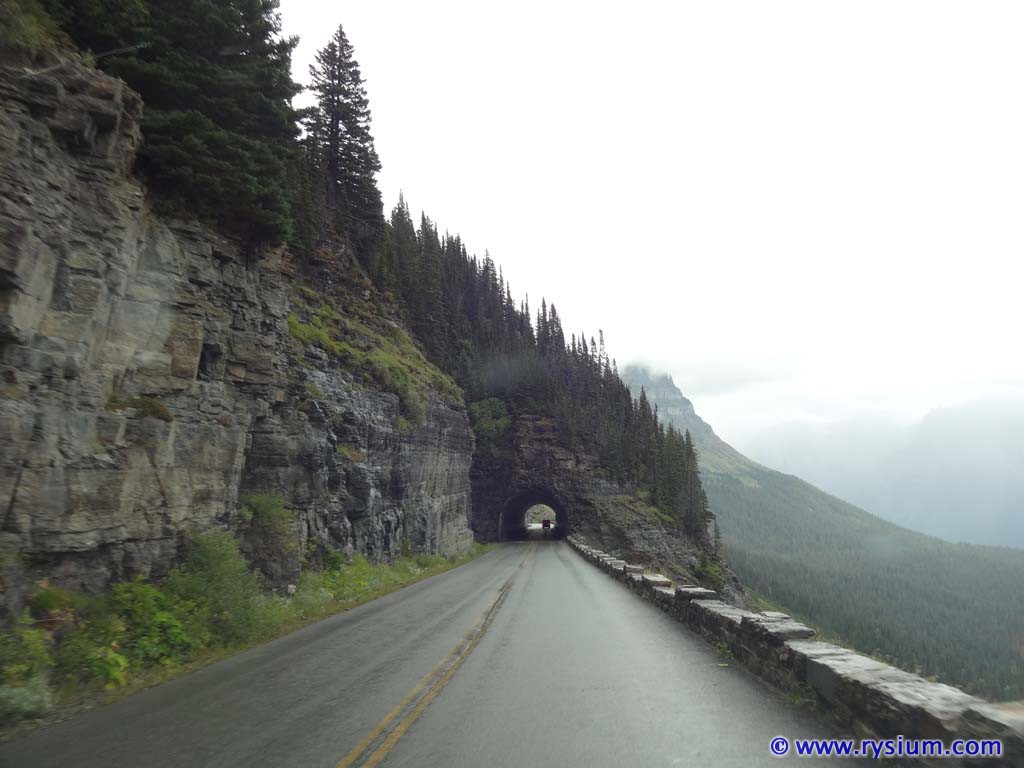
But actually I listed one round trip (starting at the same spot (same gas station) in Browning, MT where I ended up refueling after driving up and down in Glacier Park. That driving includes climbing from 3169ft (Apgar Village) to 6646 ft (Logan Pass) and rolling back to 4485ft (Saint Mary) on a beautiful Going-to-the-Sun Road.

d12_08.jpg


There is no way to compare that road to "flat driving" and get a good data when for example on my daily flat commute (home-office-home) I'm getting 19.5mpg - different road, traffic, driving style. The numbers will always be all over the place as the real factor on mpg is speed, traffic and aggressive acceleration. Yes, you can loose a lot of gas climbing a hill and not gain it going down if you drive like you stole it. But at the same time you will loose similar amount of gas if you drive the same style on flat highway.

There is no myth here. Pure (simplified) physics is the same for cars as for pendulum, you loos potential energy by going up and you gain it back by going down. The entire difference in gas mileage is about how you drive up and down. Go fast or slow, using breaks (downshift) or the road is good enough to coast, do step on it while passing slow trucks going uphill or keep breaking following slow truck downhill? All these factors related to "hill driving" take toll on you mpg, not a Newton Law not working for you.

Yes "it's easy to go from 21 mpg on flats to 17" the same way as easy going from 22mpg in mountings to to 18mpg on flat what I already showed in my numbers.

If you want to debate that's fine but make sure you bring something to the table first. Making statements like "it's a wash going down hill versus up hill is not correct by a long shot and just keeps the myth alive.

I don't see a point to "debate" anymore. I gave my numbers, I pointed out relation between numbers and driving style and show possible and reasonable explanation.

The quote above misrepresents what I wrote in this thread. There is no "wash" in gas usage but at the same time not the hills are to be blamed for poor gas mileage - the driving style is. Keep your pedal to the metal uphill with motor screaming, then speed up to 90 taking advantage of "going downhill" and you will get your 17mpg. Drive smart keeping load on the engine at minimum uphill and coast downhill, yes baby 23mpg you have. BTW this is why CC is not efficient in hills - it tries to keep the speed at all cost. Yes, some roads do not allow you to "drive smart" but that just confirms my point here.

Oh, to stay on the topic, so moderator will not ban me for trashing the thread :blabla: my "real" (measured at the pump) gas mileage returned to 19.5mpg on my daily commute (flat 50% back country highway, 50% small city traffic)
 
In city driving, at best I get 18. Surprisingly, I get worse on the interstates - only about 16 or 17 at 78 mph. It does seem to vary a LOT based upon hills, temperature and wind. I even had real gas (no ethanol) along some of my trips.

The reality of it is, figure out how many miles you're going to drive per year, divide by a mpg (say, 18 is safe). That's how many gallons you'll burn. Multiply that by gas price and set that as your annual budget for fuel. If you get better, you saved a little money.

All I'm getting at is don't expect 27 mpg, expect 18. I'm sure there's some prius forum out there for being anal about mpg, isn't there? 4runners are 4 fun not for mpg.
 
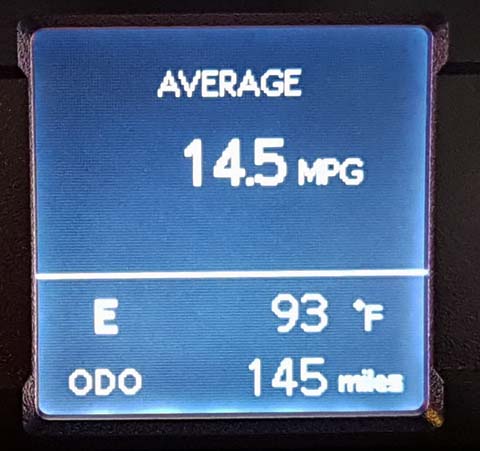
With all of 145 miles on the odometer, I'm at a whopping 14.5 MPG.

Mostly local driving with a very light foot.

MPG-01.jpg
 
2016 TE with just shy of 3,000 miles. Everything on it is (still) stock. I drive probably 80-85% city, where there are lots of lights and stop signs. I seem to average about 17 mpg.

I did do an approx. 600 mile round trip on the freeway in July and I averaged 20-22 mpg on the freeway. That was driving between 70-85 MPH with the A/C on.

I wish I either got 2 or 3 MPG better gas mileage or that the TE had a little more get up and go, but as it is, I get much better gas mileage than I did in my Jeep Gr Cherokee.
 
With 285s 17 and CVT tent on top. I am around 15.5mpg average around city driving from home to work and work to home 16miles. This last weekend I gain to 1.5mpg extra putting me at 17mpg from a road/camp trip got 325mi in a tank. I was pretty amazed of the gain first time out on a long road trip ever. Doing 70mph with A/C on.
 
With 285s 17 and CVT tent on top. I am around 15.5mpg average around city driving from home to work and work to home 16miles. This last weekend I gain to 1.5mpg extra putting me at 17mpg from a road/camp trip got 325mi in a tank. I was pretty amazed of the gain first time out on a long road trip ever. Doing 70mph with A/C on. odo 13,500ish
 
With 285s 17 and CVT tent on top. I am around 15.5mpg average around city driving from home to work and work to home 16miles.

This last weekend I gain to 1.5mpg extra putting me at 17mpg from a road/camp trip got 325mi in a tank.

I was pretty amazed of the gain first time out on a long road trip ever. Doing 70mph with A/C on. odo 13,500ish and freeway speeds I am usually on cruise control
 

Members online

No members online now.

Forum statistics

Threads
278,316
Messages
3,554,111
Members
248,016
Latest member
Advally Service

Trending content

Back
Top