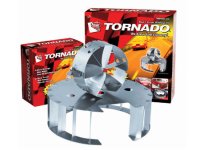
Seafoamed today!!

Again, this is not a fuel injection cleaning process. Really has nothing at all to do with fuel.

I think Lester is referring to 1E's comment about it being in the manual. Meaning, the fuel injection cleaning and power steering flushes aren't in there as well even though dealers recommend it during service.

Either way, I'm in the 5K oil change club. I know it's overkill but it give ME piece of mind. Personally, I'm not a believer in the use of Seafoam, but if it makes someone feel good about it, then good for them. It's not my money they're using.

I'm old enough to remember that Seafoam was used in EVERY part of the vehicle (trans, fuel system, intake, AND even the oil). Now they've got a type for all parts of the powertrain?! It's a marketing ploy. If they have people to buy it, they'll keep on making it. I do find it interesting that they have one for the trans to "clean" it. ATF is inherently a detergent. That is one of its intended properties. If your trans fluid is black, then it has all the contaminants suspended in its fluid. Flush it out and replace with good ATF. You'll never need a detergent to clean the detergent.
 

Attachments

  • tornado1.jpg
    tornado1.jpg
    53 KB · Views: 661
I think Lester is referring to 1E's comment about it being in the manual. Meaning, the fuel injection cleaning and power steering flushes aren't in there as well even though dealers recommend it during service.

Either way, I'm in the 5K oil change club. I know it's overkill but it give ME piece of mind. Personally, I'm not a believer in the use of Seafoam, but if it makes someone feel good about it, then good for them. It's not my money they're using.

I'm old enough to remember that Seafoam was used in EVERY part of the vehicle (trans, fuel system, intake, AND even the oil). Now they've got a type for all parts of the powertrain?! It's a marketing ploy. If they have people to buy it, they'll keep on making it. I do find it interesting that they have one for the trans to "clean" it. ATF is inherently a detergent. That is one of its intended properties. If your trans fluid is black, then it has all the contaminants suspended in its fluid. Flush it out and replace with good ATF. You'll never need a detergent to clean the detergent.

If you want to change your oil every 2K and Seafoam everything then have at it lol. It's your truck! My whole point was it's not needed for long life or proper operation. Kind of like rotating your tires every hundred miles. Won't hurt but really? [MENTION=106176]wfo9[/MENTION] let me know when you design an engine that will be mass produced and warrantied. I'll be glad to listen to you then. Until that time you're just some guy on the internet, same as me.
 
I'm not a huge fan of seafoam for anything other than cleaning the intake runner and combustion chamber. (I also happen to run it in my 2 strokes that sit too much) It's not required at all... I do however feel it allows for better performance, and longer engine life. I've used it for 20+ years, with many positive results.

Here is the sequence of events and the "why" I think it is useful in short form.

The PCV system sucks airated oil and moisture from the crankcase into intake under under low load situations (go read about how PCV works). This oil clings to the runners and forms a nice messy sludge. Short trips magnifies the situation. The sludge eventually gets into the combustion chamber where it is burned off (where carbon deposits are left behind). When you go WOT, A nice burst of the sludge will find its way into the combustion process. This absolutely destroys the effective octane rating and detonation occurs. The carbon build further magnifies detonation propensity. Knock sensors detect it and pull back timing. More carbon forms and the cycle continues. Eventually the catalytic converters fail early from oil contamination. Going WOT frequently, helps also and considering what dogs these motors are, it may not be much of a problem.

My peace of mind (from doing several modern motor tear downs and seeing the effects of the PCV sludge). Is running a catch can in the PCV line and doing some type of decarb/intake cleaning procedure every year or two.

And I run my oil to ~7500 (mostly) ;-)

I'm not telling everyone what they should do... DO whatever maintenance you like. But this was a thread about sea-foam and all the "experts" had to jump in and tell him why it was a bad thing.
 
Last edited:
If you want to change your oil every 2K and Seafoam everything then have at it lol. It's your truck! My whole point was it's not needed for long life or proper operation. Kind of like rotating your tires every hundred miles. Won't hurt but really? [MENTION=106176]wfo9[/MENTION] let me know when you design an engine that will be mass produced and warrantied. I'll be glad to listen to you then. Until that time you're just some guy on the internet, same as me.

With that logic, we should all just keep our mouths shut and stop contributing our experiences and opinion.

You make this such a wonderful place 1engineer, always the voice of reason :blabla:

The forum can be replaced with the manual everyone. Toyota got it all right, LOL.
 
It says it right on the can, and if you really looked at the site you would have seen it.

Thanks for supplying the link.... oh wait you didn't.

I don't have a can in front of me, but did look further on the site, again thanks for the link....
I did see it says "NOTE: Do not exceed 3,000 miles without changing the oil.
 
I did see it says "NOTE: Do not exceed 3,000 miles without changing the oil.

Yea, I always change the oil after treatment (even though it is not going directly into the oil).

If you are going to decarb... Just do it right before an oil change is due.
 
Thanks for supplying the link.... oh wait you didn't.

I don't have a can in front of me, but did look further on the site, again thanks for the link....
I did see it says "NOTE: Do not exceed 3,000 miles without changing the oil.

How are you 61 and a senior member of any car forum and not know what seafoam is?
Dont get offended, but im guessing you dont wrench alot.
 
My point was, if the op did get some into the crank case it would not harm his motor. But you guys go ahead and enjoy WTF
 
Thanks for supplying the link.... oh wait you didn't.

I don't have a can in front of me, but did look further on the site, again thanks for the link....
I did see it says "NOTE: Do not exceed 3,000 miles without changing the oil.

How are you 61 and a senior member of any car forum and not know what seafoam is?
Dont get offended, but im guessing you dont wrench alot.

[MENTION=124839]amicalola-man[/MENTION],

Where in any posting I made did you see me say I didn't know what seafoam is?
NONE!
Just because I choose not to use them?
You must be very confused.
I know what it is, saw it on the shelves and similar products as well...

Was making a point to the OP, if he didn't know where it went, preferably into the desired location, and it went into the CC, he should change the oil instead of just leaving it.


You can guess if I do or don't wrench a lot :wtf: does that have to do with anything ?
Probably been wrenching a lot longer than you would realize....from a 65 Chevy Malibu SS with a modded 350/300HP Corvette engine, and all the drivetrain goodies you would want to imagine..... but nevermind, you probably wouldn't understand anyway unless you are my age or closer.

I wrench what I want to wrench on and get someone else (qualified, not some shadetree mechanic) to do my other stuff....

Please get your info correct before you ASSume!:banana:
 
You guys don't really understand the application at all.

The seafoam is used to clean the intake runners and the combustion chamber from oil->carbon buildup. I will agree that adding it to the fuel system does no do squat, but that is not what he is really talking about.

If we pulled your intake and heads today you would be shocked at what you saw. And yes it does kill power. Thus the reason for a catch can and occasional sea foam cleaning.

It has nothing to do with the gasoline you run and has everything to do with the PCV system.

I respectfully disagree, and here's why.

Given that the PCV valve comes into contact with fuel and oil that is the direct result of blow-by getting past the piston rings during combustion, the composition of both products is important. There are additives present at higher concentrations in Top Tier fuel and modern day high quality oils (especially synthetic) that will help prevent deposit formation, including detergents and dispersants. If a quality oil is being used and changed at the recommended interval, in conjunction with use of a Top Tier fuel, there is no need to waste your money on aftermarket products. The composition of both fuel and oil will do their job in keeping systems and components clean.

Now for those that "chase the dime", believe that all gasoline is the same, and fill up with the cheapest product they can find, then maybe Seafoam or other "pop and pour" products found at your local auto parts store may have some effect, but still won't reverse the ramifications of using low quality gasoline. I'm sure it's a "feel good" for those that purchase low quality gasoline, but your vehicle (and millions of miles worth of data) would disagree that its an equal replacement for consistently using a Top Tier gasoline.

What is low quality gasoline? The government mandates a certain level of additive in gasoline, called LAC (lowest additive concentration). Refiners or gasoline terminals add the specified amount based on their own retail brand requirements, or their customer's requirements if its another retail marketer. The amount can vary from LAC to Top Tier, or something in between, depending on the marketer's claim sets or desired gasoline performance. LAC fuel will dirty up your engine. Plain and simple.

Ask yourself this question: Why would OEM's like Toyota, BMW, Honda, MB, VW, and GM spend time and money supporting Top Tier gasoline if there wasn't something to it? Correct, they wouldn't. They don't care about fuel, but do care about warranty claims, complaints about driveability issues, and customer satisfaction.

Now, onto the oil...The use of a low quality oil or running even a high quality oil for multiples of the recommended interval can also result deposit formation. Low quality engine oil contains very little additive of any kind. Detergents, dispersants, etc. contained in a high quality oil will keep various deposit-prone engine parts (including the PCV) as clean as possible.

Here are a few links on the subject in support my statements above, including the ASTM tests for PCV on page 49-50 (#7-9) There wouldn't be ASTM fuel tests for PCV's if fuel had no impact on it's cleanliness. Yes, these are dated, but they are still applicable today. We just have better performing additives now.

https://books.google.com/books?id=h...q=gasoline detergent affect pcv valve&f=false

Pages 14-16 speak to fuel additives, and their role in PCV valve cleanliness, as well as other parts of the engine, fuel, and emission systems.

http://www.atc-europe.org/public/doc52.pdf

Fuel info. that some may find interesting:

Top Tier Detergent Gasoline - Wikipedia, the free encyclopedia

Visiting the Shell Technology Center, Part 2: The Law of Unleaded [w/videos]

Bottom line...use a Top Tier gasoline combined with a high quality synthetic oil and you won't need to worry about which aftermarket product to use, or how to use it. You can then spend more money on upgrades, beer, or women instead! :cheers:
 
Last edited:
Maybe it was your lack of knowledge about a product as common as brake cleaner In the automotive world. And if you dont know what it does, then dont say anything!
Even if the OP poured the whole can in tell me without making assumptions what it would do?
Im so sorry for hurting your feelers, but no I didnt get the feeling you wrench alot. If you wrench then that would make you a shade tree mechanic as well, unless you call rotating tires and oil changing wrenching.
Judging by your overcompensating and defensive response, pretty sure im right. And if you haven't tore engines apart and seen first hand what running different products will do then don't respond. So yes wrench time matters alot with this subject.
 
You know that by not putting a quart of Marvel Mystery Oil in your tank at the same time as the Sea Foam treatment you negated the effects of the Sea Foam by 1-100% right?

These two products are made to provide exponential benefits when used in tandem. You might say they make love to your car when used together.

Also, it is widely accepted and documented that you should use neither if there is 1) A full moon phase occurring or 2) You bought a losing lottery ticket the day you purchased either product.

I can't believe people waste money on this shit. :moon:
 
Maybe it was your lack of knowledge about a product as common as brake cleaner In the automotive world. And if you dont know what it does, then dont say anything!
Even if the OP poured the whole can in tell me without making assumptions what it would do?
Im so sorry for hurting your feelers, but no I didnt get the feeling you wrench alot. If you wrench then that would make you a shade tree mechanic as well, unless you call rotating tires and oil changing wrenching.
Judging by your overcompensating and defensive response, pretty sure im right. And if you haven't tore engines apart and seen first hand what running different products will do then don't respond. So yes wrench time matters alot with this subject.

Here, let me get you that towel.....

You know what, you are so right on everything you post....
I'll just ask you when I want to know something, that way I'll get the correct info, I'm sure!
NOT!

Now, back to seafoam....
 
Topic for discussion:

SeaFoam:

Pale Oil (refined crude oil) - read one refined step above Kerosene
Naphtha (a crude oil distillate) - read pretty much Kerosene
IPA (Isopropyl alcohol) - a low level solvent

So you are basically going to dilute your oil with a solvent solution that was engineered 60 years ago when people used to throw moth balls in their fuel tank thinking it cleaned the fuel system or ran a quart of Marvels Mystery Oil through whenever the car wasn't "running right" and then you are going to run this witches brew for up to 3k miles before you change the oil?

I pretty much got that right? I have rebuilt several high performance motors. Everybody is so adamant about oil changes and protecting the main bearings, cam bearings, cylinders and rings and all the other moving parts of a motor. And rightfully so.

There are hundreds of threads here arguing whether oil should be changed at X vs Y miles.

And here we are saying "Meh, I'm going to dilute the shit out of my oil to HELP the motor". LOL

Think about it. :snacker:
 

Members online

Forum statistics

Threads
278,310
Messages
3,554,080
Members
248,016
Latest member
Advally Service

Trending content

Back
Top