Spark Plugs: how often do you change them

When do you change your spark plugs?

  • When the manual tells me to

    Votes: 21 35.6%
  • Every 90K-100K with the timing belt

    Votes: 17 28.8%
  • When performance/economy seem off

    Votes: 19 32.2%
  • When chasing other problems

    Votes: 1 1.7%
  • When family comes over and no thanks

    Votes: 1 1.7%

  • Total voters
    59
I just changed mine at around 38K miles, they worked fine and they looked fine to me when I removed them and could have probably left them in. On the other hand, I am a firm believer that spark plug wires never go bad, but change them anyway, except this time I was going to reuse the same plug wires (NGK), however when I took them off they were badly corroded where they plug into the ignition coils, so I ended up replacing them, I have never had this problem before with plug wires.

This is where dielectric grease comes into play, right in the seat where the boot touches down on the coil, and around the mouth of the extended tip of the coil and wires 2,4,6.
 
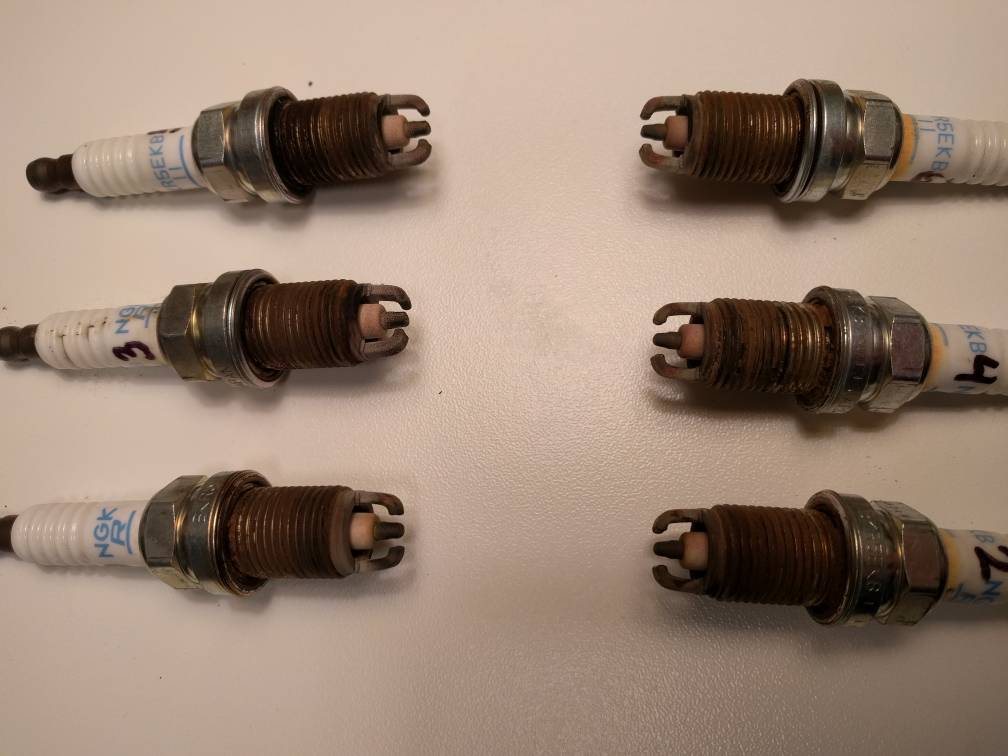
Here is what my plugs looked like when I pulled them this past weekend. They are just less than 4 years old and I probably put 80K on them if not more.

I can't find a record of mileage when I installed them, but I pulled them at 242,060K miles

I also don't have the correct wire-gauge to accurately measure with, but the closest I can measure them puts the gap between .050 -.060

I'll tempted to clean them up, re-gap them and keep them as spares or throw them in at next plug change interval, for sh*ts and giggles.
b2966ff09e5f3fbe2e65cf4f65ff8ef5.jpg


Sent from my Nexus 5X using Tapatalk

Yeah those are really worn out, it's only a resistor plug, I do mine somewhere between 30 and 40k. Toyota doesn't recommend gapping those plugs BTW, but if I had to guess I'd say spec was .03-.035
 
Yeah those are really worn out, it's only a resistor plug, I do mine somewhere between 30 and 40k. Toyota doesn't recommend gapping those plugs BTW, but if I had to guess I'd say spec was .03-.035

NGK instructions say to NOT gap, and factory gap on them is .044

I'm kidding about reusing these plugs, they did their job, but the insulators (color) and electrodes (surface condition and even wear) look pretty good for an 18 year old engine.
 
I just replaced the plugs on (2) 3rd Gen 4Runners. They were recently acquired and both have over 230k miles.

Another 1997 I purchased is getting a motor swap due to some type of head issue gasket or head. The donor engine is on a stand as I type and will get new plugs because they are staring me in the face.

So I would replace when purchased to begin a service/maintenance log.

I also replaced air & fuel filter, oil and filter,
 
I just changed mine at around 38K miles, they worked fine and they looked fine to me when I removed them and could have probably left them in. On the other hand, I am a firm believer that spark plug wires never go bad, but change them anyway, except this time I was going to reuse the same plug wires (NGK), however when I took them off they were badly corroded where they plug into the ignition coils, so I ended up replacing them, I have never had this problem before with plug wires.

Spark plugs wires can fail. In your case the boot failed allowing moisture to cause corrosion.

I've seen spark plug wires arc from wire to wire. That's the major failure.
 
Man, I don't think I've ever changed spark plugs in any of my vehicles.

My Toyota Matrix has 108K Miles on it.. original plugs.
My previous 2000 Sunfire GT had the same mileage on original plugs, sold it that way.
Before that I had a 2001 Cavalier with 135K miles on it... original plugs, lol.

Oh wait.. I did have a 1987 Cavalier and I remember changing the plugs in it when I bought it, it had 110K on the odo.

My 4runner has 182K miles on it. I've owned it for 2.5 years and have never changed the plugs, although I'm sure one of the previous owners must have done it at least once. I know the Ignition Wires aren't original.

Same as most, the reason I don't tend to mess around with the plugs too much is my unholy fear of stripping the thread on the aluminum heads.
 
So, on a related note but not to hijack the thread, I replaced my spark plugs about 8,000 miles ago and recently realized my anti-seize tube was unopened, meaning I did not apply it. Should I leave them be or go back in now to apply?

I used 6 Denso 3289 Double Platinum plugs.

More Information for DENSO 3289


'99 SR5, 4WD, 215,000 mi.
 
So, on a related note but not to hijack the thread, I replaced my spark plugs about 8,000 miles ago and recently realized my anti-seize tube was unopened, meaning I did not apply it. Should I leave them be or go back in now to apply?

I used 6 Denso 3289 Double Platinum plugs.

More Information for DENSO 3289


'99 SR5, 4WD, 215,000 mi.

I would go back in and apply a light coat of anti-seize to the threads. But that's just me.
 
I would go back in and apply a light coat of anti-seize to the threads. But that's just me.

I often don't use it, and didn't the last time I installed plugs in my T4R; and they came right out.

As long as you don't have any issues (plugs seated and torqued properly, no leaks, no internal/external contamination) you should be fine.
 
So, on a related note but not to hijack the thread, I replaced my spark plugs about 8,000 miles ago and recently realized my anti-seize tube was unopened, meaning I did not apply it. Should I leave them be or go back in now to apply?

I used 6 Denso 3289 Double Platinum plugs.

More Information for DENSO 3289


'99 SR5, 4WD, 215,000 mi.

It matters less on how much anti-seize is on there and matters more on how tight you put them in. I usually do finger tight then about 1/4 a turn with a socket and leave it at that.

To the OP, your plugs are wearing but by no means are worn out. I doubt you'll see any change in engine operation by changing them.

My option? I change them when they need to be changed. I don't do intervals for plugs.

I'm on 60k miles+ on my Altima's iridium plugs, they still look brand new so I leave them alone.
 
I often don't use it, and didn't the last time I installed plugs in my T4R; and they came right out.

As long as you don't have any issues (plugs seated and torqued properly, no leaks, no internal/external contamination) you should be fine.

Plug corrosion problems aren't a result of improper seating or sealing. It's a result of galvanic corrosion -- caused by two dissimilar metals being in contact with each other. In this case, steel plug threads in an aluminum head. It's particularly bad with long-life plugs -- like iridium. Not because those plugs are particularly susceptible, but because they last so long, they frequently stay in service for 8-10 years. Not as big a deal with the change intervals on our trucks, but I prefer and ounce of prevention to a pound of cure -- just how I roll. :cool:
 
So, on a related note but not to hijack the thread, I replaced my spark plugs about 8,000 miles ago and recently realized my anti-seize tube was unopened, meaning I did not apply it. Should I leave them be or go back in now to apply?

I used 6 Denso 3289 Double Platinum plugs.

More Information for DENSO 3289


'99 SR5, 4WD, 215,000 mi.

Anti seize in aluminum heads is a big no-no, more likely to over torque and pull threads out.
 
Anti seize in aluminum heads is a big no-no, more likely to over torque and pull threads out.


NGK actually has a engineering paper about not using anti seize on their specially coated spark plugs. But if I remember correctly they are concerned about messing up the heat range.


Sent from my iPhone using Tapatalk
 
My 30k service going back to 1999 is:

-plugs
-air filter
-MAF clean
-TB clean
-swap PCV
-all fluid check
-check brake pads and shoes.

100% engine reliability since Day 1 with one exception. I did not know about throttle body cleaning at the beginning and I set a P0171 about year 3, with the engine refusing to power up once closed loop kicked in. Just enough to get a few miles from home.

Same, I change mine around 30k as well as all my diff fluids, transfer case, and transmission fluid. I do my air filter whenever it gets dirty though since I see a lot of dusty gravel roads. MAF and throttle body is also a good one to clean at this time. I did my PCV when I did valve cover gaskets, and didn't touch it for 65k miles or so probably. The grommet was so hard and brittle. I'll be changing that now every 30k also.

I'm coming up on my 3rd spark plug change with the 4Runner later this summer and I'm debating replacing the wires since they'll be about 90k miles old, but only like 4-5 years old. I'm all about preventative maintenance. I'd much rather change a part or replace something on my own schedule, rather than have to replace it at an unknown time when it is critical.

It matters less on how much anti-seize is on there and matters more on how tight you put them in. I usually do finger tight then about 1/4 a turn with a socket and leave it at that.

To the OP, your plugs are wearing but by no means are worn out. I doubt you'll see any change in engine operation by changing them.

My option? I change them when they need to be changed. I don't do intervals for plugs.

I'm on 60k miles+ on my Altima's iridium plugs, they still look brand new so I leave them alone.

Why not just use the torque setting given by Toyota? Not bashing you, but so many people don't use torque settings and I don't understand why. Auto manufacturers put ALOT of money and time into testing and finding the correct torque settings for things.

NGK actually has a engineering paper about not using anti seize on their specially coated spark plugs. But if I remember correctly they are concerned about messing up the heat range.


Sent from my iPhone using Tapatalk

Interesting. I've never heard about not using anti seize on plugs. I'll have to look into it before I change mine next time.
 
Please share

Sent from my Nexus 5X using Tapatalk

The torque setting? I don't know it off the top of my head but it's in the TSRM/FRM that you can download for free online. I think it's something like 13 ft lbs. The manual has all the torque settings you could ever need. A member here Doc something I believe has a thread that has most of the torque settings in it also.
 
Gap erosion is around .001-.002 per month. It adds up eventually.


Sent from my iPhone using Tapatalk

Is that a rate you've personally observed or is it just a generally accepted number? What does that that translate to in mileage?

Not calling BS or anything, just curious. That'd be kind of an interesting science project.
 
The torque setting? I don't know it off the top of my head but it's in the TSRM/FRM that you can download for free online. I think it's something like 13 ft lbs. The manual has all the torque settings you could ever need. A member here Doc something I believe has a thread that has most of the torque settings in it also.
There is a picture on the box that shows the "manual" torque setting of plugs or approximately 1/2 to 2/3 of a turn from seating.

Most torque settings are usually dry thread, because once lubed, the same torque setting will be too tight.

I wonder if the FSM specifies wet or dry torque settings for spark plugs. If wet, they probably specify the exact anti-sieze compound to use as each has its own property of displacement.

FWIW, an internet search yields 21.6 pounds-feet for a 14mm plug in aluminum head, dry. Interested to see what the FSM says.

Sent from my Nexus 5X using Tapatalk
 
Last edited:
Is that a rate you've personally observed or is it just a generally accepted number? What does that that translate to in mileage?

Not calling BS or anything, just curious. That'd be kind of an interesting science project.
Well, the plugs I pulled had approximately a .066 gap (estimated average) and were .044 when installed just under 4 years earlier. In that time I drove well over 90K.

.022 divided by 46 months is .000478 per month

.022 divided by 90K miles is .000244 per thousand miles

That was my truck under my operating conditions. YMMV

Sent from my Nexus 5X using Tapatalk
 
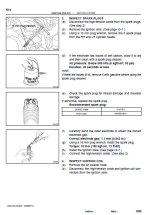
Here's the FSM statement on the spark plugs. If the 21.6 ft-lbs is true then 13ft lbs with anti seize should be fine with no worries about being too tight.
 

Attachments

  • spark plug.JPG
    spark plug.JPG
    58.4 KB · Views: 2,546

Members online

No members online now.

Forum statistics

Threads
278,310
Messages
3,554,079
Members
248,016
Latest member
Advally Service

Trending content

Back
Top