I think this needs further exploration.
1. There is no learning. The system only has two positions - open and closed. Open at low speed. Closed at high speed.
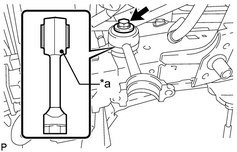
The system should be symmetrical. Front to back. Meaning the spacing between the KDSS piston side and fixed bushing should be equal distance apart. Similarly the lever arm from the KDSS sway bar rotating center to the axis of the bushings of the piston and fixed end should be similar distance. And the location of the mount of the sway bar to the axle or a-arm must also be approximately the same. If all of those parameters are correct, KDSS should always self level when run at low speed. The fluid forces on each piston should reach an equilibrium point where there is no force on either sway bar at rest.
We are finding that lifts may result in a lean to the passenger side.
This means that both pistons (both are on the driver's side) are putting a downward force on the sway bars when the vehicle is sitting level. What is causing the equalization of force to balance at a non-zero location. Zero being the point where the KDSS piston is equal extension as the fixed side.
My guess is that a lift - because the sway bar is fixed essentially in 3 locations and has a fixed arm length that is shorter than the control arms in the rear in particular the lift puts a downward pressure on both ends of the two sway bars, pulling them downward. The passenger side - being fixed acts like a limit strap of sorts. The driver's side will equalize where both pistons are slightly extended from the zero point. This is because the system is not truly pure hydraulic master/slave, but also has expansion chambers that only have around 500psi of pressure. The downward force on the free end from the lift is likely causing a small amount of extension that would be prevented with pure hydraulic master/slave.
The test would be to disconnect both front and rear and see if they self level to an original zero point.
Otherwise I'm kinda at a loss for the cause.
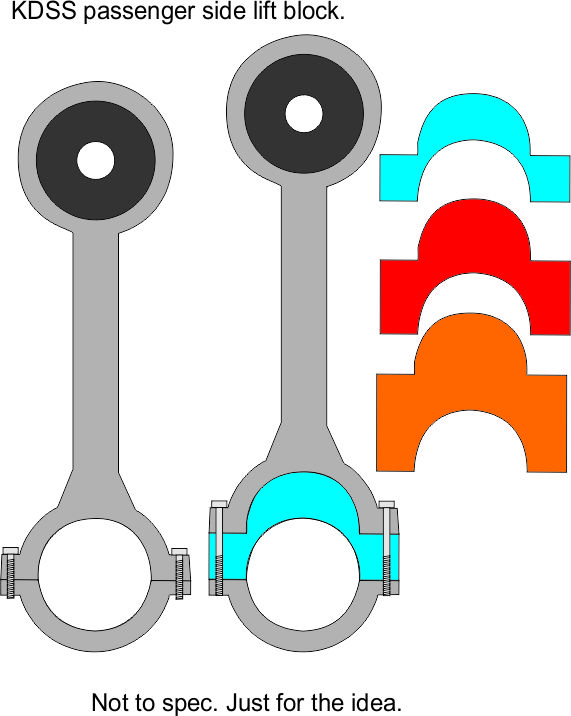
adjusting the springs to compensate is not a good solution. It will cause a suspension imbalance side to side and poor handling. It results in a spring rate on the passenger side that's different from the driver's side because it's compensating for an effective negative spring from the sway bar on the passenger side. It's a bandaid, not a fix. I suspect a small spacer on the fixed end would solve the issue, or a pair of spacers on the axle mount locations.