Trans Cooler Mount: Need Kansas 5th Gens for New Product Fitment

Ordered a bracket for my stock TRDORP, I have a hayden 678 sitting in my garage waiting to be installed... I will post pics once I have it in :)
 
My bracket was delivered last week. It was shipped quickly, and I'm really happy with the quality. Yesterday I mounted the cooler, but ran out of time to make the connections into to the cooling loop. I didn't want to rush things, since this is the first time I've installed a cooler, so I wanted to step back and take another look at how/where people were making connections.

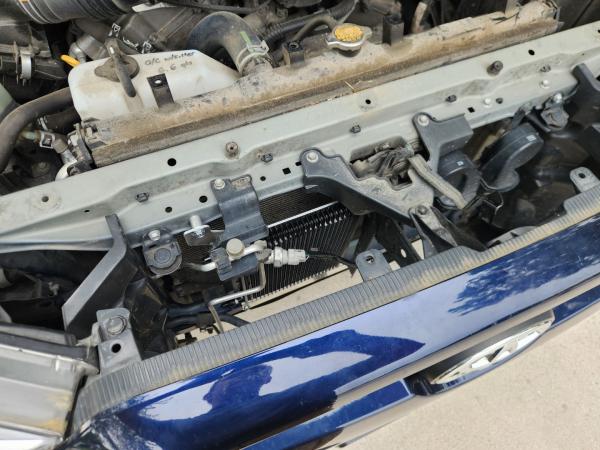
zkengle-albums-trans-cooler-install-picture63228-iconicfabbracket.jpg


zkengle-albums-trans-cooler-install-picture63227-4r-cooler.jpg


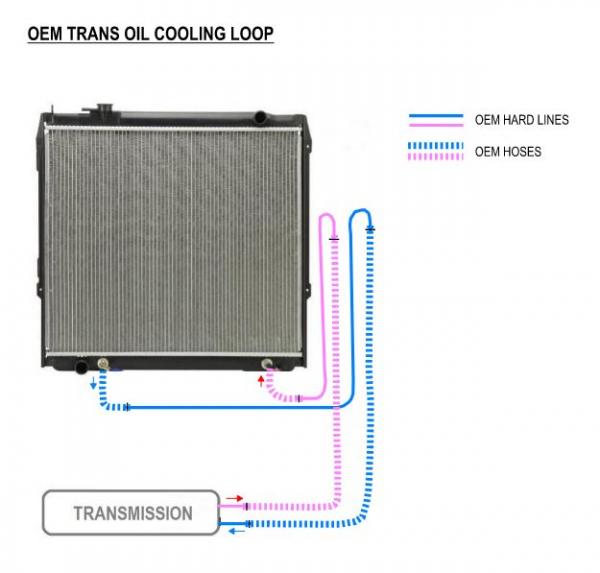
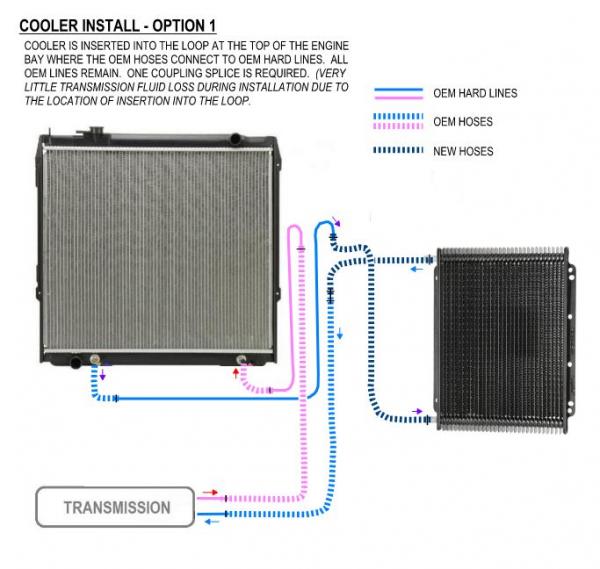
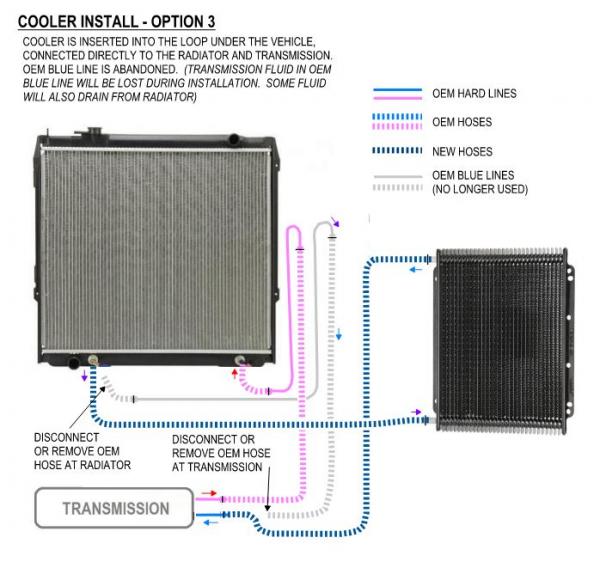
Between sketches here and youtube videos, it seems there are a few options. So taking all that info, I came up with some drawings based on other sketches in this thread that might help other noobs like me. Maybe I'm being paranoid, or just overly cautious, but I know trans fluid level is critical, and I'd rather not have to go through the drain/fill process right now.

So, after crawling around under the vehicle and looking at the various hoses and hard lines, here's my version of the sketches and options. Since I have not actually made my connections yet, the narrative on fluid loss during installation is only speculative. Comments are welcome and I can adjust the sketches as feedback is received. So have at it... let me know your thoughts...

zkengle-albums-trans-cooler-install-picture63223-oem.jpg


zkengle-albums-trans-cooler-install-picture63224-option1.jpg


zkengle-albums-misc-picture63225-option-2-a.jpg


zkengle-albums-trans-cooler-install-picture63226-option-3-a.jpg
 
Last edited:
zkengle

GREAT drawings! You captured things well.

Let me know how hard it is to get at the top of the OEM hard lines if you go that route. It's a cramped space. I eventually want to go the route of abandoning one of the OEM hard lines and shorten one of my hoses
 
[MENTION=6100]teotwaki[/MENTION] - thank you! Hoping they help some people.

I'm going to make final connections this weekend and I'll be sure to post some pictures. My next camping trip isnext weekend, so that will be the test of how well this works.

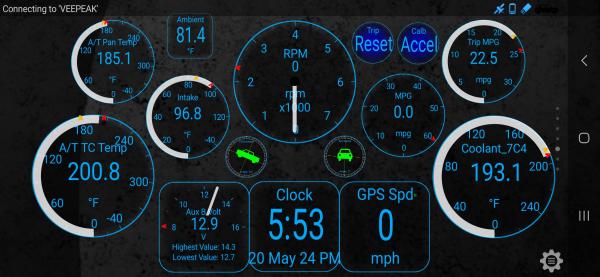
I have some baseline temp readings for future comparison. On my ~20 mile evening commute I would hit around 185f A/T pan temp and about 200f max torque converter temp.

zkengle-albums-trans-cooler-install-picture63229-torque-app-screenshot-evening-commute-no-cooler-installed-~20-miles-35-minutes-ambient-air-temp-81f-t-pan-temp-steady-around-185f-t-c-temp-max-around-200f.jpg


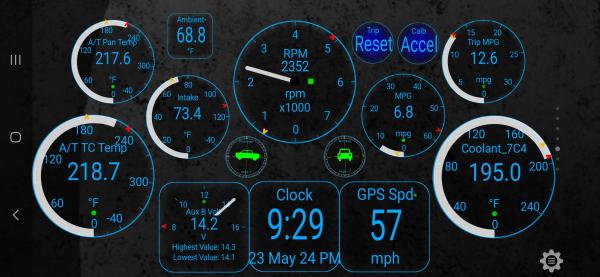
Towing about 3,000lbs to camp last weekend, I hit almost 220f A/T pan temp, with the TC maxing out at almost 240f. That was after 175 miles and heading up into the mountains of Northern PA (so nothing too crazy).

zkengle-albums-trans-cooler-install-picture63230-torque-app-screenshot-arriving-camp-mountains-towing-~3-000lbs-no-cooler-installed-~175-miles-3hrs-45min-ambient-air-temp-68f-t-pan-temp-max-around-217f-t-c-temp-max-around-235f.jpg

(Screenshots are from Torque app, connected to Veepeak OBDCheck BLE+ Bluetooth 4.0 OBD II Scanner. Ignore the avg mpg - that seems to calculate really high for my regular commute. Its fairly close for my camping trip, maybe just a little high.)

I'm still going back and forth on which option I'll go with. Option 3 seems like it would probably provide the least restricted flow, but I'm concerned about loosing too much fluid during the process.

So I think I'm leaning towards Option 2 right now - seems to be a good compromise with minimal risk for fluid loss. Still might even pour some fresh fluid in the hoses just for the heck of it. Obviously can't fill the whole cooler with fluid since it will be cold and the bypass will be open, but it seems like every little bit would help.
 
Last edited:
Mine should be showing up in the next few days! Hopefully, my power steering cooler shows up as well since I don't really want to pull my front end apart multiple times.
 
The results are in from my trans cooler install! Towed our camper about 450 miles round-trip this past weekend to our regular camping spot in Northern PA. No matter what how hard I pushed it, the trans only reached 185f once very briefly on a steep grade, typically hanging around 150-170 for most of the drive (mixed highway and rural). On the same trip a few weeks ago, the trans hovered around 200 for much of the trip, hitting 225-230f a few different times. Ambient temps were pretty similar conditions. :banana:

 
The results are in from my trans cooler install! Towed our camper about 450 miles round-trip this past weekend to our regular camping spot in Northern PA. No matter what how hard I pushed it, the trans only reached 185f once very briefly on a steep grade, typically hanging around 150-170 for most of the drive (mixed highway and rural). On the same trip a few weeks ago, the trans hovered around 200 for much of the trip, hitting 225-230f a few different times. Ambient temps were pretty similar conditions. :banana:


Thanks for the trip report. That pretty much mirrors what I experienced when towing my trailer both before and after the trans cooler install. I'm curious about how the bracket and cooler fitment was in your 4Runner and how you ended up routing the hoses.
 
The bracket and cooler fit perfectly! I didnt have to pull the bumper - just removed the engine bay shroud to access the space.

I routed the hoses through the existing openings in the plastic shroud to the left of the radiator (looking at the front of the vehicle) and then turned them back towards the engine and through the existing openings in the sheet metal radiator support. It was a little tight trying to reach down in there and was at one point on top of the engine, but it really wasn't too bad at all. Literally the hardest part was manipulating the hose clamps.
 
The bracket and cooler fit perfectly! I didnt have to pull the bumper - just removed the engine bay shroud to access the space.

I routed the hoses through the existing openings in the plastic shroud to the left of the radiator (looking at the front of the vehicle) and then turned them back towards the engine and through the existing openings in the sheet metal radiator support. It was a little tight trying to reach down in there and was at one point on top of the engine, but it really wasn't too bad at all. Literally the hardest part was manipulating the hose clamps.

Glad to hear it fit well!

How/where did you attach the hoses to the transmission lines in the engine area?
 
Got my cooler in today. Kind of a pain to route the new hoses. I removed the radiator overflow tank to get a little better access. The hardest part was getting that edge protector stuff in the access holes.

nmXXfK6.jpg

7LxdOQf.jpg

3vtFWLh.jpg
 
Got my cooler in today. Kind of a pain to route the new hoses. I removed the radiator overflow tank to get a little better access. The hardest part was getting that edge protector stuff in the access holes. I added a half quart of WS through the return line to make up the minor amount I spilled and the volume of the cooler and hoses.

nmXXfK6.jpg

7LxdOQf.jpg

3vtFWLh.jpg
 
I had a 2005 SR5 for 13 years with close to 250,000 miles or maybe more. It had a similar cooler I installed. The Trans never needed work even though I often towed a heavy off road trailer
 
Thanks, all, for sharing your experiences. I'm going to order one for my 2021 ORP.

Was there a conclusion on whether the bypass version of the Hayden cooler is useful on a 5th gen? There are several posts indicating that the tranny has an internal thermostat, which would suggest that the bypass is unnecessary. I'd rather not have the bypass if it isn't helpful as it could restrict the flow and is one more thing that could break.
 
Thanks, all, for sharing your experiences. I'm going to order one for my 2021 ORP.

Was there a conclusion on whether the bypass version of the Hayden cooler is useful on a 5th gen? There are several posts indicating that the tranny has an internal thermostat, which would suggest that the bypass is unnecessary. I'd rather not have the bypass if it isn't helpful as it could restrict the flow and is one more thing that could break.

the bypass on the hayden is passive, it doesn't restrict fluid flow. I honestly don't think it does much.
 
I ordered one of these kits with the 698 and just got mine in. I was wondering if there is any consensus on where the best place to tap the lines is? I am thinking after the OEM Radiator pass through before it goes back to the trans.
 
I ordered one of these kits with the 698 and just got mine in. I was wondering if there is any consensus on where the best place to tap the lines is? I am thinking after the OEM Radiator pass through before it goes back to the trans.

i tapped mine near the top, which i found the easiest.
 
i tapped mine near the top, which i found the easiest.

Did you use a barbed fitting to connect to the OEM hose? or did you eliminate the OEM hose by connecting the cooler in between?

I was thinking of connecting one end to the raidator outlet and the other to the hardline going back to the trans
 
the bypass on the hayden is passive, it doesn't restrict fluid flow. I honestly don't think it does much.

This is what Hayden says on their brochures (but doesn't offer any tech data about "colder climates").

"Hayden’s new patented internal pressure by-pass coolers allow the vehicle’s transmission to reach optimum operating temperature quickly by routing the fluid through the by-pass channel of the cooler until fluid temperature increases. This new design allows vehicles in colder climates to reach proper operating temps faster which improves fuel economy and helps reduce friction of internal components. Hayden’s internal pressure by-pass design incorporates an integrated valve that eliminates the need for external valves and additional plumbing at installation."

I also wonder if the "valve" is a moving metal part or if it is all viscosity based.

Are there any tests to show the Hayden bypass doesn't work? I suspect the key is determining at what temperature point the Hayden cooler's "valve" activates. Probably somewhere below 160 degrees as Hayden's web site frequently refers to 175 degrees as a normal temp.

Maybe there is a way to run some cold weather drive tests and find what the Hayden is doing. Would we also need to know where the temperature sensors are located in our transmissions in order to better evaluate and understand the readings on the ScanGuage?

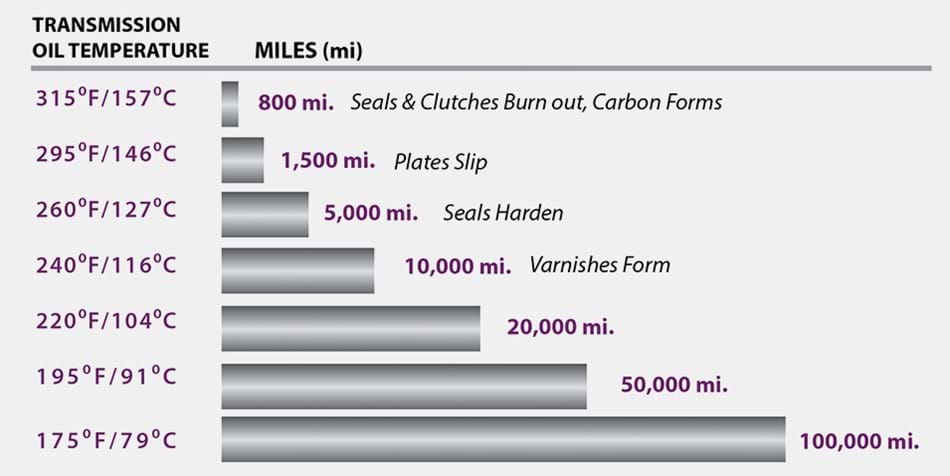
transmission_chart.jpg
 

Members online

Forum statistics

Threads
278,315
Messages
3,554,125
Members
248,016
Latest member
Advally Service

Trending content

Back
Top