Transfer Case Actuator Leak - Fix OPTIONS & Thoughts

da1dp

New member
Hello! I've been scouring the forums and considering all options for repairing the transfer case leak on my (4th gen 4runner) '03 T4R Sport V8 AWD.

From what I've found there are 4 options to getting this problem resolved and paying someone $2k to repair is NOT happening for this vehicle. I'm hoping others can share their experience or suggestions based on these options.

Note, I use my 4Runner often in the mountains. I live outside of Denver and often hit offroad trails in the Rockies with my family so 4WD & 4LO are important to me. It gets us to some epic hikes and cool site seeing!

---OPTION 1 - "Twist and turn method" - I've read were many have had success unbolting the actuator from the TC, then pulling and twisting counter clockwise to get the actuator remove. It has been noted that this is risky and causing some noises of cracking plastic. My research led me to believe that this fixed the leak, but may have impacted the integrity of the actuator, especially for shifting between 4hi & 4lo. One poster actually used this method and ended up replacing the entire TC after problems going into 4LO. My concern with this method is cracking the actuator out of the TC will leave me stranded in 4LO some day while on the trail b/c the actuator fails.

QUESTION: has anyone had long term success with the "Twist and turn method" in regards to switching between 4HI & 4LO. My speculation is that most that had success with this method probably NEVER uses 4LO.


---OPTION 2: "Pull TC and do the right way" - Member gmyatko did a writeup about doing this. He explained the process took about 6 hours done the right way. I'm not a mechanic by trade, but would say I am competent to do this method. Overall, this seems like the BEST solution despite the time required.

---OPTION 3: "TC fluid additive" - I am weary about adding chemicals to my TC fluid to fix this issue for 2 reasons; 1) it may compromise the longevity of the TC & 2) It may only be a short-term fix.

QUESTION - Has anyone had long-term success with this?

---OPTION 4: "Pull TC & pull motor apart" - This seems logical, but some have reported timing issues with motor in 4LO after put back together. Plus, this seems almost as timely as option 2. I'm leaning away from this option.

Suggestions? I've seen a lot of people on these boards use the twist and turn method, but I doubt many have put their TC in 4LO many times after this method. I'm guessing by the amount of posts about replacing the actuator that there may be long-term consequences with this method. I could be wrong. I hope so because this seems like the fastest and simplest method. I don't mind breaking some plastic if I can be confident the actuator will still work for the long term....

Depending on the best method, I plan to do a write up for video for this. Any input would be appreciated!

Thoughts?

Cheers!
 
Register to hide this ad
I have researched this repair extensively and have come to the conclusion that Option 2 is the best. You might as well just do it right the first time. I too have read gmyatko's procedure, and while it is a little rough and no pictures it still covers everything and tells you things you don't need to do that the FSM and TSB say to do. I'm going to do mine myself in a few months, just adding TC oil every oil change for now. I'm not a mechanic but can do semi-major repairs (timing belt, CV axle) and am a mechanical engineer so I feel confident I can do this if I approach it methodically and slowly.

Good luck with yours. When are you planning to do your repair? I will definitely be interested in your write-up and lessons learned if you do yours before me. This is a widespread issue on the 03-04 V8 4WD models so I think a lot more owners would be willing to do their own repair if there was a good write-up. TSB (Lexus version) is attached in case you don't have it.
 

Attachments

Last edited:
How much is it leaking? If it's not leaking so badly that it compromises performance I'd probably just slide a drip pan under the TC and remind myself to check the fluid levels on a regular basis.

I've often thought about what I might do if my TC actuator takes a dump. I'd probably look into an FJC T-case swap if it's not too much more expensive than a TC repair. Sure, I'd lose multi-mode capability but I'd get a by-God shifter in its place.
 
---OPTION 2: "Pull TC and do the right way" - Member gmyatko did a writeup about doing this. He explained the process took about 6 hours done the right way. I'm not a mechanic by trade, but would say I am competent to do this method. Overall, this seems like the BEST solution despite the time required.

Cheers!

I agree on Option 2. Just in case (for you too lazy to look it up....... me included, LOL):

http://www.toyota-4runner.org/problems-warranty-issues/42814-transfer-oil-leak-3.html#post698160
 
What is this twist method? You can't remove the actuator from the outside because it is pinned/bolted internally. The best method is to rebuild it properly and/or replace it.

20140619_125040.jpg
 

Attachments

  • 20140619_125040.jpg
    20140619_125040.jpg
    138.2 KB · Views: 22,692
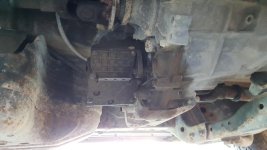
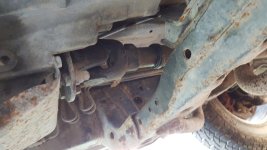
***UPDATE: Went to look under the truck tonight and I now have oil coating the drive shaft, gas tank, and rear differential as well as oil splatter on various parts of the truck. I have no idea if this is related but for now I assume it is until I can verify where the leak is coming from. Just wanted to let you know so I don't cause you issues if it turns out to be due to the stop leak treatment.

I went with option 3. I had a small leak that was starting to get worse.
I added BlueDevil last week, drove around for a few hours and have no had a leak since. I will put about 500 miles on the truck this week and change the oil this weekend. I'll let you know how it holds up.

It's not the proper fix but I'm not willing to spend $2K to have someone fix it and I don't have time right now to do it myself.

This is what I used I believe this is the same product as the white shepherd people talked about in other threads just with a new name
http://www.amazon.com/BlueDevil-Products-49499-Stop-Leak/dp/B000OAEN7C#productDetails
 
Last edited:
What is this twist method? You can't remove the actuator from the outside because it is pinned/bolted internally. The best method is to rebuild it properly and/or replace it.

View attachment 134272

The twist method is where the shaft stays in the TC and you remove the actuator from the shaft by removing the actuator internals then twisting it about the shaft a certain amount that allows you to then remove it but not without some amount of damage to the actuator housing. Not exactly a factory repair method.
 
Do you have to remove the tranny to get the transfer case out?

The FSM and TSB say to remove the tranny but my understanding from guys that have done this is you don't have to.

Anyone else that has done this before have any input on this?
 
Following as I think I have the leaks too.
 

Attachments

  • 20170826_191825.jpg
    20170826_191825.jpg
    128.2 KB · Views: 14,573
  • 20170826_191925_001.jpg
    20170826_191925_001.jpg
    131.8 KB · Views: 13,280
How did BlueDevil approach worked out for you? Toyota dealer just told me that the reason for the oil leak is due to TC actuator problem... :(
 
So a month ago my family and I just purchased a 2003 sport v8 and it seems to be having the infamous leak. Weirdly this leak just started this week with the record low temps. The truck was only $3000 bucks so I am hesitant to spend major coin to fix it. Not to mention it has 205k miles on. Besides this little leak it runs and drives excellent and smooth. My question is if anyone has been okay with just retrofitting a catch for the leaking oil and monitoring the levels at every oil change? Obviously this is not a fox, but would it damage the system ? I would love to just replace the seals, but all the DIY fixes seem really intensive and possibly over my head.
 
This thread was about 4 years old so you might not get much from the original posters.

This link below is an awesome tutorial for how to fix the leak the proper way. It may seem overwhelming but I swear it isn't. For about $15 you can seal the actuator back up with new o-rings and replacing the c-clips on the shafts. (I wouldn't bother with the small shaft seals, just the big o-ring that goes on the actuator). The only specialty tools you may need is a transmission jack, a big assortment of socket extensions, and a tube of rtv gasket maker.

The hardest part is dropping the case gently and reinstalling it, the most tedious part is cleaning all the old rtv off the sealing surfaces.

I did it in a day and I swear the case shifts into and out of low range almost immediately now, and is nearly silent while doing so. Before it took forever to shift and made all sorts of clunking noises.

http://www.toyota-4runner.org/4th-gen-t4rs/182074-fixing-transfer-case-shift-motor-leak-within.html
 
This thread was about 4 years old so you might not get much from the original posters.

This link below is an awesome tutorial for how to fix the leak the proper way. It may seem overwhelming but I swear it isn't. For about $15 you can seal the actuator back up with new o-rings and replacing the c-clips on the shafts. (I wouldn't bother with the small shaft seals, just the big o-ring that goes on the actuator). The only specialty tools you may need is a transmission jack, a big assortment of socket extensions, and a tube of rtv gasket maker.

The hardest part is dropping the case gently and reinstalling it, the most tedious part is cleaning all the old rtv off the sealing surfaces.

I did it in a day and I swear the case shifts into and out of low range almost immediately now, and is nearly silent while doing so. Before it took forever to shift and made all sorts of clunking noises.

http://www.toyota-4runner.org/4th-gen-t4rs/182074-fixing-transfer-case-shift-motor-leak-within.html

Thanks so much this really helps a lot.
 
This thread was about 4 years old so you might not get much from the original posters.

This link below is an awesome tutorial for how to fix the leak the proper way. It may seem overwhelming but I swear it isn't. For about $15 you can seal the actuator back up with new o-rings and replacing the c-clips on the shafts. (I wouldn't bother with the small shaft seals, just the big o-ring that goes on the actuator). The only specialty tools you may need is a transmission jack, a big assortment of socket extensions, and a tube of rtv gasket maker.

The hardest part is dropping the case gently and reinstalling it, the most tedious part is cleaning all the old rtv off the sealing surfaces.

I did it in a day and I swear the case shifts into and out of low range almost immediately now, and is nearly silent while doing so. Before it took forever to shift and made all sorts of clunking noises.

http://www.toyota-4runner.org/4th-gen-t4rs/182074-fixing-transfer-case-shift-motor-leak-within.html

excellent post. looks like i'll be doing this soon. the tcase wasn't leaking when I got the 4runner used with 110k miles. drove it for year then changed the tcase fluid and it started leaking. been leaking for two years now and it's getting worse. so I'm finally going to bite the bullet and fix it.
 
excellent post. looks like i'll be doing this soon. the tcase wasn't leaking when I got the 4runner used with 110k miles. drove it for year then changed the tcase fluid and it started leaking. been leaking for two years now and it's getting worse. so I'm finally going to bite the bullet and fix it.

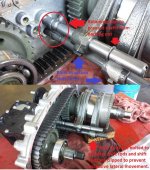
I don't remember where I saw it, but if you have the all wheel drive V8 transfer case, when you pull the actuator motor out there is a third hole in the case. On the V6 cases/actuators there is a third shaft that goes through that hole. Another forum member pressed/hammered a small freeze plug in that hole. Normally the shafts and shaft seals help block oil from getting past the case and in the small void between the case and actuator, but in the AWD case that hole is wide open and the only thing stopping oil from leaking out is the large o-ring that you take the actuator out to replace. I would have sourced out a freeze plug and installed it but I didn't read about it until after I had done the repair. I would have also used 2 o-rings on the actuator motor but didn't think about it until afterwards. There is plenty of room in the groove for the o-ring for a second one. I just figure it would be cheap insurance, it's harder for oil to leak past 2 well fitting o-rings.

If you look at the first pic on post #5 that 3rd hole I'm talking about using the freeze plug in is just to the left of the shift shafts.
 
Last edited:
Reviving an old thread because I'm officially joining the leaking actuator club.

Noticed the garage floor was developing some oil spots. Examined the transfer case, and it's definitely weeping where the actuator seal is located. Instead of spending thousands to get it fixed, I'm giving AT-205 reseal a shot first. I recently flushed all my fluids, so I went ahead and simply removed about 1/2 quart from the TC. Took a fresh 1/2 quart 75W90 and mixed in 2.5 fluid ounces of AT-205 and pumped it in. Then cleaned the area including the actuator housing of any residual oil. It's been two days and no sign of leaking. I will be monitoring this closely and will post back in few days.
 
Just wanted to update

It's been about two weeks and no sign of the leak. So AT-205 seems to have worked in my case. Worth a shot for those with the same issue.
 
Just wanted to update

It's been about two weeks and no sign of the leak. So AT-205 seems to have worked in my case. Worth a shot for those with the same issue.
Curious whether this AT-205 ended up being a permanent fix or started leaking again? I have a similar leak of one drop a day but am concerned that it could expend other o-rings or sealing materials to make leaks worse elsewhere or cause other rubber material to become disformed. I say that as someone who is not familiar with other rubber parts the TC gear oil touches.
 

Members online

Forum statistics

Threads
278,310
Messages
3,554,079
Members
248,016
Latest member
Advally Service

Trending content

Back
Top