Transmission Fluid Change procedure

wfo9

New member
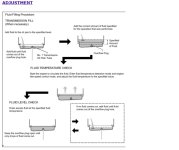
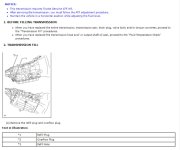
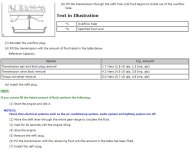
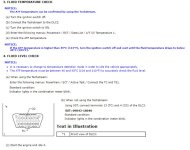
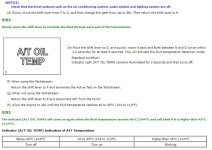
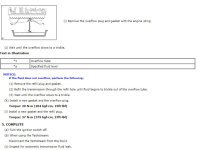
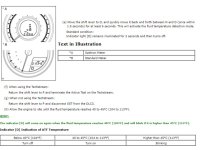
Just thought I would post what is in the repair manual for future reference.
 

Attachments

  • temp1.JPG
    temp1.JPG
    66.3 KB · Views: 18,762
  • temp2.JPG
    temp2.JPG
    84.7 KB · Views: 17,426
  • temp3.JPG
    temp3.JPG
    98.1 KB · Views: 16,134
  • temp4.JPG
    temp4.JPG
    92.7 KB · Views: 15,935
  • temp5.JPG
    temp5.JPG
    99.3 KB · Views: 15,806
  • temp6.JPG
    temp6.JPG
    73.6 KB · Views: 15,769
Register to hide this ad
Slight difference on the 4wd transmission if you don't have another way to check the temp...
 

Attachments

  • tempx.JPG
    tempx.JPG
    96.8 KB · Views: 15,986
The title of this thread is a bit misleading... It's just the fill procedure from the FSM not the change procedure. I don't think the FSM give an actual fluid change/flush procedure.

If you just drain the pan you will only be chaining about 1.5qt of the 6+ total.

Most people use the transmission cooler line and the trans pump to get a full change.

Basically
-disconnect the lower hose and dump to a bucket out of the radiator.
-Run the motor for 10-15 seconds (should pump out about 2qt
-Put about 2 qt in the fill (I think it is easiest to run a hose down from the engine compartment and use gravity)
-Repeat until fluid is clear and fresh (should be about 8qt)

Now do the level check procedure outlined in the FSM (at the top of this thread).

I'm sure this is outlined somewhere else here on the forum... Just thought I would throw it in here since it could be confusing based on the thread title.
 
The title of this thread is a bit misleading... It's just the fill procedure from the FSM not the change procedure. I don't think the FSM give an actual fluid change/flush procedure.

If you just drain the pan you will only be chaining about 1.5qt of the 6+ total.

Most people use the transmission cooler line and the trans pump to get a full change.

Basically
-disconnect the lower hose and dump to a bucket out of the radiator.
-Run the motor for 10-15 seconds (should pump out about 2qt
-Put about 2 qt in the fill (I think it is easiest to run a hose down from the engine compartment and use gravity)
-Repeat until fluid is clear and fresh (should be about 8qt)

Now do the level check procedure outlined in the FSM (at the top of this thread).

I'm sure this is outlined somewhere else here on the forum... Just thought I would throw it in here since it could be confusing based on the thread title.

The new Tacoma manual has you do 3 drain/fill/recirc cycles to constitute a fluid replacement, I suspect this would suffice if you’re not brave enough to do the “feed and bleed”.
 
If I may go on a tangent here: why would you ever need to flush transmission fluid?? Tend to hear more horror stories of high mileage vehicles popping the trans shortly after a flush..

Wouldn't it be better to just use the pan/ overflow steps above to do this 1-2 quarts at a time every 60k or so?
 
I’d give that a whirl. Can you elaborate a bit on the Tacoma procedure? Now where’s the damn drain plug?
 
I do not agree with the Toyota instructions on the tranny fluid pan drain/drop procedure on filling prior to starting the engine ...

you do not fill to the fluid level hole... YOU PUT INTO THE TRANNY 2QTS !!! when the engine is OFF the fluid will be much higher than the level fill hole so the tranny if you follow this toyota procedure will not have the proper amount of fluid .

IMO you put in 2qts start engine open the fluid level hole as the temp rises some fluid will come out then when its in the 110F temp range put the level plug in .. all done............

when you want to do fluid exchange drop pan and do a good cleaning of it ..
 
If I may go on a tangent here: why would you ever need to flush transmission fluid?? Tend to hear more horror stories of high mileage vehicles popping the trans shortly after a flush..

Wouldn't it be better to just use the pan/ overflow steps above to do this 1-2 quarts at a time every 60k or so?
I think you are getting the term flush confused with an exchange/replace of fluid.

Flush is something where a cleaning fluid is pushed through the trans with pressure and can dislodge material....

Just running the engine to push out the fluid and replacing it with new fluid should not cause any problems at all.

The problem with draining from the pan only is that you will be mixing the new and old fluid quite a bit. It will work, but if you are taking the time.. Might as well put in fresh clean fluid and avoid mixing as much as you can.

These really only need to be done at 80-100k intervals. Probably more often after the first since you can't really get all new fluid in.
 
I do not agree with the Toyota instructions on the tranny fluid pan drain/drop procedure on filling prior to starting the engine ...

you do not fill to the fluid level hole... YOU PUT INTO THE TRANNY 2QTS !!! when the engine is OFF the fluid will be much higher than the level fill hole so the tranny if you follow this toyota procedure will not have the proper amount of fluid .

IMO you put in 2qts start engine open the fluid level hole as the temp rises some fluid will come out then when its in the 110F temp range put the level plug in .. all done............

when you want to do fluid exchange drop pan and do a good cleaning of it ..

I don't think you understood what they call for in the FSM procedure. You fill initially until it drains from the overflow just to set a baseline... Then plug the overflow and put in the required amount based on the procedure done.. For just a or drain plug or pan removal... 1.8 qt additional. Then you do the fluid level check once up to temp.
 
The title of this thread is a bit misleading... It's just the fill procedure from the FSM not the change procedure. I don't think the FSM give an actual fluid change/flush procedure.

If you just drain the pan you will only be chaining about 1.5qt of the 6+ total.

Most people use the transmission cooler line and the trans pump to get a full change.

Basically
-disconnect the lower hose and dump to a bucket out of the radiator.
-Run the motor for 10-15 seconds (should pump out about 2qt
-Put about 2 qt in the fill (I think it is easiest to run a hose down from the engine compartment and use gravity)
-Repeat until fluid is clear and fresh (should be about 8qt)

Now do the level check procedure outlined in the FSM (at the top of this thread).

I'm sure this is outlined somewhere else here on the forum... Just thought I would throw it in here since it could be confusing based on the thread title.

it seems tedious to pump out 2 qts at a time.. why cant you just let the engine pump the entire 6+ quarts out of the trans at once?
 
I don't think you understood what they call for in the FSM procedure. You fill initially until it drains from the overflow just to set a baseline... Then plug the overflow and put in the required amount based on the procedure done.. For just a or drain plug or pan removal... 1.8 qt additional. Then you do the fluid level check once up to temp.

when the trannty fluid level port / plug is off and engine is off this will not hold the amount you drained out ..

many have done this MY way .. you measure what you drained out then you put in the new fluid the same amount .. the fluid level hole in place .. then start engine open level hole and when it gets to 110 f range add fluid till it comes out or plug fill hole if fluid drains out with what you added ..

this is not gonna do any damage as the fluid you removed is the same amount you put in, that is the safe way rather fill the tranny to the level hole with the engine off ..

engine off a good amount for fluid drains back into the pan and will be well above the fluid level port ..

you all do it your way good luck ..IMO my way much easier ..less mess.
 
when the trannty fluid level port / plug is off and engine is off this will not hold the amount you drained out ..

many have done this MY way .. you measure what you drained out then you put in the new fluid the same amount .. the fluid level hole in place .. then start engine open level hole and when it gets to 110 f range add fluid till it comes out or plug fill hole if fluid drains out with what you added ..

this is not gonna do any damage as the fluid you removed is the same amount you put in, that is the safe way rather fill the tranny to the level hole with the engine off ..

engine off a good amount for fluid drains back into the pan and will be well above the fluid level port ..

you all do it your way good luck ..IMO my way much easier ..less mess.

Sounds reasonable to me. How much are you exchanging using your method?

There's a healthy discussion on changing trans fluid in the 4th gen forum.

http://www.toyota-4runner.org/4th-g...s-still-original-transmission-fluid-come.html
 
Last edited:
when the trannty fluid level port / plug is off and engine is off this will not hold the amount you drained out ..

many have done this MY way .. you measure what you drained out then you put in the new fluid the same amount .. the fluid level hole in place .. then start engine open level hole and when it gets to 110 f range add fluid till it comes out or plug fill hole if fluid drains out with what you added ..

this is not gonna do any damage as the fluid you removed is the same amount you put in, that is the safe way rather fill the tranny to the level hole with the engine off ..

engine off a good amount for fluid drains back into the pan and will be well above the fluid level port ..

you all do it your way good luck ..IMO my way much easier ..less mess.

Your way will work.. I think you just read the FSM procedure wrong. It does not recommend leaving the fluid level port off while filling it. Only to set a baseline then you add the recommended amount (based on the procedure done) with the port closed.

When checking the level. you have to have the motor running with the temp at the proper level.
 
Last edited:
it seems tedious to pump out 2 qts at a time.. why cant you just let the engine pump the entire 6+ quarts out of the trans at once?

It's not that bad when you can just add in from the back of engine bay like he said and let gravity feed it in. You don't want to run the pump dry, that's why you only do 2 qts at a time
 
It's not that bad when you can just add in from the back of engine bay like he said and let gravity feed it in. You don't want to run the pump dry, that's why you only do 2 qts at a time

I never did a fluid exchange on a 4runner but GM with the dip stick that is very easy as I did this with the GM tranny fluid exchange..

so with this no dip stick you have to get a pipe connector to screw into the tranny fill hole and run tubing up to the engine bay .. using a clear container with accurate fluid marks 1 qt comes out add 1 qt.. when the fluid looks good as it come out then the fluid exchange is done..

then you have to let it cool down and do the fluid level check ..

much easier with dip stick ..
 
I never did a fluid exchange on a 4runner but GM with the dip stick that is very easy as I did this with the GM tranny fluid exchange..

so with this no dip stick you have to get a pipe connector to screw into the tranny fill hole and run tubing up to the engine bay .. using a clear container with accurate fluid marks 1 qt comes out add 1 qt.. when the fluid looks good as it come out then the fluid exchange is done..

then you have to let it cool down and do the fluid level check ..

much easier with dip stick ..

holy freakin awesome idea
hmmm
 

Members online

Forum statistics

Threads
278,309
Messages
3,554,075
Members
248,016
Latest member
Advally Service

Trending content

Back
Top