Hey folks,
I found this document on the DC Power Engineering website and thought you might be interested to read it; since most of us are pushing our electrical systems beyond, or to the limits of what they were designed to do... thought I'd post it here for anyone to view:
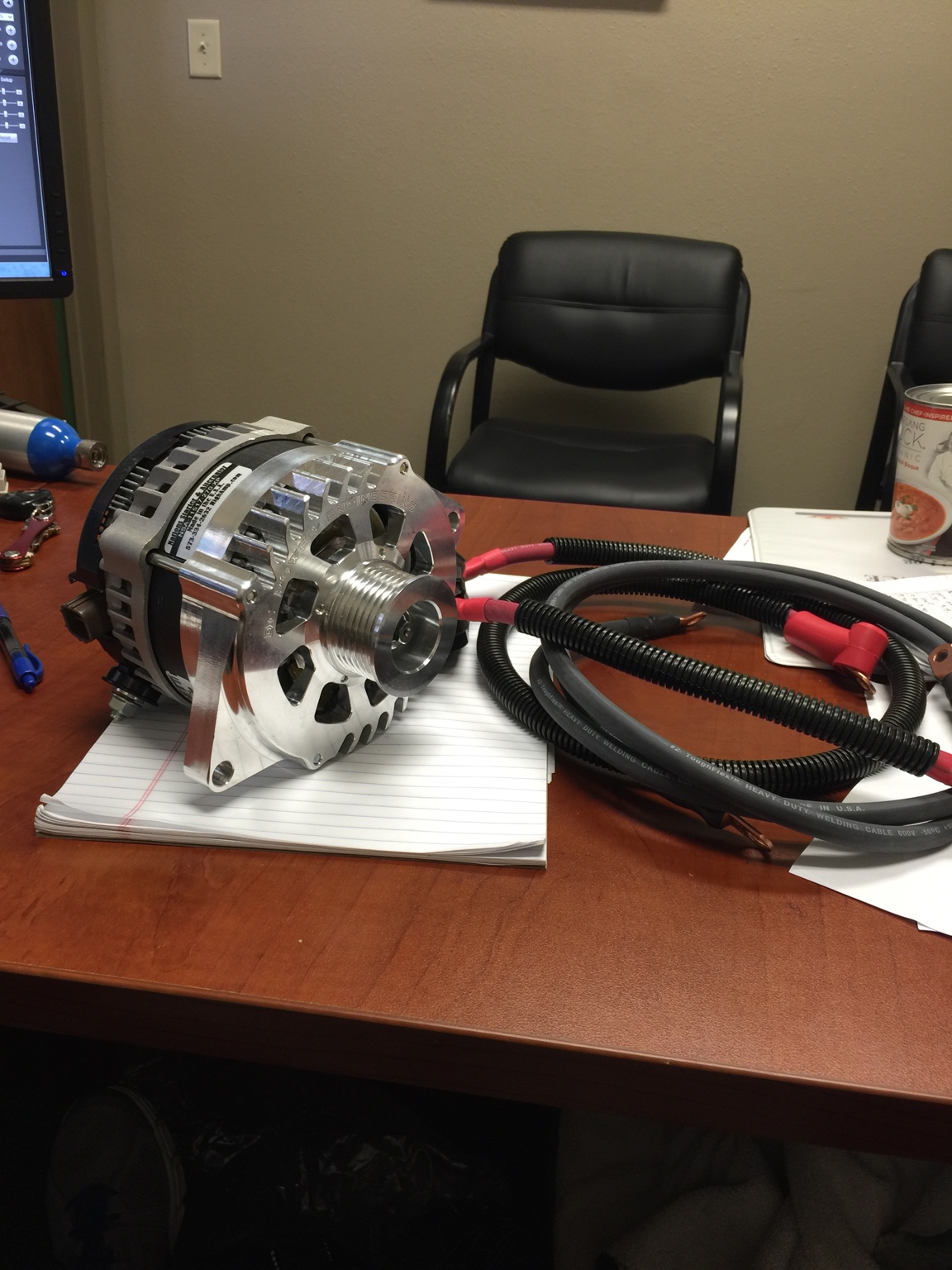
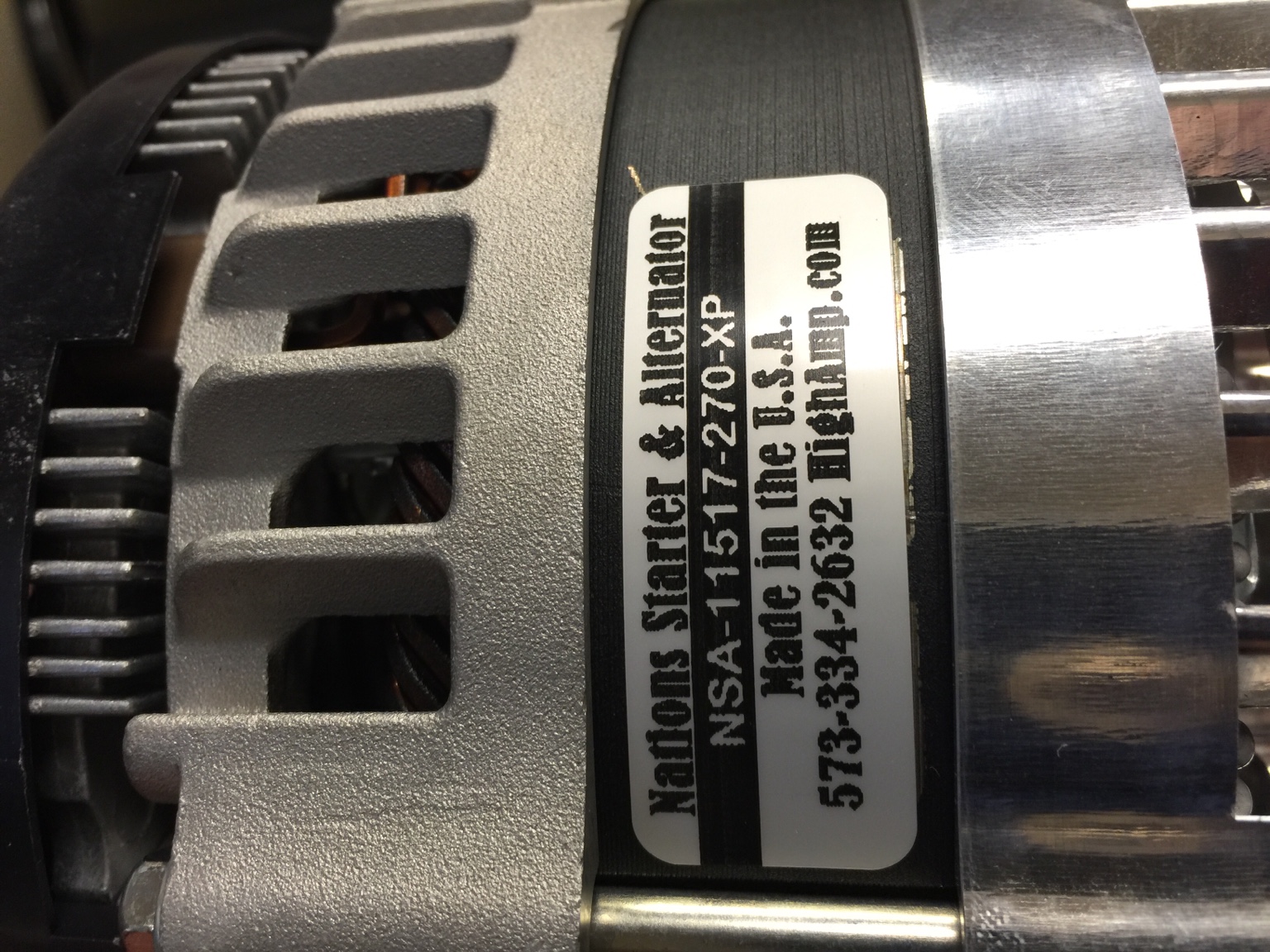
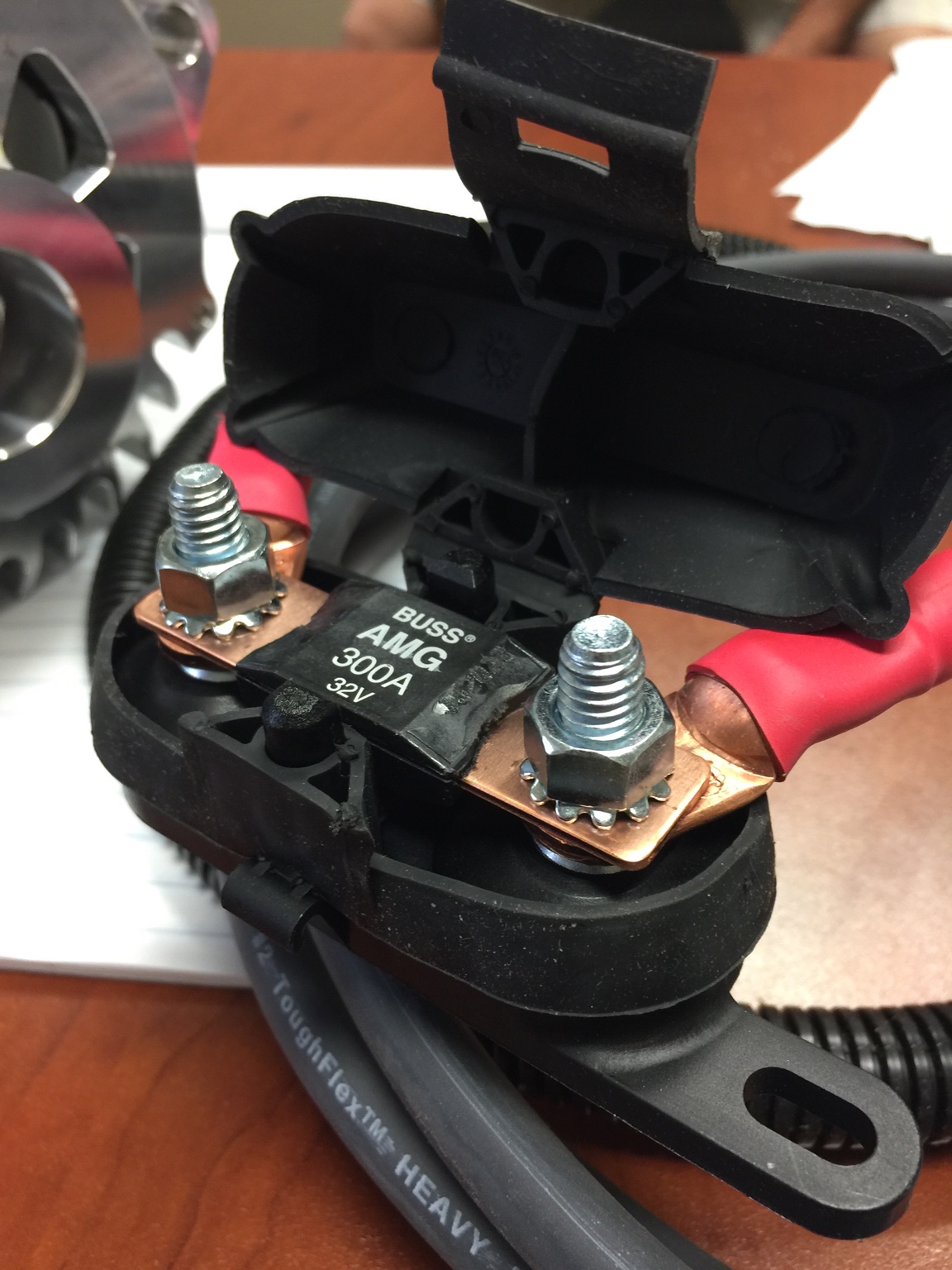
This is my alternator pictured below:
 "THE TRUTH ABOUT IDLE"
DC Power Engineering - The Truth About Idle
Purchasing a high-output alternator can be a very tedious and mind-boggling experience if you don’t know what to look for or at least know the important questions to ask. At DC Power, we have nothing to hide as our alternators meet or exceed our customers’ expectations every time. The main reason for that is because we design, engineer, and manufacture our units to get the results we desire – the results our customers demand!
But . . . I Got a Smokin’ Deal!
A good portion of our business is with customers who have already purchased an alternator from another company only to find out that it didn’t do what was claimed or worse yet, it didn’t meet their requirements. This is an excellent example where the bargain price will actually cost you more money in the long run – in some cases, a lot more. Don’t fall into this trap. Choosing the correct unit for your application will make the difference between excellent reliability and a healthy electrical system OR short life span and / or damage to your vehicle’s electrical system.
Idle Output
Last we checked, you don’t normally cruise around town at 4,000 RPM. Rather, in town driving is stop and go, so your vehicle sees a lot of time at idle. When you’re rolling down the highway in overdrive, it’s not uncommon for engine RPM to be between 1,800 and 2,200 RPM. These are considered normal driving conditions so you absolutely want a high-output alternator that has been designed to work well under these conditions. Choose poorly and you’ll have serious problems, including: poor engine idling characteristics; dimming lights; an inadequate supply of voltage to the various on-board computers and modules; a weak or even dead battery; and possibly even engine stalling.
Since we at DC Power feel so strongly about this specification, we provide it on every unit that we sell. If you’re shopping around, we’ll provide the following questions that you should ask in rank of importance so that you can compare apples to apples. Now . . . who else does that?
What is the alternator’s output at idle?
Without question, the most important consideration when purchasing a high-output alternator is its output capability when the engine is idling. This is especially true with modern vehicles as they have extremely high electrical demands from on-board computers, safety equipment, convenience modules, and accessories – to the point that many require at least 120 amps at idle. Yes, that’s a bunch!
All DC Power alternators are designed to produce the highest output possible at idle. For example, our 270 amp XP Series Corvette unit can deliver 200 amps at idle – this is 130 more than the stock unit! Most of our alternators produce in excess of 50% of their rated maximum output at idle, some up to 70%. This becomes increasingly important with the addition of current hungry aftermarket accessories such as high powered lighting, AC inverters, high performance car stereo systems, etc. The addition of such accessories is more than likely why you’re considering the purchase of a high-output alternator in the first place.
What idle speed are you basing your idle output rating on?
When we speak of idling, your engine probably idles somewhere between 700 and 900 RPM. Your alternator is driven by the belt, which connects its pulley to the pulley at the front of the crankshaft. Because the pulley on your alternator is quite a bit smaller in diameter than the one on the crankshaft, it spins at a much higher RPM than the engine does. So, when we say “idle speed” we are referring to the actual RPM of the alternator itself with the engine idling, not the engine.
Idle speed is idle speed right? Well, not exactly. For many years, the industry standard was 2,500 RPM and there was a time when this was accurate. Not any more. With today’s modern vehicles and emission standards, alternator idle speeds are MUCH lower – now typically between 1600 and 1900 RPM. Despite this change, you will find that some companies are still using this over-inflated idle speed when calculating the idle output of their alternators.
The idle output rating of every DC Power Alternator is given based on the actual idle RPM of the vehicle the alternator is intended for – not a typical or “universal” idle speed. Furthermore, our units are capable of meeting this specification at operating temperature – not when ice cold! These two differences set us apart from the pack.
How do you determine the alternators’ speed at idle?
By now, you may have hung the phone up on the other guys anyway. BUT, if you’ve gotten this far we’ll tell you that we don’t really know how our competitors determine idle speed – obviously a critical component in answering the first two questions.
At DC Power, we use the following method:
1. Test
2. Analyze
3. Re-test
4. Measure
5. Re-analyze
6. Confirm the results by testing, measuring, and analyzing again . . .
We use an optical laser tachometer to get the exact idle speed of each vehicle that we offer an alternator for and keep this info in a giant database. We perform extensive on-car load testing on our alternators to be absolutely certain that they will deliver what we claim. Finally, we conduct extensive bench testing (hyperlink to testing page) to every single one that we offer. Every alternator we offer has gone through this rigorous process to ensure that it works as advertised and meets or exceeds your expectations.
No other brand of alternator will outperform a properly installed DC Power alternator!
"GETTING YOUR VEHICLE THE POWER IT NEEDS"
Getting your vehicle the power it needs.
There are a few different options available when it comes making a decision about equipping your vehicle with the power it needs to function properly and meet the demands of added electronic equipment. While we will be explaining the different options available, we at DC Power Engineering only view one of them as the proper solution. That is option number three, we put it last so that you have the chance to view all options so that you can make the most informed and educated decision possible.
Option one
Your first option is simply to do nothing and ignore the problem. The upside, there is no real upside. The downside, you may experience all or some of the symptoms covered in the Supply and Demand article. Your alternator fails prematurely due to being over worked. The worst-case scenario is that your alternator fails as a result of overworking it. Your accessories quit working, the on board computer system fails, and if you are driving and your alternator quits, pretty soon your sitting on the side of the road, waiting for a tow truck and an expensive bill you don’t want or need! If your alternator is not charging your battery, essentially your vehicle is on borrowed time, using only the juice in the battery to keep it self running. Once it is gone your vehicle shuts down immediately with no warning, including your vehicles computer system. Think about all the electronics in your house, primarily your LCD TV, home computer system, appliances etc, central air conditioning, all the comforts of home. Now imagine that the power company comes along and shuts off the power to your house at the main breaker, you lose it ALL! This is basically what happens when your alternator stops working.
When that power comes back on they recommend that all electronic equipment and computers are disconnected from the wall because the sudden surge of power coming back into the house has the ability short them out. Now, back to the example your car or truck, the same thing happens when the battery is reconnected or you try to jump-start your dead battery. This can be a very dangerous situation and damage the sensitive electronics found in today’s modern vehicles.
Option two
Your second option is to have the alternator rewound by somebody for higher output to get you the adequate output for your needs. The upside - You have found someone to rewind your alternator and claims that it is rated at 200, 250 amps and 150 amps at idle, or whatever works for the needs of your vehicle. This can be a good solution as long as you find someone who is capable of doing it correctly, and assuming they know how get alternators that perform as they should. So, you get your re-wrapped, or rewound alternator done, you saved some money, and you get it put back in your car. Wait a minute, why are my lights dim and my battery voltage is low? This is when you usually find out that the money you just spent getting a “better” alternator, is actually worse! You find out now at idle your alternator is only producing 40 or 50 amps or even worse, not charging at all! Now you have a potentially serious problem because that much output is not even enough to maintain your vehicles most basic charging system needs and you are at big risk of serious problems! And, if you are only having your alternator rewound for higher output, they could still be re-using the other used components such as the voltage regulator and rectifier, which have also experienced untold miles of wear and tear! This can cause the rewound alternator to not perform as well or last as long as expected and those parts might not even have a warranty.
Option three is to purchase a new high performance, high quality alternator or add a second alternator [link to running two alternators article] to your vehicle. This is generally the best, most viable option that we view as a real solution to repair the needs of your charging system. The upside – Everything works as advertised, you have all the extra power you need for all of the standard accessories and vehicle systems, as well as all of the extra accessories and electronic components. You will have enough extra power for all the vehicles systems to function properly and safely. And as an added bonus your electronic equipment will not fail prematurely from a lack of power, which can save you big bucks in the end. The only real downside is a little larger investment upfront. Buying a high quality high output alternator may cost you more than option one or two up front, but it is worth every dime in the end.
XP and HP Series High Output Alternator Information
Generating Power Where it Matters Most – At "TRUE" Idle.
DC Power’s 180-HP, 230-XP, 250-XP and 270-XP high output alternators do more than 70 percent of their maximum rated output at idle. Due to the efficiency of the alternators stator configuration they will lose less output when hot. So for example you can expect our 270XP to continually do 160+ amps at idle right next to exhaust headers that easily reach over 200 degrees Fahrenheit without having any cooling issues. For more information about how important alternator idle performance is, please visit our tech article The Truth about “Idle”
Reducing Size and Electrical Noise with DENSO’s new Hairpin Stator
By using a welded, rectangular copper stator, DC Power Engineering has been able to increase the winding density up to 70 percent versus 45 percent seen in a typical inferior stator design. By increasing the winding density allowed the weight to be reduced by 20 percent, increased power output by 50 percent while increasing generation efficiency by 10 percent. The efficiency in the stator design reduces electromagnetic noise by 10 decibels. By engineering a newly designed noise cancellation circuit by dividing the alternator’s stator coil into two separate pairs that produce a phase difference. This allows the alternator’s AC ripple current to decreased by 700 percent, which eliminates engine noise generated by the alternator for noise sensitive electronics.
Stator for XP and HP High Output Alternators
Increasing Surface Area for Cooling
To solve the problem of higher heat production due to higher output, the rectifiers use 12 50-amp press-fit diodes. The surface area of the rectifier cooling fins to nearly twice the size of conventional fins, improving the cooling ability of the rectifiers. This allows vehicles that typically run larger, single water-cooled alternator or two air-cooled alternators to be replaced with a single air-cooled alternator while providing the same output with more reliability and efficiency.
DC Power Engineering’s Exclusive DENSO Partnership
Due to DENSO's high output alternator technological advances in the rotating electrical industry, DC Power Engineering has partnered with DENSO to bring their new technology to the aftermarket with DC Power Engineering's own proprietary part numbers. With DC Power Engineering's in house R&D Team, HAAS ST-30 Lathe and HAAS VM-2 CNC Machines and Mastercam X5, we are able to create direct drop in replacements for thousands of different vehicle applications. Whether you have a Chevrolet, Ford, GMC, Honda, Toyota, Dodge, Cadillac, Nissan, Acura, Jeep, Mazda, Pontiac, Buick, Volkswagen, or another manufacture chances are, DC Power Engineering may have a solution!
Durability
Our XP and HP Series alternators are manufactured in the USA. DC Power Engineering uses OEM (Original Equipment Manufacturer) components for maximum life and is backed by our 2-year warranty.
"There are a few people asking about the 270-XP H.O. alternator and I found this documentation about it so I couldn't pass it up. Another question that I've been asked was about 'DC Power Engineering' and their fitment guide; it only goes up to the 2009 4Runner and no further... I asked them that same question when ordering mine and their answer was: "Our fitment guide is just a little out of date" ...I mean comm'on guys... I bought my 270-xp alternator two years ago and you mean you couldn't fix that catalog problem in two years... Anyway the model number is:
DC Power Engineering (M) 270-XP Product code: 101362 This is the one that's on my truck so that should be the same # for yours as well.
Their phone# is Toll Free (US ONLY): 888-441-0144"
I hope someone here will find this helpful at some point should you decide to go that route!
"Best to you all!"
rig



 (or the Mods can ban me to expedite that process of squashing fact-checking!)