5th Gen Oil Recommendation? New Owner!

What’s your go to oil?


  • Total voters
    541
0W30 vs 5W30, which do you like better in the 4.0 and why?

Both are about the same, I like to run the 0w30 in winter and 5W30 in the summer. Being in the south East it probably doesn’t make a difference, just old habits from living up north growing up. I will say the 5W30 sounds/feels good under throttle, I’m not heavy footed but getting on the interstate it’s a big difference from the 0w20 Toyota recommends. The 0w30 feels about the same. Overall the 30 weight oil quieted the engine and smoothed out the acceleration throughout the RPM range.
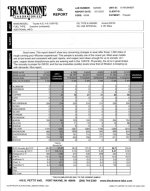
Here is my last oil report, I am super happy with it.
 

Attachments

  • B786DECC-0B51-4ECE-ABB0-57396BD7D4B4.jpg
    B786DECC-0B51-4ECE-ABB0-57396BD7D4B4.jpg
    112 KB · Views: 2,974
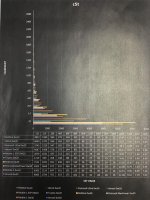
This is for you guys up north, usually I post this stuff in the fall or winter but you guys can save it and print it out. It’s good information on cold flow characteristics.
 

Attachments

  • 1338882D-5196-4778-819E-575C2F39A335.jpg
    1338882D-5196-4778-819E-575C2F39A335.jpg
    135.2 KB · Views: 2,893
my last oil change used QSUD 5W-30 and while wear performance was "fine", the TBN was pretty weak. i was down to 3.6 by 5200 miles. i've seen other UOAs showing it under 2 at 7,000 miles. i'll consider running it again if i see that it's got an improved additive package to last longer.

Blackstone reports seem to indicate that TBN is good as long as it’s above 1.0. A 2.0 TBN at 7,000 miles would imply it’s still good but approaching end of life. I think most people change oil between 5,000-7,500 anyway.
 
Is it possible to add Kirkland/Warren to the poll?

0w-20 synthetic just added to my '21 with 1,100 miles on her. (oem filter)

Also added some NMF, and damn.. she sounds like she's running smoother, and at idle almost sounds like it's "cammed".

Will likely send out a sample to blackstone after 5k.
 
Is it possible to add Kirkland/Warren to the poll?

0w-20 synthetic just added to my '21 with 1,100 miles on her. (oem filter)

Also added some NMF, and damn.. she sounds like she's running smoother, and at idle almost sounds like it's "cammed".

Will likely send out a sample to blackstone after 5k.

I originally had Kirkland on the list, I think I had around 25 oils to begin with but the poll limit is 15. So went with the 15 most popular oils.
Definitely get a Blackstone report and post, would love to see that.

Congratulations on the new rig, we needs pics!!!
 
I originally had Kirkland on the list, I think I had around 25 oils to begin with but the poll limit is 15. So went with the 15 most popular oils.
Definitely get a Blackstone report and post, would love to see that.

Congratulations on the new rig, we needs pics!!!

Ah, well that makes all the sense then. :D

Will do, and thank you!
 
Blackstone reports seem to indicate that TBN is good as long as it’s above 1.0. A 2.0 TBN at 7,000 miles would imply it’s still good but approaching end of life. I think most people change oil between 5,000-7,500 anyway.

true but if i can find it, i've seen info that seems to inidicate its an exponential slope - once TBN starts to take a dive, it does so fast until its effectively depleted. like you said i'd probably aim for 7-8k and no more, especially since i tow and load it down pretty good in our hot climate.

in any case, the longer i can go before i have to be under the truck screwing with all the skidplates and stupid canister filter the happier i am!
 
true but if i can find it, i've seen info that seems to inidicate its an exponential slope - once TBN starts to take a dive, it does so fast until its effectively depleted. like you said i'd probably aim for 7-8k and no more, especially since i tow and load it down pretty good in our hot climate.

in any case, the longer i can go before i have to be under the truck screwing with all the skidplates and stupid canister filter the happier i am!


But...there are also data indicating that TBN depletion is not linear...it's also heavily engine dependent. As a normally aspirated non turbo engine, our 4Runners are very easy on oil.
 
A TBN of 1-2 is way out of my comfort zone LOL

The following sources indicate TBN is not accurately measured and TBN guidelines are changing. What TBN guideline do you recommend?

Blackstone uses ASTM D4739 to measure TBN. This test method can yield a result as much as 2 mgKOH/g lower than a more accurate test. See Used Engine Oil Analysis TBN vs TAN | Chevron Lubricants (US)

Understanding Total Base Number in today’s HD engine oils states "A quick and easy rule of thumb for most oil analysis laboratories and many fleet maintenance managers is to drain the oil when the TBN reaches 1/3 of its starting value or 3.0 mg KOH/g, whichever comes first. Detroit recently released its 2018 Service Bulletin (DDC-SVC-BRO-0001) in which it has removed TBN limits entirely from the used-oil analysis parameters. Discussions with other key engine builders has revealed that they have noticed that used-oil TBN values are often very low – sometimes below 1.0 mg KOH/g – yet without any additional indications of adverse oil condition. We expect other engine builders in time to follow Detroit’s lead and either update or eliminate their TBN guidelines."
 
The following sources indicate TBN is not accurately measured and TBN guidelines are changing. What TBN guideline do you recommend?

Blackstone uses ASTM D4739 to measure TBN. This test method can yield a result as much as 2 mgKOH/g lower than a more accurate test. See Used Engine Oil Analysis TBN vs TAN | Chevron Lubricants (US)

Understanding Total Base Number in today’s HD engine oils states "A quick and easy rule of thumb for most oil analysis laboratories and many fleet maintenance managers is to drain the oil when the TBN reaches 1/3 of its starting value or 3.0 mg KOH/g, whichever comes first. Detroit recently released its 2018 Service Bulletin (DDC-SVC-BRO-0001) in which it has removed TBN limits entirely from the used-oil analysis parameters. Discussions with other key engine builders has revealed that they have noticed that used-oil TBN values are often very low – sometimes below 1.0 mg KOH/g – yet without any additional indications of adverse oil condition. We expect other engine builders in time to follow Detroit’s lead and either update or eliminate their TBN guidelines."

Thanks for that, good interesting info.
My view is that oil analysis and when to change oil is relevant to heavy equipment, fleets, and industrial machine use where there are lots of vehicles and lots of oil to change. In those cases it makes sense to analyze oil regularly to get the maximum miles or hours of service and change if at the optimum time to balance machinery life and cost.

For my 6.6 quart oil capacity 4Runner I don’t analyze or overthink the oil chemistry. Just use a top notch oil and filter and change them regularly, about every 5,000 to 7,000 miles. If I do a lot of severe driving, change it sooner.
 
The following sources indicate TBN is not accurately measured and TBN guidelines are changing. What TBN guideline do you recommend?

Blackstone uses ASTM D4739 to measure TBN. This test method can yield a result as much as 2 mgKOH/g lower than a more accurate test. See Used Engine Oil Analysis TBN vs TAN | Chevron Lubricants (US)

Understanding Total Base Number in today’s HD engine oils states "A quick and easy rule of thumb for most oil analysis laboratories and many fleet maintenance managers is to drain the oil when the TBN reaches 1/3 of its starting value or 3.0 mg KOH/g, whichever comes first. Detroit recently released its 2018 Service Bulletin (DDC-SVC-BRO-0001) in which it has removed TBN limits entirely from the used-oil analysis parameters. Discussions with other key engine builders has revealed that they have noticed that used-oil TBN values are often very low – sometimes below 1.0 mg KOH/g – yet without any additional indications of adverse oil condition. We expect other engine builders in time to follow Detroit’s lead and either update or eliminate their TBN guidelines."

To be honest I don’t pay attention to TBN, if I was extending my drain intervals past 5k I would but I never do.
Good info above!
 
Blackstone wrote a report concerning the question “Which oil is better?” and comparing the wear metals from different engines and different oils.

The conclusion: there’s not much difference between brands.

”So what does all of this tell us?
Well, we’re no closer to saying that one type of oil is better than another, that’s for sure. We see much more variation in wear levels from the type of engine, the time on the oil, the viscosity, the use the engine sees, etc. Whatever differences exist from oil brand to oil brand, we don’t see a lot of difference in terms of wear for most types of engines.”


https://www.blackstone-labs.com/wp-content/uploads/2018/09/Aug-17-ENG.pdf
 
I've been taking my 2010 Trail to the Toyota dealer next to my work for the last couple oil changes. I just noticed they used 0w20 synthetic the 1st time, as I had being using. However, the last two times its looks like they have used regular 5w20. I don't care much about 0w20 vs 5w20, but is there any possible reason they would switch from synthetic? Could there be any negative consequences from this? And should I switch back asap?
 
I've been taking my 2010 Trail to the Toyota dealer next to my work for the last couple oil changes. I just noticed they used 0w20 synthetic the 1st time, as I had being using. However, the last two times its looks like they have used regular 5w20. I don't care much about 0w20 vs 5w20, but is there any possible reason they would switch from synthetic? Could there be any negative consequences from this? And should I switch back asap?

You don't have to change out the oil to something else. It used to be normal to change conventional oil every 3,000 miles, but with modern lubricants most engines today recommend conventional oil change intervals of 5,000 to 7,500 miles. Personally, I would change a conventional oil at 4000-5000 miles of mixed driving. How many miles do you drive in a year? If you drive less than 5000 miles in a year, the dealer did you a favor. Change the oil in a year or 5000 miles which ever comes first.

If you don't have the skills to inspect and repair your vehicle, then it's a good idea to have a reputable mechanic or shop perform a multi-point inspection once a year along with an oil change. If you accrue 5000 miles or less mixed driving in a year, use a conventional oil. If you drive about 7500 miles in a year, use a conventional synthetic blended oil. Use a synthetic if you drive 10,000 or more miles a year. Don't exceed 10,000 miles on synthetic oil.
 
Last edited:
I've been taking my 2010 Trail to the Toyota dealer next to my work for the last couple oil changes. I just noticed they used 0w20 synthetic the 1st time, as I had being using. However, the last two times its looks like they have used regular 5w20. I don't care much about 0w20 vs 5w20, but is there any possible reason they would switch from synthetic? Could there be any negative consequences from this? And should I switch back asap?

Out of curiosity, how do you know they switched to regular from synthetic? I just took my 4Runner to the dealer and had a oil change. So now you have me wondering about my oil change.

But to answer your question.

The 4Runner manual says to change your oil every 5,000 using standard oil under normal driving. With synthetic you can generally change it every 10,000 miles.

The only issue I see is if you paid for a synthetic oil change and the dealer only gave you standard oil to save money and you waited 10,000 miles to change your oil it can potentially cause some serious problems. Not to mention the shady tactic.

Now what gets me is that if you use normal oil the manual says change it every 5,000 but the dealer will say change it every 3,000 or 6 months which is the industry norm. With synthetic Toyota says you can change it every 10,000 or once a year. However, the dealer recommends changing it after every 5,000. I would have guessed at 7,500 but why after only half of the synthetic oil’s life? Doesn’t make sense.
 
Last edited:
Out of curiosity, how do you know they switched to regular from synthetic? I just took my 4Runner to the dealer and had a oil change. So now you have me wondering about my oil change.

Thanks for the response. The oil change that was synthetic says "synthetic" 0w20 on the receipt. The other receipts say "premium" 5w20. The cost per quart is also about $4.00 less on the premium receipts.

I was too stupid to actually bother reading the receipts until this week when I went to pick it up and it wasn't ready because they were washing it.
 
Thanks for the response. The oil change that was synthetic says "synthetic" 0w20 on the receipt. The other receipts say "premium" 5w20. The cost per quart is also about $4.00 less on the premium receipts.

I was too stupid to actually bother reading the receipts until this week when I went to pick it up and it wasn't ready because they were washing it.

Ok thanks for sharing that.

You should also be able to tell by price. My deals charges $39.95 for 5 quarts + $5 and change per quart extra. Synthetic $59.95 for5 quarts. Mine cost $79
 
They’re screwing with you.
I hate dealers.
In my mind I can imagine they will give you one of these explanations:
1. The system screwed up and selected the wrong service when writing up your work order, but don’t worry, the service was performed correctly with the correct 0W-20 synth. “You got a discount” lol.

2. Oh, your right but it’s fine. Come back for your next service and we’ll knock $10 off and give you a free car wash.

3. Oops, bring it back in and we will (not) perform the service correctly. Make you wait but only a half hour or so, and wash your truck so you think they did the work.
 
Thanks for the response. The oil change that was synthetic says "synthetic" 0w20 on the receipt. The other receipts say "premium" 5w20. The cost per quart is also about $4.00 less on the premium receipts.

I was too stupid to actually bother reading the receipts until this week when I went to pick it up and it wasn't ready because they were washing it.

Amazon sells 12 qts of Toyota 5W-20 for $72.50 which is described as follows "... Get Outstanding Performance with Genuine Toyota 5W-20 Synthetic Motor Oil ..."

Scroll down and read the product description here: Amazon.com: Toyota Genuine SAE 5W-20 946 ML Motor OIl 1 QUART (PACK OF 12): Automotive The description says this is synthetic oil.

Call Toyota corporate and ask if Toyota 5W-20 is synthetic, a blend or conventional. Then ask the dealer if 5W-20 is conventional, blend or synthetic. If both say it's synthetic, then all is good.

There's very little conventional oil left at the retail level. I recently bought 5 qts of Mobil 1 Extended Performance Full Synthetic Motor Oil for $24.37 ... Mobil claims it's a 20,000 mile oil, but I will not use it for more than 10,000 miles of mixed driving.
 
Last edited:

Members online

Forum statistics

Threads
278,316
Messages
3,554,120
Members
248,016
Latest member
Advally Service

Trending content

Back
Top