A possible solution to leaking axle seals

3fe718612cb27b925d0b7db61268ef6f.jpg

Add another patient to the good Doctors retainer reversal list.
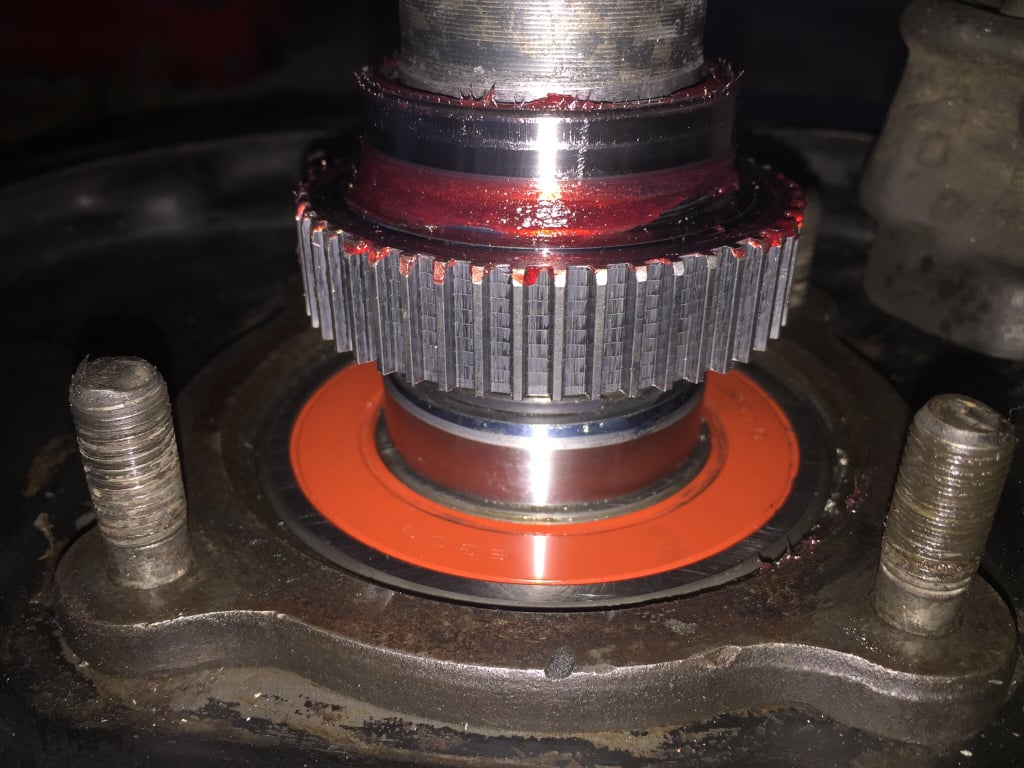
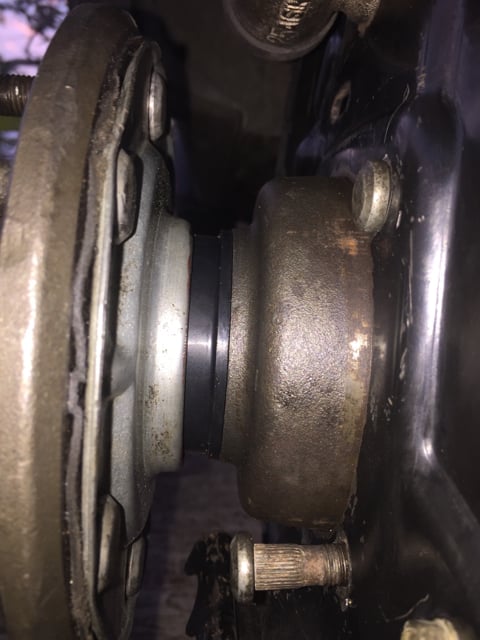
I’m here to see if my grease test is a pass or a fail before completing the mission.
Thinking she could take another millimeter, but not sure.

Also, wondering if the outer seal (black) should be exposed this much.
Can’t remember if it was that way before...
e8f5c669ec8a19f93306b31e4e76f909.jpg


...Thanks!

The retainer needs to be pressed on further. The seal lip is riding closer to back near the bevel. If you press the retainer on until you have 5mm of polished axle showing, the seal lip will be riding close to dead center on the 10mm polished retainer shoulder. To measure the distance while your doing the press work, release the bottle jack a liltle and then have a friend lift up the assembly while you get a 5mm allen wrench above the retainer to do a quick measurement. If it's not far enough, press it down a little further. You can do varying degrees of adjustment with the press depending on how much you move the jack handle. For a very small movement, lift the jack handle only a little before bringing it back down. By doing small movements and rechecking the distance over and over, you'll have a very good chance getting it perfect.

The dust seal looks correct. You're good.
 
The retainer needs to be pressed on further. The seal lip is riding closer to back near the bevel. If you press the retainer on until you have 5mm of polished axle showing, the seal lip will be riding close to dead center on the 10mm polished retainer shoulder.

The dust seal looks correct. You're good.

Thank you Tim. I understand the FSM states 5mm and some posts suggest 3mm of polished axle showing. Perhaps that’s why the grease test is the gold standard.
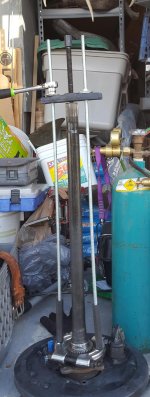
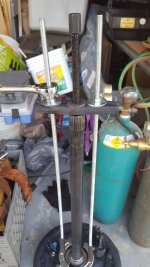
My ‘press’ is an old steel tube over the axle shaft so I will incrementally tap on that retainer again and run one more grease test before torquing down.
You guys are an invaluable resource.
Thanks again!
 
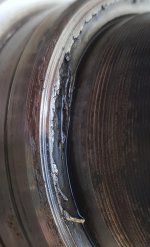
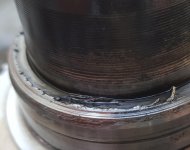
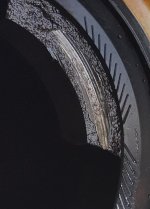
Mine has an awful grinding noise in addition to the leak and I can see where the retainer appears to rub on the axle housing. When I checked the bearing(trying to wobble the tire when in the air) I really didn't feel any movement or thrust. My retainer shows about 4.1mm of axle and is rubbing. Is it possible it isn't on far enough or the bearing moves a lot more under load ? If I flip the retainer it is really going to rub as it doesn't have the taper that matches the axle housing so I'm hoping it is bearing movement. Waiting for new OEM bearings.
Also it appears the diff breather was plugged and the whole unit was entombed in dried oil mud, which may have caused the seal to squirt. When I drained the diff oil (160K miles, not sure if PO ever did) the plug looked like it had grease on it. Is that normal ? The oil wasn't too bad looking.
 

Attachments

  • race.jpg
    race.jpg
    130.9 KB · Views: 563
  • race2.jpg
    race2.jpg
    124.9 KB · Views: 560
  • hub.jpg
    hub.jpg
    126 KB · Views: 581
  • cal.jpg
    cal.jpg
    135 KB · Views: 556
  • diff.jpg
    diff.jpg
    129.9 KB · Views: 558
Mine has an awful grinding noise in addition to the leak and I can see where the retainer appears to rub on the axle housing. When I checked the bearing(trying to wobble the tire when in the air) I really didn't feel any movement or thrust. My retainer shows about 4.1mm of axle and is rubbing. Is it possible it isn't on far enough or the bearing moves a lot more under load ? If I flip the retainer it is really going to rub as it doesn't have the taper that matches the axle housing so I'm hoping it is bearing movement. Waiting for new OEM bearings.
Also it appears the diff breather was plugged and the whole unit was entombed in dried oil mud, which may have caused the seal to squirt. When I drained the diff oil (160K miles, not sure if PO ever did) the plug looked like it had grease on it. Is that normal ? The oil wasn't too bad looking.

Based off where your inner retainer is sitting on the axle, for it to be hitting in the inside of the axle housing, it must be bearing play allowing that to happen.

As for your differential drain plug, the gunk you see is metal debris the magnet has collected from your differential. The differential drain plug is magnetized for that reason.
 
Thanks Tim !
My neighbor has a press but he's out of town so I figured out a way to get started. Had to realign it 2x but it got the retainer & gear off !
 

Attachments

  • thumbnail (4).jpg
    thumbnail (4).jpg
    150.3 KB · Views: 548
  • thumbnail (6).jpg
    thumbnail (6).jpg
    95.6 KB · Views: 524
I finally finished up my rear axle bearing repair this weekend.
after reviewing all the details in this thread I have to say, Dr. Coffee's solution to the new seal design definitely has merit.
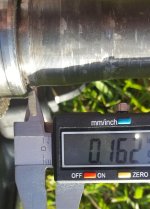
I had the machine shop move my retainer outboard by 1 mm (or roughly .160 because my shop guy "don't work in friggin mm!" -:biggrin2:)
It put my seal right about center on the retainer.
I'm happy to say after about 75 miles or so shes still dry!
Plus, no more grinding sounds! :party:

He did mess up a bit on the position of the ABS rotor but it doesn't seem to have presented a problem... so far

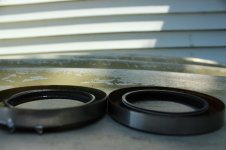
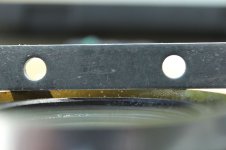
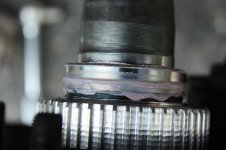
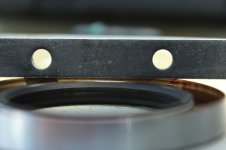
I included some shots of the seals side by side old (left) new (right)
The position of the rubber seal in relation to the back side of the metal casing - using a straight edge across the back of the case.
Retainer grease test.

Thanks for the help on this!!:thumb3:
 

Attachments

  • IMG_1879.JPG
    IMG_1879.JPG
    61.6 KB · Views: 475
  • IMG_1880.JPG
    IMG_1880.JPG
    63.8 KB · Views: 465
  • IMG_1884.JPG
    IMG_1884.JPG
    68.3 KB · Views: 467
  • IMG_1881.JPG
    IMG_1881.JPG
    61.8 KB · Views: 469
Oil in ABS cavity?

Hi Guys,

This is likely answered in the thread or elsewhere but I am writing in the midst of bell crank cleaning and greasing, so haven't searched as of yet.

I pulled the first ABS sensor to check for gear oil and to my dismay there is a bit. Not enough to coat the ring as I spin the axle but enough that the low spot of the gear is wet. F**k.

Is this unusual for a 96 that has 175,000 km that has never had the axle touched before? Can I say that's normal or is it reseal time?

Diff breather extension done several years back so should not be plugged.

Thanks.
 
This is confusing the hell out of me.

Flipping the inboard retainer removes the chance of the beveled edge causing a sealing issue. I get that.

But why does this retainer then get moved further inboard?
How far past seal can the retainer go before contacting the axle housing?
Wouldn't flipping the retainer and putting it back in it's original position be adequate?

I have my axles out right now and will be taking them into a shop to have the bearings replaced, so I won't be able to do this grease test thing to make sure it's sitting correctly. I mean I can, but if it's not right I'd have to go back to the shop to have them move the retainer.
 
Is this unusual for a 96 that has 175,000 km that has never had the axle touched before? Can I say that's normal or is it reseal time?

My '97 blew the passenger axle seal at 181,000 mi, so you're in the ballpark. When I took apart the driver side, it too was leaking, though not enough to get onto the brakes yet.
 
Wouldn't flipping the retainer and putting it back in it's original position be adequate?

It should be adequate. The grease test is just a sanity check that the seal in the right place when all is said and done. And if you are OCD like so many of us here, you can use the grease test to fine tune the retainer location to get the seal contact to the very center of the retainer. But that is not necessary, as long as you have ~2mm on each side, you should be fine.
 
It should be adequate. The grease test is just a sanity check that the seal in the right place when all is said and done. And if you are OCD like so many of us here, you can use the grease test to fine tune the retainer location to get the seal contact to the very center of the retainer. But that is not necessary, as long as you have ~2mm on each side, you should be fine.

okay.... I'll have them put it on backwards, but I'm going to request that it goes back right where it was lol
 
This is confusing the hell out of me.

Flipping the inboard retainer removes the chance of the beveled edge causing a sealing issue. I get that.

But why does this retainer then get moved further inboard?
How far past seal can the retainer go before contacting the axle housing?
Wouldn't flipping the retainer and putting it back in it's original position be adequate?

I have my axles out right now and will be taking them into a shop to have the bearings replaced, so I won't be able to do this grease test thing to make sure it's sitting correctly. I mean I can, but if it's not right I'd have to go back to the shop to have them move the retainer.

You bring up an excellent question and you're 100% correct. When you flip the inner retainer, you gain back the 2mm from the seal design change because you no longer have to push past the 2mm non-polished bevel to get up onto the polished shoulder of the retainer. 5mm of polished axle showing above the inner retainer (the OEM location of the inner retainer) has been perfect for the 8 axle seal jobs I've performed.
 
You bring up an excellent question and you're 100% correct. When you flip the inner retainer, you gain back the 2mm from the seal design change because you no longer have to push past the 2mm non-polished bevel to get up onto the polished shoulder of the retainer. 5mm of polished axle showing above the inner retainer (the OEM location of the inner retainer) has been perfect for the 8 axle seal jobs I've performed.

Well I to flow up, I ended up having the shop install the new retainer in the original position, NOT flipped. I asked about flipping it, and he said he hadn't done it for vehicles in the past, and hadn't encountered problems. Since I wasn't doing it myself I wanted to let the experienced person do what they preferred.

I did do the grease test, and the seal seems to side in the center of the retainer, on both axles. Everything is back together now, so I guess I'll see if starts leaking again...
 
Well I to flow up, I ended up having the shop install the new retainer in the original position, NOT flipped. I asked about flipping it, and he said he hadn't done it for vehicles in the past, and hadn't encountered problems. Since I wasn't doing it myself I wanted to let the experienced person do what they preferred.

I did do the grease test, and the seal seems to side in the center of the retainer, on both axles. Everything is back together now, so I guess I'll see if starts leaking again...

Well, hopefully it holds for a long time. Maybe after around 5k miles, jack up the rearend, remove the wheels, and pull the ABS sensors. With the transmission in neutral and the parking brake off, turn the axles while looking into the ABS port at the ABS tone ring. If you see gear oil on the ABS tone ring ridges, the seals aren't holding.
 
Give it two days and look into the ABS cavity. Its either sealed or leaking. If you wait too long the oil will spill onto the brake shoes and that will just cost you more.

When it leaks, save yourself some money. Buy two new retainers. Mark the outer edge of the retainer with painters tape. Wrap it 10x so the new retainer will stop when it contacts it. Cut the old ones off. With a plumbers torch, heat the new one to get it to expand enough to slip it into place. Once you get it hot, slide it down to the tape and when it cools, it will tighten down on the axle.

You only need a machine shop if you need to press the bearings.

So what you saw on the grease test was the outer dust lip of the seal. But had you read the thread, you would have realized that. After all these pages of info you deferred to the guy who has been doing it wrong along. Did you expect him to say he has F'd more trucks than he can recall? Maybe If I charged $750 to read this thread you would have made a better choice.

Good luck.
 
Give it two days and look into the ABS cavity. Its either sealed or leaking. If you wait too long the oil will spill onto the brake shoes and that will just cost you more.

When it leaks, save yourself some money. Buy two new retainers. Mark the outer edge of the retainer with painters tape. Wrap it 10x so the new retainer will stop when it contacts it. Cut the old ones off. With a plumbers torch, heat the new one to get it to expand enough to slip it into place. Once you get it hot, slide it down to the tape and when it cools, it will tighten down on the axle.

You only need a machine shop if you need to press the bearings.

So what you saw on the grease test was the outer dust lip of the seal. But had you read the thread, you would have realized that. After all these pages of info you deferred to the guy who has been doing it wrong along. Did you expect him to say he has F'd more trucks than he can recall? Maybe If I charged $750 to read this thread you would have made a better choice.

Good luck.

so axle seals cannot be correctly installed without flipping the retainer period, yet Toyota hasn't fixed this, and shops that don't flip the retainer just plain do it wrong, and haven't figured it out despite returning irate customers.

Maybe these seals are leaking, I don't know. I'll check them. but unless people have seen this thread, all 4runners on earth that have had axles seals replaced are currently still leaking?
 
so axle seals cannot be correctly installed without flipping the retainer period, yet Toyota hasn't fixed this, and shops that don't flip the retainer just plain do it wrong, and haven't figured it out despite returning irate customers.

Maybe these seals are leaking, I don't know. I'll check them. but unless people have seen this thread, all 4runners on earth that have had axles seals replaced are currently still leaking?

No, it's not like this. It's really not that complicated, it's not rocket science, more like basic geometry.

It all depends on whether or not the shop used a) Original design Toyota seals and any aftermarket replacements that mimic that geometry; b) New improved design Toyota seals that have more compliance by changing the diaphragm angle; or c) some in-between design (which I've seen).

If the shop used option a), then they did not need to flip, and probably should not have flipped, the retainer. The retainer's original position and orientation were perfectly fine for the original Toyota seal or any original design seal replacements. You got ~150k miles out of them, so if the shop did it right, you should get the same again.

This whole discussion about retainer flipping and repositioning only applies to options b) an c). You are on thin ice if they used the new seal design but did not flip the retainer, because that puts the sealing edge too close to the bevel. That's the genius/cleverness of Dr. Coffee's method. But again, it only applies to seal designs that are different from original.

So to get back to your original questions, shops that don't flip the retainer are not doing it wrong if they are using the original design seals. If they are using the new seal design and are not flipping the retainer, then they are not doing it right.

Do you know what seal they used?
 
No, it's not like this. It's really not that complicated, it's not rocket science, more like basic geometry.

It all depends on whether or not the shop used a) Original design Toyota seals and any aftermarket replacements that mimic that geometry; b) New improved design Toyota seals that have more compliance by changing the diaphragm angle; or c) some in-between design (which I've seen).

If the shop used option a), then they did not need to flip, and probably should not have flipped, the retainer. The retainer's original position and orientation were perfectly fine for the original Toyota seal or any original design seal replacements. You got ~150k miles out of them, so if the shop did it right, you should get the same again.

This whole discussion about retainer flipping and repositioning only applies to options b) an c). You are on thin ice if they used the new seal design but did not flip the retainer, because that puts the sealing edge too close to the bevel. That's the genius/cleverness of Dr. Coffee's method. But again, it only applies to seal designs that are different from original.

So to get back to your original questions, shops that don't flip the retainer are not doing it wrong if they are using the original design seals. If they are using the new seal design and are not flipping the retainer, then they are not doing it right.

Do you know what seal they used?

I installed the inner axle seals myself. The only thing the shop did was replace the wheel bearings and reinstall the retainer.

the axles seals used came with a rebuild kit purchased from Marlin Crawler
https://www.marlincrawler.com/axle/rear-axle-parts/rear-axle-service-kit-1979-99
That page just says the part is "Stock rear axle seal". The seals were black rubber and looked much better quality than what came out of the axle. for whatever thats worth.

Option B you say is the revised Toyota seal and is actually worse than the original geometry?
 
I installed the inner axle seals myself. The only thing the shop did was replace the wheel bearings and reinstall the retainer.

the axles seals used came with a rebuild kit purchased from Marlin Crawler
https://www.marlincrawler.com/axle/rear-axle-parts/rear-axle-service-kit-1979-99
That page just says the part is "Stock rear axle seal". The seals were black rubber and looked much better quality than what came out of the axle. for whatever thats worth.

Got it. I actually bought that kit, then sent it back after seeing the seals, because they were not the improved design. But they might work with the retainers in the original position. I didn't measure them, but I think they are a hybrid between the original geometry and the new Toyota geometry.

Option B you say is the revised Toyota seal and is actually worse than the original geometry?

It's not worse than original, it's actually better, because it is more compliant. But, it does require flipping/repositioning the retainer to put the sealing lip in the right location. So it's better from the standpoint of performance, but "worse" from the standpoint that it requires more labor compared to just replacing the seal with an original design. It's a tradeoff :).
 

Members online

Forum statistics

Threads
278,312
Messages
3,554,086
Members
248,016
Latest member
Advally Service

Trending content

Back
Top