BALL JOINTS: Sankei 555 (Moog/Raybestos) Poor Quality/Design Flaw??? My Findings...

nobb

New member
I know there are already a gazillion threads on this topic for our notorious lower ball joints, but I thought I would share my findings and get your thoughts and experiences on this issue. I had the chance recently to inspect some Raybestos lower ball joints. They came in a generic white box with a Raybestos sticker on it, but the actual joints themselves are branded Sankei 555. Many people claim that Sankei is the manufacturer of the OEM joints, and as such, they are good quality. I will argue against this as I've also had the opportunity to compare brand new Toyota OEM joints with the Sankei. As some background info, it appears that these Sankei 555 joints are also resold by Moog, Raybestos, Napa Premium Chassis, and Beck/Arnley.

When I inspected the Sankei 555 joint, I was impressed by the greaseable design and also the fact that the dust cap had a little opening for excess grease to come out. However, that was where my positive impressions ended. The dust boot itself felt thin (like it could puncture easily) in comparison to the NOK japanese branded rubber boot on the OEM joint.

I'm no grease expert, but I'll also comment on the grease differences between the OEM and aftermarket joints. The aftermarket joint has a yellow sticky grease (as pictured) which resembles the generic lithium grease you would get when you buy a grease gun and they give you some free grease. This transparent color suggests to me that this grease does not have much in terms of extreme pressure (moly) additives. The OEM joint uses a white grease which appears to be soap (sodium) based. If it is indeed a soap grease, then it would have excellent water repelling and shock loading properties, as well as being very "sticky" in regards to not being pushed out from contacting surfaces. Once again, I am not a grease expert so don't take my word on this. Just my observations and thoughts.

However, the most troubling finding is the movement of the joint itself. When I moved the ball piece, I noticed a TERRIBLE amount of resistance. Almost as if the ball was grinding inside the socket. It just FEELS like metal on metal contact and in my opinion, this will cause heat buildup and wear. And it is NOT a smooth type of resistance either. It was notchy, uneven resistance. In comparison, the new Toyota OEM joints have a smooth fluid movement.

I was curious as to what causes so much uneven resistance so I took the grease boot off and inspected. What I found was that the ball had a grease channel cut in to allow for grease to be evenly distributed inside the joint. The OEM ball joint does not have this feature. This grease channel could be what is causing the grinding. I cannot say for certain, however.

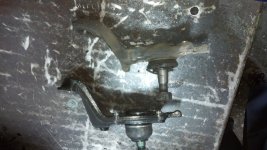
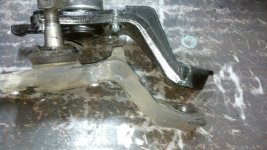
But what I DID find was very interesting. I will let the following pictures speak for themselves:
H2TKfeQl.jpg

H2TKfeQl.jpg


Note the scratches/scuff marks on the ball? I literally created those scratches on the fly JUST BY MOVING THE BALL IN THE SOCKET at most maybe 20 times. So if I was able to create those scratches just by moving the ball by hand, imagine what is happening when these joints are installed on a moving vehicle and the suspension is constantly going up and down. I did NOT notice this to be a problem with the Toyota OEM joints.

This can't be normal, so I would like to hear your experiences and opinions of these Sankei 555/Raybestos/Napa/Moog joints. Is this the final nail in the coffin as to why you should only buy OEM? Am I overreacting?
 
Last edited:
Register to hide this ad
Solution
I am not sure if Sankei is really the manufacturer of the OEM joints because they are completely different than any Sankei branded joint. eg

HERE is what I learned from talking to someone who owns a Toyota repair shop and orders parts.

1) There rarely a sole distributor for ANY Toyota part. Meaning one year Koyo had the contract to manufacture the radiator for the 4Runner. Toyota bought from them. A few years later it was another manufacturer. The SAME thing exists for nearly all parts on a 4Runner.

2) As long as a manufacturer was at one point a direct supplier for Toyota for that exact part (eg Koyo radiator), then you can buy that part directly from the manufacturer with confidence.

3) So given this example say Koyo...
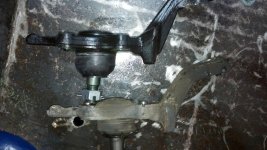
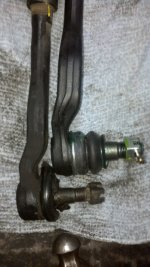
As a side note, if you get Toyota parts, get the Tacoma version instead of the 4runner. Taco stuff has a little more beef to it.

Note the shank difference on the tie rod ends
 

Attachments

  • 233.jpg
    233.jpg
    105.1 KB · Views: 7,723
  • 234.jpg
    234.jpg
    106.9 KB · Views: 8,431
  • 235.jpg
    235.jpg
    113 KB · Views: 11,543
  • 254.jpg
    254.jpg
    87.9 KB · Views: 7,891
Sankei 555 is NOT the OEM manufacturer of UBJs. This has been covered before and I reached out to Sankei directly and here is there response:

Dear Mr. Mike,


1. Sankei is not an OEM supplier but has been supplying our suspension and steering parts to North American Aftermarket through our customers for more than 45years.

2.Our products are designed and manufactured with our own engineering and technical standards, which are “equal” or “exceeding” to OEM quality. In fact, we have a high reputation as a qualityproduct manufacturer and supplier.

3. Sankei does not have different grades of product, though in these days, some American parts manufacturers and distributors have so called the “Premium” and the “Economy” which is lower grade of product coming from low cost countries. Our Sankei products are supplied for the aftermarket as the “Premium” through our customers.

Best regards,
Taro Yamazaki

:deadhorse:
 
Last edited:
Yes, using Tacoma parts will increase your turning radius. In my opinion, it's not worth using the Tacoma parts. If they are any stronger, would be very minimal, it's not worth the increase in turning radius.
 
I'm sure some guys already know this, but FWIW I was chatting with the guys at Napa when picking up some replacement LBJ's and they mentioned that Spicer makes their premium chassis line of parts (not the Master ride series, Napa Chassis parts). Their premium line seems pretty good, and has gotten good reviews here. Actually the Napa Chassis line was the same price as the duralast LBJ at autozone.

The casting is probably not the failure point for most LBJ's, I think it's usually the ball.
 
The casting is probably not the failure point for most LBJ's, I think it's usually the ball.

I agree.

On another note, even if the Tacoma parts provided identical turning radii. Who is to say that they are really effectively stronger. There are a lot of unconsidered variables to claim this. Perhaps the Tacoma components cross section is thicker in places that aren't even high stress areas so it might not matter. The thinner 4Runner components could actually be a more refined design that removes unnecessary material to save money on raw materials or they could even be slightly different alloys.:noidea:
 
Last edited:
It's been discussed on here on a few threads. Something to do with the LBJs coming into contact somewhere during the turn, thus Messing with the radius. Do a search and you should find it.

Gotcha. I haven't had any issues, but my entire front susp, is Tacoma so it all works together just fine.
 
I'm sure some guys already know this, but FWIW I was chatting with the guys at Napa when picking up some replacement LBJ's and they mentioned that Spicer makes their premium chassis line of parts (not the Master ride series, Napa Chassis parts). Their premium line seems pretty good, and has gotten good reviews here. Actually the Napa Chassis line was the same price as the duralast LBJ at autozone.

The casting is probably not the failure point for most LBJ's, I think it's usually the ball.

Spicer does make some of Napa's premium chassis components but whatever is in their system for premium 4Runner ball joints are definitely identical to 555 Sankei (atleast at the Napa I went to). I am not sure how the supply chain system works but it appears Moog, Napa, Raybestos, Beck/Arnley...they all likely just rebrand and supply the 555 Sankei part. For the lower ball joints, I haven't actually found any variety in manufacturers other than OEM or Sankei/555. But maybe someone can correct me...
 

I have the 555 Tacoma LBJ and OTRE. For me, the tie rod hits the sway bar moumt, leading to reduced turning (significant) and a spongy feel at lock because it is flexing the rack (not good). I need to crawl under there and clearance the sway bar mount a bit.

If I remember correctly, the shank of the ball joint is significantly larger, the ball may be as well. If the ball is larger, This would increase the bearing area of the ball and increase strength.

I was just under my truck this weekend and noticed that the boots on the LBJ are very dry and cracked. Both the LBJs and OTREs are very corroded, even though they have less than 10k miles and I'm not in a salt zone (Oregon).

I bought the Raybestos parts (which ended up being the 555 part) with a lifetime warranty that is supposed to include labor. Has anyone attempted go redeem this? I bought them through rockauto and the item number isn't recognized any longer.
 
I bought the Raybestos parts (which ended up being the 555 part) with a lifetime warranty ....


For the zillionth time - ALL - "555" is not a part type. It is a metal casting impression. At most it means that they used a Toyota part to cast the replica.

Basically 555 means nothing for you the consumer. You bought a raybestos part .... Aka not Toyota/OEM. 555 is not a parts maker lol. That Chinese part is just like the rest and that's why it broke at 10k miles.

Buy Toyota / OEM Ball Joints! They are different than these knock offs
.
 
Last edited:
I have the 555 Tacoma LBJ and OTRE. For me, the tie rod hits the sway bar moumt, leading to reduced turning (significant) and a spongy feel at lock because it is flexing the rack (not good). I need to crawl under there and clearance the sway bar mount a bit.

If I remember correctly, the shank of the ball joint is significantly larger, the ball may be as well. If the ball is larger, This would increase the bearing area of the ball and increase strength.

I was just under my truck this weekend and noticed that the boots on the LBJ are very dry and cracked. Both the LBJs and OTREs are very corroded, even though they have less than 10k miles and I'm not in a salt zone (Oregon).

I bought the Raybestos parts (which ended up being the 555 part) with a lifetime warranty that is supposed to include labor. Has anyone attempted go redeem this? I bought them through rockauto and the item number isn't recognized any longer.

I have had no issue with anything hitting/rubbing/binding. Nor does it steer any different, or steer more or less. All of my front end is Tacoma it all works together fine. I'm also running a bit more lift than most and a larger tire as well. Not sure if that has anything to do with it or not. I was merely showing the differences between the different parts. If people don't want to run them...Don't. All the issues that people have brought up I have experienced none of them.
 
I have the 555 Tacoma LBJ and OTRE. For me, the tie rod hits the sway bar moumt, leading to reduced turning (significant) and a spongy feel at lock because it is flexing the rack (not good). I need to crawl under there and clearance the sway bar mount a bit.

If I remember correctly, the shank of the ball joint is significantly larger, the ball may be as well. If the ball is larger, This would increase the bearing area of the ball and increase strength.

I was just under my truck this weekend and noticed that the boots on the LBJ are very dry and cracked. Both the LBJs and OTREs are very corroded, even though they have less than 10k miles and I'm not in a salt zone (Oregon).

I bought the Raybestos parts (which ended up being the 555 part) with a lifetime warranty that is supposed to include labor. Has anyone attempted go redeem this? I bought them through rockauto and the item number isn't recognized any longer.

The balljoint is the same size Tacoma and 4runner. The Tacoma has a larger outer tierod end that must be used with the Tacoma balljoint.
 
So not to dig up an old thread, but I can't seem to post a new thread, and I've searched & read a bit, but don't see this answered anywhere directly.

Is there any way to identify a ball joint's manufacturer by looking at it? If it is OEM, will it definitely have the 555 cast on it? And where does one look for that casting? If it doesn't have the 555 casting, does that mean it is not OEM??

Matt
 
So not to dig up an old thread, but I can't seem to post a new thread, and I've searched & read a bit, but don't see this answered anywhere directly.

Is there any way to identify a ball joint's manufacturer by looking at it? If it is OEM, will it definitely have the 555 cast on it? And where does one look for that casting? If it doesn't have the 555 casting, does that mean it is not OEM??

Matt

Just forget about the "555" altogether. It doesn't mean anything.

There's so much Chinese knock-off stuff on the market right now that the only way to know what you have is to buy it directly from the manufacturer.

Even the eBay and Amazon stuff that's being sold as OEM is suspect in a lot of cases.

I work in automotive manufacturing, and this is a big problem right now.
 
Just forget about the "555" altogether. It doesn't mean anything.

There's so much Chinese knock-off stuff on the market right now that the only way to know what you have is to buy it directly from the manufacturer.

Even the eBay and Amazon stuff that's being sold as OEM is suspect in a lot of cases.

I work in automotive manufacturing, and this is a big problem right now.

okay, thanks. I don't see the 555 on them, so I got a little worried. It's a sale on this forum, so I'm hoping it's an honorable sale.
 
Just forget about the "555" altogether. It doesn't mean anything.

There's so much Chinese knock-off stuff on the market right now that the only way to know what you have is to buy it directly from the manufacturer.

Even the eBay and Amazon stuff that's being sold as OEM is suspect in a lot of cases.

I work in automotive manufacturing, and this is a big problem right now.

Its not really a problem, its just the facts of life. LOL. Long time no post!!!
 

Members online

No members online now.

Forum statistics

Threads
278,397
Messages
3,554,714
Members
248,095
Latest member
Cpn2mss

Trending content

Back
Top