BALL JOINTS: Sankei 555 (Moog/Raybestos) Poor Quality/Design Flaw??? My Findings...

nobb

New member
I know there are already a gazillion threads on this topic for our notorious lower ball joints, but I thought I would share my findings and get your thoughts and experiences on this issue. I had the chance recently to inspect some Raybestos lower ball joints. They came in a generic white box with a Raybestos sticker on it, but the actual joints themselves are branded Sankei 555. Many people claim that Sankei is the manufacturer of the OEM joints, and as such, they are good quality. I will argue against this as I've also had the opportunity to compare brand new Toyota OEM joints with the Sankei. As some background info, it appears that these Sankei 555 joints are also resold by Moog, Raybestos, Napa Premium Chassis, and Beck/Arnley.

When I inspected the Sankei 555 joint, I was impressed by the greaseable design and also the fact that the dust cap had a little opening for excess grease to come out. However, that was where my positive impressions ended. The dust boot itself felt thin (like it could puncture easily) in comparison to the NOK japanese branded rubber boot on the OEM joint.

I'm no grease expert, but I'll also comment on the grease differences between the OEM and aftermarket joints. The aftermarket joint has a yellow sticky grease (as pictured) which resembles the generic lithium grease you would get when you buy a grease gun and they give you some free grease. This transparent color suggests to me that this grease does not have much in terms of extreme pressure (moly) additives. The OEM joint uses a white grease which appears to be soap (sodium) based. If it is indeed a soap grease, then it would have excellent water repelling and shock loading properties, as well as being very "sticky" in regards to not being pushed out from contacting surfaces. Once again, I am not a grease expert so don't take my word on this. Just my observations and thoughts.

However, the most troubling finding is the movement of the joint itself. When I moved the ball piece, I noticed a TERRIBLE amount of resistance. Almost as if the ball was grinding inside the socket. It just FEELS like metal on metal contact and in my opinion, this will cause heat buildup and wear. And it is NOT a smooth type of resistance either. It was notchy, uneven resistance. In comparison, the new Toyota OEM joints have a smooth fluid movement.

I was curious as to what causes so much uneven resistance so I took the grease boot off and inspected. What I found was that the ball had a grease channel cut in to allow for grease to be evenly distributed inside the joint. The OEM ball joint does not have this feature. This grease channel could be what is causing the grinding. I cannot say for certain, however.

But what I DID find was very interesting. I will let the following pictures speak for themselves:
H2TKfeQl.jpg

H2TKfeQl.jpg


Note the scratches/scuff marks on the ball? I literally created those scratches on the fly JUST BY MOVING THE BALL IN THE SOCKET at most maybe 20 times. So if I was able to create those scratches just by moving the ball by hand, imagine what is happening when these joints are installed on a moving vehicle and the suspension is constantly going up and down. I did NOT notice this to be a problem with the Toyota OEM joints.

This can't be normal, so I would like to hear your experiences and opinions of these Sankei 555/Raybestos/Napa/Moog joints. Is this the final nail in the coffin as to why you should only buy OEM? Am I overreacting?
 
Last edited:
Register to hide this ad
Solution
I am not sure if Sankei is really the manufacturer of the OEM joints because they are completely different than any Sankei branded joint. eg

HERE is what I learned from talking to someone who owns a Toyota repair shop and orders parts.

1) There rarely a sole distributor for ANY Toyota part. Meaning one year Koyo had the contract to manufacture the radiator for the 4Runner. Toyota bought from them. A few years later it was another manufacturer. The SAME thing exists for nearly all parts on a 4Runner.

2) As long as a manufacturer was at one point a direct supplier for Toyota for that exact part (eg Koyo radiator), then you can buy that part directly from the manufacturer with confidence.

3) So given this example say Koyo...
Japan Raybestos no issues

I have over 340K on my 2005 Tundra with factory off road kit and its time for ball joints again.
Its had them changed out twice, once for the recall just under 60k and again around 210k with the Japanese made Raybestos (bearing & casting say Three Five) on them fwiw.
For the difference in cash vs OEM I'm replacing them again with the same Raybestos parts, going over 100k miles is acceptable to me with a little larger than stock Duratracs.

But' fwiw, I'll simply parrot an old friends advice who owns a suspension/driveline shop for several decades who's seen it all. He says most cases of premature suspension failures is due to "half ass lift setups and oversize tires" adding more stress.
People going cheap on lift kits without upgrading the control arms results in direct premature ball joint failure due to the caster alignment. Just because a truck aligns on the rack does not mean it will be without problems down the road. Not blaming just saying it adds to it...
The top UCA on these Toys should be changed if lifting just a few inches especially if hard wheeling is in the future, so anyone who has ball joint failures a lot might check into it.

Lots of choices for Toys. Peace!!
https://www.tundras.com/threads/everything-you-need-to-know-about-upper-control-arms-uca.4497/
 
Last edited:
I have over 340K on my 2005 Tundra with factory off road kit and its time for ball joints again.
Its had them changed out twice, once for the recall just under 60k and again around 210k with the Japanese made Raybestos (bearing & casting say Three Five) on them fwiw.
For the difference in cash vs OEM I'm replacing them again with the same Raybestos parts, going over 100k miles is acceptable to me with a little larger than stock Duratracs.

But' fwiw, I'll simply parrot an old friends advice who owns a suspension/driveline shop for several decades who's seen it all. He says most cases of premature suspension failures is due to "half ass lift setups and oversize tires" adding more stress.
People going cheap on lift kits without upgrading the control arms results in direct premature ball joint failure due to the caster alignment. Just because a truck aligns on the rack does not mean it will be without problems down the road. Not blaming just saying it adds to it...
The top UCA on these Toys should be changed if lifting just a few inches especially if hard wheeling is in the future, so anyone who has ball joint failures a lot might check into it.

Lots of choices for Toys. Peace!!
https://www.tundras.com/threads/everything-you-need-to-know-about-upper-control-arms-uca.4497/

Why would lack of UBJ adjustability have any bearing on LBJ life?
 
As an update since my posting. It's been 5 years/70,000 kms since I replaced my LBJ's with the OEM ones and I have already noticed minor play so I had to replace them again. I still kept my factory original joints with 300,000kms as comparison and strangely, the 70,000km ones felt noticeably looser than the 300,000km ones. 5 yrs ago was also when I out a 3" Old Man Emu lift so I'm wondering if that is the primary cause for the accelerated wear.
 
Moog bashing

One of my trucks is a 1 ton Dodge Ram 4x4 and when I rebuilt the front suspension, the LBJ and UBJ were MOOG. They had the best quality on the market unless you wanted to spend 400 on one articular brand that will go unnamed.
I investigated the LBJ thoroughly due to the 18,000 lb GVW with all my toys and boat in tow.
MOOG was the best choice for that build, I'm surprised to see it being bashed so hard on this forum. That said, I am about to replace upper and lower on my 2001 4R so I'm glad I stumbled across this thread. I'm doing the CV boots also and will probable go with Beck Arnley-any comments on that?
 
I don’t think the front ends of these things like to be lifted, or be put under extra stress from heavier tires. You can lift, but do not expect normal service life from ball joints and all that good stuff.
 
One of my trucks is a 1 ton Dodge Ram 4x4 and when I rebuilt the front suspension, the LBJ and UBJ were MOOG. They had the best quality on the market unless you wanted to spend 400 on one articular brand that will go unnamed.
I investigated the LBJ thoroughly due to the 18,000 lb GVW with all my toys and boat in tow.
MOOG was the best choice for that build, I'm surprised to see it being bashed so hard on this forum. That said, I am about to replace upper and lower on my 2001 4R so I'm glad I stumbled across this thread. I'm doing the CV boots also and will probable go with Beck Arnley-any comments on that?

For american cars & trucks moog & cardone seem to be upgrades. Not for Japanese cars & trucks. I've only heard good things about the BA boots.
 
I don’t think the front ends of these things like to be lifted, or be put under extra stress from heavier tires. You can lift, but do not expect normal service life from ball joints and all that good stuff.

I agree with what your saying here, though I have evidence that proves other wise.
Not being Smartass saying that, ight.
Useage and setup can make a lot of difference, emphasis on setup.
I'm sure you know this, all BJ's have a operating range, stock height no problems.
I ran 96red 2" daystar lift to 246k mi DD 265/75's, got a real lift SS1.2 3" F 4" R, 285/75 STT's
This is where setup becomes crucial (operating range) of BJ's.
When I installed SS1.2 limit straps went also and I set them to the range of BJ's not strut travel.
Sure I lost usable travel of strut, mechanical limits are what they are.
I think if folks would utilize limit straps when lifting it would help.
96red got BJ's @ 349k mi @ FSM spec limit.
My $.02
 
Last edited:
That said, I am about to replace upper and lower on my 2001 4R so I'm glad I stumbled across this thread. I'm doing the CV boots also and will probable go with Beck Arnley-any comments on that?

The OEM Toyota reboot kit is expensive but will last the longest. The reason why most aftermarket boot kits and even CV joints suck is because they use neoprene/silicone. Almost ALL OEM's for the last 20 years have switched to thermoplastic for the CV boots, which is a far superior material and can be expected to last 20 years in normal applications.

On average I've had to redo my CV boots every 2 years. BOTH sides have been failing together like clockwork within months of each other. I have lifetime warranty on these boots but it's annoying to keep having to redo them.
 
For american cars & trucks moog & cardone seem to be upgrades. Not for Japanese cars & trucks. I've only heard good things about the BA boots.

Agreed, just Like Mahle, Meyle, and some other euro aftermarket brands are great replacements for European Cars.

I've had Audi's and VW's in the past and the aftermarket like control arm kits, OTR's etc are either OEM Suppliers or on par with OEM at the fraction of the cost.
 
Check out Proforged ball joints. I put them in my FJ Cruiser and they are built very well. They come with a 1 million mile warranty. If you are lifted and they fail, you get a free set.

Rockauto.com sells them
 
The FJ ball joint design is much different from 3rd gen runner. If the ball joint fails on a FJ, nothing will happen and you still can drive until someone detects that the ball joint is shot. For the 3rd gen case is very different and dangerous.

OEM TOYOTA ball joint is the ONLY way to go with 3rd gen 4runner and Hilux Surf.

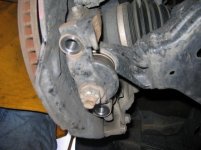
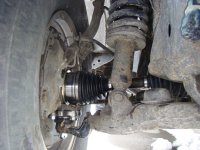
1st picture is FJ

2nd picture is 4runner
 

Attachments

  • FJ.jpg
    FJ.jpg
    42.1 KB · Views: 2,474
  • 3rd gen.jpg
    3rd gen.jpg
    134.6 KB · Views: 3,262
Last edited:
Check out Proforged ball joints. I put them in my FJ Cruiser and they are built very well. They come with a 1 million mile warranty. If you are lifted and they fail, you get a free set.

Rockauto.com sells them

Anyone with experience with these though? I've heard great things about this brand, just not for this specific application. The million mile warranty is all marketing BS. A sealed ball joint is a wearing part. Highly doubt they will make money on that, plus the money you save with the warranty exchange is down the drain when you consider downtime and labor. With the amount of lifted failures happening, I wouldn't be surprised if these companies began voiding warranties if a failure happened on a lifted vehicle. Plus, what's the point of a free set of ball joints if the vehicle gets totaled?

I'd love to see how they stack up considering all I've heard about the brand, but I'm still mucho skeptical.
 
OEM in the bracket just bolt on is the best way to go for 3rd gen. I just experienced a wild ride. My 4runner popped the lower ball joint with out warning. No warble, no drift, nothing. Stretched the upper ball joint but did not break. I have spoke to other owners that went with after market. They have not lasted 200k miles only lasted around 50k I decided OEM since the was the first ball joint replacement
f6ffccf20500b4575e547c5bc119d89c.jpg
c6a9919959eb117e8d4045ea98e16cb4.jpg
c34ba81d1c5ae4991c76780cb94e92f9.jpg


Sent from my SM-N950U using Tapatalk
 
Anyone with experience with these though? I've heard great things about this brand, just not for this specific application. The million mile warranty is all marketing BS. A sealed ball joint is a wearing part. Highly doubt they will make money on that, plus the money you save with the warranty exchange is down the drain when you consider downtime and labor. With the amount of lifted failures happening, I wouldn't be surprised if these companies began voiding warranties if a failure happened on a lifted vehicle. Plus, what's the point of a free set of ball joints if the vehicle gets totaled?

I'd love to see how they stack up considering all I've heard about the brand, but I'm still mucho skeptical.

All good questions. I searched the web hard for any negative stories on Proforged LBJs and did not find one bad story, expeience or even warranty replacement. You Cant say the same about all the others. Bad news travels far and wide. They are built in USA in NJ.
 
Any of the BJ's will work any can fail. If I'm not willing to run them on my rig I won't suggest them to someone else. I installed Toyota's on the 01 I bought 2-17
11k mi on them now, won't be long I'll be doing the FSM check when I rotate the tires.
 
I have spoke to other owners that went with after market. They have not lasted 200k miles only lasted around 50k I decided OEM since the was the first ball joint replacement

There's so many variables that unless we can get data from a big sample size it's still hard to find a conclusion. The original OEM LBJs lasted 320,000kms and were still very tight. Then I lifted it 3" and installed new OEM LBJs, but this time they became VERY loose after only 70,000kms.
 
There's so many variables that unless we can get data from a big sample size it's still hard to find a conclusion. The original OEM LBJs lasted 320,000kms and were still very tight. Then I lifted it 3" and installed new OEM LBJs, but this time they became VERY loose after only 70,000kms.
I wonder how the lifting factors in on the ball joint life if they wear out quicker quicker or is it the fact we drive on tougher surfaces wearing them out sooner. My T4R is a 98 on 99 tall springs well with in OEM standards. Not lifted for a T4R but a little higher then stock. I wish my would have lasted to 300k but fate did not work that way..

Sent from my SM-N950U using Tapatalk
 

Members online

No members online now.

Forum statistics

Threads
278,397
Messages
3,554,714
Members
248,095
Latest member
Cpn2mss

Trending content

Back
Top