Bypass radiotor instead of replacing?

I'm thinking you have a regular plastic tank Koyo. I'm speaking of the all aluminum they just released this year. Only downside is that they didn't include the trans cooler so bypass in mandatory.

I found a link to this all aluminum 3 row radiator but they are always out of stock. Do you know of another place that has them in stock normally?

I'm thinking I may move the new Denso radiator I installed in the 01 to the 98 since it probably needs one anyway and get one of these 3 row aluminum ones for the 01 since it's my keeper.

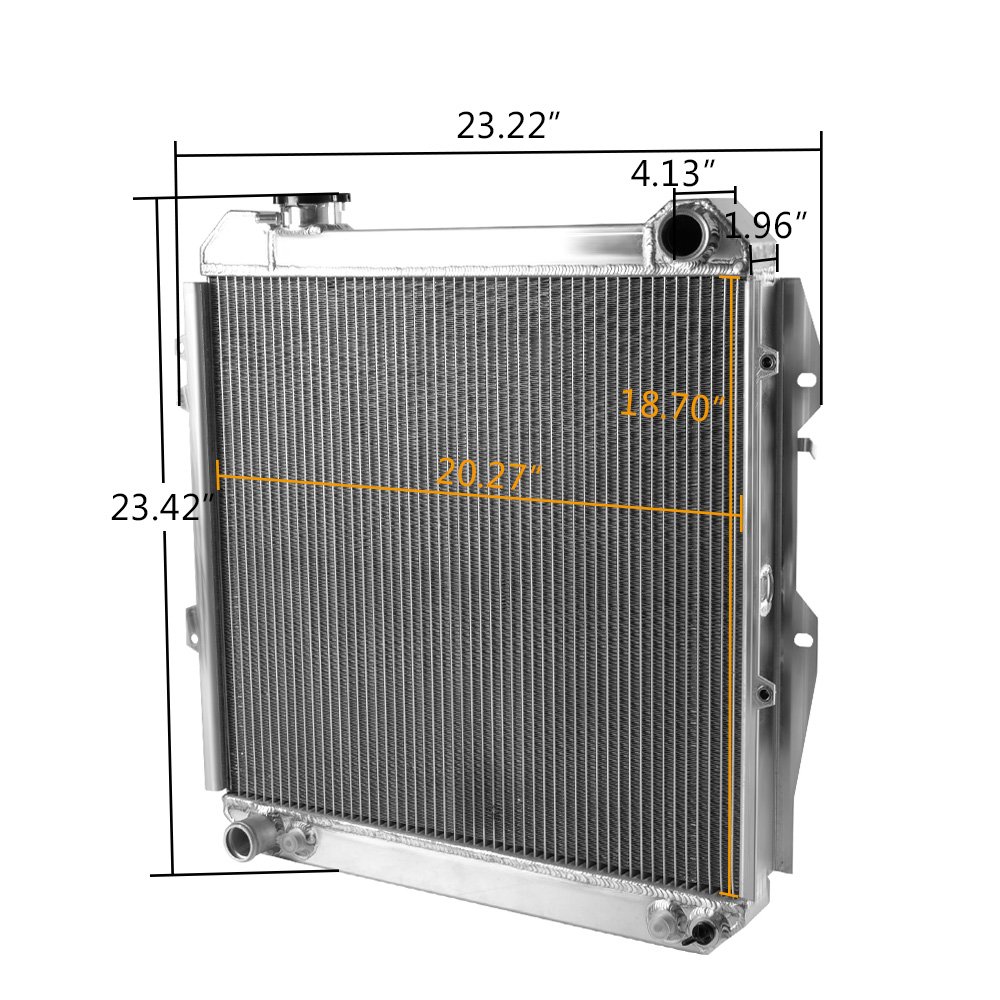
Also; I wonder if this 88-95 2-row aluminum radiator could be retrofitted for the 3rd gen 4runners. The price is decent enough. The inlet and outlets are in the right spot but I don't know about the hose size and if the mounting holes line up. Any experts here know?

71DAN23FGhL._SL1000_.jpg


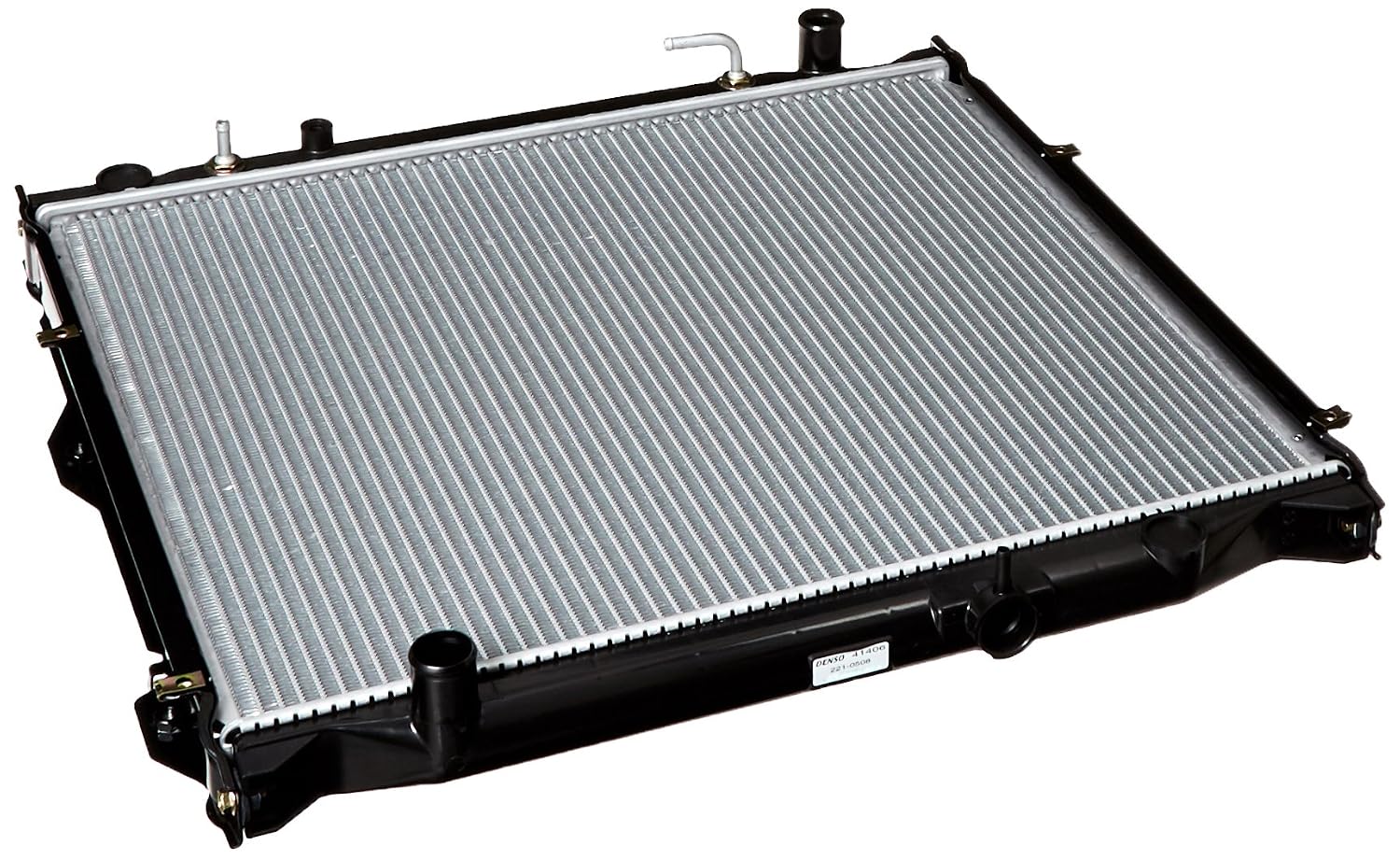
3rd gen Denso:
81okdlt3JlL._SL1500_.jpg
 
Well decided to buy local to verify condition and put an end to this returning madness. Went with one from Advance auto, Carquest brand, $107 with 25% coupon with tax. Looks exactly like every other radiator on the aftermarket. Trans fittings were tight, mounting holes and hangers lined up perfect, threads were clean, no broken nipple or damaged fins. Literally took 20 minutes to swap out.

Multiple extensions and wobblers make accessing the mounting holes through the grille and bumper a breeze.

We'll see how it holds up.

f843bc0ada414f51efc902fe421d17ca.jpg


Prior to changing I a ran a bottle of Thermocure from Evaporust. Seemed to work really well.
c87eb467167f72a867ed3062dd0730e4.jpg


Now, we're do I position the jiggler on the OEM thermostat? [emoji848][emoji848]

Sent from my SM-G965U using Tapatalk
 
Did you get the one with lifetime warranty? I just swapped one in to Advance for a free replacement. No questions asked.
 
Did you get the one with lifetime warranty? I just swapped one in to Advance for a free replacement. No questions asked.
I didn't even think to ask but I just checked online and it sure does fall under the limited lifetime warranty. That's great.

ed9e6284d6cd649df3c580961bef154c.jpg


Sent from my SM-G965U using Tapatalk
 
And where was it made? At $200, definitely not Japan. Like I said, legitimate OEM meaning exactly what it came from the factory with.
You'd have to ask Toyota, but it was OEM toyota. Came with the toyota part number sticker and everything on the box.
 
You'd have to ask Toyota, but it was OEM toyota. Came with the toyota part number sticker and everything on the box.

You got the Taiwan one.

Lifetime warranty usually means you will spend a lifetime returning and replacing. They tend to last 4-5 years of normal driving in my experience.
 
Does it really? Both take more time than you'd think to warm up. Even with driving around for twenty minutes on a cold winter day the coolant will be lukewarm at best. I would think the coolant warms up the ATF faster and then maintains the temps.
You might be right. It was always explained to me that the trans generates a ton of heat from all the friction and slipping of the torque converter.

Regardless, it's clear the heat exchanger in the radiator serves an important purpose of regulating transmission temps at both ends of the scale. Which is why I stand by my vote to not bypass the rad.
 
You might be right. It was always explained to me that the trans generates a ton of heat from all the friction and slipping of the torque converter.

Regardless, it's clear the heat exchanger in the radiator serves an important purpose of regulating transmission temps at both ends of the scale. Which is why I stand by my vote to not bypass the rad.
The bottom tank temperature is nearly completely unregulated. It is the last place to heat up, and is only has hot as the 'leftover' heat that hasn't been pulled out by the engine fan. So, in some cases fairly warm (hot day, AC on) and in others quite cold (Yukon in winter)...

I do agree that the bottom tank cooler is quite efficient though. For its size, it does a great job.

-Charlie
 
I do agree that the bottom tank cooler is quite efficient though. For its size, it does a great job.


-Charlie

I only wish Denso would have made their radiator impossible to milkshake.


That trans cooler tube should be copper nickel or stainless steel so that it can not develop a leak into the antifreeze.

However, the radiator would be significantly more expensive. That would not bother me to have a $300 radiator that never would leak.

I guess there are $600 radiator that's OEM as well. However, it's not leak proof or it would state that. :(


Sent from my SM-J337V using Tapatalk

 
The bottom tank temperature is nearly completely unregulated. It is the last place to heat up, and is only has hot as the 'leftover' heat that hasn't been pulled out by the engine fan. So, in some cases fairly warm (hot day, AC on) and in others quite cold (Yukon in winter)...

I do agree that the bottom tank cooler is quite efficient though. For its size, it does a great job.

-Charlie

I think we're talking about two different things
 
I only wish Denso would have made their radiator impossible to milkshake.


That trans cooler tube should be copper nickel or stainless steel so that it can not develop a leak into the antifreeze.

However, the radiator would be significantly more expensive. That would not bother me to have a $300 radiator that never would leak.

I guess there are $600 radiator that's OEM as well. However, it's not leak proof or it would state that. :(


Sent from my SM-J337V using Tapatalk

I'm surprised that 'milkshakeable' radiators are even still a thing.
I understand OEM fit for older cars limits the ability to design a new system, etc, but I'm still seeing reports of newish (even less than 10 years old) vehicles that have the same issue. The only cars that seem to be completely free of such an issue are the one that have stock standalone tranny coolers. Those are usually only found stock on newer transverse engine vehicles and heavy duty trucks. It seems like most longitudinal engine vehicles get the shaft here.

I was looking through a lot of reviews and consumer reports when buying an SUV for my wife a few months back and found that near every SUV/Truck had this issue, especially in the mid 2000s. It was deemed one of the highest causes for 'lack of initial quality' for pretty much every car maker out there. That and too small 'warping' brakes.

That surprised the hell out of me. I'd think that the downside to such a design would have been made readily apparent just a few years in when people started complaining, but I guess not. Surely it's cheaper to at least engineer the piping a little thicker or make it rust resistant than to have to deal with thousands of blown transmissions under warranty. That, and pissed-off non-return customers.

I mean, most Nissan trucks and SUVs came with an extra tranny cooler, but it was piped inline. One of the first mods that any Nissan forum tells you to do is to put it completely in bypass. Outside of extreme wheeling or towing, they say that the tranny stays cool enough with the stock cooler in bypass.
 
Last edited:
Regardless, it's clear the heat exchanger in the radiator serves an important purpose of regulating transmission temps at both ends of the scale. Which is why I stand by my vote to not bypass the rad.

I think we're talking about two different things

I think we are. The bottom tank of the radiator is unregulated for temperature. It doesn't heat up the trans fluid faster than a an external cooler, and doesn't cool it more than an external cooler. It is outside the thermostat controlled portion of the cooling system (unlike the engine oil cooler, that does help regulate oil temperature). The only thing sort-of regulating temperature at the bottom of the radiator is the fan clutch...

That said, I still would recommend using the stock cooling loop (and do use it myself) unless you have a reason for more cooling.

-Charlie
 
...
unless you have a reason for more cooling.

-Charlie

Yes, in my case, towing (just 3000#) in Texas' very common 105+ heat during stop/start driving in town.

Using the OEM trans cooling + external trans cooler + 2150CFM fan over external trans cooler is the Only way to keep the trans under 200 consistently.

Previous to the external cooler and fan, trans would reach 248 on Davis mountain passes (EZ mountains) and about 235 in town. Of course I didn't like that at all.

Luck and enjoy those Runners! :cowboy:
 
I think we are. The bottom tank of the radiator is unregulated for temperature. It doesn't heat up the trans fluid faster than a an external cooler, and doesn't cool it more than an external cooler. It is outside the thermostat controlled portion of the cooling system (unlike the engine oil cooler, that does help regulate oil temperature). The only thing sort-of regulating temperature at the bottom of the radiator is the fan clutch...

That said, I still would recommend using the stock cooling loop (and do use it myself) unless you have a reason for more cooling.

-Charlie
The coolant interfacing with the ATF in the rad also has a regulatory effect on trans temps as well. If that weren’t the case, they’d share separate coolers. The part I’m not 100% on is whether the ATF warms the coolant or vice versa (after the vehicle is first started).
 
The coolant interfacing with the ATF in the rad also has a regulatory effect on trans temps as well. If that weren’t the case, they’d share separate coolers. The part I’m not 100% on is whether the ATF warms the coolant or vice versa (after the vehicle is first started).
I guess it depends on how you drive, and how long you let your truck idle when you first start it.
If you gun it instantly, I'd assume the tranny would heat up faster (but your cold engine wouldn't like it), and if you idle for a minute or 2, then the coolant would warm the tranny fluid.
 
I'm surprised that 'milkshakeable' radiators are even still a thing.
I understand OEM fit for older cars limits the ability to design a new system, etc, but I'm still seeing reports of newish (even less than 10 years old) vehicles that have the same issue. The only cars that seem to be completely free of such an issue are the one that have stock standalone tranny coolers. Those are usually only found stock on newer transverse engine vehicles and heavy duty trucks. It seems like most longitudinal engine vehicles get the shaft here.

I was looking through a lot of reviews and consumer reports when buying an SUV for my wife a few months back and found that near every SUV/Truck had this issue, especially in the mid 2000s. It was deemed one of the highest causes for 'lack of initial quality' for pretty much every car maker out there. That and too small 'warping' brakes.

That surprised the hell out of me. I'd think that the downside to such a design would have been made readily apparent just a few years in when people started complaining, but I guess not. Surely it's cheaper to at least engineer the piping a little thicker or make it rust resistant than to have to deal with thousands of blown transmissions under warranty. That, and pissed-off non-return customers.

I mean, most Nissan trucks and SUVs came with an extra tranny cooler, but it was piped inline. One of the first mods that any Nissan forum tells you to do is to put it completely in bypass. Outside of extreme wheeling or towing, they say that the tranny stays cool enough with the stock cooler in bypass.

The manual 4 runners don't need a trans cooler..:D

Yes I can see folks wanting to bypass the inner transmission cooler for a safety guard but honestly, we never really should have had to in the first place. No radiator should have ever milked.

I am pretty sure they could have designed the radiator that is could not happen as well.. Especially, in the replacement radiators..:/

I really think it comes down to cost and vehicle lifespan. Most Mfg don't care if the ride will last 10 years. If they can save $10 a part they will and that is probably want gets the consumer. ;(
 

Members online

No members online now.

Forum statistics

Threads
278,315
Messages
3,554,104
Members
248,016
Latest member
Advally Service

Trending content

Back
Top