Chasing a misfire that I can't solve. Help!

Is there a way to check for fuel volume? Wondering if cyl 6 is starving for fuel. Fuel line goes into the passenger side of the rail near cyl 5, then goes transfers over to the driverside of the rail. Cylinder 6 is the last cylinder to get
fuel from the rail before dumping through the regulator and returned back to the tank. Wondering if it's a ever so slightly sticking FR?
I'm just thinking out loud as you have tried almost every possible way already.


Maybe a double dose of Techron would help.


Sent from my iPhone using Tapatalk
 
I'll go out on a limb and suggest an Intake Manifold Leak.

Just a side thought, the original pic of the #6 spark plug looked like the gap was really small. You mentioned you changed this plug though. Maybe double check that all the gaps are within spec just to cover your bases.
 
[MENTION=107222]HiLife[/MENTION] that is something to think about. And does make sense to me.

[MENTION=99144]19963.4lsr5[/MENTION] I have done multiple tanks of techron and Lucas prior to tackling the injectors and no changes.

[MENTION=128414]Whakeen[/MENTION] and intake manifold gasket leak crossed my mind as well which is why I wanted to do a leak down test. No leak that I could see. Also no notable coolant loss.

Now the gap on cylinder 6 plug looks so small due to corrosion and build up from enduring the misfire. All plugs have been replaced with OEM from dealer.

Thanks for responses. I did order a OEM fuel filter and A/F sensor today. So waiting on those to come in. Grabbed another 6er of OEM spark plugs as well in case I need em. I may try [MENTION=139000]phattyduck[/MENTION] A/F scan gauge code he uses on his 99 to see what mine is currently reading at, then if it changes once new parts are put in.
 
Last edited:
Had an issue getting the nuts off the front o2 sensor since they were rust puddles and had no shape to get a socket or wrench on. However the front o2 sensor being swapped, as well as new OEM fuel filter, as well as recleaning the MAF has yielded 2 hpr more at idle and what seems like slight improvement in fuel economy. I should also correct that since my rig is federal emission the front sensor is labeled as an o2 sensor ( i previously referred to it as a/f sensor) unlike the CA emissions which label the front as the a/f sensor. Either way the front sensor on either version plays a role in the air to fuel ratio. However I was creeping along on the freeway on ramp at about 15mph this morning and engine was misfiring and stumbling but no code thrown. Smoothed out once throttle was pushed. Still shakes at freeway speeds too. I'm thinking swap ecu at this point...what's your folks thoughts?
 
Last edited:
Today I did what I'd call the poor mans leak down. Let me know I did it correct. Pulled plug from 6. Took ratchet extensions linked together and placed in cylinder 6 spark plug tube. Rotated crank pulley with breaker watching the extensions go up and down with compression cycle. Marked extensions with paint pen notating what I feel is tdc. Removed extensions and place compression tester hose into cylinder 6 with Schrader valve removed. Rotated crank pulley until I felt air pushing out the top of hose( compression stroke). Removed hose and swapped extensions in. Continued rotating crank pulley till tdc mark on extension was in sight. Replaced the compression hose and attached to my on board air (ARB compressor)...

No bubbles at radiator
No noise at exhaust tail
Hissing when opened throttle body...

Intake valve leak. Makes sense with noisy lifters I hear from drivers side valve covers I guess. But did I do it wrong?

Let's test. Removed compression hose. Dropped extensions in again. Rotated crank pulley watching them go down and back up until tdc mark is seen. Reconnect hose setup...

No bubbles at radiator
Audible hissing noise from exhaust tail makes sense since I'm now on exhaust stroke.
No noise from throttle body

Cool so now I know my head gasket is good. And I seem to have my strokes correct on the cylinder. So I put extensions back in and rotate again to tdc. Swap back to hose setup. Reconnect air one more time...

No bubbles at radiator
No noise at exhaust
Hissing when throttle body is open.

Cool so intake valves it is...unless how much room for error is there to actually not being tdc? How do I know I wasnt near tdc?

There is definate ticking from back side of drivers valve cover that follows rpms. It was pretty obvious hissing at throttle body.So I think this could be intake valve issues.

I still get engine shaking vehicle at hwy speeds felt through the driveline. I still get intermittent stumbles and misfires. Nothing consistent enough to have a code thrown though since injectors were swapped.

I've also been tracking mpg and its terribly down. 10.7mpg solid city driving tank. And 15.6 mpg solidfreeway. I'm on 285s regeared to 4.88 armored and winch upfront but I should be getting better mpgs still.

So now what? Valve adjustment?
 
Last edited:
Did a leak down today with OTC tester and onboard air. Used ARB cmka12 compressor which puts out a max psi of 100 per their site. However multiple attempts at getting it to run that hard at tdc did not work. Tested a variety of psi and average 16% loss all from intake valves ( heard at throttle body). Funny part is I forgot to connect my spark plug wire, and could feel the difference but it wasn't alarmingly different then how the motor normally runs. I guess I'll do a valve job...

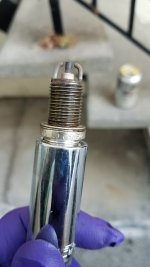
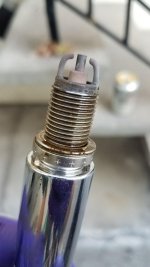
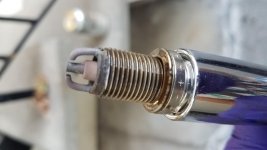
Also this is plug 6 again. What is building up on the electrodes? It doesn't look like oil ( which I'd expect with leaky valves) . It almost looks like over heating and ash? What are your thought.
 

Attachments

  • 20201026_170713.jpg
    20201026_170713.jpg
    63.9 KB · Views: 396
  • 20201026_170723.jpg
    20201026_170723.jpg
    106.9 KB · Views: 414
  • 20201026_170718.jpg
    20201026_170718.jpg
    121.1 KB · Views: 408
Last edited:
Confirmed with a shop today. Compression 175 (getting worse vs difference in gauges) no change with wet compression vs dry compression. Leak down again confirms intake valves. Suggests intake valves burnt or bent so head job needed but lowering of compression on cylinder with no change wet vs dry leads us to believe piston ring starting to fail...so rebuilt 5vz ordered from yota 1. It'll be February by the time it's done so this thread will go silent until then...Thank goodness [MENTION=120071]mtbtim[/MENTION] just did a motor swap vid series.
 
Confirmed with a shop today. Compression 175 (getting worse vs difference in gauges) no change with wet compression vs dry compression. Leak down again confirms intake valves. Suggests intake valves burnt or bent so head job needed but lowering of compression on cylinder with no change wet vs dry leads us to believe piston ring starting to fail...so rebuilt 5vz ordered from yota 1. It'll be February by the time it's done so this thread will go silent until then...Thank goodness [MENTION=120071]mtbtim[/MENTION] just did a motor swap vid series.
If I'm reading this correctly, you are saying that the dry compression is the same as wet compression? If that's the case then that tells me that piston rings are in good condition. When a piston ring fails you will have low dry compression and higher wet compression (depending on how damaged the rings are). The added oil helps seal the piston rings.
 
If I'm reading this correctly, you are saying that the dry compression is the same as wet compression? If that's the case then that tells me that piston rings are in good condition. When a piston ring fails you will have low dry compression and higher wet compression (depending on how damaged the rings are). The added oil helps seal the piston rings.

Sorry wasn't clear in my writing. My compression gauge gave me 180 on dry cylinder six. I'm being generous here by saying wet was 190 (probably like 187). Shops gauge dry cylinder six was 175 ( difference in gauges vs actually losing more compression from last time I checked). Shops wet cylinder 6 gave 180. So there are changes between wet and dry. But the percentage of changes I'm getting and the shop got are similar. This leads us to believe the piston ring maybe starting to fail. There are no changes in the differences/percentages between my values and the shops value other than shop got slightly lower numbers which could be a difference of gauges used. That is what i meant by no changes between wet and dry values... i was comparing my values with the shops values. I realize I didn't give full information in my original post.
 
Sorry wasn't clear in my writing. My compression gauge gave me 180 on dry cylinder six. I'm being generous here by saying wet was 190 (probably like 187). Shops gauge dry cylinder six was 175 ( difference in gauges vs actually losing more compression from last time I checked). Shops wet cylinder 6 gave 180. So there are changes between wet and dry. But the percentage of changes I'm getting and the shop got are similar. This leads us to believe the piston ring maybe starting to fail. There are no changes in the differences/percentages between my values and the shops value other than shop got slightly lower numbers which could be a difference of gauges used. That is what i meant by no changes between wet and dry values... i was comparing my values with the shops values. I realize I didn't give full information in my original post.
If your piston rings were failing you would have a much lower dry compression number. The slight increase between dry and wet is due to the volume of oil being added effectively raising the compression ratio.
 
If your piston rings were failing you would have a much lower dry compression number. The slight increase between dry and wet is due to the volume of oil being added effectively raising the compression ratio.
Huh. That makes sense. I did find it a little strange that dry vs wet was minimal change in com0ression. I don't know that it changes my mind though. It's about a $2,500 job once I pull the heads, send em out to get machined, plus a valve or 2 depending how many I bent, plus all the gaskets, timing belt, water pump, etc etc etc. It's an even $3,000 ( black Friday sale) for a fully built 5vz with timing belt, valve covers etc...I'll basically need to swap my intake manifold and plenum plus some misc. From my current engine to the new. And I'll have a "new" rebuilt motor for $500 more instead of just heads.
 
Huh. That makes sense. I did find it a little strange that dry vs wet was minimal change in com0ression. I don't know that it changes my mind though. It's about a $2,500 job once I pull the heads, send em out to get machined, plus a valve or 2 depending how many I bent, plus all the gaskets, timing belt, water pump, etc etc etc. It's an even $3,000 ( black Friday sale) for a fully built 5vz with timing belt, valve covers etc...I'll basically need to swap my intake manifold and plenum plus some misc. From my current engine to the new. And I'll have a "new" rebuilt motor for $500 more instead of just heads.
I agree that you might as well get a rebuilt motor for the price difference. Just wanted to make sure you had all the info/facts before you went that way
 
Hoping someone can help put my mind at ease. So yes we have identified an intake valve is out of spec and allowing air into the cylinder without sealing. It maybe burnt or just wildly out of spec. It clickitty clacks like crazy though above 1400rpm. Yes my gas mileage is shit... 11mpg ( or 130 ish miles per tank). All of this does make me believe it it time for a head job/motor swap.

Here is where my mind isn't at ease. Both a head job and motor swap are not cheap or fast.

At idle in driveway it sounds like cylinder 6 fuel injector is clicking away. Hard to tell over the noisy valve situation.

Rev and hold throttle cable open to 1800rpm and the engine isn't shaking crazy...

The shaking and vibration only occur in gear. It will occur in any gear from 1400 to 2200 rpm. The faster the vehicle moves the more violent the shake.

My brain doesn't connect how an air/fuel issue in a cylinder can cause a vibration only in gear but not while reving in park or neutral at a stand still. My brain does make sense of a rear end issue reverberating into the driveline which is why it's felt in gear at speed...

Now before those new to this thread tell me to check my driveline... I'm on my third driveshaft at this point...stock one when this all started, pulled one from a yard to test driveshaft theory, and now a 4wd shaft since I converted. No changes.

I also mentioned I regeared the rear end. Well was my r and p set wrong, too much lash etc... pop the stock third back in. Only change is how strong the vibration feels ( likely due to stock 3.93 vs regear to 4.88) but it is there with either third in.


So now im at a loss for a rear end vibe causing this.

At idle you will randomly feel the stumble of a miss and then it corrects. You will randomly feel the engine hesitate and correct when coming to a stop. I have not gotten a mis code in a while but that's because the truck only throws them when driving at freeway speeds and I'm currently not driving on the freeway at all with this thing like this.

So back to original question...

Is it really possibly that an intermittent misfire caused by improper air fuel mixture due to a leaky valve in a cylinder could produce a consistent vibration like this only in gear with out consistently throwing codes?
 
Last edited:
Is it really possibly that an intermittent misfire caused by improper air fuel mixture due to a leaky valve in a cylinder could produce a consistent vibration like this only in gear with out consistently throwing codes?

It makes sense to me that it would cause a vibration in gear and no/less vibration in park or neutral. When you are in gear and moving you have a load/resistance on the engine and you also have a larger amount of fuel being injected (compared to idling or park/neutral revving). Both of those combined make a big enough difference for that leaking valve to either combust fully or combust partially/misfire.
 
It makes sense to me that it would cause a vibration in gear and no/less vibration in park or neutral. When you are in gear and moving you have a load/resistance on the engine and you also have a larger amount of fuel being injected (compared to idling or park/neutral revving). Both of those combined make a big enough difference for that leaking valve to either combust fully or combust partially/misfire.

Thought. I know if I jack the rear end of the ground and put in drive the vibrating is seen in the drive shaft. I've done that already. With your comment my thought is I could disconnect drive shaft at tcase put in drive and with hood open safely manipulate throttle to see if the trans gears is enough to put the load strain on the motor to see it shake. Could even drop into 4lo to add more gear resistance. Sound accurate?
 
Thought. I know if I jack the rear end of the ground and put in drive the vibrating is seen in the drive shaft. I've done that already. With your comment my thought is I could disconnect drive shaft at tcase put in drive and with hood open safely manipulate throttle to see if the trans gears is enough to put the load strain on the motor to see it shake. Could even drop into 4lo to add more gear resistance. Sound accurate?
I don't think that would be enough resistance to load the engine up for a misfire, but it's worth a try. Obviously if you're going to try putting it in 4wd make sure the front is jacked up. Safety first and whatnot. Does it misfire/shake/vibrate if you power brake it? When you're driving and it vibrates have you tried shifting into neutral?

Edit: You could also try removing the rear driveshaft and driving around in 4hi to see if the vibration is still there
 
I don't think that would be enough resistance to load the engine up for a misfire, but it's worth a try. Obviously if you're going to try putting it in 4wd make sure the front is jacked up. Safety first and whatnot. Does it misfire/shake/vibrate if you power brake it? When you're driving and it vibrates have you tried shifting into neutral?

Edit: You could also try removing the rear driveshaft and driving around in 4hi to see if the vibration is still there

Dont need to worry about jacking the front up nor can I drive in 4hi with rear shaft removed... haven't finished building my front diff yet so I'm still 2wd.

Throwing it in neutral the vibration fades quickly.

Power braking? You mean holding brakes while in drive and slowly pushing gas pedal?
 
Dont need to worry about jacking the front up nor can I drive in 4hi with rear shaft removed... haven't finished building my front diff yet so I'm still 2wd.

Throwing it in neutral the vibration fades quickly.

Power braking? You mean holding brakes while in drive and slowly pushing gas pedal?

Well there goes that idea...

I'm not sure if power braking is the correct term. What I do is firmly press the brake with one foot, shift to drive, then apply some throttle. You should be able to "load" the engine up to cause the not sealing valve to struggle and hopefully cause the vibration you are feeling without moving at all. I wouldn't recommend doing this for more than a few seconds at a time as it creates a lot of heat in the torque converter causing transmission temps to rise pretty quick.
 

Members online

Forum statistics

Threads
278,310
Messages
3,554,080
Members
248,016
Latest member
Advally Service

Trending content

Back
Top