Crawford Eco Block

That an engine running lean uses less fuel? No datapoint was needed ;)

It's not running leaner.. (at least not in normal driving conditions)

Let the guy report his findings...

I wish someone would install this and track some before and after fuel trims...

Either way, I'm sure it is a pretty small change.. But I am curious.
 
It's not running leaner.. (at least not in normal driving conditions)

Let the guy report his findings...

I wish someone would install this and track some before and after fuel trims...

Either way, I'm sure it is a pretty small change.. But I am curious.

It will have a leaner AFR for sure, but not to the point that it is running lean as the trolls are implying.

This data has been collected many times. The amount of trim is dependent on the condition of your Lambda sensor, when the system is stock the trim is less than +/- 5% and with the EB it will be between -10 and -20%. If it gets above -25% it will throw a check engine light.

Quirt
 
Last edited:
It will have a leaner AFR for sure, but not to the point that it is running lean as the trolls are implying.

This data has been collected many times. The amount of trim is dependent on the condition of your Lambda sensor, when the system is stock the trim is less than +/- 5% and with the EB it will be between -10 and -20%. If it gets above -25% it will throw a check engine light.

Quirt

So it DOES run lean - in open loop. But it also doesn't run "lean" if you make up a new definition for the word? It keeps getting better.

And you're apparently relying on the premise that Toyota runs 10-20% rich, and does so for no reason. Even in a hyper competitive environment, it's tuned to waste 10-20%. You can't expect anyone to be that stupid that they believe that. Come on man.
 
Last edited:
It will have a leaner AFR for sure, but not to the point that it is running lean as the trolls are implying.

This data has been collected many times. The amount of trim is dependent on the condition of your Lambda sensor, when the system is stock the trim is less than +/- 5% and with the EB it will be between -10 and -20%. If it gets above -25% it will throw a check engine light.

Quirt

It may have a leaner starting point, but the trims (long and short term) will bring it right back to the same point in steady states. But the load numbers will still be different and that will change up the timing and other behaviors a bit (probably not by much). It could be leaner in transitions and open loop, but we are all guessing a bit on exactly how that works with this particular ECU.

I'm not that interested in this really, but it is educational to see actual results vs pure speculation. Overall I would expect a very small impact, but it may be more than expected... Just have to see.

I encourage people to try things and see what happens vs being shamed for having an open mind. Nobody is ever right 100% of the time.

 
Last edited:
It will have a leaner AFR for sure, but not to the point that it is running lean as the trolls are implying.

This data has been collected many times. The amount of trim is dependent on the condition of your Lambda sensor, when the system is stock the trim is less than +/- 5% and with the EB it will be between -10 and -20%. If it gets above -25% it will throw a check engine light.

Quirt

Sorry guys, it was late at night on the other side of the world when I made this post and I did the math wrong. Interestingly enough our well educated troll did not even catch it!

This is what I should have written;
The amount of trim is dependent on the condition of your Lambda sensor, when the system is stock the trim is less than +/- 5% and with the EB it will be between +10 and +20%. If it gets above +25% it will throw a check engine light.

Quirt
 
It may have a leaner starting point, but the trims (long and short term) will bring it right back to the same point in steady states. But the load numbers will still be different and that will change up the timing and other behaviors a bit (probably not by much). It could be leaner in transitions and open loop, but we are all guessing a bit on exactly how that works with this particular ECU.

I'm not that interested in this really, but it is educational to see actual results vs pure speculation. Overall I would expect a very small impact, but it may be more than expected... Just have to see.

I encourage people to try things and see what happens vs being shamed for having an open mind. Nobody is ever right 100% of the time.

When the ECU is in closed loop the starting point of the AFR is always the same but there will be a trim in place to get the AFR back to what the table is asking for. The short and long term trims get the original trim from the EB closer to zero so the transitions are not so drastic.

For the ECU to make the decision to add a trim of any kind it must be in closed loop and getting its data for this trim from the Lambda sensor. When it transitions into open loop, it ignores the Lambda sensor which is the definition of open loop. At this point there will not be any Lambda based trims at all and the ECU makes its fueling decision based on the open loop fuel map. There are compensations to the open and closed loop fuel maps like engine temp and air temp but these are not affected by the EB.

As you said, the load numbers in every load based table will be affected by the EB to a small degree, usually it only goes up one level on the horizontal axis.

I like your comment about people being shamed for having an open mind. We are all human and thinking for yourself / using your gut feeling will always give you the overall best results. Being cautious is good and taking advantage of the vast amount of knowledge on the internet gives us an advantage our parents never had. Google is your friend for finding out the real story ;)

Quirt
 
It's not about having an open mind here. We know that the fuel trim is exactly what it needs to be to maximize fuel economy and meet emissions rules. This isn't a new idea. I can guarantee with 100% certainty Toyota has run every fuel map possibility. In term of engine building they have unlimited resources and actual testing labs. They have actual engineers, chemists, and physicists doing the design and testing. It's not plausible that a spacer will improve mileage and reduce emissions. It would require a change in the chemical relationships as we know them. It would guarantee a Nobel prize in science for this to be true.

I'm always open to be proven wrong. But I'm not a fool. It requires evidence.

Prove me wrong. Show me one single shred of evidence that supports the premise that you can run at stoich or leaner and still have a functional cat. Even just a theoretical chemical equation for how it even could possibly work. No one in the entire automotive world has done it. But somehow a $30 spacer has the magic formula? I'll believe it as soon as I see the evidence.
 
Second Tank Results

The purpose for sharing my results is because few people have done it, and that number is almost non-existent for results from more than one tank of gas. This is the sort of information that could've helped me make a purchasing decision one way or the other. I know that this thread is full of members with a strong opinion on this product. I am not trying to sway anyones opinion, just providing some facts to the discussion.

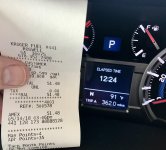
Here are the results from the second tank of gas after installing the Ecoblock. I would estimate this tank at about 60/40 city/highway.

362 miles / 19.8 gallons = 18.28 mpg

Drive time was 12:24 Traffic in Atlanta sucks.
 

Attachments

  • fullsizeoutput_379d.jpg
    fullsizeoutput_379d.jpg
    120.1 KB · Views: 301
The purpose for sharing my results is because few people have done it, and that number is almost non-existent for results from more than one tank of gas. This is the sort of information that could've helped me make a purchasing decision one way or the other. I know that this thread is full of members with a strong opinion on this product. I am not trying to sway anyones opinion, just providing some facts to the discussion.

Here are the results from the second tank of gas after installing the Ecoblock. I would estimate this tank at about 60/40 city/highway.

362 miles / 19.8 gallons = 18.28 mpg

Drive time was 12:24 Traffic in Atlanta sucks.


I appreciate you posting your mpg. The problem is that it doesn't tell us anything. Without having a counterfactual example where you remove it and do the same driving, I'm not sure what we would learn. I get better than 18mpg with 34" tires sometimes. But I also get 16mpg sometimes. It just depends on what I do and where I go.
 
The purpose for sharing my results is because few people have done it, and that number is almost non-existent for results from more than one tank of gas. This is the sort of information that could've helped me make a purchasing decision one way or the other. I know that this thread is full of members with a strong opinion on this product. I am not trying to sway anyones opinion, just providing some facts to the discussion.

Here are the results from the second tank of gas after installing the Ecoblock. I would estimate this tank at about 60/40 city/highway.

362 miles / 19.8 gallons = 18.28 mpg

Drive time was 12:24 Traffic in Atlanta sucks.

Thanks for taking your time to collect and share this information with us, please keep it coming :)

I know its a bit early, but what's your gut feeling at this point about the product?

Quirt
 
Last edited:
The purpose for sharing my results is because few people have done it, and that number is almost non-existent for results from more than one tank of gas. This is the sort of information that could've helped me make a purchasing decision one way or the other. I know that this thread is full of members with a strong opinion on this product. I am not trying to sway anyones opinion, just providing some facts to the discussion.

Here are the results from the second tank of gas after installing the Ecoblock. I would estimate this tank at about 60/40 city/highway.

362 miles / 19.8 gallons = 18.28 mpg

Drive time was 12:24 Traffic in Atlanta sucks.

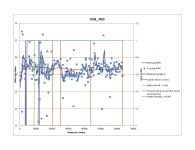
Here is my MPGs tracked since inception (minus the 22 miles on the ODO when purchased). Here are my observations:
1) 1st 1500 miles it ran low on MPGs (I also went on a 500 mile freeway road trip at this point). Was the computer adjusting trims, was this due to break in of the vehicle, pedal position commanded input, or something else?
2) I was initially driving with the 'ECO' light and meter on. I think this was detrimental to MPGs as I 'lugged' the drive train while getting up to speed which wasn't necessarily efficient.
3) You can see the slight decrease/increase due to tire swapping. The LT duratracs (stock size) are noticeably heavier (inertia resistance) and not a highway tread (rolling resistance).

90% of my miles are over the same stretch which doesn't vary weekly by more than 80%. Traffic on those routes varies, but that's why I'm looking at the long term averages. You can see when I added sliders, when I've swapped tires, when I've run 91+ vs. 87 octane, and when I swapped intakes. If you do something similar, with baselining and then making a change, your data can add value. There are lots of variables in MPGs that have been discussed ad nauseam that we don't need to get into here but that is why baselining is critical. Good luck and keep us informed!
 

Attachments

  • mo_mo-MPGs.jpg
    mo_mo-MPGs.jpg
    101.6 KB · Views: 266
Does anyone have any new questions to ask? It would be nice to hear some new ideas :)

Quirt
 
Last edited:
That's impressive [MENTION=112119]mo_mo[/MENTION]! Did you just create a spreadsheet for that?

Yes. I write the miles and gallons in my phone and make a note if I change something. Then every 6 months I'll update the spreadsheet with the notes from the phone.
 
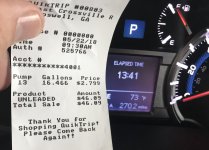
Here are the results from the third tank of gas after installing the Ecoblock. This tank is 100% city stop and go traffic -

270 miles / 16.46 gallons = 16.4 mpg

Drive time was 13:41.
[MENTION=121742]Quirt[/MENTION] - I am not sure what I think at this time. I wish I had documented what I was getting for mileage before instead of estimating it. Once I run tank of gas on an exclusive interstate only trip I'll be able to sum up my thoughts.
 

Attachments

  • fullsizeoutput_37b3.jpg
    fullsizeoutput_37b3.jpg
    126 KB · Views: 197
Here are the results from the third tank of gas after installing the Ecoblock. This tank is 100% city stop and go traffic -

270 miles / 16.46 gallons = 16.4 mpg

Drive time was 13:41.

[MENTION=121742]Quirt[/MENTION] - I am not sure what I think at this time. I wish I had documented what I was getting for mileage before instead of estimating it. Once I run tank of gas on an exclusive interstate only trip I'll be able to sum up my thoughts.

Understood... What I would recommend is to run through 6 tanks of fuel to get yourself a baseline average with the EB then remove it and do another 6 tanks so you have a back to back test / average.

Thanks for sharing your results so far and I look forward to seeing more.

Quirt
 
Here are the results from the third tank of gas after installing the Ecoblock. This tank is 100% city stop and go traffic -

270 miles / 16.46 gallons = 16.4 mpg

Drive time was 13:41.

[MENTION=121742]Quirt[/MENTION] - I am not sure what I think at this time. I wish I had documented what I was getting for mileage before instead of estimating it. Once I run tank of gas on an exclusive interstate only trip I'll be able to sum up my thoughts.

Am I the only one that thinks that feels that gas pumps measurements might be a inaccurate. Are all gas pumps calibrated regularly? I really don't know. I have a hard time accepting that all gas pumps were created equally.
 

Members online

Forum statistics

Threads
278,312
Messages
3,554,083
Members
248,016
Latest member
Advally Service

Trending content

Back
Top