"Using fog lights in good weather at speeds over approx 20 mph is an exercise in futility. Sure you'll light up the road immediately in front of the car but that light does you no good. Some people use fog lights as "fill in" lighting. They fill in the area between the front of the car and the low beams. Again this is an exercise in futility in normal driving. It gives people a false sense of comfort. Some people claim to use fog lights to avoid hitting things that might jump out from the side of the road. Again this is nonsense. At speeds over approx 20 mph you won't be able to brake in time for any object that is illuminated solely by fog lights.
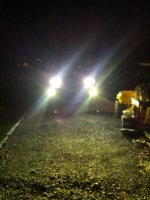
In summary, then, if you want good night vision then you need to avoid lights such as the ones shown in that photo. And you always want to leave fog lights off in good weather. Using fogs in good weather hurts your vision. Many will claim this is not true but proper objective testing has proved them wrong. Quite honestly there has been no car sold in the past 10-15 years that will benefit from the use of fog lights in good weather.
There's a good piece on fog lights here:
http://www.danielsternlighting.com/t...fog_lamps.html
Then there's the issue of HID light sources for fog lights. HID light sources tend to have a lot of blue light in their SPD and this blue light is detrimental in wet weather. Even the so-called 3000K HID has a lot of blue. This blue reflects back into your eyes from rain/fog/snow and the human eye deals poorly with bluish light. It's very hard for the eye to focus on objects illuminated with blue light. Blue light tends to scatter within the eye which makes it hard for the eye to properly use the more yellow components of light. For fog lights you really want to avoid HID light sources. If I had to choose between the halogen Micro DE and the HID Micro DE for use in inclement weather I'd leave the HID version on the shelf."