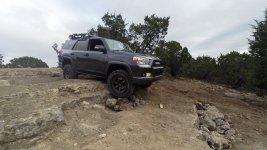
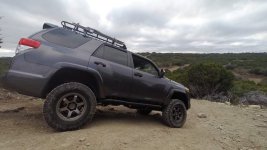
2014 Warthog
New member
I think we are saying the same thing. If you add the rotations made by both front wheels and compare it with rotations made by both rear wheels, and come up with a significant delta you will have binding. What I don't quite grasp yet, is how this delta/binding is not additive over time/distance and what would be considered significant. I feel there must be some part of the system that relieves tension beyond the tires slipping. Otherwise, even very slight turns would eventually add up to a bind. Maybe I'm over thinking it and the reality is that it would take a bunch of miles of gradual turns to come up with a noticeable delta front to rear.
Just to clarify, I'm talking about dry even pavement here. The tires obviously slip on slick uneven terrain without issue.
Oooh I see, yeah. With gradual turns the lugs on the tires can bend a little bit each relieving the stress gradually over the turn, but you are wearing the tires out a little faster having more side stress put on the lugs that way. But a tight turn requires way too much differential movement and the lugs cant bend that far and finally just start skidding/squealing/hopping instead.
Even on in 2wd, the tires wear from the differential in distance traveled while cornering just from the width of the tire itself! I.e. The outter part of the tire travels less than the inner part on the tire inside of the turn. My soft rubber AT tires leave nice "prints" in the driveway if I am turning sharply on it due to them slightly slipping/rubbing on the cement

Last edited: