
You are using an out of date browser. It may not display this or other websites correctly.
You should upgrade or use an alternative browser.
You should upgrade or use an alternative browser.
Is your starter going??? Quick and easy repair!!!
- Thread starter Jason B
- Start date

thegipper
New member
My 97 with 206k miles just gave me trouble starting for the first time, it clicked twice before it started. It didn't give me any trouble this morning but I'm sure over time it will just get worse. I've watched the videos and I'm going to tackle this repair. I read that some starters use different contacts.
I found an ebay kit (I think similiar to what others have ordered) where it includes the two contacts and a new plunger. It kit says "O.E.M # : 053660-7120 FITS: DENSO 1.2KW, 1.4KW, 1.8KW / 2.0KW, 2.2KW OSGR STARTERS"
I'm assuming this kit will work? Can anyone confirm before I order it?
Here is the link to the kit on ebay.
I found an ebay kit (I think similiar to what others have ordered) where it includes the two contacts and a new plunger. It kit says "O.E.M # : 053660-7120 FITS: DENSO 1.2KW, 1.4KW, 1.8KW / 2.0KW, 2.2KW OSGR STARTERS"
I'm assuming this kit will work? Can anyone confirm before I order it?
Here is the link to the kit on ebay.

mtbtim
Elite Member
My 97 with 206k miles just gave me trouble starting for the first time, it clicked twice before it started. It didn't give me any trouble this morning but I'm sure over time it will just get worse. I've watched the videos and I'm going to tackle this repair. I read that some starters use different contacts.
I found an ebay kit (I think similiar to what others have ordered) where it includes the two contacts and a new plunger. It kit says "O.E.M # : 053660-7120 FITS: DENSO 1.2KW, 1.4KW, 1.8KW / 2.0KW, 2.2KW OSGR STARTERS"
I'm assuming this kit will work? Can anyone confirm before I order it?
Here is the link to the kit on ebay.
Hell, I wish I would have found this kit when I was searching for contacts for my starter. For the price, I would have just taken a chance they would be right. I ended up getting the parts at the dealer which cost a lot more, but the contact kits did include all the other hardware in relation to the contacts.
The only issue I see is they only list the Make, Model and Year of what vehicle it will work for and not list what Denso starter part number they will work for. When I was searching, most of the sellers I found would list all the Denso starters it would work with and the list was very, very long but I never found a seller that listed my Denso starter as one it would work for.
Somebody recently asked my advice regarding a kit they found on Amazon but after reading negative review regarding the plunger not being the correct length, I suggested they look elsewhere. From the picture provided on Ebay, the contacts do look like the correct ones. However, there's no way to know from the picture if the plunger is the right length.
For $9, I'd take the risk and just order it. Even if you find the entire kit doesn't work out, you're only out $9. Like I said, the contacts do look correct so maybe at the very least you could make use of the contacts and then have to buy the plunger through the dealer if the plunger isn't right.
Take a look at the video I posted earlier. It may help you out. Good luck!

Dephcon
New member
Funny, I just did the contacts on my starter yesterday and this thread pops up. I pulled the starter from the truck and cleaned it up a but. Popped the old contacts out and put it all back together. Took about a couple hours, most of the issues was attempting to get the starter out between the frame rail and fender. I had to take the nut off my upper control arm and push the bolt back, but not remove it. I left just enough thread to put the nut back on and pull the bolt back into place.
Fairly easy to do, even though there were a couple oh shit moments when I wasn't able to actually get the starter out of the wheel well. All in all, it was a lot easier than my recent wheel stud debacle.
Fairly easy to do, even though there were a couple oh shit moments when I wasn't able to actually get the starter out of the wheel well. All in all, it was a lot easier than my recent wheel stud debacle.
mtbtim
Elite Member
I looked back at a few of the most recent posts on this thread from [MENTION=115590]StreetCreeper[/MENTION], [MENTION=10169]TheDurk[/MENTION] and [MENTION=115347]gamefreakgc[/MENTION] and I have a few comments that might help future 3rd Gen owners searching for information on how to fix their starter.
#1) If this is your only vehicle and you want to make sure you get the right parts ahead of time, you can actually read the label on the side of your starter to get the part numbers without pulling the starter out first. The label faces out towards the passenger side wheel well, so if you take your tire off, clean off the side of the starter with some cleaner and a rag, you should be able to get in there close enough to read the numbers. You might have to remove the trans dipstick tube to read it easier because it does sit in the way a bit. If your eyes are horrible, maybe get someone with better vision to read it for you.
#2) I found the label does not list whether or not it's a 1.4kw or 1.8kw (at least not on mine). It only lists the Toyota part number and the corresponding Denso part number. My label was fully intact, so I don't think that piece of information rubbed off or scraped off. I took the part numbers to my local dealer and they told me which kilowatt starter I had. The first parts gal told me I had a 1.4kw but I actually had a 1.8kw.
#3) If you're label is unreadable, you might be forced to just pull the starter and match up parts but here's something I learned but I'm unsure it's 100% correct. The automatic versions of our 3rd Gens used the 1.8kw. I think this must have something to do with the automatic trans being harder to turn over than a manual (just a guess). The manual versions used a 1.4kw unless the truck lives in a cold climate and they put a 1.8kw for the "Cold Weather Package".
#4) If you have a 1.8kw starter, you are not forced to work on it in the engine bay. You can remove it via the passenger side wheel well no problem and work on it comfortably on your work bench or wherever. In the video I made for this repair, you can see how to get it out. 2wd 3rd Gen owners have reported you can easily remove the starter under the engine no problem and don't have to resort to removing via the wheel well.
#1) If this is your only vehicle and you want to make sure you get the right parts ahead of time, you can actually read the label on the side of your starter to get the part numbers without pulling the starter out first. The label faces out towards the passenger side wheel well, so if you take your tire off, clean off the side of the starter with some cleaner and a rag, you should be able to get in there close enough to read the numbers. You might have to remove the trans dipstick tube to read it easier because it does sit in the way a bit. If your eyes are horrible, maybe get someone with better vision to read it for you.
#2) I found the label does not list whether or not it's a 1.4kw or 1.8kw (at least not on mine). It only lists the Toyota part number and the corresponding Denso part number. My label was fully intact, so I don't think that piece of information rubbed off or scraped off. I took the part numbers to my local dealer and they told me which kilowatt starter I had. The first parts gal told me I had a 1.4kw but I actually had a 1.8kw.
#3) If you're label is unreadable, you might be forced to just pull the starter and match up parts but here's something I learned but I'm unsure it's 100% correct. The automatic versions of our 3rd Gens used the 1.8kw. I think this must have something to do with the automatic trans being harder to turn over than a manual (just a guess). The manual versions used a 1.4kw unless the truck lives in a cold climate and they put a 1.8kw for the "Cold Weather Package".
#4) If you have a 1.8kw starter, you are not forced to work on it in the engine bay. You can remove it via the passenger side wheel well no problem and work on it comfortably on your work bench or wherever. In the video I made for this repair, you can see how to get it out. 2wd 3rd Gen owners have reported you can easily remove the starter under the engine no problem and don't have to resort to removing via the wheel well.
Last edited:
mtbtim
Elite Member
Good Info, thanks.
What about the 2.0kw? Any info on that? Maybe Tacoma only?
As far as I know, our rigs either came with a 1.4 or 1.8kw starter.

StreetCreeper
New member
As far as I know, our rigs either came with a 1.4 or 1.8kw starter.
That's my understanding too. Never heard mention of a 2.0...

Scramble
New member
That's my understanding too. Never heard mention of a 2.0...
I have one, they sell them at Camelback...
http://www.toyota-4runner.org/3rd-gen-t4rs/221606-what-starter-do-i-need.html
Scramble
New member
That's my understanding too. Never heard mention of a 2.0...
As far as I know, our rigs either came with a 1.4 or 1.8kw starter.
After some brief research the 2.0kw seems to be the cold weather starter for the 3RZ.
Referring to the post by mtbtim, Replaced the starter on 99 4Runner 3.4L V6 AT 2WD last night. It had a ReMan 1.4Kw starter on it in a warm climate region that had failed. It had only lasted about 1 year. By my VIN it showed vehicle was manufactured with the 1.8Kw starter. I went back with the 1.8Kw. Getting the bolts to break is the only trouble, be sure you have a variety of socket and extension lengths and a wobble head on hand before starting would be my advice. Any way back to the real reason for this post.....you can come out the bottom of the engine on the 2wd but I am doubtful you can do the same on a 4wd.
Last edited:
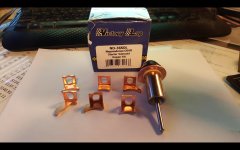
Rebuilt my starter for a 2nd time this weekend. It had been clicking for over a year! Finally wouldn't catch. My hands are cold arena sore, but it's done. Bought a kit on ebay for $17 that included both contacts and plunger. (97 4wd 3.4 auto)
Victory Lap ND-36SOL Solenoid Repair Kit https://www.amazon.com/dp/B0031HL09E/ref=cm_sw_r_taa_Zh1qybM66MRGQ
Good to go for another 100k!
Victory Lap ND-36SOL Solenoid Repair Kit https://www.amazon.com/dp/B0031HL09E/ref=cm_sw_r_taa_Zh1qybM66MRGQ
Good to go for another 100k!
Attachments

Jason B
Official Vendor
Is everyone replacing the plunger just to be safe or is there good reason to?
This doubles the price of the repair, but more importantly my local dealer has the contacts in stock, but I'd have to wait till tomorrow to get the plunger too.
No, not needed. I'm the Original Poster of this thread, I forgot
 and I did this repair like 7 years ago, and it's only the one side of the contact that goes bad, but I did replace both contacts, re-used plunger.
No, not needed. I'm the Original Poster of this thread, I forgot
Great, thanks!
Now all I've got to do is get the starter off!
mtbtim
Elite Member
Is everyone replacing the plunger just to be safe or is there good reason to?
This doubles the price of the repair, but more importantly my local dealer has the contacts in stock, but I'd have to wait till tomorrow to get the plunger too.
Well, in the OPs case, I reckon it wasn't necessary. I would concur that the larger of the two contacts is the one that receives the most wear. The part of the plunger that makes contact with the copper contacts did show signs of some wear in my starter solenoid. Basically the surface looked really rough.
However, this is the way I look at it. It's sort of a pain in the ass to get the starter out and back in. Do you really want to roll the dice for the savings if the plunger then gives you problems sometime down the road? I think this is why most of us just replace the plunger while we're in there. It's like doing the valve cover gasket job. It's a decent amount of labor to get the valve covers off. Do you want to roll the dice and save on replacing the cam plugs or should you do it while you're in there to save yourself a bunch of repeated labor if your gamble doesn't pay off and the cam plugs end up being a source for an oil leak. Just like replacing the water pump while doing the timing belt. You're already in there so why not do it. Anyway, I could keep going but you get the gist of what I'm saying.
The video I did for this job is posted on Page #6 of this thread in case you're looking for a tutorial of how to get the damned thing out.
Last edited:
Well, in the OPs case, I reckon it wasn't necessary. I would concur that the larger of the two contacts is the one that receives the most wear. The part of the plunger that makes contact with the copper contacts did show signs of some wear in my starter solenoid. Basically the surface looked really rough.
However, this is the way I look at it. It's sort of a pain in the ass to get the starter out and back in. Do you really want to roll the dice for the savings if the plunger then gives you problems sometime down the road? I think this is why most of us just replace the plunger while we're in there. It's like doing the valve cover gasket job. It's a decent amount of labor to get the valve covers off. Do you want to roll the dice and save on replacing the cam plugs or should you do it while you're in there to save yourself a bunch of repeated labor if your gamble doesn't pay off and the cam plugs end up being a source for an oil leak. Just like replacing the water pump while doing the timing belt. You're already in there so why not do it. Anyway, I could keep going but you get the gist of what I'm saying.
The video I did for this job is posted on Page #6 of this thread in case you're looking for a tutorial of how to get the damned thing out.
I hear ya, and normally I'd agree, but right now Its cold and sloppy here and my other car is put away for the winter and my wife needs her car. At this rate I'm fully expecting to be push starting my truck to get home tonight and I plan on leaving it running in the dealer lot while I get my contacts. If the repair lasts until May I'll be fully satisfied! Once I'm back to 2 cars it can take a week to repair for all I care!
Already watched your video last night- thanks! I have a manual transmission (no dipstick) and (according to my VIN) the smaller starter so hopefully it won't be too bad.
For those of you with manual transmissions:
Once again manual wins and this job is WAY easier on the MT version.
My 2 cents:
I reused the plunger. It was a bit pitted and there were some obvious arc spots but it cleaned up well with some emery cloth and I'm confident it will last at least as long as the new set of contacts.
On my truck I only had to use a single 24" extension with a universal joint and short socket on the end for the top bolt. For the bottom bolt there is a bracket for the exhaust downpipe that prevents completely removing the bolt, or getting a socket on it, but it is easily accessible with a box end wrench. I used another wrench on the end of that to crack it free.
I think it was worthwhile to pull the starter from the truck.
Pay attention to the orientation [MENTION=120071]mtbtim[/MENTION] shows in his video when you're trying to clear the brake line/control arm bolt. This is key. Even with that tip it still took a few minutes of fiddling to get it out. You can gain a bit more length from the rubber brake line and additional working room by turning the wheel all the way to the left.
Once again manual wins and this job is WAY easier on the MT version.
My 2 cents:
I reused the plunger. It was a bit pitted and there were some obvious arc spots but it cleaned up well with some emery cloth and I'm confident it will last at least as long as the new set of contacts.
On my truck I only had to use a single 24" extension with a universal joint and short socket on the end for the top bolt. For the bottom bolt there is a bracket for the exhaust downpipe that prevents completely removing the bolt, or getting a socket on it, but it is easily accessible with a box end wrench. I used another wrench on the end of that to crack it free.
I think it was worthwhile to pull the starter from the truck.
Pay attention to the orientation [MENTION=120071]mtbtim[/MENTION] shows in his video when you're trying to clear the brake line/control arm bolt. This is key. Even with that tip it still took a few minutes of fiddling to get it out. You can gain a bit more length from the rubber brake line and additional working room by turning the wheel all the way to the left.
Last edited:
Notagearhead23
New member
So, I'm not a gearhead but can do basic stuff like change oil and tires.
It seems like what Jason is laying out is pretty simple, but I've never takin on a project of this size.
Do y'all recommend that I got to my mechanic or try the steps that Jason layed out.
My mechanic quoted me $401, parts and labor.
It seems like what Jason is laying out is pretty simple, but I've never takin on a project of this size.
Do y'all recommend that I got to my mechanic or try the steps that Jason layed out.
My mechanic quoted me $401, parts and labor.
Similar threads
- Replies
- 1
- Views
- 35K


