
OEM Brakes are terriable

You seem like you don't being told you're wrong. Didn't like the word 'no' as a child?

Again, no reason to lie to you. Why would I just simply make up the fact that rusty shims, compared to new shims, can add a different feel to the brakes? To impress you? To impress any of you? I could care less. I'm 28 years old and have been paid to work on cars since I was 15. And I'm honest enough that when I don't know the answer to something, I'll be the first to admit it.

Rusty shims are physically wider and have to be crushed down compared to newer shims. And again, let me clairify. If you look at the OEM shims, they're layered (we're not talking aftmkt here). When the shims rust, the layers seperate. Hydraulics doesn't have anything to do with it. Think of 10 pieces of paper laid down on top of each other. They'll lay flush pressed together. Now you put a kink in one or two of those layers of paper, and you'll have gaps.

What you are missing mr web tech is that in order for your pedal to feel soft there has to be compression along the way. Your theory that rust causes gaps is valid for all of one push on the pedal. That is it. One push and all your pixie dust is flat. That is the beauty of hydraulics. Non compressibility. Unless you make your shims out of spring steel and put and arch in it will you have a gap. Rust isn't going to magically expand each time it is compressed or if it falls out causing a gap, you are once again back to one stroke and the piston sits tight again. Now be a good shop boy and go find me that left handed crescent wrench.

Most real techs I know would have their head under a hood on a week day morning. Let me guess, today is your day off?
 
ChaosStarter -So far all I've heard is that it does happen. As an engineer...I want to know HOW it happen. How could brake pads cause a spungy feel in the brake pedal. Maybe it's your definition of what spungy means. Spungy to ME means longer brake pedal travel to brake the vehicle. As I said.....explain to me HOW a brake pad can effect brake pedal travel (aka.... Spungy feel). Just saying that it does....is meaningless.
theres a difference between spongy/soft, and pedal travel. they arent the same thing, and often have different causes.

you need to be very clear, excessive pedal travel, but a FIRM pedal, or spongy pedal, that never firms up.

the first isnt really an issue, more a personal preference than a problem. altho, with rear drum brakes, and it can mean the rears are worn, or out of adjustment.
the second isnt so good, usually means air, or some other problem with the system. and would need a closer look, as it can be unsafe.
 
What you are missing mr web tech is that in order for your pedal to feel soft there has to be compression along the way. Your theory that rust causes gaps is valid for all of one push on the pedal. That is it. One push and all your pixie dust is flat. That is the beauty of hydraulics. Non compressibility. Unless you make your shims out of spring steel and put and arch in it will you have a gap. Rust isn't going to magically expand each time it is compressed or if it falls out causing a gap, you are once again back to one stroke and the piston sits tight again. Now be a good shop boy and go find me that left handed crescent wrench.

Most real techs I know would have their head under a hood on a week day morning. Let me guess, today is your day off?

so, when you go to stop, how many times to you pump the pedal?

if it requires more than ONCE to get a proper feeling pedal, there is a problem.
 
What you are missing mr web tech is that in order for your pedal to feel soft there has to be compression along the way. Your theory that rust causes gaps is valid for all of one push on the pedal. That is it. One push and all your pixie dust is flat. That is the beauty of hydraulics. Non compressibility. Unless you make your shims out of spring steel and put and arch in it will you have a gap. Rust isn't going to magically expand each time it is compressed or if it falls out causing a gap, you are once again back to one stroke and the piston sits tight again. Now be a good shop boy and go find me that left handed crescent wrench.

Most real techs I know would have their head under a hood on a week day morning. Let me guess, today is your day off?


How many times should you need to push the pedal to stop? If you're pumping your brakes, something isn't right. One push and it should be it. Now if your calipers and slides and other components are not RUSTED up, the pistons back off and the pads should move away from the rotor when you let off the brake pedal so they don't drag. If you apply the brakes for 4 seconds, let off for a few seconds and reapply the brakes, it has to go through the whole process again. And every time you do that, it has to compress those shims down again. In fact, Toyota had a TSB BR004-06 for the '03-'05 4Runner for inconsistant/unusual brake feel or slightly lower brake pedal. The TSB states to replace the brake pad shims.

And no, I'm here at work. It's damn slow and I'm waiting on parts to arrive to finish up a customer car. Trust me, I'd love to make 100 hours this week but times are rough for everyone.

And damnit, I'm sick of driveway mechanics thinking they're God's gifts to cars because they've done some oil changes and brake jobs. I have to fix the **** that you screw up working on your family cars. You don't believe me, no problem. I'll keep posting my advice on the forum for those who need it whether you like it or not.
 
Last edited:
ChaosStarter

When we tow his bass boat, I feel like I have to go to the floor on his truck to get it to stop going down certain hills

You're making the assumption that it MUST be the pads. That's a false analogy. There could be other causes which you're ignoring. Does your friends Silverado have read drum brakes. Poorly adjusted rear brakes is another cause of spongy brakes. Were the brakes bled when the pads were replaced?? When was the last time the brake fluid was exchanged?

You keep saying it's happening...I want to know HOW it's happening. OEM pads being harder...just doesn't pass the smell test.
 
ChaosStarter


You're making the assumption that it MUST be the pads. That's a false analogy. There could be other causes which you're ignoring. Does your friends Silverado have read drum brakes. Poorly adjusted rear brakes is another cause of spongy brakes. Were the brakes bled when the pads were replaced?? When was the last time the brake fluid was exchanged?

You keep saying it's happening...I want to know HOW it's happening. OEM pads being harder...just doesn't pass the smell test.


His tools are 3 bays down. He is also Toyota Expert certified. Yes, his rear drums are adjusted properly, and no leaks that could cause contamination on the brake shoes. He has bled his brakes multiple times with GM Dot3 fluid. He machined the rotors when he did the pads so I know it had a fresh surface to break-in the new pads. Like myself, he's quite particular with his truck. Rotors don't appear glazed. All calipers and slides are ok. I honestly don't know what else to tell you.

The truck stops great when it doesn't have the boat behind it. It's a huge difference when it is. I did tell him that it's possible that there is an internal leak in the master cylinder because it seems like his rears wear down a little quicker between pad changes, when obviously it should be the other way around, but without actually trying a known good master cyl, we can't know for sure even though all the other variables are ruled out, unless he throws a full set of GM pads on there as the final variable elimination. Plus, I've already told you, it seems the OEM pads bite the rotors a little better whereas the aftermarkets (some brands, not all) tend to slide a little more, or can't take sustained heat. It's like anything else, you pay for what you get. If you pay $25 for pads and $30/ea for rotors, don't tell me you bought quality stuff because obviously the cheapest stuff possible was bought. That's going to give you cheap feeling brakes.


I'm not going to tell you that one type of material is better than another because they all have their different applications. What I do know is that there is a noticeable difference between aftermarket and OEM pads. I've seen it on many customer cars, and I'll continue to see it as long as I work in the business and for Toyota.
 
Last edited:
What you are missing mr web tech is that in order for your pedal to feel soft there has to be compression along the way. Your theory that rust causes gaps is valid for all of one push on the pedal. That is it. One push and all your pixie dust is flat. That is the beauty of hydraulics. Non compressibility. Unless you make your shims out of spring steel and put and arch in it will you have a gap. Rust isn't going to magically expand each time it is compressed or if it falls out causing a gap, you are once again back to one stroke and the piston sits tight again. Now be a good shop boy and go find me that left handed crescent wrench.

Most real techs I know would have their head under a hood on a week day morning. Let me guess, today is your day off?


So let me ask you. I've stated my credentials and training which you blindly dismissed. What are yours? Besides being a forum member for 10 years....
 
Last edited:
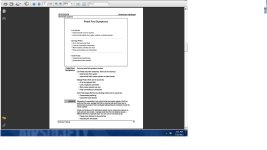
I'm trying to see how I can get an image on here from my computer from a *.pdf file, but in short, SunGod can suck it. I'm done with this arguement. Good luck with your backyard mechanics.

Straight out of the Toyota brakes course training book (which itself is a couple hundred pages big). I had to go digging in my training manuals for this one. Although I can't wait for the next response.

"All you did was look that up! You're still a grease monkey because I said so! I'm never wrong! Go back to your oil change station boy and turn your left handed cresent wrenches! I work at Autozone and know everything!! My daddy taught me how to work on cars and he never said anything about this so it can't be true!" :cry2:
 

Attachments

  • brakes.jpg
    brakes.jpg
    76.8 KB · Views: 228
Last edited:
ChaosStarter

Seems like two different arguments going on here...

You're arguing with Sun about rust being a factor...and you're arguing with me about non-OEM pads being a factor. In showing Sun that rust may actually be a factor...you also PROVED that OEM pads can NOT be a factor...This is using YOUR data that you just posted.
 
ChaosStarter

Seems like two different arguments going on here...

You're arguing with Sun about rust being a factor...and you're arguing with me about non-OEM pads being a factor. In showing Sun that rust may actually be a factor...you also PROVED that OEM pads can NOT be a factor...This is using YOUR data that you just posted.


You're right Mike, two different topics at hand. :p

The one with SunGoddess was just proving that rusty shims on the back of pads can lead to a spongy brake pedal.

The one with you is referring to the material of OEM vs. non-OEM. You have to realize something though, all of Toyota's training manuals when it comes to repairs usually assume that the car is 100% OEM, according to my instructor at the training facility. So reading what I posted, we're assuming the car has OEM brakes, and yet still has a spongy pedal. That's when we start going through the diagnosis of ruling things out.
 
Last edited:
And damnit, I'm sick of driveway mechanics thinking they're God's gifts to cars because they've done some oil changes and brake jobs. I have to fix the **** that you screw up working on your family cars. You don't believe me, no problem. I'll keep posting my advice on the forum for those who need it whether you like it or not.
haha, thats funny. i was thinking the exact same thing.
i hate it when people bring **** in, and "someone" has already tried to fix it.
 
Haaa, that is funny. Toyota says it is so and that makes it right. I had a TSB for the sulfur odor and my 4 runner still has the odor. There is a TSB for the sunroof rattle, my sunroof still rattles. See the pattern? If you were a dealer tech that would still mean little. Most dealer techs are parts replacers because that is the way dealerships fix things.

Let me ask you a question that I doubt you can find the answer on the internet. Why do drum brakes have return springs, but disc brakes do not?
 
Haaa, that is funny. Toyota says it is so and that makes it right. I had a TSB for the sulfur odor and my 4 runner still has the odor. There is a TSB for the sunroof rattle, my sunroof still rattles. See the pattern? If you were a dealer tech that would still mean little. Most dealer techs are parts replacers because that is the way dealerships fix things.

Let me ask you a question that I doubt you can find the answer on the internet. Why do drum brakes have return springs, but disc brakes do not?

lmao. are you serious?
haow about YOU give the answert to that. i would be surprised if you actually know why.

edit: nevermind. it doesnt matter if you answer. ive got you on ignore now. you're a troll.
 
The one with you is referring to the material of OEM vs. non-OEM. You have to realize something though, all of Toyota's training manuals when it comes to repairs usually assume that the car is 100% OEM, according to my instructor at the training facility.

That contradicts what you've been saying. You said more then once that you fix cars that people tried to repair by themselves. You can't possibly think that every vehicle you work on has OEM parts on them. Nor can the Toyota training manual. That just doesn't make sense.

So either the manual is correct or wrong.

Rust on the shims....I'm skeptical on that one too. I've done many brake jobs where the shims were extremely rusty..but the brakes weren't spongy.

I'd like the hear the science behind the theory. It still doesn't make sense to me.
 
Just to throw it out there. The rust or flaking may be acting like a spring. Not agreeing or disagree just speculating. So when pressure is released the pads get pushed back further than with non rusty shims.

I've warped shims on off road applications and it will act that way but it wasn't rust that caused the problem but heat.

About the only thing I hate about modern brakes is the ABS units.. I've seen quiet a few that cause spongy braking, Ford truck rear abs bladders were horrible back in the late 80s and 90s for causing brake problems.
 
Haaa, that is funny. Toyota says it is so and that makes it right. I had a TSB for the sulfur odor and my 4 runner still has the odor. There is a TSB for the sunroof rattle, my sunroof still rattles. See the pattern? If you were a dealer tech that would still mean little. Most dealer techs are parts replacers because that is the way dealerships fix things.

Let me ask you a question that I doubt you can find the answer on the internet. Why do drum brakes have return springs, but disc brakes do not?

It's over for you man. Just give it up. Can you just man up when you've been proven wrong? Now you're saying the Toyota engineers are wrong?

I'll just throw this out there because I like feeding the old trolls as much as the new ones.

TSB for sulfur odor? Owners manual says not to drive with your rear window down, even if you've had the mid-pipe cats replaced. Solved.

TSB for sunroof rattle? Can't help you there as I didn't repair it. Take it back or complain to Toyota as see if they care.

Why do drum brakes have return springs and disc do not? Because the inner seal (behind the outer dust seal) that surrounds the caliper piston acts as a self-adjusting seal. It pulls the piston back in when you left off the brake pedal and expands out when you apply it. Again, suck it. :flipoff:

**edit** (because sungoddess will cry that I didn't explain the other part) -- Drum brakes apply themselves (with leading/trailing shoes mostly, although similar with dual-servo or self-adjusting drum brakes) once they start to grab, they need the return spring to pull them off the drum.


Mike - Why can't we assume that it's all OEM? When the aftermarket parts are brought in, everything changes. As far as the info behind the rusty shims? I've explained everything I can, talk to the Toyota engineers.
 
Last edited:
To the OP, A fluid flush should do the trick. When Brake fluid (if/when) reaches a boiling temp or over heats the chemical composition of the fluid brakes down becoming "spongy, soft, slightly compressible" (which ever term you'd like to use).

The fluid can reach these temperatures by a few different causes, one being the commonly found on our runners a frozen caliper piston(s). without the caliper piston being capable of retracting into the caliper housing it's obviously going to stay compressed to the pad keeping the pad slightly compressed to the rotor in turn causing LOTS of heat to build inside the caliper breaking down your brake fluid.

Also lots of stop and go driving (like driving up to 40 then stoping real fast) over an over an over with in short time periods.

as well the brake fluid as any chemical composition has a half life in which it naturally brakes down over time. once the chemical composition of the brake fluid is compromised it no longer has the same compression abilities, or in other words the fluid becomes slightly compressible in effect giving your pedal a "soft or spongy" feel. Between new brake pads and perhaps replacing or resurfacing your rotors you'll be fine (any one of your choices will do fine OEM is a ceramic pad your only other option would be a semi-metallic brake pad which will increase stoping power however the life of the pad is shortened the semi-metallic's are best when doing a lot of towing only cons of the semi metallic are shorter life than ceramic and increased wheel brake dust)

To the Toyota service techs: there was once a day when dealerships had technicians that would diagnose issues without computers without SB's without machines. They were considered technicians, you guys are part changers, you read a SB dealing with related symptoms then you go start changing out parts until the problem goes away... oh that's technical all right.. your ASE certification doesnt mean ****, your years of reading SB's means nothing. You work for a flat rate book in which charges I or any other customer for a certain number of hours per job yet you line jobs up side by side to get them done as quick as possible you care nothing about the quality of work you provide of if the problem even gets fixed only how many hours you can rack up in a days work. yeah there may be a few Toyota Techs out there that actually do care and thank you to those ladies and gentlemen that take there jobs to that extra level of ensuring quality service.

which ever one of you thinks that brake pad selection has anything to do with a spongy pedal.. ignore the TSB and use your brain. What kind of pad out there is going to increase pedal travel?

which ever one of you thinks that rusted shims increase pedal travel.. those shims are maybe a 32nd of an inch thick... this does not justify an inch or more of extra brake pedal travel.. again think about it..

yes it could be air in the line however if its a 4th gen and the ECU is working properly the ABS system senses air in the brake lines and indicates a problem with an ABS light on the dash.. also each wheel has its own individual brake line coming form the hydraulic control unit encase air does compromise a wheels brake the other brake lines aren't effected and braking can still be manageable.

whoever thinks its a brake line "swelling?" and thinks that toyota or any other automotive manufacturer actually puts plain rubber hoses in there brake line circuits, your crazy. 4th gens have hydro assisted brake systems with an actuator canister that release crazy amounts of pressure to the hydraulic control unit, the only type of lines you'll find in that system are A.) metal or B.) Flexible hose with either single wire or 2 wire steel reinforced walls.

all in all :nicethread: crazy trollers
 
Last edited:
Mike - Why can't we assume that it's all OEM?

Because it's NOT being logical. MOST people do NOT get their vehicles serviced at the dealer. Not some..but MOST. Some people will buy a used vehicle and take it to the dealer to get serviced....Just based on the simple math....changes are you more likely to see non oem parts as opposed to oem parts.
 

Members online

No members online now.

Forum statistics

Threads
278,316
Messages
3,554,105
Members
248,016
Latest member
Advally Service

Trending content

Back
Top