Rear Axle Seals: The Ultimate Information and Replacement Thread (3rd gen)

I purchased all the parts to do this repair. I determined the job was to complex for me to do in my driveway. I Then decided to take to the Toyota dealer to do the work. I made sure I purchased all Toyota parts required to do this job correctly. Last week the drivers side failed,after 5000 miles, a few days from one year anniversary of dealer repairing. All the parts I supplied were thankfully Toyota parts. It saved me. As of right this minute they say it's covered. We'll see.
 
Last edited:
Axle seals failed again after having them fixed at a shop a year ago. the shop replaced the bearings and seals. Cleaned out and tested the diff breather this morning before dropping my 4runner off at the shop again for them to have another look at it today. When I pulled off the drum and discovered the again failed seals, I noticed no vertical play but some horizontal play in the shafts, maybe pressed bearings too far? Or the diff breather killed them? I'll update tomorrow.
 
I'm about to do this and I just wanted to say thanks to [MENTION=44220]BigFishAllDay[/MENTION] ! This write up is exactly what I needed. Thank you.
 
Shop claimed i was just a few days past my warranty but "they'll see what they can do." After two full days of my 4runner sitting at the shop, I was quoted $900 to rework the axle seals.
Thanks to this write up, that turned into a quick response of NO.
 
@bigfishallday

Hello. so just curious, have you ever done the front bearings on a 3rd gen 4x4?
if so, is there a writeup? and of all the parts and part numbers? Thanks
 
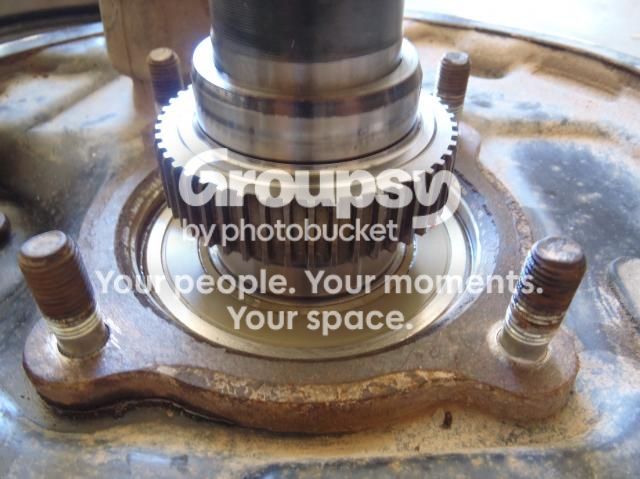
Here’s a picture of the assembly as it sits on the axle (after removal from the vehicle). The top of the Bearing is visible pressed into the backing plate. The Olive/Light Gray colored plastic ring you see is a grease seal built into the bearing. Next is the first of the two Retainers. Not visible in the picture is the Snap Ring, but I believe it sits above the first of the two retainers, holding the retainer in place. Just above that sits the Skid Control Rotor (or ABS exciter ring), that looks like a gear. Finally, on the top you have the second Retainer keeping the Skid Control Rotor in place. The Outer Shaft Oil Seal is not visible as it is on the other side of the bearing.

40_zps4c1acb57.jpg~original

Thanks for this great write-up! A very well made DIY!

I am wondering how gear oil leaks past the bearing. In the picture above, it is hard for me to see how gear oil would flow past the bearing. But, looking at the pictures of your brakes (elsewhere in the thread), it sure seems like a lot of fluid flowed onto the brake shoes/brake system. It appears the O-Ring between the backing plate and the axle flange kept gear oil from leaking out before getting onto the brakes...would you agree? i.e. if the O-Ring was not present and making a good seal, the gear oil would have leaked out down the back-side of the backing plate onto the ground instead of getting all over the brake shoes. No?

My guess is the bearing presses into the backing plate/flange, and the Retainer presses onto the shaft to hold the bearing in place? i.e. the bearing is not pressed onto the shaft, only into the backing plate. Which makes the retainer necessary to hold the bearing in place on the axle shaft.

The reason I ask all this is I wonder if your old bearings had gear oil in them? Or, since they appear to be sealed bearings, were their seals OK and the gear oil flowed between the bearing and the retainer to make its way out onto the brake shoes?

Thanks again!
 
Ok, the top retainer is what the seal rides on. No oil should be past that (meaning nothing on the exciter ring and out) Some people remove the ABS sensor and look inside to see if there's any oil. If there is, your seal is leaking. When I did mine about 5 months ago, I did everything including the press work. Getting that outer retainer properly positioned is CRITICAL to proper seal. There isn't much margin for error. Looking at that picture, and thinking back to my repair, I thought I had a slight gap between the exciter ring and the outer retainer. I tested the position of the seal on the retainer by smearing some grease on the retainer and sliding the axle on then off and looking at the retainer to see where the grease was smeared off. Mine were right in the middle of the retainer. I used Dr. Coffee's write up. It made a lot of sense to me.
 
Ok, the top retainer is what the seal rides on. No oil should be past that (meaning nothing on the exciter ring and out) Some people remove the ABS sensor and look inside to see if there's any oil. If there is, your seal is leaking. When I did mine about 5 months ago, I did everything including the press work. Getting that outer retainer properly positioned is CRITICAL to proper seal. There isn't much margin for error. Looking at that picture, and thinking back to my repair, I thought I had a slight gap between the exciter ring and the outer retainer. I tested the position of the seal on the retainer by smearing some grease on the retainer and sliding the axle on then off and looking at the retainer to see where the grease was smeared off. Mine were right in the middle of the retainer. I used Dr. Coffee's write up. It made a lot of sense to me.

Thanks for your reply!

I understand how gear oil makes its way into the ABS speed sensor area, and I agree that a bad seal, or bad bearings, or both, would cause that to happen. The part I am trying to figure out is what path the gear oil takes from there, in order to get on the brake shoes.

It seems to me that the gear oil would have to work its way through the bearing, or around the bearing, in order to get to the shoes (which are on the other side of the backing plate in the picture above).

Looking at the pictures of the brakes shoes soaked in gear oil, I would have expected a more obvious path than just seepage between the press connections. But I don't see anything that obvious.

Thoughts?

thanks.
 
Thanks for your reply!

I understand how gear oil makes its way into the ABS speed sensor area, and I agree that a bad seal, or bad bearings, or both, would cause that to happen. The part I am trying to figure out is what path the gear oil takes from there, in order to get on the brake shoes.

It seems to me that the gear oil would have to work its way through the bearing, or around the bearing, in order to get to the shoes (which are on the other side of the backing plate in the picture above).

Looking at the pictures of the brakes shoes soaked in gear oil, I would have expected a more obvious path than just seepage between the press connections. But I don't see anything that obvious.

Thoughts?

thanks.
The bearing is pressed into the backing plate and even though the tolerance around the shaft to the ID of the bearing is very close, its not a press fit so the gear oil will work it way out there. Also, that large oring is just a dust seal, so it can get out a little there also. When I did mine I didn't even replace the oring as mine were still round and supple. Wow, that sounded a little weird LOL but you get the idea.
 
The bearing is pressed into the backing plate and even though the tolerance around the shaft to the ID of the bearing is very close, its not a press fit so the gear oil will work it way out there. Also, that large oring is just a dust seal, so it can get out a little there also. When I did mine I didn't even replace the oring as mine were still round and supple. Wow, that sounded a little weird LOL but you get the idea.

Thanks!

If you are referring to the O-Ring that goes between the bearing housing and the axle housing, I think I would prefer it to leak there, then the gear oil wouldn't get on the brakes. it would drain out before ever getting to the backing plate.

Would you agree?
 
Great write up.
I have a question that I couldn't find an answer to. I looked through all the replies briefly so its possible that I've missed it.

Is it possible to use axle assemblies from a non-ABS 4runner in an ABS axle housing? I'm guessing that non-ABS axles will not have the skid rotor gear ring on them?
I'm doing an E-Locker swap into my non-ABS 4runner with 50k original miles, and I have a complete E-Locker rear axle from a 4runner with ABS but 250k miles, so I want to use my original, low mileage axles in the E-Locker housing if possible.
Thanks!

EDIT: Found an answer in a different thread - I will need custom machined spacers on non-abs axles to move the seal ring into proper place (further away from the brake drums)
 
Last edited:
Thanks!

If you are referring to the O-Ring that goes between the bearing housing and the axle housing, I think I would prefer it to leak there, then the gear oil wouldn't get on the brakes. it would drain out before ever getting to the backing plate.

Would you agree?

Yep, that seal does pretty much seal it up. I think centrifugal force along with the slight pressure kinda "spins" the oil out between the inner part of the bearing and the shaft.
 
Skybill,

Yes, you can get away with that. As long as you feel comfortable that your bearings are within specs, you can skip all the machine shop work, replace the O-Rings, Inner Axle Seals, and Shoes and you should be fine.

If you decide to do the shoes, get your drums machined as well. Also, you may want to dig through the link I provided in the write-up for the Toyota FSM and see if you can find a procedure for checking the bearings to make sure they are within spec. I'm sure this will require some type of SST, so you may want to take the axles to a Toyota shop and have them check the bearings for you.

Also, don't take a chance with aftermarket axle seals. Get the OEM seals from Toyota. Same with the brake shoes, aftermarket rear shoes have fitment issues in my experience.

Opened up my passenger drum this weekend and there was grease everywhere. Looks like I'll be doing this. Anybody find this procedure to determine if new bearings are necessary? I'd rather spend $30 than $600.

Great write up by the way.
 
Opened up my passenger drum this weekend and there was grease everywhere. Looks like I'll be doing this. Anybody find this procedure to determine if new bearings are necessary? I'd rather spend $30 than $600.

Great write up by the way.

I love this thread, as many others do as well - thanks OP.

Can someone please provide some definitive way to determine whether one needs to replace the bearings or not? Mine, at 165,000 miles, have a little play in them, but aside from the seals leaking (with a plugged up breather valve), I don't notice any other noises coming from the rear wheels or feel any weird driving issues. When I rock the backing plate back and forth I can definitely see the play, but it's not entirely obvious to me how much play would require a new set of bearings. If I can get up to 200k and then replace the bearings then, or have it be someone else's problem, I'd be happier.

I got all the parts to do the bearing replacement, and am already at $300, but then I got to thinking whether I really really need to do it or not.

Can anyone provide any advice?
 
Even if the bearings were pristine gear oil will have leaked through the bearing washing away the grease leading to eventual failure. While oil is passing through the bearings they continue to receive lubrication and can last for years but not indefinitely. You might be able to pop the plastic shield and repack the bearing. How long it would last or whether it's actually possible on that bearing I don't know. Replacement is your best option. If only one side is leaking you can do everything on that side and on the good side (never leaked but destined to leak) swap in a new seal. I did this on one of mine and that was 50 thousand miles ago and still leak free.
 
The gear oil can actually infiltrate the bearing washing the grease out. This is why the bearings are supposed to be replaced. grease is far thicker than oil. The seals on the bearings are not oil seals.

Thanks for this great write-up! A very well made DIY!

I am wondering how gear oil leaks past the bearing. In the picture above, it is hard for me to see how gear oil would flow past the bearing. But, looking at the pictures of your brakes (elsewhere in the thread), it sure seems like a lot of fluid flowed onto the brake shoes/brake system. It appears the O-Ring between the backing plate and the axle flange kept gear oil from leaking out before getting onto the brakes...would you agree? i.e. if the O-Ring was not present and making a good seal, the gear oil would have leaked out down the back-side of the backing plate onto the ground instead of getting all over the brake shoes. No?

My guess is the bearing presses into the backing plate/flange, and the Retainer presses onto the shaft to hold the bearing in place? i.e. the bearing is not pressed onto the shaft, only into the backing plate. Which makes the retainer necessary to hold the bearing in place on the axle shaft.

The reason I ask all this is I wonder if your old bearings had gear oil in them? Or, since they appear to be sealed bearings, were their seals OK and the gear oil flowed between the bearing and the retainer to make its way out onto the brake shoes?

Thanks again!
 
Search here:
Toyota Parts Factory | Your #1 Source for Genuine OEM Toyota - Scion Parts and Accessories

That's what I did.

I'm buying nearly all of my parts from camelback. they are owning the competition, IMO.

Ok. Update. I followed this write up to the tee. I just passed my 1 year anniversary safety inspection with flying colors.

I used Fairfax Auto Parts machine shop to press the bearings:
NAPA Fairfax Auto Parts - One of Virginia's largest Auto Parts Dealer. - Auto Parts, Wholesale, and Machine Shop
they have a solid rep around here and they turned them around in about 3 hours for $170.59.

I replaced the brake shoes as recommended after I tried to soak/clean/cook the old shoes (they were practically brand new!) but failed inspection again as oil keep seeping out even after all night in a toaster oven at 400 (stupid, don't waste your time).

I am not a mechanic and not particularly mechanically inclined and I did this in my driveway in a couple of days and it saved me a ton of money but more importantly, gained me a ton of knowledge and self-confidence.

Thanks BigFishAllDay!
 
Last edited:
Ok. Update. I followed this write up to the tee. I just passed my 1 year anniversary safety inspection with flying colors.

I used Fairfax Auto Parts machine shop to press the bearings:
NAPA Fairfax Auto Parts - One of Virginia's largest Auto Parts Dealer. - Auto Parts, Wholesale, and Machine Shop
they have a solid rep around here and they turned them around in about 3 hours for, I think, $120, don't remember exactly, it was a fair price whatever it was.

I replaced the brake shoes as recommended after I tried to soak/clean/cook the old shoes (they were practically brand new!) but failed inspection again as oil keep seeping out even after all night in a toaster oven at 400 (stupid, don't waste your time).

I am not a mechanic and not particularly mechanically inclined and I did this in my driveway in a couple of days and it saved me a ton of money but more importantly, gained me a ton of knowledge and self-confidence.

Thanks BigFishAllDay!

I have spent $1800 total getting everything replaced and they started to leak
again. I might take my axles there and have them press everything on.
 
Even if the bearings were pristine gear oil will have leaked through the bearing washing away the grease leading to eventual failure. While oil is passing through the bearings they continue to receive lubrication and can last for years but not indefinitely. You might be able to pop the plastic shield and repack the bearing. How long it would last or whether it's actually possible on that bearing I don't know. Replacement is your best option. If only one side is leaking you can do everything on that side and on the good side (never leaked but destined to leak) swap in a new seal. I did this on one of mine and that was 50 thousand miles ago and still leak free.

OK so I got new bearings pressed on by the dealer... 2 hours of labor, oh well.

One of the axles still has a little up/down wiggle when I shake the backplate, although a much less pronounced wiggle than before, and I am able to send the backplate spinning easily. The other side has absolutely no wiggle, and the backplate will not spin on its own, only for as long as I push it around. Is this a normal difference in tolerances, or did they not do something exactly right? Someone else picked up the parts for me, so I wasn't able to test them until I got home tonight... (My wishful thinking says that it's a minor difference that will equalize over a few miles of actual driving)
 
Last edited:
I have spent $1800 total getting everything replaced and they started to leak
again. I might take my axles there and have them press everything on.

no warranty on the work? I had someone do it without doing the bearings once. stupid waste of money, IMO.

Edit: yeah, BTW, they didn't need any instruction from me, old hat to them, they probably could do it in their sleep.
 
Last edited:

Members online

No members online now.

Forum statistics

Threads
278,316
Messages
3,554,120
Members
248,016
Latest member
Advally Service

Trending content

Back
Top