The 3.4L TRD Supercharger Thread

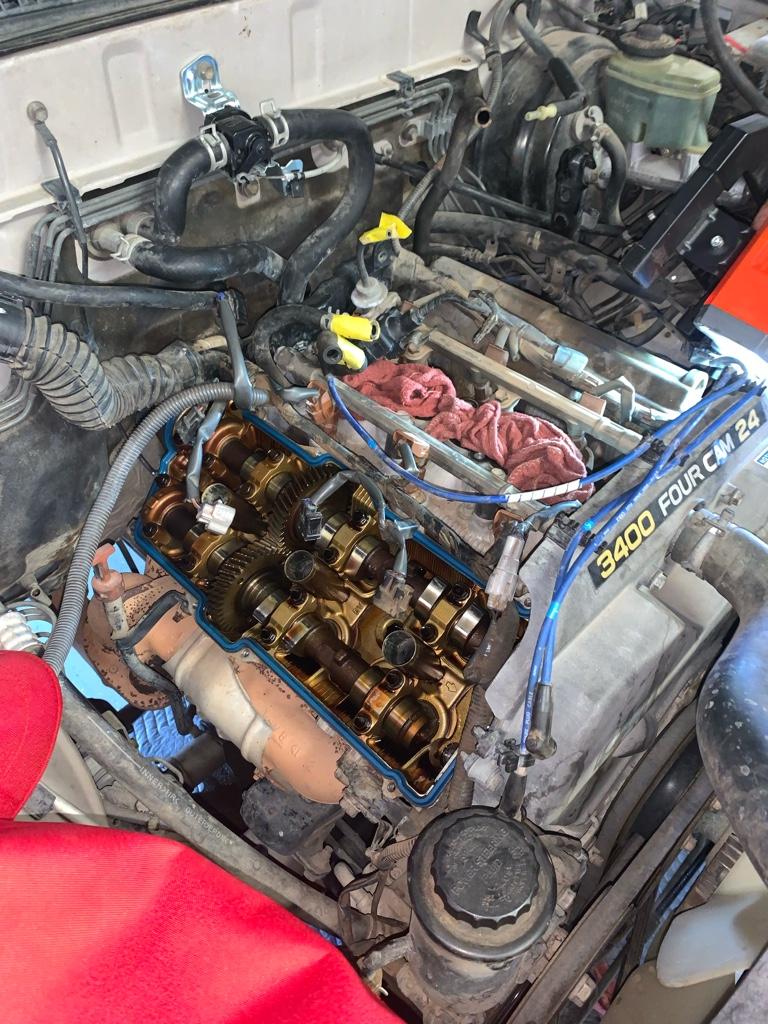
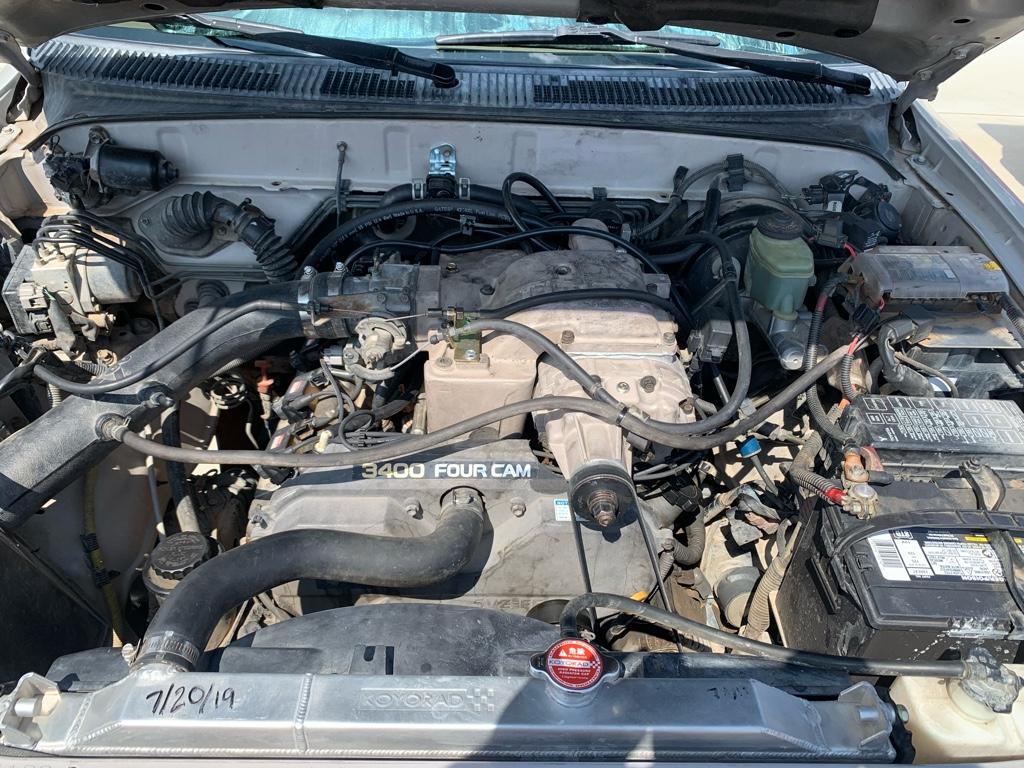
I’m now apart of the cool kid club! [emoji41]Have read through every single page of this thread over the past 3 months in order to prepare for this installation, so want to give a big thanks to everyone on here for giving all the needed knowledge to tackle this install

c5c51aa58dc07df7d67a2fc7469f0cf5.jpg

adae7dfb84edba85eaf652ea29e6612b.jpg


Sent from my iPhone using Tapatalk
 
I’m now apart of the cool kid club! [emoji41]Have read through every single page of this thread over the past 3 months in order to prepare for this installation, so want to give a big thanks to everyone on here for giving all the needed knowledge to tackle this install

c5c51aa58dc07df7d67a2fc7469f0cf5.jpg

adae7dfb84edba85eaf652ea29e6612b.jpg


Sent from my iPhone using Tapatalk

Even I haven't read the whole thing!

You'll do great. Just don't swap the fuel return line and the vacuum lines like I did the first time I put my supercharger back on!
 
Can somebody help me understand how some of the 1st gen SCs sound smooth at idle and others sound like a box of rocks yet both are supposed to be "normal".

Mine is the box of rocks category and although it runs strong and smooth under acceleration, the noise at idle just drives me crazy. It was the same before and after a full rebuild by High speed lab so I can't figure it out.
 
Any news on whether the new 7th injector works with the new SC?

Yes, the new supercharger comes with the EGR port just like the old ones which is what the 7th injector bolts up to.

Can somebody help me understand how some of the 1st gen SCs sound smooth at idle and others sound like a box of rocks yet both are supposed to be "normal".

Mine is the box of rocks category and although it runs strong and smooth under acceleration, the noise at idle just drives me crazy. It was the same before and after a full rebuild by High speed lab so I can't figure it out.

Sounds like your rotor pack bearings might be the culprit. They all rattle at idle, mine does as well, but a rebuilt of the front and rear bearings should reduce the sound significantly. Since it did not I suspect the only bearings left, rotor pack bearings. I don't think there is a huge need to send it out again as I'm going to guess the High Speed Lab took a considerable amount of time to rebuilt it. Only if the sound progressively becomes worse then you should send it in. I would use John Bond's services as they tend to be more thorough.
 
Hey guys, I'm having this weird sound coming from the supercharger after 2.8 - 3.2k rpm. The oil is clear and its at the correct level and i checked all the lines and they are all good.

Could this be a sign of a bearing issue? I'm hoping its just that and nothing major.

November 4, 2023 - YouTube

Here is the video of the sound. It just started making the sound today, so I know for sure it is not normal.
 
Hey guys, I'm having this weird sound coming from the supercharger after 2.8 - 3.2k rpm. The oil is clear and its at the correct level and i checked all the lines and they are all good.

Could this be a sign of a bearing issue? I'm hoping its just that and nothing major.

November 4, 2023 - YouTube

Here is the video of the sound. It just started making the sound today, so I know for sure it is not normal.

Pretty odd sound. Kind of sounds like air whistling. Have you tried holding the bypass valve open while revving it?
 
Can somebody help me understand how some of the 1st gen SCs sound smooth at idle and others sound like a box of rocks yet both are supposed to be "normal".

Mine is the box of rocks category and although it runs strong and smooth under acceleration, the noise at idle just drives me crazy. It was the same before and after a full rebuild by High speed lab so I can't figure it out.


**long post alert**

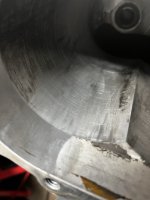
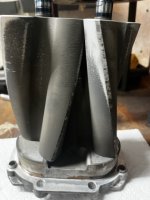
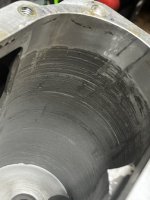
I’m having the same issue. I put my supercharger on(it was used) and it sounded like a diesel truck at idle to 1000rpm then sounded normal at higher rpms. Then I replaced the rear bearings and the coupler when I saw the rear of the rotors were worn. It still makes noise but it sounds more like a helicopter flying now. I have a feeling the rotor bearings are bad. Does anyone know if I can salvage this thing based on my videos and pics? I’m worried the case is too scratched but idk. The first picture I cleaned the carbon off at the bottom since it makes the scratches look deeper than they are. Thanks for everybody that helps

Supercharged 5vz fe normal? - YouTube - idling before I replaced rear bearings.

Supercharged 5vz fe normal? - YouTube - idling after bearings replaced

Bad rotor pack bearings? - YouTube - too much rotor play?
 

Attachments

  • IMG_7700 Medium.jpeg
    IMG_7700 Medium.jpeg
    53.3 KB · Views: 3,040
  • IMG_7692 Medium.jpeg
    IMG_7692 Medium.jpeg
    69 KB · Views: 3,034
  • IMG_7697 Medium.jpeg
    IMG_7697 Medium.jpeg
    72 KB · Views: 3,030
Hey Guys....

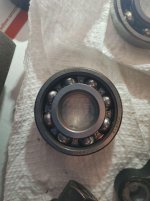
I started to do a supercharger rebuilt (gen 2) and the nose cone bearings i got have quite a bit of play in them. The seller (ebay guy) says the slop is normal and once the supercharger oil gets in them, they'll tighten up.

Is this normal? Should i go ahead and install them?
 

Attachments

  • 11.jpg
    11.jpg
    114.3 KB · Views: 3,027
**long post alert**

I’m having the same issue. I put my supercharger on(it was used) and it sounded like a diesel truck at idle to 1000rpm then sounded normal at higher rpms. Then I replaced the rear bearings and the coupler when I saw the rear of the rotors were worn. It still makes noise but it sounds more like a helicopter flying now. I have a feeling the rotor bearings are bad. Does anyone know if I can salvage this thing based on my videos and pics? I’m worried the case is too scratched but idk. The first picture I cleaned the carbon off at the bottom since it makes the scratches look deeper than they are. Thanks for everybody that helps

- idling before I replaced rear bearings.

- idling after bearings replaced

- too much rotor play?

I think I helped you on the supercharger page on FB. Here's my experience with the 2.0" pulley if you are indeed the same guy:

https://www.toyota-4runner.org/3rd-gen-t4rs/245552-jerods-supercharged-trd-build-22.html - halfway down the page. There's load of other mods I've done over the past 8+ years so feel free to plagiarize. There's safer ways to make power.

Hey Guys....

I started to do a supercharger rebuilt (gen 2) and the nose cone bearings i got have quite a bit of play in them. The seller (ebay guy) says the slop is normal and once the supercharger oil gets in them, they'll tighten up.

Is this normal? Should i go ahead and install them?

Sadly enough, I have never checked the play on new bearings. I know that these rotors are supposed to have play but no clue on the nose cone. I guess the question really is, how much do you trust the seller?
 
I think I helped you on the supercharger page on FB. Here's my experience with the 2.0" pulley if you are indeed the same guy:

https://www.toyota-4runner.org/3rd-gen-t4rs/245552-jerods-supercharged-trd-build-22.html - halfway down the page. There's load of other mods I've done over the past 8+ years so feel free to plagiarize. There's safer ways to make power.


Ohh neat. Yeah I just copied and pasted over on the FB group. Man I’ve been reading your SC endeavors for ever on here, it’s cool to finally be a part of the fun. Had no idea that was you on FB. I talked to the previous owner last night and he said he also only ran the 2” pulley for about three weeks. And the 2” is what came installed on the SC when it got to my house so. He swears up and down that there were no issues with the SC when he sent it to me.

I’m not sure if it feels right demanding some of my money back because I bought it through Facebook over the internet sight unseen. I was hoping he would have some consideration and help pay for the damage but I’m not sure what’s fair. I think most would say that’s what you get for buying used things over the internet lol

So you’re running the AEM FIC… would you say it’s better or worse than the standard URD PCU? I ask because I’m worried about not enough fueling control in closed loop mode. Also I’m not sure how the URD is supposed to get the AFR ratios from my ‘98 4runner. I saw in a tuning guide that he used to sell an additional computer that reconfigures the older style o2 sensors to work with the the URD PCU, but I can’t find that for sale on the URD website anymore. Did he update the PCU to no longer need that since then or something? I’ve also heard that 1998 ECUs were better than other model years at properly handling the fueling/timing in closed loop mode with boost. Any wisdom you could impart would be greatly appreciated!
 
Ohh neat. Yeah I just copied and pasted over on the FB group. Man I’ve been reading your SC endeavors for ever on here, it’s cool to finally be a part of the fun. Had no idea that was you on FB. I talked to the previous owner last night and he said he also only ran the 2” pulley for about three weeks. And the 2” is what came installed on the SC when it got to my house so. He swears up and down that there were no issues with the SC when he sent it to me.

I’m not sure if it feels right demanding some of my money back because I bought it through Facebook over the internet sight unseen. I was hoping he would have some consideration and help pay for the damage but I’m not sure what’s fair. I think most would say that’s what you get for buying used things over the internet lol

So you’re running the AEM FIC… would you say it’s better or worse than the standard URD PCU? I ask because I’m worried about not enough fueling control in closed loop mode. Also I’m not sure how the URD is supposed to get the AFR ratios from my ‘98 4runner. I saw in a tuning guide that he used to sell an additional computer that reconfigures the older style o2 sensors to work with the the URD PCU, but I can’t find that for sale on the URD website anymore. Did he update the PCU to no longer need that since then or something? I’ve also heard that 1998 ECUs were better than other model years at properly handling the fueling/timing in closed loop mode with boost. Any wisdom you could impart would be greatly appreciated!

Yeah you're kinda stuck when it comes to refunds. If you send some photos of the damage he might find some kindness in his heart and refund a little but usually when things are bought off a classified listing it's as-is. Hard thing is you don't know the condition until it's running on a vehicle.

First off, the AEM FIC 6 is discontinued, has been for years. If you do happen to find a universal one (Honda ones are most common on the used market) it's a lot more wiring and work to set up. Something like 20 wires to splice in. But the control it gives is better than the Split Second URD module which only has 5-6 wires if I recall. As far as the ECU year goes, anything 97 or newer is good. My 98 fights the tune like all other old Toyotas though. 99+ California spec or 01+ Federal are best to tune with the A/F ratio sensor but can be done with a narrowband like mine. Just a bit harder.

Closed loop is a tricky beast on a Toyota. You'll see my fights with it on my build thread until I got the O2 sensor skew right. I think URD sells a MAF tuner which does the same thing but MAF tuning a Toyota is hard, O2 sensor voltage skewing is so much simpler and easy. You just can't tune open loop wide open throttle with O2 as the ECU ignores the O2 signal at that point so you'll also have to tune the injectors (or 7th injector). I would ask URD if their Split Second unit does O2 sensor tuning as if it does, that would be all you need.

You're right in that you can't get Air/Fuel Ratios (AFRs) from the Toyota ECU. A wideband sensor like the UEGO sensor is mandatory for tuning. I don't trust the signal that comes from the Toyota narrowband or wideband for something as critical as engine tuning.

If you can get closed loop tuning right, there's loads of power to be made. I rarely ever drive in open loop, like 99% is closed loop so I'd rather make power there. Same goes for tuning the power curve, much better to have the power in the 3000-4000 RPM range where you'll use it than redline power that looks pretty on a dyno sheet.

 
Yeah you're kinda stuck when it comes to refunds. If you send some photos of the damage he might find some kindness in his heart and refund a little but usually when things are bought off a classified listing it's as-is. Hard thing is you don't know the condition until it's running on a vehicle.

First off, the AEM FIC 6 is discontinued, has been for years. If you do happen to find a universal one (Honda ones are most common on the used market) it's a lot more wiring and work to set up. Something like 20 wires to splice in. But the control it gives is better than the Split Second URD module which only has 5-6 wires if I recall. As far as the ECU year goes, anything 97 or newer is good. My 98 fights the tune like all other old Toyotas though. 99+ California spec or 01+ Federal are best to tune with the A/F ratio sensor but can be done with a narrowband like mine. Just a bit harder.

Closed loop is a tricky beast on a Toyota. You'll see my fights with it on my build thread until I got the O2 sensor skew right. I think URD sells a MAF tuner which does the same thing but MAF tuning a Toyota is hard, O2 sensor voltage skewing is so much simpler and easy. You just can't tune open loop wide open throttle with O2 as the ECU ignores the O2 signal at that point so you'll also have to tune the injectors (or 7th injector). I would ask URD if their Split Second unit does O2 sensor tuning as if it does, that would be all you need.

You're right in that you can't get Air/Fuel Ratios (AFRs) from the Toyota ECU. A wideband sensor like the UEGO sensor is mandatory for tuning. I don't trust the signal that comes from the Toyota narrowband or wideband for something as critical as engine tuning.

If you can get closed loop tuning right, there's loads of power to be made. I rarely ever drive in open loop, like 99% is closed loop so I'd rather make power there. Same goes for tuning the power curve, much better to have the power in the 3000-4000 RPM range where you'll use it than redline power that looks pretty on a dyno sheet.

Yeah he only showed self interest last night so I’m not hopeful. Certainly worth a try though.

If I add my own AFR gauge/sensor, can I use that signal for tuning instead? Or are we stuck using the Toyota o2 sensors? As far as the signal going from the AFR gauge/sensor to the URD PCU/Toy ECU…

I do like that idea of using o2 skewing since in open loop the 7th injector can basically take over anyway. Does the Toy ECU seem more receptive to it vs MAF tuning you think? . Provided you’re running the 2.1” pulley and I’m not sure what your altitude is, what are your AFRs when your pushing the pedal at low rpms/closed loop mode using the o2 skewing? Does your FIC provide o2 skewing?
 
Yeah he only showed self interest last night so I’m not hopeful. Certainly worth a try though.

If I add my own AFR gauge/sensor, can I use that signal for tuning instead? Or are we stuck using the Toyota o2 sensors? As far as the signal going from the AFR gauge/sensor to the URD PCU/Toy ECU…

I do like that idea of using o2 skewing since in open loop the 7th injector can basically take over anyway. Does the Toy ECU seem more receptive to it vs MAF tuning you think? . Provided you’re running the 2.1” pulley and I’m not sure what your altitude is, what are your AFRs when your pushing the pedal at low rpms/closed loop mode using the o2 skewing? Does your FIC provide o2 skewing?

Yes, any decent AFR gauge will have 0-5V output signal that you can then connect to your piggyback controller. We can't use the Toyota sensors as they all, both Air/Fuel ratio and narrowband, work on a 0-1V signal.

Yes, O2 sensor tuning/voltage skewing works perfectly on our Toyota ECUs and once you calculate the values it is very easy. MAF tuning is difficult and hard to do. The FIC 6 does both so I ended up doing both but only because I changed out the stock MAF sensor so I was forced to tune it. Problems of my own making.

I have the 2.1" pulley at sea level. I have full control over the target AFR at all levels of throttle input, boost and RPM. I have it start at >1PSI into the low 14's, mid boost of about 5 PSI is low 13's and WOT of >10PSI is at 11.8-12.1 (can't really get it perfect so a range is acceptable). So more boost = more fuel. If it were to go straight to 12 AFR at 1 PSI of boost I actually wouldn't make more power, just lose gas mileage. One last note is the AEM FIC 6 works on a PSIA (pounds per square inch atmospheric) pressure scale. That makes it extremely easy to tune for high altitude as the starting atmospheric pressure is different than at sea level. For here, it's 14.6 PSIA. If I travel 90 minutes up the pass, it's 12.5 PSIA and adjusts my tune accordingly.
 
Last edited:

Forum statistics

Threads
278,314
Messages
3,554,097
Members
248,016
Latest member
Advally Service

Trending content

Back
Top