The 3rd Gen All Questions Allowed Thread

Status
Not open for further replies.
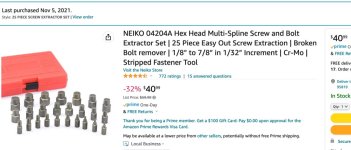
Thank you sir! Do you know the full name of the kit? Like are there any numbers associated with it?

Here's what I got but it looks like it went up a few bucks. And Bad Luck is absolutely correct about those Lexus plugs!
 

Attachments

  • neiko.jpg
    neiko.jpg
    95.9 KB · Views: 200
Last edited:
So can I still use the OEM gaskets with the Lexus plugs? I know that probably sounds silly but I’m assuming I can? I already have them on hand, with new drain and fill plugs but I won’t use those plugs. I’ll grab the Lexus ones for sure.
Yes, the crush washer/gasket thingies will work with the Lexus plugs. The Lexus plugs are a little on the expensive side considering they are just large bolts lol, but worth it in my opinion.
 
Yes, the crush washer/gasket thingies will work with the Lexus plugs. The Lexus plugs are a little on the expensive side considering they are just large bolts lol, but worth it in my opinion.

I will pay one million doll hairs if it prevents me from the nightmare of stripping things out again. I have every intention to go to my nearest Toyota dealer tomorrow and will grab them if they have them in stock. If not, I’ll special order them. Either way, it’s going down. Much appreciated once again.
 
[MENTION=15163]Spiker[/MENTION]engineering

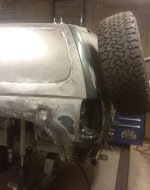
U do anything for the rear hatch struts on the 3rd gen? Need/want rear struts that can handle a very high weight load... The Ko2 weight alone weights around 65lbs


20220616_17344.jpg
 

Attachments

  • 20220616_17344.jpg
    20220616_17344.jpg
    106.6 KB · Views: 317
I had the same issue and picked up a cheap set from Harbor Freight. It did the job for under $10.

5 Piece Pipe Nipple Extractor Set

I literally purchased that today for $8 plus tax. I am super stoked to have found this and I pray it does the trick. I also went ahead and placed a special order through my local Lexus dealership for the Lexus fill/drain plugs that Bad Luck posted on here. Things are beginning to look up for the old rig!
 
How quickly should a 99 T4R start?

Just wondering if I need to chase down a problem or it is normal for the engine to crank for about 3-5 seconds before it fires up.
1999 3.4 L auto trans 230k miles.

We have owned it for last 7 years, always the same. Sometimes takes longer when it is hot.
New fuel injectors and psi regulator-no fix
New spark plugs -no fix

Thanks for any input
 
Last week I used rivnuts to attach my bug deflector. The washers I had were too large. While replacing them today I see that the passenger-side rivnut came loose and I can't get the bolt out.

I've tried every version of needle nose I have to try and hold it in place from the inside but nothing will reach. I've used a prybar to put pressure on the washer while unscrewing the bolt but it just spins. It's nearly out but I'm stuck on this last bit.

And once I get the bolt out, what do I do - drill out the rivnut?

Anybody have any suggestions?

0etHHaX.jpg


Awful image but this is what I'm dealing with. Can't get anything in there to prevent the rivnut from spinning.

0zLx7UX.jpg
 
Anybody have any suggestions?

Ouch, that's annoying. How about cutting off the head of the fastener that's on there and getting the bug shield out of the way. Then trying you hand with vise-grips on the rivnut and pliers on the remaining fastener threads (or slot it and use a flat screwdriver)?

As for what to do after that, try tightening it down again like during the install? Might be a first step regardless, you can't drill out something that's spinning. Otherwise you're probably looking at cutting or grinding it off enough to push it through to the inside and then fishing out the remains.
 
Ouch, that's annoying. How about cutting off the head of the fastener that's on there and getting the bug shield out of the way. Then trying you hand with vise-grips on the rivnut and pliers on the remaining fastener threads (or slot it and use a flat screwdriver)?

As for what to do after that, try tightening it down again like during the install? Might be a first step regardless, you can't drill out something that's spinning. Otherwise you're probably looking at cutting or grinding it off enough to push it through to the inside and then fishing out the remains.

Thanks for the response. I'm about to grab the dremel and do just that. My concern is there won't be enough purchase area on the rivnut to grab onto. Wish my bent-nose needle nose had a longer reach. Should've left well enough alone but I'd guess nobody else here would have either.

EDIT: A little surgical precision with the dremel and I was able to pull what was left of the rivnut and bolt through the hole. Just wish I could've hung on to it before it dropped and landed somewhere in the hood! Installed new rivnut and all is well.
 
Last edited:
Can coolant make a starter go bad?

I replaced my fuel injectors in my '97 5VZ-FE a couple weeks ago to solve a misfire (this was the 2nd time in 5 months...) and the job went pretty smoothly. However, when removing the throttle body, I spilled some of the coolant in the IAC lines onto the block where the starter is and watched it drip down onto the starter. It wasn't very much, maybe about one fluid oz at most? My friend assured me it wouldn't be an issue. After finishing up, I went to start the truck and it wouldn't turn over.

All the lights, windows, locks, etc work. When I turn the key, the fuel pump makes noise but nothing else. No click, no grinding, nothing. (Side note: when turning the key in the start position, the lights on my stereo turn off, but other lights will stay on.) I checked the main lead to the starter and it has power. The fuses are all good. My battery is a bit low but also good. I tried to start it while getting a jump, but it didn't change anything. Before the fuel injector job, it started effortlessly every time.

So my question is, did that coolant ruin my starter? What else should I try before removing the starter and attempting to clean/repair the contacts? I have read through a lot of topics here and videos on youtube, but none seem to have exactly the same problem as me.
 
I don't see how an ounce of coolant indirectly hitting it would kill it, yet gallons of rain being directly splashed onto it wouldn't...
 
I don't see how an ounce of coolant indirectly hitting it would kill it, yet gallons of rain being directly splashed onto it wouldn't...

Yea I figured it was unrelated to the coolant. So how could my engine be starting just fine before replacing fuel injectors and not start at all after? None of that work involves the starter.. What else might be preventing the starter from trying to crank?
 
Yea I figured it was unrelated to the coolant. So how could my engine be starting just fine before replacing fuel injectors and not start at all after? None of that work involves the starter.. What else might be preventing the starter from trying to crank?
Check all your grounds. Especially the ones on the upper intakes
 
Check all your grounds. Especially the ones on the upper intakes

They are all secure and I even made sure they're clean. Same with my battery terminals.

I measured the voltage between the negative terminal and the starter relay plug when a friend turned the key and it jumped by about 10 mV, not the ~12V I believe is expected. I replaced the relay fuse and checked other fuses, they're all good. I'm no good with electrical systems and am starting to lose hope. I still want to keep trying to solve this but might see how soon I can get a mechanic to check the wiring harness out... I feel like those are sinning words around here but I'm really out of ideas
 
They are all secure and I even made sure they're clean. Same with my battery terminals.


I measured the voltage between the negative terminal and the starter relay plug when a friend turned the key and it jumped by about 10 mV, not the ~12V I believe is expected. I replaced the relay fuse and checked other fuses, they're all good. I'm no good with electrical systems and am starting to lose hope. I still want to keep trying to solve this but might see how soon I can get a mechanic to check the wiring harness out... I feel like those are sinning words around here but I'm really out of ideas
How about the starter relay itself? Have you tested/ test replaced that?

Sent from my Pixel 4 XL using Tapatalk
 
[MENTION=15163]Spiker[/MENTION]engineering

U do anything for the rear hatch struts on the 3rd gen? Need/want rear struts that can handle a very high weight load... The Ko2 weight alone weights around 65lbs


View attachment 397129

[MENTION=222826]clearock[/MENTION] Unfortunately not. The end fittings on those struts are unique, and it would not be cost effective for us to produce them unless we do it in very large quantities.
 
Okay so I really wanna open this can of worms— but for good reason. The 4Runner has 314,595 miles on it as I’m writing this. I’ve ran full synthetic 5W-30 ever since my ownership (bought with 191,586 miles) and nothing else. Use AMSOIL signature series from 200K-273K, then Pennzoil Platinum for two oil changes, then Pennzoil Ultra Platinum from then on until my last oil change, which was at 314K.

As you can tell, I’ve been a bit of an oil snob/purist over the years. Well it all changed recently when I discovered that Costco has their own line of oil— Kirkland Signature full synthetic. It’s made by Warren Distribution, who also produces Walmart’s SuperTech as well as the AmazonBasic’s oil. Figured I’d give it a shot since I’ve been extremely diligent about oil changes over the time I’ve owned the truck. It should be noted that I’ve also ONLY ever ran 5W-30, nothing else.

So recently, I’ve noticed more wetness on and around my oil drain pan. Yesterday I crawled beneath it and wiped everything off that I could see was wet/damp with oil. I’m planning to extensively monitor this over the next few months, checking it daily/weekly/as regular as possible.

My question, after some deep thought and lots of research, is, would you suggest running a full synthetic high mileage oil OR bumping my regular full synthetic up to a 10W-30 offering? Again, 314K on the ODO, all original everything, engine/trans/etc.

I have my personal reservations about running a high mileage oil. I’ve read that they’re a crock of shiz, but have also read that they’re like slapping a bandaid on a larger problem, like leaking rear main seals, etc. I also don’t know where this wetness/dampness of oil is coming from, so that may be my next big investigation.

I’d like to stay with the Kirkland Signature full synthetic as long as I can help it. From my understanding, the HM oils tend to cause seals to swell, resulting in the slowing/stopping of oil leaks. So I’ve got some decisions to make and would love some info/input on the matter.

 
Status
Not open for further replies.

Members online

Forum statistics

Threads
278,310
Messages
3,554,079
Members
248,016
Latest member
Advally Service

Trending content

Back
Top