I am new here and have read just about everything on the subject of using a weight distribution hitch on a 4Runner. I have a new 2013 4runner Limited 2WD V6.
I recently sold my 3000lb dry weight popup camper. Loaded with battery, propane, water and cargo, it probably weighed about 3,500 lbs. I traded in my old 2003 Honda Odyssey minivan V6 on the new T4R. I could barely tell the camper was back there. I used a Reese receiver and WD hitch when towing that camper.
Not sure if any improvements were made to the 2013 factory hitch receiver but it sure looks substantial to me. Big steel crossmember welded to the side frames and receiver bolted on with 6 bolts.
I've read a lot of opinions on the forum and it seems to be pretty divided between "no, you can't and shouldn't, or you risk killing your family if you use a WDH" and the other side saying "no problem, will work fine, don't worry about it, I've been using a WDH for years".
One post specifically says "The OEM receiver is mounted to the cross member and is not designed to take the stress of a WDH. You can twist the frame and it's not repairable." But, I don't see (or haven't found) any empirical evidence to back up that claim. Can anyone give me a link to any evidence proving that using a WDH might do damage to your T4R's factory receiver or to your family? Does anyone have photos of this? Or a document from a testing agency or mechanical engineer that proves we can't use a WDH on our T4R's? Or is this only based on opinion or a hunch?
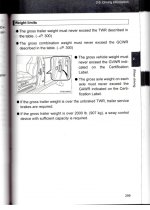
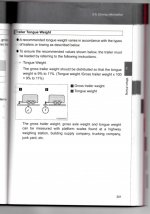
Hoping I didn't make a big mistake buying a 4runner. Although I don't have any proof either, logic tells me that the T4R with a truck frame and bigger 270hp engine with 5,000 max tow weight should be able to handle a trailer in the 4,250 lb GVWR range without any problem. Of course I live in flat Florida, but I might want to tow up to the Smokies sometime. I don't mind downshifting and crawling up long hills at 40 mph.
Getting ready to start looking at travel trailers in the <21 foot size, but need more facts if they're available.
Thanks guys.....David
I recently sold my 3000lb dry weight popup camper. Loaded with battery, propane, water and cargo, it probably weighed about 3,500 lbs. I traded in my old 2003 Honda Odyssey minivan V6 on the new T4R. I could barely tell the camper was back there. I used a Reese receiver and WD hitch when towing that camper.
Not sure if any improvements were made to the 2013 factory hitch receiver but it sure looks substantial to me. Big steel crossmember welded to the side frames and receiver bolted on with 6 bolts.
I've read a lot of opinions on the forum and it seems to be pretty divided between "no, you can't and shouldn't, or you risk killing your family if you use a WDH" and the other side saying "no problem, will work fine, don't worry about it, I've been using a WDH for years".
One post specifically says "The OEM receiver is mounted to the cross member and is not designed to take the stress of a WDH. You can twist the frame and it's not repairable." But, I don't see (or haven't found) any empirical evidence to back up that claim. Can anyone give me a link to any evidence proving that using a WDH might do damage to your T4R's factory receiver or to your family? Does anyone have photos of this? Or a document from a testing agency or mechanical engineer that proves we can't use a WDH on our T4R's? Or is this only based on opinion or a hunch?
Hoping I didn't make a big mistake buying a 4runner. Although I don't have any proof either, logic tells me that the T4R with a truck frame and bigger 270hp engine with 5,000 max tow weight should be able to handle a trailer in the 4,250 lb GVWR range without any problem. Of course I live in flat Florida, but I might want to tow up to the Smokies sometime. I don't mind downshifting and crawling up long hills at 40 mph.
Getting ready to start looking at travel trailers in the <21 foot size, but need more facts if they're available.
Thanks guys.....David
Last edited: